Nilgun Anadolu-Okur – författare
Visar alla böcker från författaren Nilgun Anadolu-Okur. Handla med fri frakt och snabb leverans.
3 produkter
3 produkter
Contemporary African American Theater
Afrocentricity in the Works of Larry Neal, Amiri Baraka, and Charles Fuller
Häftad, Engelska, 2011
833 kr
Skickas inom 10-15 vardagar
The Black Arts Movement was sparked by the Civil Rights movement and the urge to produce and revitalize functional, realistic, and holistic symbols to express African American creativity. When Larry Neal began his quest for a new dramatic form to epitomize African American self-determination he laid the foundation upon which his friends and compatriots-Amiri Baraka and Charles Fuller-would build. Expressing their individual protests through their writings, these artists soon united in their attack against Eurocentrism, which traditionally minimized or neglected the roles played by Africans and African Americans on the world stage. Their writings signaled a radical change in the form and content of African American writing, particularly drama.In this insightful examination of African American cultural history, the author explores the heart of the dramatic imagination of African Americans during the turbulent years of the Civil Rights and Black Power movements. The analysis of the works of these three important dramatists reveals the roots of an Afrocentric approach to the theater, and introduces a new methodology for exploring Afrocentrism that is particularly suited to classes in African American drama and literature.?
Contemporary African American Theater
Afrocentricity in the Works of Larry Neal, Amiri Baraka, and Charles Fuller
Inbunden, Engelska, 1997
2 113 kr
Skickas inom 10-15 vardagar
The Black Arts Movement was sparked by the Civil Rights movement and the urge to produce and revitalize functional, realistic, and holistic symbols to express African American creativity. When Larry Neal began his quest for a new dramatic form to epitomize African American self-determination he laid the foundation upon which his friends and compatriots-Amiri Baraka and Charles Fuller-would build. Expressing their individual protests through their writings, these artists soon united in their attack against Eurocentrism, which traditionally minimized or neglected the roles played by Africans and African Americans on the world stage. Their writings signaled a radical change in the form and content of African American writing, particularly drama.In this insightful examination of African American cultural history, the author explores the heart of the dramatic imagination of African Americans during the turbulent years of the Civil Rights and Black Power movements. The analysis of the works of these three important dramatists reveals the roots of an Afrocentric approach to the theater, and introduces a new methodology for exploring Afrocentrism that is particularly suited to classes in African American drama and literature.?
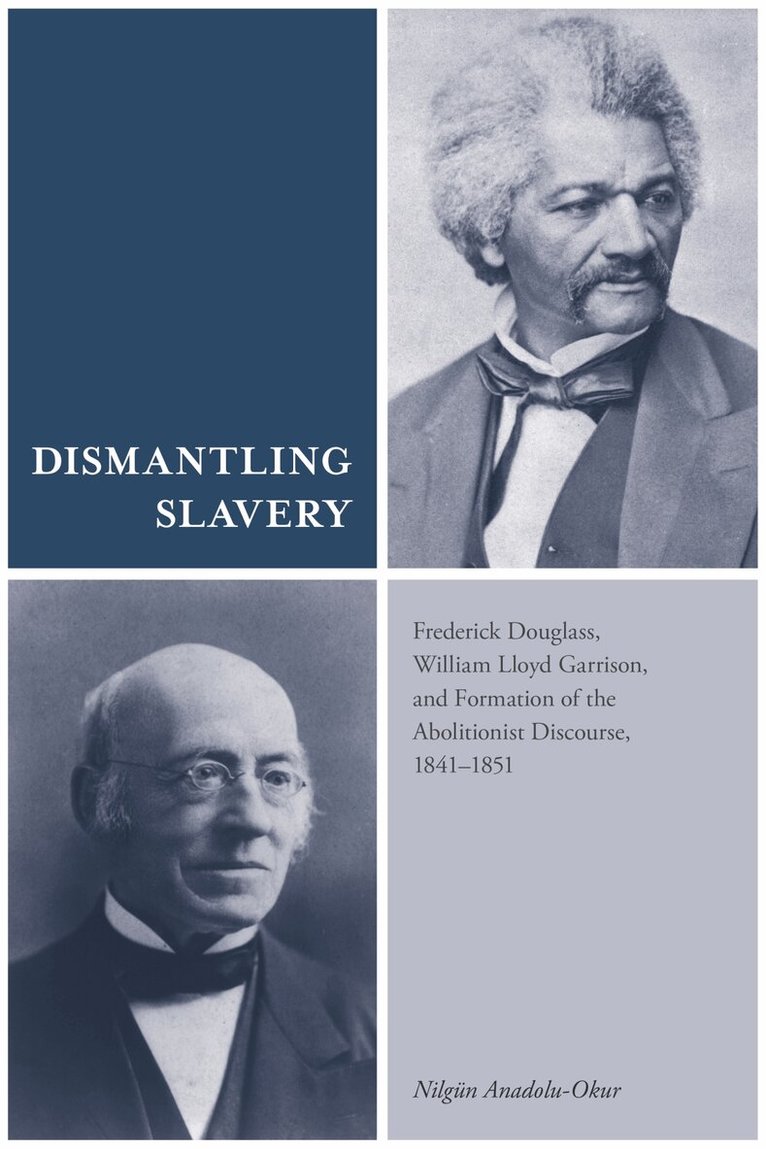
Dismantling Slavery
Frederick Douglass, William Lloyd Garrison, and Formation of the Abolitionist Discourse, 1841–1851
Inbunden, Engelska, 2016
668 kr
Skickas inom 10-15 vardagar
In 1841, William Lloyd Garrison and Frederick Douglass formed a partnership that would last a decade and forever change the abolitionist movement. Throughout the stages of their extraordinary alliance, anti-slavery mobilization was accelerated, reaching its height between 1841 and 1851. Centering their arguments on emancipation, women’s equality, and suffrage, the two men worked tirelessly to publicize and recruit for their cause. Their work initiated a new discourse of social reform and critique, positioning the abolition of slavery at the center of progressive social concerns throughout the first half of the nineteenth century Dismantling Slavery is the first book to address these two giants of abolition—Douglass and Garrison—simultaneously. While underscoring the evolution of abolitionist discourse, Dismantling Slavery unveils the true nature of the friendship between Douglass and Garrison, a key ingredient often overlooked by scholars. Drawing on the writings, speeches, and experiences that shaped the two as abolitionists, Nilgün Anadolu-Okur’s groundbreaking study is one account of the ways in which abolitionist discourse was shaped and put to the purposes of moral and democratic reforms. In addition to turning a close eye on the relationship between Douglass and Garrison, Anadolu-Okur also details significant developments that occurred in tandem among other abolitionists and activists of the era, making for a compelling account of this pivotal decade in American history, up until the dissolution of Garrison and Douglass’s partnership. Dismantling Slavery represents a significant interdisciplinary contribution to the study of abolitionist discourse and will appeal to a wide range of nineteenth-century scholars.