Nina Namaste - Böcker
Visar alla böcker från författaren Nina Namaste. Handla med fri frakt och snabb leverans.
3 produkter
3 produkter
2 029 kr
Skickas inom 10-15 vardagar
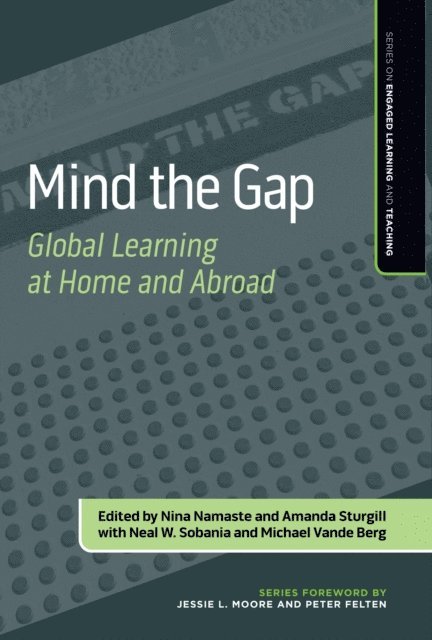
There is growing awareness that global learning is not confined to university, credit-bearing off campus international programs, and that institutions of higher learning have, up until now, conceived of global education too narrowly. Global learning through study abroad and off-campus domestic study fits into a larger context of students’ educational experiences. You can find global learning as part of other high-impact practices; domestic off-campus programs, undergraduate research, and service- or community-based learning all can be global learning opportunities. On-campus global learning can occur in the disciplines and in the core curriculum as well. Language and culture, anthropology, sociology, and other departments, multicultural centers, and diversity and inclusivity offices, to name a few, also teach students to be global learners. Global learning pertains to the many staff and faculty educators who intentionally encourage students to engage with and successfully navigate difference. Thus, there is a growing need for bridging across disciplinary and administrative silos, silos that are culturally bound within academia. The gaps between these silos matter as students seek to integrate off- and on-campus learning. Higher education needs a new, holistic assessment of global learning.This book investigates not just student learning, but also faculty experiences, program structures, and pathways that impact global learning, and expands the context of global learning to show its antecedents and impacts as a part of the larger higher education experience. Chapters look at recent developments such as short-term, off-campus, international study and certificate/medallion programs, as well as blended learning environments and undergraduate research, all in the context of multi-institutional comparisons. Global learning is also situated in a larger university context.A Series on Engaged Learning and Teaching Book. Visit the books’ companion website, hosted by the Center for Engaged Learning, for book resources.
455 kr
Skickas inom 10-15 vardagar
There is growing awareness that global learning is not confined to university, credit-bearing off campus international programs, and that institutions of higher learning have, up until now, conceived of global education too narrowly. Global learning through study abroad and off-campus domestic study fits into a larger context of students’ educational experiences. You can find global learning as part of other high-impact practices; domestic off-campus programs, undergraduate research, and service- or community-based learning all can be global learning opportunities. On-campus global learning can occur in the disciplines and in the core curriculum as well. Language and culture, anthropology, sociology, and other departments, multicultural centers, and diversity and inclusivity offices, to name a few, also teach students to be global learners. Global learning pertains to the many staff and faculty educators who intentionally encourage students to engage with and successfully navigate difference. Thus, there is a growing need for bridging across disciplinary and administrative silos, silos that are culturally bound within academia. The gaps between these silos matter as students seek to integrate off- and on-campus learning. Higher education needs a new, holistic assessment of global learning.This book investigates not just student learning, but also faculty experiences, program structures, and pathways that impact global learning, and expands the context of global learning to show its antecedents and impacts as a part of the larger higher education experience. Chapters look at recent developments such as short-term, off-campus, international study and certificate/medallion programs, as well as blended learning environments and undergraduate research, all in the context of multi-institutional comparisons. Global learning is also situated in a larger university context.A Series on Engaged Learning and Teaching Book. Visit the books’ companion website, hosted by the Center for Engaged Learning, for book resources.
Del 97 - At the Interface / Probing the Boundaries
Who Decides?
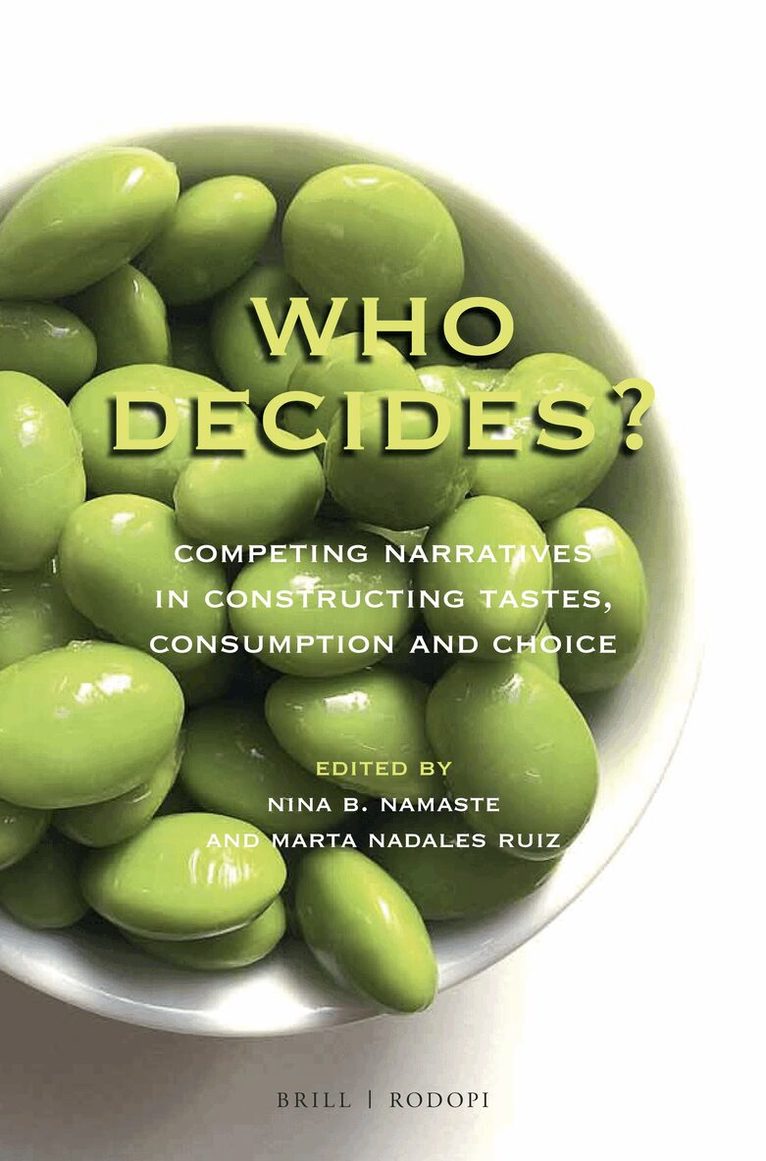
Competing Narratives in Constructing Tastes, Consumption and Choice
Häftad, Engelska, 2018
870 kr
Skickas inom 5-8 vardagar
How is the meaning of food created, communicated, and continually transformed? How are food practices defined, shaped, delineated, constructed, modified, resisted, and reinvented – by whom and for whom? These are but a few of the questions Who Decides? Competing Narratives in Constructing Tastes, Consumption and Choice explores. Part I (Taste, Authenticity & Identity) explicitly centres on the connection between food and identity construction. Part II (Food Discourses) focuses on how food-related language shapes perceptions that in turn construct particular behaviours that in turn demonstrate underlying value systems. Thus, as a collection, this volume explores how tastes are shaped, formed, delineated and acted upon by normalising socio-cultural processes, and, in some instances, how those very processes are actively resisted and renegotiated.Contributors are Shamsul AB, Elyse Bouvier, Giovanna Costantini, Filip Degreef, Lis Furlani Blanco, Maria Clara de Moraes Prata Gaspar, Marta Nadales Ruiz, Nina Namaste, Eric Olmedo, Hannah Petertil, Maria José Pires, Lisa Schubert, Brigitte Sébastia, Keiko Tanaka, Preetha Thomas, Andrea Wenzel, Ariel Weygandt, Andrea Whittaker and Minette Yao.