Amanda Sturgill - Böcker
Visar alla böcker från författaren Amanda Sturgill. Handla med fri frakt och snabb leverans.
6 produkter
6 produkter
608 kr
Skickas inom 10-15 vardagar
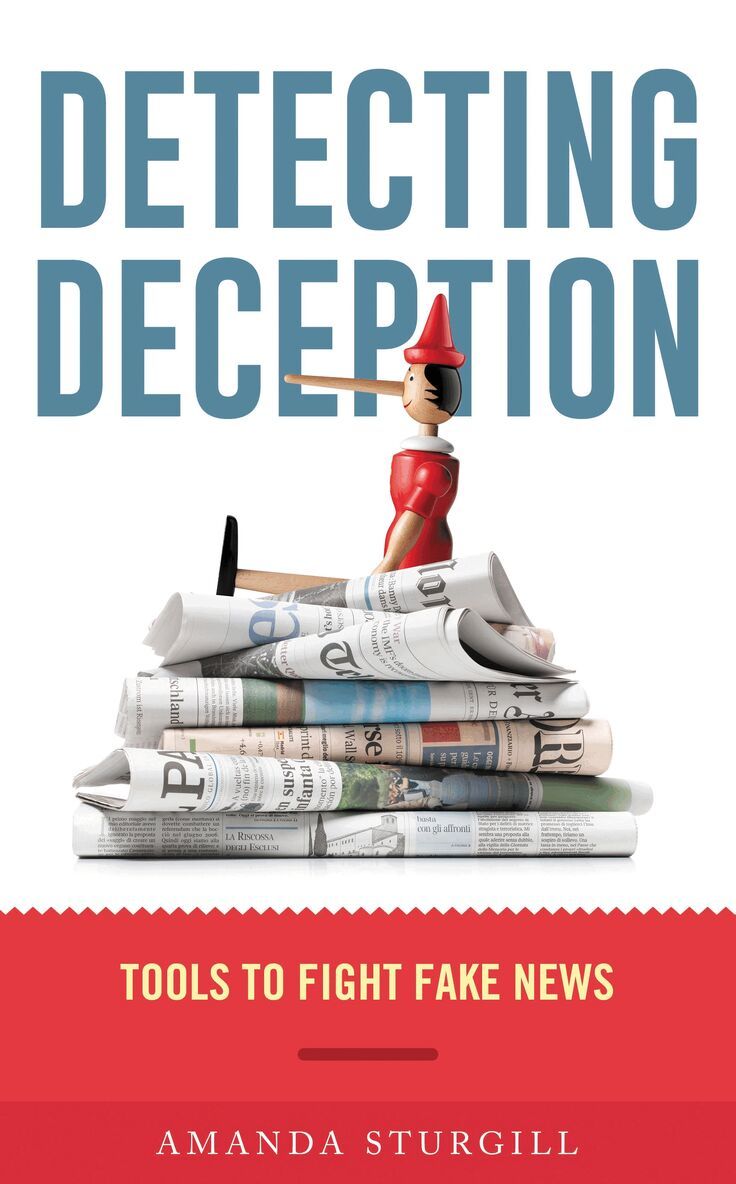
Teaching fact checking and verification is an essential part of journalism education. When a confusing media environment includes statements like “Truth is not truth” and “The president offered alternative facts,” students need to go beyond traditional reporting standards. They need to be trained to consider the presentation of reality in deciding if a statement is misleading or patently false. Detecting Deception applies the concepts of logical argumentation to supplement the verification techniques that are the stock and trade of any media professional.Pithy and practical, Amanda Sturgill draws from present day news examples to help students recognize the most common bad arguments people make. Detecting Deception is an essential tool for training future journalists to build stories that recognize faulty arguments and hold their subjects to a higher standard.
274 kr
Skickas inom 10-15 vardagar
Teaching fact checking and verification is an essential part of journalism education. When a confusing media environment includes statements like “Truth is not truth” and “The president offered alternative facts,” students need to go beyond traditional reporting standards. They need to be trained to consider the presentation of reality in deciding if a statement is misleading or patently false. Detecting Deception applies the concepts of logical argumentation to supplement the verification techniques that are the stock and trade of any media professional.Pithy and practical, Amanda Sturgill draws from present day news examples to help students recognize the most common bad arguments people make. Detecting Deception is an essential tool for training future journalists to build stories that recognize faulty arguments and hold their subjects to a higher standard.
488 kr
Skickas inom 10-15 vardagar
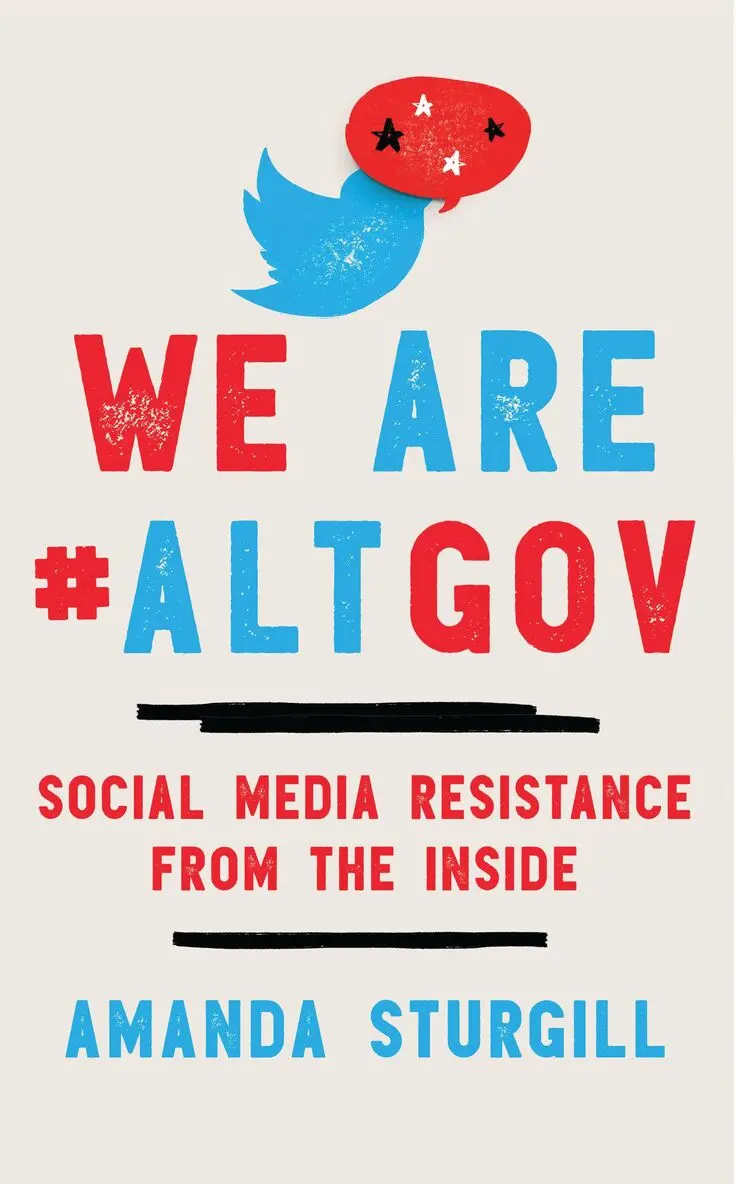
When being a team-player at work meant lying to the American people, brave civil servants took to social media to share the inside scoop.Government employees expect some changes with each new election, but adjusting to the Trump administration was different. The new president was banning Muslim immigrants, repealing Net Neutrality and deleting climate change information from EPA websites. It became urgent to take a stand. The #ALTGOV Twitter movement subverted official statements to remind the American public that all was not well in the White House but that there was something they could do about it.This is the story of how the same social media technologies that fractured America have helped rogue government workers and concerned citizens work to keep it together. Beginning with tweets from the parks about the Inauguration Day crowd, the #AltGov Twitter accounts offered followers context, truth, and opportunities to take real-world action to support human rights, privacy rights, and science. Followers say they offer hope. They’ve also faced challenges from their bosses in the government, from trolls and bots, and from each other.Amanda Sturgill offers the first real look at this grassroots movement, including exclusive interviews with #AltGov members as they struggled to work with others who had a spectrum of goals and motivations. They faced their own fears of being discovered or even inadvertently causing the harm they were trying to forestall. The #AltGov movement shows us that social media is more than a megaphone—it’s a way for everyday people to live out the democratic ideals that shaped their country.
261 kr
Skickas inom 10-15 vardagar
When being a team-player at work meant lying to the American people, brave civil servants took to social media to share the inside scoop.Government employees expect some changes with each new election, but adjusting to the Trump administration was different. The new president was banning Muslim immigrants, repealing Net Neutrality and deleting climate change information from EPA websites. It became urgent to take a stand. The #ALTGOV Twitter movement subverted official statements to remind the American public that all was not well in the White House but that there was something they could do about it.This is the story of how the same social media technologies that fractured America have helped rogue government workers and concerned citizens work to keep it together. Beginning with tweets from the parks about the Inauguration Day crowd, the #AltGov Twitter accounts offered followers context, truth, and opportunities to take real-world action to support human rights, privacy rights, and science. Followers say they offer hope. They’ve also faced challenges from their bosses in the government, from trolls and bots, and from each other.Amanda Sturgill offers the first real look at this grassroots movement, including exclusive interviews with #AltGov members as they struggled to work with others who had a spectrum of goals and motivations. They faced their own fears of being discovered or even inadvertently causing the harm they were trying to forestall. The #AltGov movement shows us that social media is more than a megaphone—it’s a way for everyday people to live out the democratic ideals that shaped their country.
2 029 kr
Skickas inom 10-15 vardagar
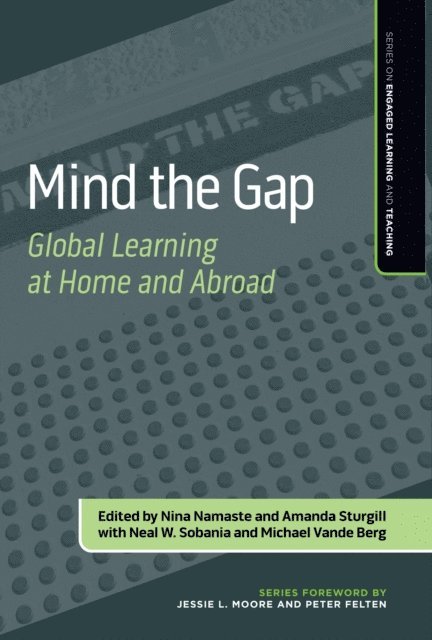
There is growing awareness that global learning is not confined to university, credit-bearing off campus international programs, and that institutions of higher learning have, up until now, conceived of global education too narrowly. Global learning through study abroad and off-campus domestic study fits into a larger context of students’ educational experiences. You can find global learning as part of other high-impact practices; domestic off-campus programs, undergraduate research, and service- or community-based learning all can be global learning opportunities. On-campus global learning can occur in the disciplines and in the core curriculum as well. Language and culture, anthropology, sociology, and other departments, multicultural centers, and diversity and inclusivity offices, to name a few, also teach students to be global learners. Global learning pertains to the many staff and faculty educators who intentionally encourage students to engage with and successfully navigate difference. Thus, there is a growing need for bridging across disciplinary and administrative silos, silos that are culturally bound within academia. The gaps between these silos matter as students seek to integrate off- and on-campus learning. Higher education needs a new, holistic assessment of global learning.This book investigates not just student learning, but also faculty experiences, program structures, and pathways that impact global learning, and expands the context of global learning to show its antecedents and impacts as a part of the larger higher education experience. Chapters look at recent developments such as short-term, off-campus, international study and certificate/medallion programs, as well as blended learning environments and undergraduate research, all in the context of multi-institutional comparisons. Global learning is also situated in a larger university context.A Series on Engaged Learning and Teaching Book. Visit the books’ companion website, hosted by the Center for Engaged Learning, for book resources.
455 kr
Skickas inom 10-15 vardagar
There is growing awareness that global learning is not confined to university, credit-bearing off campus international programs, and that institutions of higher learning have, up until now, conceived of global education too narrowly. Global learning through study abroad and off-campus domestic study fits into a larger context of students’ educational experiences. You can find global learning as part of other high-impact practices; domestic off-campus programs, undergraduate research, and service- or community-based learning all can be global learning opportunities. On-campus global learning can occur in the disciplines and in the core curriculum as well. Language and culture, anthropology, sociology, and other departments, multicultural centers, and diversity and inclusivity offices, to name a few, also teach students to be global learners. Global learning pertains to the many staff and faculty educators who intentionally encourage students to engage with and successfully navigate difference. Thus, there is a growing need for bridging across disciplinary and administrative silos, silos that are culturally bound within academia. The gaps between these silos matter as students seek to integrate off- and on-campus learning. Higher education needs a new, holistic assessment of global learning.This book investigates not just student learning, but also faculty experiences, program structures, and pathways that impact global learning, and expands the context of global learning to show its antecedents and impacts as a part of the larger higher education experience. Chapters look at recent developments such as short-term, off-campus, international study and certificate/medallion programs, as well as blended learning environments and undergraduate research, all in the context of multi-institutional comparisons. Global learning is also situated in a larger university context.A Series on Engaged Learning and Teaching Book. Visit the books’ companion website, hosted by the Center for Engaged Learning, for book resources.