• Fri frakt över 249 kr
  • •
  • Snabba leveranser
  • •
  • Billiga böcker
Kundservice

Du är på sajten för privatpersoner.

Företag, bibliotek eller offentlig verksamhet?

Du handlar på classic.bokus.com, där alla dina funktioner finns intakta.
Till classic.bokus.com
Bokus logotyp. Gå till startsidan.
  • Erbjudanden
  • Student
  • Topplistor
  • Barn & ungdom
  • Bokus Play
  • E-böcker
  • Ljudböcker
  • Pocketböcker
  • Spel & pussel

10% rabatt på allt med kod NYSTART10 →

Sidfot

Mina sidor

    Hjälp

    • Kundservice
    • Vanliga frågor och svar
    • Frakt och leverans
    • Retur vid ångerrätt
    • Reklamera vara
    • Betalning
    • Köpvillkor
    • Allmänna villkor
    • Information om webbplatsens tillgänglighet

    Om Bokus

    • Om oss
    • Pressrum
    • För studenter
    • För företag
    • För bibliotek och offentlig verksamhet
    • För leverantörer
    • Hållbarhet

    Populärt

    • Aktuella erbjudanden
    • Presentkort
    • Studentlitteratur
    • Nya böcker
    • Topplistor
    • Signerade böcker
    • Engelska böcker

    Inspiration

    • Boktips
    • BookTok
    • Populära bokserier
    • Barnbokskaraktärer
    • Populära författare
    Logotyp för Bokus
    Följ oss på Facebook (extern länk)Följ oss på Instagram (extern länk)Följ oss på YouTube (extern länk)Följ oss på TikTok (extern länk)
    bokus @ CookiesAnpassa cookiesIntegritetspolicyKöpvillkor
    Till Citymail hemsida (extern länk)Till Budbee hemsida (extern länk)Till Postnord hemsida (extern länk)Till Schenker hemsida (extern länk)Till Early Bird hemsida (extern länk)Till Walleys hemsida (extern länk)
    1. Samhälle och politik
    2. Samhälle och kultur
    3. Kultur och medier
    4. Medievetenskap

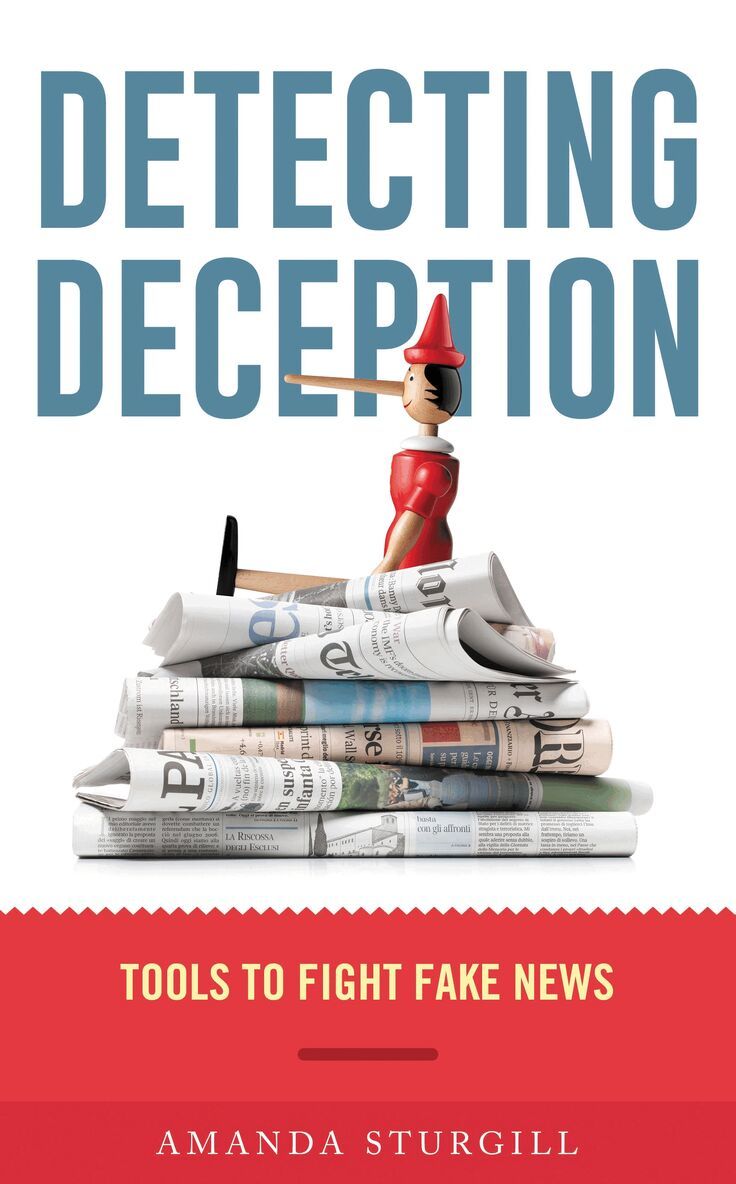
    Detecting Deception

    Tools to Fight Fake News

    AvAmanda Sturgill

    Inbunden, Engelska, 2020

    631 kr

    Beställningsvara. Skickas inom 10-15 vardagar. Fri frakt över 249 kr.

    Fler format och utgåvor

    Häftad

    284 kr

    Beskrivning

    Teaching fact checking and verification is an essential part of journalism education. When a confusing media environment includes statements like “Truth is not truth” and “The president offered alternative facts,” students need to go beyond traditional reporting standards. They need to be trained to consider the presentation of reality in deciding if a statement is misleading or patently false. Detecting Deception applies the concepts of logical argumentation to supplement the verification techniques that are the stock and trade of any media professional.Pithy and practical, Amanda Sturgill draws from present day news examples to help students recognize the most common bad arguments people make. Detecting Deception is an essential tool for training future journalists to build stories that recognize faulty arguments and hold their subjects to a higher standard.

    Produktinformation

    • Utgivningsdatum:2020-08-19
    • Mått:161 x 229 x 17 mm
    • Vikt:431 g
    • Format:Inbunden
    • Språk:Engelska
    • Antal sidor:160
    • Förlag:Bloomsbury Publishing Plc
    • ISBN:9781538141021

    Utforska kategorier

    • Medievetenskap inom Samhälle och politik
    • Skrivande och redigering inom Språk och ordböcker
    • Media och underhållning inom Ekonomi och Ledarskap

    Mer om författaren

    Amanda Sturgill is an associate professor of journalism at Elon University, where she teaches classes in writing, copy editing, media analytics and digital strategy to undergraduate and graduate students. A self-described critical thinking maven, her students leave the university with a strong appreciation for the vital role of accurate and honest communication in free societies. Amanda was trained in the doctoral program at Cornell University and has gone on to publish communication technology and media and religion work in a variety of outlets. She was an editor on the two-volume Religion Online: How Digital Technology Is Changing the Way We Worship and Pray and an associate editor for The Golden Age of Data: Media Analytics in Study and Practice. She has a special interest in the scholarship of teaching and learning and, in particular, the integration of high-impact teaching practice in professional fields like journalism. She has run an international pedagogy research seminar, co-edited Mind the Gap: Global Learning at Home and Abroad and is an active member and presenter with the International Society for the Scholarship of Teaching and Learning. She presently chairs the Standing Committee on Teaching and sits on the board of directors of the Association for Education in Journalism and Mass Communication.

    Recensioner i media

    This practical guide was designed to help train potential journalists "to spot problematic reasoning so it can be questioned or corrected." Dividing her text into three parts, Sturgill employs contemporary news stories throughout to illustrate how facts can be presented in misleading ways. Each chapter ends with a "Your Turn" section, presenting reflective questions that challenge readers to practice the skill introduced in the chapter at hand. An appendix that includes possible answers to the questions makes this a resource that can be independently consulted by individuals seeking self-study.... More practical and pedagogical than similar works…this volume will serve as an affordable and accessible handbook for undergraduate students studying journalism, or any reader interested in improving their news evaluation skills. Recommended.

    Innehållsförteckning

    • Preface: Detecting Deception and Why It MattersSection 1: Distractions and Deceptions1. The Personal Attack: “We Shouldn’t Listen to Dummies”2. Poisoning the Well: “Nothing to See Here”3. The Straw Man: “Said No One Ever”4. The Appeal to Hypocrisy: “She Did It First!”5. The Red Herring: “Look! Squirrel!”6. The Black and White: “There Are Only Two Things That Could Happen”7. The Slippery Slope: “And You’ll End up Living in a Van by the River”8. The Fallacy of Fallacies: “One Rotten Apple Spoils the Grocery Store”9. The Faulty Analogy: “Comparing Oranges to Falsehoods” 10. The Irrelevant Conclusion: “Cool. Don’t Care” 11. The Hasty Generalization: “I Saw a Thing Once” 12. The Division Fallacy: “All the Children Are Above Average”13. The Composition Fallacy: “Great Players Must Make a Great Band” 14. Begging the Question: “The Blue Sky Is Blue”15. The Appeal to Purity: “Real Men Don’t Eat Haggis” 16. Equivocation: “I Mean, I Am Nice”17. The Sunk Cost: “We’ve Already Invested so Much”Section 2: Unrelated Evidence18. The Appeal to Pity: “If You Really Cared About Me” 19. The Appeal to Force: “Agree—or Else” 20. The Appeal to Ignorance: “No One Has Proved You Can’t” 21. The Appeal to Authority: “I’m Not a Doctor But . . .” 22. The Appeal to Tradition: “We’ve Always Done It This Way” 23. The Appeal to Popularity: “A Lot of People Agree” 24. The Big Lie and Conspiracy Theories: “The Sky Is Green. The Sky Is Green. The Sky Is Green” Section 3: Issues with Numbers and Data25 Ignoring the Base Rate: “100 Percent of People Die”26 The False Cause: “Spider Bites and Spelling Bees”27 The Hidden Variable: “Rabbit Feet and Lucky Rocks”28 Unnecessary Precision: “The Difference That Doesn’t Matter”29 Naive Probability and the Audience It Confuses: “This Slot Machine Is Hot” 30 Deception with Charts: “A Picture Is Worth 1,000 Lies” 31 Misrepresenting Polls and Surveys: “Four out of Five Dentists Surveyed Agree” Appendix 1: Possible Answers to Section 1 Exercises Appendix 2: Possible Answers to Section 2 Exercises Appendix 3: Possible Answers to Section 3 Exercises