Noah Coburn – Författare
Visar alla böcker från författaren Noah Coburn. Handla med fri frakt och snabb leverans.
10 produkter
10 produkter
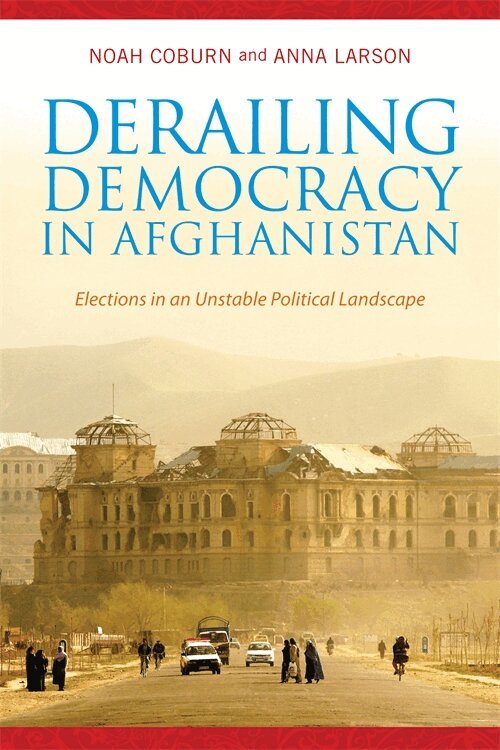
Derailing Democracy in Afghanistan
Elections in an Unstable Political Landscape
Inbunden, Engelska, 2013
600 kr
Skickas inom 7-10 vardagar
Since the invasion of Afghanistan in 2001, researchers, policymakers, and the media have failed to consider the long-term implications of the country's post-conflict elections. Based on fieldwork in provinces across the country and interviews with more than seven hundred candidates, officials, community leaders, and voters, this book builds an in-depth portrait of Afghanistan's recent elections as experienced by individuals and communities, while revealing how the elections have in fact actively contributed to instability, undermining the prospects of democracy in Afghanistan. Merging political science with anthropology, Noah Coburn and Anna Larson document how political leaders, commanders, and the new ruling elite have used elections to further their own interests and deprive local communities of access to political opportunities. They retrace presidential, parliamentary, and provincial council elections over the past decade and expose the role of international actors in promoting the polls as one-off events, detached from the broader political landscape.This approach to elections has allowed existing local powerholders to solidify their grip on resources and opportunities, derailing democratization processes and entrenching a deeper disengagement from central government. Western powers, Coburn and Larson argue, need to reevaluate their most basic assumptions about elections, democracy, and international intervention if they hope to prevent similar outcomes in the future.
1 202 kr
Skickas inom 7-10 vardagar
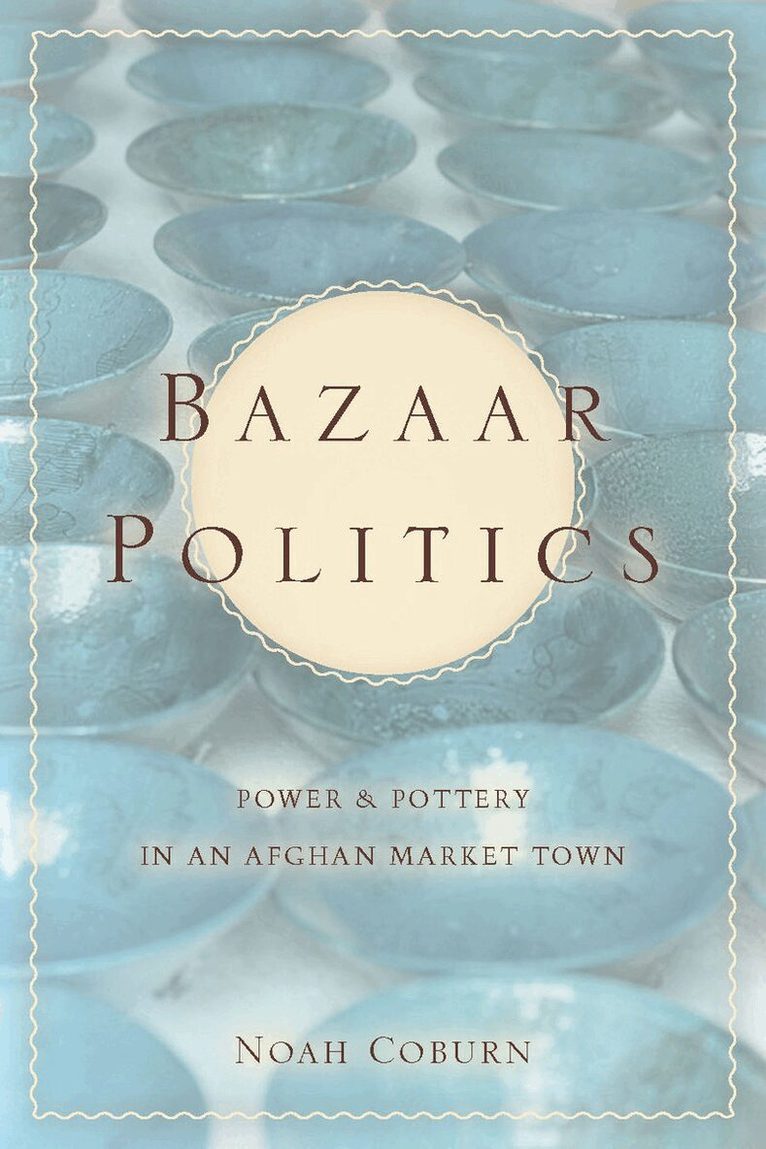
After the fall of the Taliban, instability reigned across Afghanistan. However, in the small town of Istalif, located a little over an hour north of Kabul and not far from Bagram on the Shomali Plain, local politics remained relatively violence-free. Bazaar Politics examines this seemingly paradoxical situation, exploring how the town's local politics maintained peace despite a long, violent history in a country dealing with a growing insurgency.At the heart of this story are the Istalifi potters, skilled craftsmen trained over generations. With workshops organized around extended families and competition between workshops strong, kinship relations become political and subtle negotiations over power and authority underscore most interactions. Starting from this microcosm, Noah Coburn then investigates power and relationships at various levels, from the potters' families; to the local officials, religious figures, and former warlords; and ultimately to the international community and NGO workers.Offering the first long-term on-the-ground study since the arrival of allied forces in 2001, Noah Coburn introduces readers to daily life in Afghanistan through portraits of local residents and stories of his own experiences. He reveals the ways in which the international community has misunderstood the forces driving local conflict and the insurgency, misunderstandings that have ultimately contributed to the political unrest rather than resolved it. Though on first blush the potters of Istalif may seem far removed from international affairs, it is only through understanding politics, power, and culture on the local level that we can then shed new light on Afghanistan's difficult search for peace.
292 kr
Skickas inom 7-10 vardagar
After the fall of the Taliban, instability reigned across Afghanistan. However, in the small town of Istalif, located a little over an hour north of Kabul and not far from Bagram on the Shomali Plain, local politics remained relatively violence-free. Bazaar Politics examines this seemingly paradoxical situation, exploring how the town's local politics maintained peace despite a long, violent history in a country dealing with a growing insurgency.At the heart of this story are the Istalifi potters, skilled craftsmen trained over generations. With workshops organized around extended families and competition between workshops strong, kinship relations become political and subtle negotiations over power and authority underscore most interactions. Starting from this microcosm, Noah Coburn then investigates power and relationships at various levels, from the potters' families; to the local officials, religious figures, and former warlords; and ultimately to the international community and NGO workers.Offering the first long-term on-the-ground study since the arrival of allied forces in 2001, Noah Coburn introduces readers to daily life in Afghanistan through portraits of local residents and stories of his own experiences. He reveals the ways in which the international community has misunderstood the forces driving local conflict and the insurgency, misunderstandings that have ultimately contributed to the political unrest rather than resolved it. Though on first blush the potters of Istalif may seem far removed from international affairs, it is only through understanding politics, power, and culture on the local level that we can then shed new light on Afghanistan's difficult search for peace.
1 202 kr
Skickas inom 7-10 vardagar
The U.S.-led intervention in Afghanistan mobilized troops, funds, and people on an international level not seen since World War II. Hundreds of thousands of individuals and tens of billions of dollars flowed into the country. But what was gained for Afghanistan—or for the international community that footed the bill? Why did development money not lead to more development? Why did a military presence make things more dangerous? Through the stories of four individuals—an ambassador, a Navy SEAL, a young Afghan businessman, and a wind energy engineer—Noah Coburn weaves a vivid account of the challenges and contradictions of life during the intervention. Looking particularly at the communities around Bagram Airbase, this ethnography considers how Afghans viewed and attempted to use the intervention and how those at the base tried to understand the communities around them. These compelling stories step outside the tired paradigms of 'unruly' Afghan tribes, an effective Taliban resistance, and a corrupt Karzai government to show how the intervention became an entity unto itself, one doomed to collapse under the weight of its own bureaucracy and contradictory intentions.
292 kr
Skickas inom 7-10 vardagar
The U.S.-led intervention in Afghanistan mobilized troops, funds, and people on an international level not seen since World War II. Hundreds of thousands of individuals and tens of billions of dollars flowed into the country. But what was gained for Afghanistan—or for the international community that footed the bill? Why did development money not lead to more development? Why did a military presence make things more dangerous? Through the stories of four individuals—an ambassador, a Navy SEAL, a young Afghan businessman, and a wind energy engineer—Noah Coburn weaves a vivid account of the challenges and contradictions of life during the intervention. Looking particularly at the communities around Bagram Airbase, this ethnography considers how Afghans viewed and attempted to use the intervention and how those at the base tried to understand the communities around them. These compelling stories step outside the tired paradigms of 'unruly' Afghan tribes, an effective Taliban resistance, and a corrupt Karzai government to show how the intervention became an entity unto itself, one doomed to collapse under the weight of its own bureaucracy and contradictory intentions.
341 kr
Skickas inom 10-15 vardagar
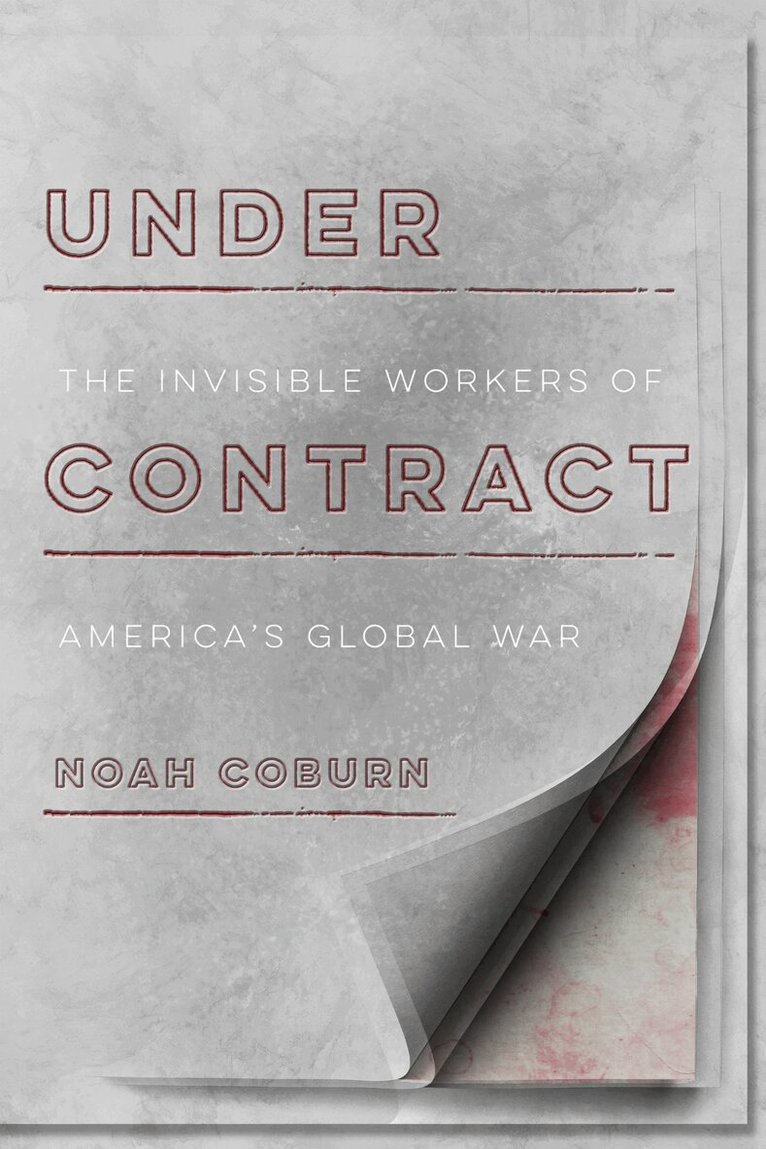
War is one of the most lucrative job markets for an increasingly global workforce. Most of the work on American bases, everything from manning guard towers to cleaning the latrines to more technical engineering and accounting jobs, has been outsourced to private firms that then contract out individual jobs, often to the lowest bidder. An "American" base in Afghanistan or Iraq will be staffed with workers from places like Sri Lanka, Bangladesh, the Philippines, Turkey, Bosnia, and Nepal: so-called "third-country nationals." Tens of thousands of these workers are now fixtures on American bases. Yet, in the plethora of records kept by the U.S. government, they are unseen and uncounted—their stories untold.Noah Coburn traces this unseen workforce across seven countries, following the workers' often zigzagging journey to war. He confronts the varied conditions third-country nationals encounter, ranging from near slavery to more mundane forms of exploitation. Visiting a British Imperial training camp in Nepal, U.S. bases in Afghanistan, a café in Tbilisi, offices in Ankara, and human traffickers in Delhi, Coburn seeks out a better understanding of the people who make up this unseen workforce, sharing powerful stories of hope and struggle.Part memoir, part travelogue, and part retelling of the war in Afghanistan through the eyes of workers, Under Contract unspools a complex global web of how modern wars are fought and supported, narrating war stories unlike any other. Coburn's experience forces readers to reckon with the moral questions of a hidden global war-force and the costs being shouldered by foreign nationals in our name.
Last Days of the Afghan Republic
A Doomed Evacuation Twenty Years in the Making
Inbunden, Engelska, 2023
435 kr
Skickas inom 10-15 vardagar
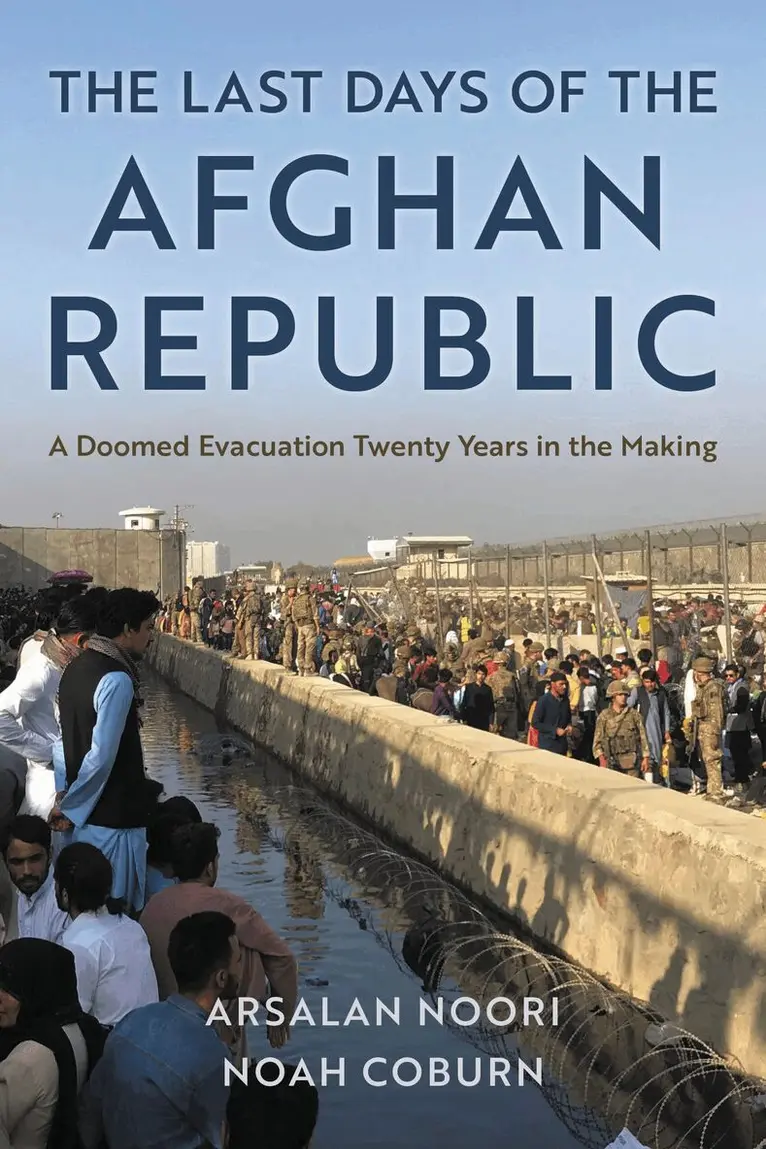
It is difficult to overstate the chaos of August 2021 for many of those in Afghanistan, particularly those who had worked closely with the international community there. In a matter of days, U.S. troops withdrew from Afghanistan and an insurgency threw out a government the international community had spent 20 years and billions of dollars supporting. A government that claimed to stand for women’s rights, freedom of the press, education, and a litany of other ideals, was replaced by one that did not allow girls to attend secondary school. The world watched for two weeks as crowds rushed the airport, bodies fell from planes, a suicide bomber killed civilians and soldiers, and a baby was handed to a Marine over a barbed wire wall. The agony of lives so clearly destroyed, as people tried to flee their homeland with little to nothing, felt like images seen in the wake of natural disasters. But this was not a natural disaster. It was completely avoidable.Part memoir and part history, The Last Days of the Afghan Republic tells this story through the experiences of Arsalan, Fatima, Zeinab, and Najeeb: a scholar, a doctor, a student, and a translator. These young men and women had bought into the promise of the international intervention, that if they studied, worked hard, and believed in democracy and human rights, Afghanistan could become a new country. Their lives also tell the story of Afghanistan over the past thirty years. They recount, from the ground up, the political decisions on the American side that led to the “forever war,” the way that Afghan political partners squandered opportunities, and the ways in which the U.S. presence unevenly reshaped Afghan society.
1 647 kr
Skickas inom 10-15 vardagar
As they have done historically, innovative institutions enrich the college ecosystem, helping the higher educational industry develop flexible resilience. The chapters in this book showcase perspectives, hard-won lessons, challenges and provocative ideas about how historically innovative institutions can contribute to the current discourse on innovation in higher education. The chapters in this book include case studies of innovative campuses and practices, as well as future-looking directions for innovation. Taken together, they ask, is there a way to consider how future trends can be navigated in effective ways, so that the most important features of higher education––student learning, the liberal arts, the cultivation of critical thinking––can remain central to tomorrow’s institutions?
1 647 kr
Skickas inom 10-15 vardagar
As they have done historically, innovative institutions enrich the college ecosystem, helping the higher educational industry develop flexible resilience.
1 898 kr
Kommande
Higher education is facing disruption from a range of political, technological, financial, and demographic factors. Many institutions are facing critical questions of change — having to revamp their models, merge, or even close outright. While this can be worrying to those leading and teaching in colleges and universities, it also presents a moment to reconsider how to successfully innovate at institutions ranging from start ups, to experimental colleges, to more traditional institutions. This volume considers innovations at a range of schools and institutional levels. The authors share their experiences introducing features and programs, evaluating their effectiveness, changing directions, and incubating novel practices that others can learn from. By considering scale, structures and culture, the authors show how thoughtful innovation can not only confront higher education’s current challenges but prepare colleges and universities for new ways of teaching and learning.