• Fri frakt över 249 kr
  • •
  • Snabba leveranser
  • •
  • Billiga böcker
Kundservice

Du är på sajten för privatpersoner.

Företag, bibliotek eller offentlig verksamhet?

Du handlar på classic.bokus.com, där alla dina funktioner finns intakta.
Till classic.bokus.com
Bokus logotyp. Gå till startsidan.
  • Erbjudanden
  • Student
  • Topplistor
  • Barn & ungdom
  • Bokus Play
  • E-böcker
  • Ljudböcker
  • Pocketböcker
  • Spel och pussel

Pocketfynda! Hundratals böcker för 49 kr/st →

Sidfot

Mina sidor

    Hjälp

    • Kundservice
    • Vanliga frågor och svar
    • Frakt och leverans
    • Retur vid ångerrätt
    • Reklamera vara
    • Betalning
    • Köpvillkor
    • Allmänna villkor
    • Information om webbplatsens tillgänglighet

    Om Bokus

    • Om oss
    • Pressrum
    • För studenter
    • För företag
    • För bibliotek och offentlig verksamhet
    • För leverantörer
    • Hållbarhet

    Populärt

    • Aktuella erbjudanden
    • Presentkort
    • Studentlitteratur
    • Nya böcker
    • Topplistor
    • Signerade böcker
    • Engelska böcker

    Inspiration

    • Boktips
    • BookTok
    • Barnbokskaraktärer
    • Populära författare
    Logotyp för Bokus
    Följ oss på Facebook (extern länk)Följ oss på Instagram (extern länk)Följ oss på YouTube (extern länk)Följ oss på TikTok (extern länk)
    bokus @ CookiesAnpassa cookiesIntegritetspolicyKöpvillkor
    Till Citymail hemsida (extern länk)Till Budbee hemsida (extern länk)Till Postnord hemsida (extern länk)Till Schenker hemsida (extern länk)Till Early Bird hemsida (extern länk)Till Walleys hemsida (extern länk)
    1. Samhälle och politik
    2. Samhälle och kultur
    3. Kultur och medier
    4. Referensverk och tvärvetenskap

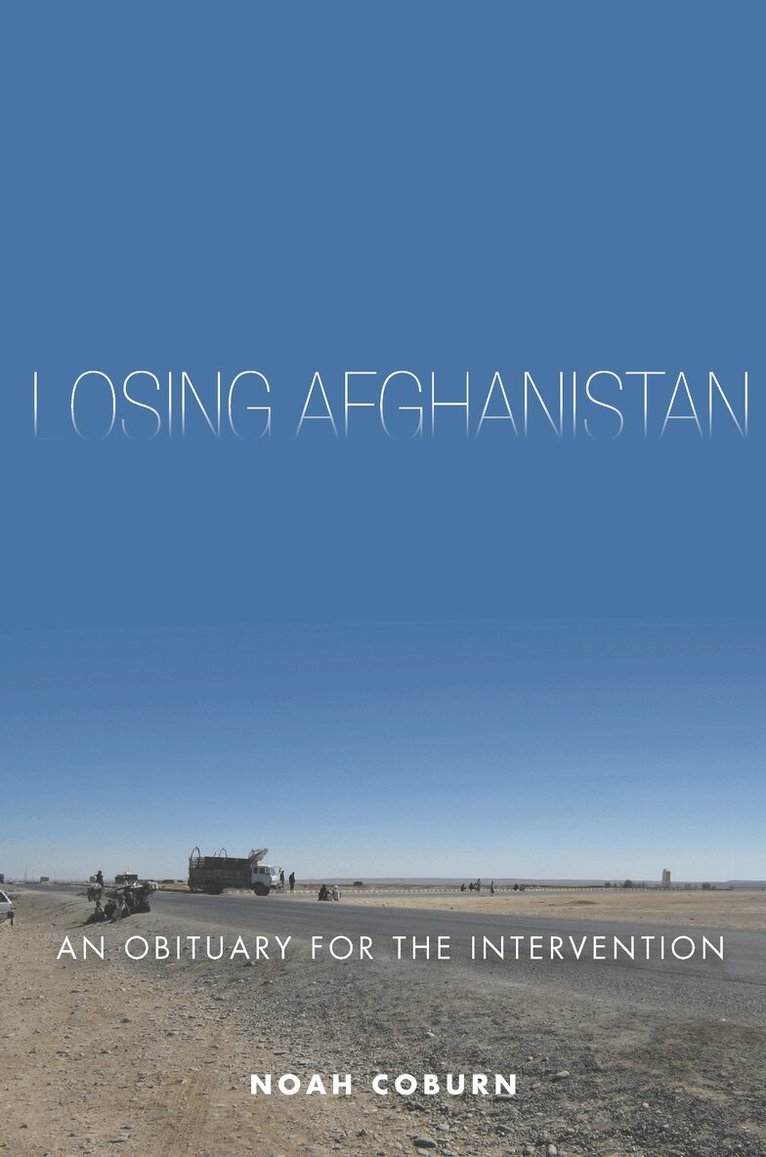
    Losing Afghanistan

    An Obituary for the Intervention

    AvNoah Coburn

    Inbunden, Engelska, 2016

    1 242 kr

    Beställningsvara. Skickas inom 5-8 vardagar. Fri frakt över 249 kr.

    Fler format och utgåvor

    Häftad

    302 kr

    E-bok

    276 kr

    Beskrivning

    The U.S.-led intervention in Afghanistan mobilized troops, funds, and people on an international level not seen since World War II. Hundreds of thousands of individuals and tens of billions of dollars flowed into the country. But what was gained for Afghanistan—or for the international community that footed the bill? Why did development money not lead to more development? Why did a military presence make things more dangerous? Through the stories of four individuals—an ambassador, a Navy SEAL, a young Afghan businessman, and a wind energy engineer—Noah Coburn weaves a vivid account of the challenges and contradictions of life during the intervention. Looking particularly at the communities around Bagram Airbase, this ethnography considers how Afghans viewed and attempted to use the intervention and how those at the base tried to understand the communities around them. These compelling stories step outside the tired paradigms of 'unruly' Afghan tribes, an effective Taliban resistance, and a corrupt Karzai government to show how the intervention became an entity unto itself, one doomed to collapse under the weight of its own bureaucracy and contradictory intentions.

    Produktinformation

    • Utgivningsdatum:2016-02-03
    • Mått:153 x 229 x 23 mm
    • Vikt:476 g
    • Format:Inbunden
    • Språk:Engelska
    • Antal sidor:264
    • Förlag:Stanford University Press
    • ISBN:9780804796637

    Utforska kategorier

    • Referensverk och tvärvetenskap inom Samhälle och politik
    • Asiens historia inom Historia och arkeologi
    • Modern militärhistoria inom Historia och arkeologi

    Mer om författaren

    Noah Coburn is Professor of Anthropology at Bennington College. He is the author of Bazaar Politics: Power and Pottery in an Afghan Market Town (Stanford, 2011) and Derailing Democracy in Afghanistan: Elections in an Unstable Political Landscape (2014) with Anna Larson. He has been conducting ethnographic research in Afghanistan since 2005, as well as working for the United States Institute of Peace, Chatham House and the Afghan Research and Evaluation Unit and as an election observer.

    Recensioner i media

    "Coburn's experienced eye demonstrates that understanding local culture is a two way street. Highly recommended for Afghans, or anyone puzzled by the policies of international military and civilian institutions and in need of practical advice on how to cope with their strange ways of thinking."—Thomas Barfield, Boston University "Rich in description and thick with ironies, Losing Afghanistan reveals the insanities of a war run by and for contractors, and by soldiers posing as development agents. In this first-hand account of war-time Afghanistan, Coburn navigates the various and sometimes shared assumptions of walled off foreigners and the world they created in which Afghans play but minor parts. A quiet indictment."—Catherine Lutz, Brown University "Losing Afghanistan provides a unique window into the longest, most costly US and international intervention since the Second World War. Having spent over a decade researching and writing about Afghanistan, living with ordinary Afghans, and a bewildering array of international actors, Coburn illuminates the chasm between what ordinary Afghans think and want, and what international actors assume and do, and the frustration and disillusionment that resulted."—Michael Keating, Associate Director, Chatham House, and Former UN Deputy Envoy to Afghanistan, Kabul "Though it receives little regard in the conference rooms where policy decisions are arrived at, anthropology in the person of field ethnographers like Noah Coburn provides a much-needed perspective that is almost always ignored or only turned to after the fact. In its careful attention to pinpointing the places where abstract policy gets stuck in practice, Losing Afghanistan demonstrates why anthropology is desperately needed as both counsel and corrective, and why its small-scale but critical truths are so often ignored."—David Edwards, American Anthropologist "Coburn convincingly shows that any anthropological understanding of the international intervention in Afghanistan needs to describe the specific subculture of the foreign military, humanitarian workers, consultants, or journalists who flocked into the country in the aftermath of the Taliban regime's fall....Coburn's compelling book is a must-read for everybody interested in Afghanistan and more generally in peacebuilding interventions."—Noah Coburn, Anthropological Quarterly

    Innehållsförteckning

    • 1. Surveying the Intervention from Above2. Intervening3. The Exotic Tribes of the Intervention4. Before the Invasion5. A New Era?6. Contracting the Intervention7. Climbing over the Wall8. The Merchant-Warlord Alternative9. Warlord Density and its Discontents10. How to Host Your Own Shura11. The Pieces Left Behind