Noah D. Guynn - Böcker
Visar alla böcker från författaren Noah D. Guynn. Handla med fri frakt och snabb leverans.
3 produkter
3 produkter
925 kr
Skickas inom 10-15 vardagar
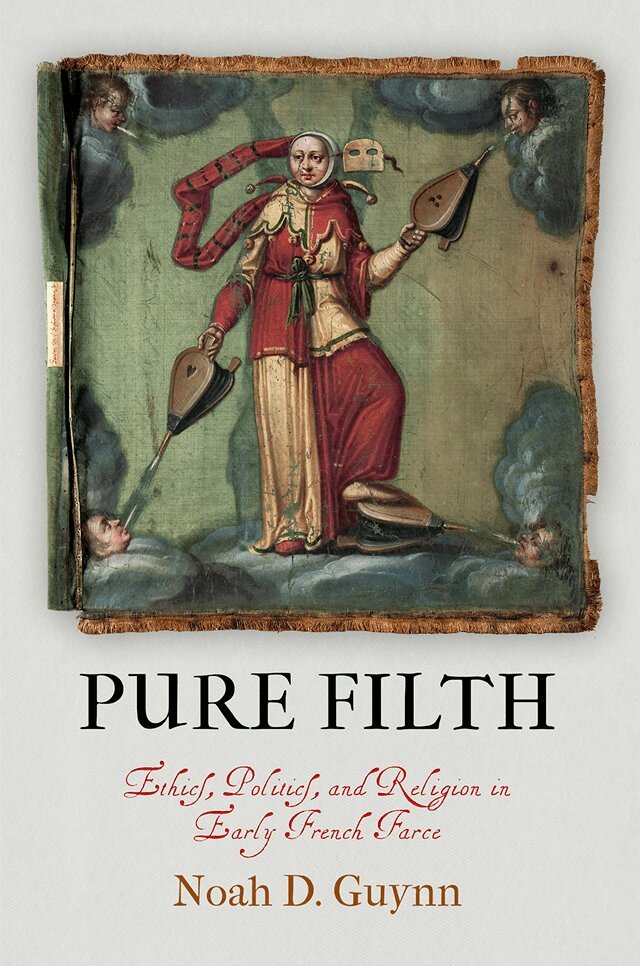
As Noah D. Guynn observes, early French farce has been summarily dismissed as filth for centuries. Renaissance humanists, classical moralists, and Enlightenment philosophes belittled it as an embarrassing reminder of the vulgarity of medieval popular culture. Modern literary critics and theater historians often view it as comedy's poor relation-trite, smutty pap that served to divert the masses and to inure them to lives of subservience. Yet, as Guynn demonstrates in his reexamination of the genre, the superficial crudeness and predictability of farce belie the complexities of its signifying and performance practices and the dynamic, contested nature of its field of reception. Pure Filth focuses on overlooked and occluded content in farce, arguing that apparently coarse jokes conceal finely drawn, and sometimes quite radical, perspectives on ethics, politics, and religion.Engaging with cultural history, political anthropology, and critical, feminist, and queer theory, Guynn shows that farce does not pander to the rabble in order to cultivate acquiescence or curb dissent. Rather, it uses the tools of comic theater-parody and satire, imitation and exaggeration, cross-dressing and masquerade-to address the urgent issues its spectators faced in their everyday lives: economic inequality and authoritarian rule, social justice and ethical renewal, sacramental devotion and sacerdotal corruption, and heterosocial relations and household politics. Achieving its subtlest effects by employing the lewdest forms of humor, farce reveals that aspirations to purity, whether ethical, political, or religious, are inevitably mired in the very filth they repudiate.
Del 29 - Gallica
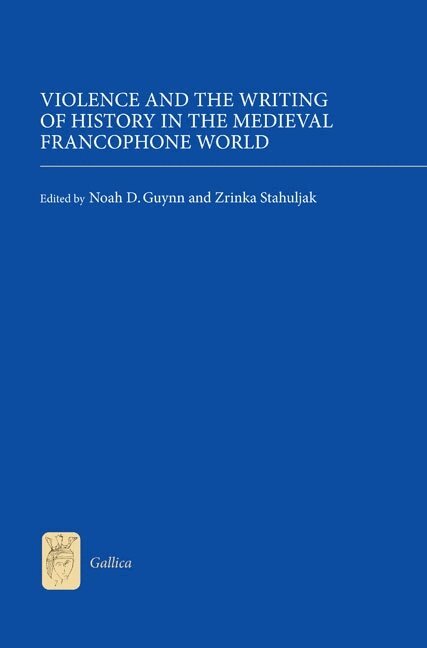
Violence and the Writing of History in the Medieval Francophone World
Inbunden, Engelska, 2013
1 190 kr
Skickas inom 7-10 vardagar
An examination of medieval historican writings through the prism of violence.The concept of medieval historiography as "usable past" is here challenged and reassessed. The contributors' shared claim is that the value of medieval historiographical texts lies not only in the factual information the texts contain but also in the methods and styles they use to represent and interpret the past and make it ideologically productive. Violence is used as the key term that best demonstrates the making of historical meaning in the Middle Ages, through the transformation of acts of physical aggression and destruction into a memorable and usable past.The twelve chapters assembled here explore a wide range of texts emanating from throughout the francophone world. They cover a range of genres (chansons de geste, histories, chronicles, travel writing, and lyric poetry), and range from the late eleventh to the fifteenth century. Through examination of topics as varied as rhetoric, imagery, humor, gender, sexuality, trauma, subversion, and community formation, each chapter strives to demonstrate how knowledge of the medieval past can be enhanced by approaching medieval modes of historical representation and consciousness on their own terms, and by acknowledging - and resisting - the desire to subject them to modern conceptions of historical intelligibility.Noah D. Guynn is Associate Professor of French at the University of California, Davis; Zrinka Stahuljak is Associate Professor of French and Comparative Literature at the University of California, Los Angeles.Contributors: Noah D. Guynn, Zrinka Stahuljak, James Andrew Cowell, Jeff Rider,Leah Shopkow, Matthew Fisher, Karen Sullivan, David Rollo, Deborah McGrady, Rosalind Brown-Grant, Simon Gaunt
Del 53 - Gallica
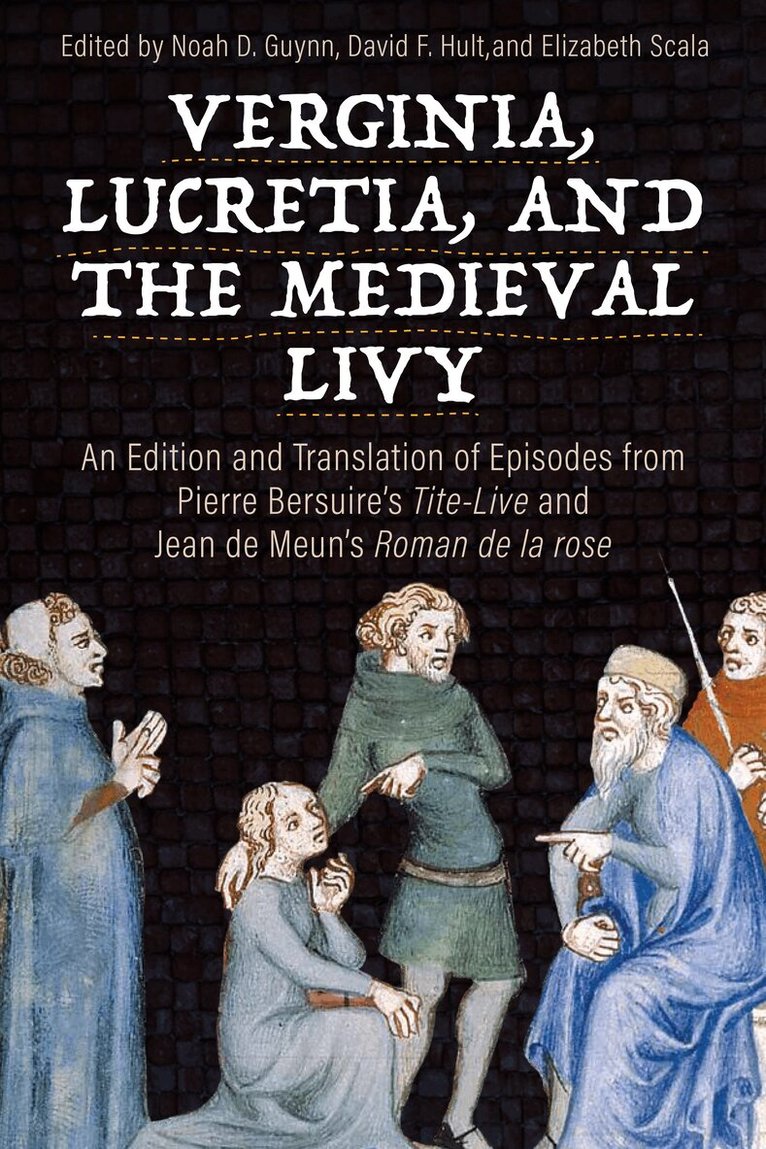
Verginia, Lucretia, and the Medieval Livy
An Edition and Translation of Episodes from Pierre Bersuire’s Tite-Live and Jean de Meun’s Roman de la rose
Inbunden, Engelska, 2025
912 kr
Skickas inom 7-10 vardagar
The tragic stories of Lucretia and Verginia, taken from the fourteenth-century French version of Livy's History of Rome, presented with facing page English translation.FEATURED TRANSLATION - February 2026, Feminae: Medieval Women and Gender IndexLivy was famous in the Middle Ages for what Dante called his "unerring" history of Rome. Within that history, two episodes were especially well-known, both promoting female virtue while also suggesting how sexual violence could trigger political change. Lucretia commits suicide after her rape, precipitating the fall of the monarchy. Verginia is murdered by her father, who prefers to see her die than be seized by the corrupt judge Appius; her death then inspires an uprising that overthrows the decemvirs, republican officials who abused the very laws they had codified. While these stories circulated widely in the medieval period, access to the Latin Livy was impeded by a scarcity of manuscripts. There is nonetheless evidence that some poets, notably Chaucer and Gower, knew Livy through the Tite-Live, a French translation by Pierre Bersuire that was completed around 1358, and borrowed from it for their own works.There are many manuscripts of the Tite-Live, though little of it is available to modern readers. This book helps fill that gap by supplying critical editions and English translations of Bersuire's Verginia and Lucretia episodes, along with those in the Roman de la Rose by Jean de Meun, one of the earliest vernacular writers to show interest in Livy. Each text features a substantial critical apparatus, which glosses difficult terms and concepts and elucidates historical events and social contexts, while an introduction provides other contextual information.