Noah Heringman - Böcker
Visar alla böcker från författaren Noah Heringman. Handla med fri frakt och snabb leverans.
7 produkter
7 produkter
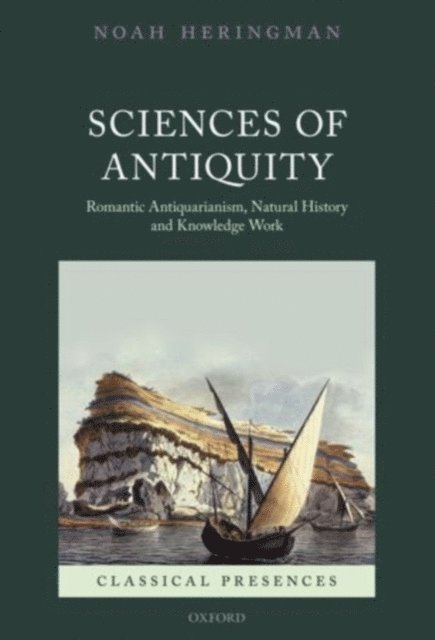
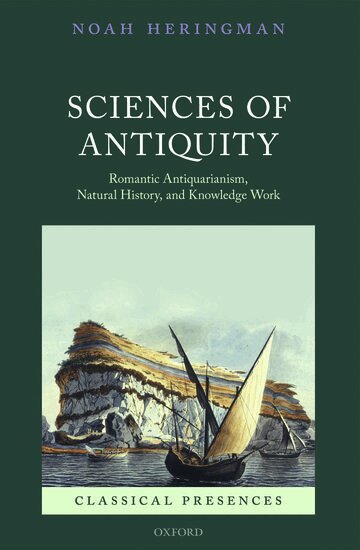
Sciences of Antiquity
Romantic Antiquarianism, Natural History, and Knowledge Work
Inbunden, Engelska, 2013
2 303 kr
Skickas inom 5-8 vardagar
In the course of the eighteenth century, discoveries ranging from Tahiti to Pompeii initiated a scientific turn in the study of the past. Seeking a formal language to display these new findings, Romantic-era plate books presented a wide array of objects as ancient relics. This proliferation of antiquities, a product of old affinities between natural history and antiquarianism, provided new material for the formation of archaeology, geology, anthropology, and other modern disciplines.Sciences of Antiquity traces the production of five scholarly plate books on subjects of major literary and scientific interest at the time: South Pacific voyaging, Mount Vesuvius, ancient Greek vases, monuments in English cathedrals, and the geology of southeast England. Focusing on illustrators, fieldworkers, and ghostwriters associated with this type of scholarly publication, Heringman explores how the expertise acquired by these largely self-educated intellectuals precipitated a major shift in the way research was done - from patronage to professionalism. Their scholarship and technical skills demanded recognition, sparking conflicts over the division of labour and the role of institutions such as the Royal Society and the Society of Antiquaries. Ambitious, collaborative plate books, such as The Collection of Etruscan, Greek, and Roman Antiquities (1776) and Sepulchral Monuments of Great Britain (1799), forged a broader and deeper perception of antiquity as extending far beyond the Greco-Roman world.
325 kr
Skickas inom 7-10 vardagar
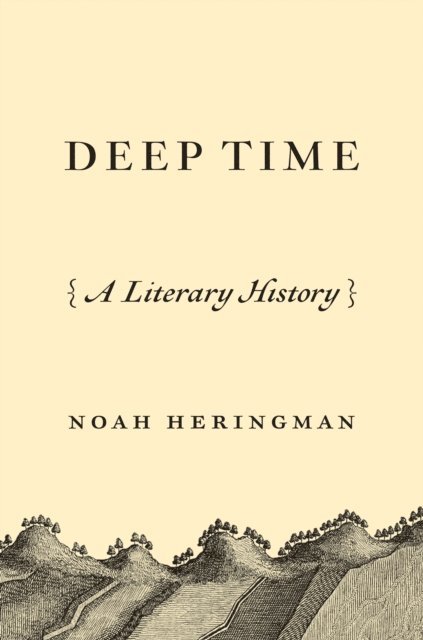
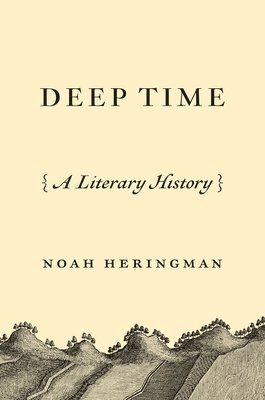
How the concept of “deep time” began as a metaphor used by philosophers, poets, and naturalists in the eighteenth and nineteenth centuriesIn this interdisciplinary book, Noah Heringman argues that the concept of “deep time”—most often associated with geological epochs—began as a metaphorical language used by philosophers, poets, and naturalists of the eighteenth and nineteenth centuries to explore the origins of life beyond the written record. Their ideas about “the abyss of time” created a way to think about the prehistoric before it was possible to assign dates to the fossil record. Heringman, examining stories about the deep past by visionary thinkers ranging from William Blake to Charles Darwin, challenges the conventional wisdom that the idea of deep time came forth fully formed from the modern science of geology. Instead, he argues, it has a rich imaginative history.Heringman considers Johann Reinhold Forster and Georg Forster, naturalists on James Cook’s second voyage around the world, who, inspired by encounters with Pacific islanders, connected the scale of geological time to human origins and cultural evolution; Georges-Louis Leclerc, Comte de Buffon, who drew on travel narrative, antiquarian works, and his own fieldwork to lay out the first modern geological timescale; Blake and Johann Gottfried Herder, who used the language of fossils and artifacts to promote ancient ballads and “prehistoric song”; and Darwin’s exploration of the reciprocal effects of geological and human time. Deep time, Heringman shows, has figural and imaginative dimensions beyond its geological meaning.
1 094 kr
Skickas inom 7-10 vardagar
How the concept of “deep time” began as a metaphor used by philosophers, poets, and naturalists in the eighteenth and nineteenth centuriesIn this interdisciplinary book, Noah Heringman argues that the concept of “deep time”—most often associated with geological epochs—began as a metaphorical language used by philosophers, poets, and naturalists of the eighteenth and nineteenth centuries to explore the origins of life beyond the written record. Their ideas about “the abyss of time” created a way to think about the prehistoric before it was possible to assign dates to the fossil record. Heringman, examining stories about the deep past by visionary thinkers ranging from William Blake to Charles Darwin, challenges the conventional wisdom that the idea of deep time came forth fully formed from the modern science of geology. Instead, he argues, it has a rich imaginative history.Heringman considers Johann Reinhold Forster and Georg Forster, naturalists on James Cook’s second voyage around the world, who, inspired by encounters with Pacific islanders, connected the scale of geological time to human origins and cultural evolution; Georges-Louis Leclerc, Comte de Buffon, who drew on travel narrative, antiquarian works, and his own fieldwork to lay out the first modern geological timescale; Blake and Johann Gottfried Herder, who used the language of fossils and artifacts to promote ancient ballads and “prehistoric song”; and Darwin’s exploration of the reciprocal effects of geological and human time. Deep time, Heringman shows, has figural and imaginative dimensions beyond its geological meaning.
1 215 kr
Tillfälligt slut
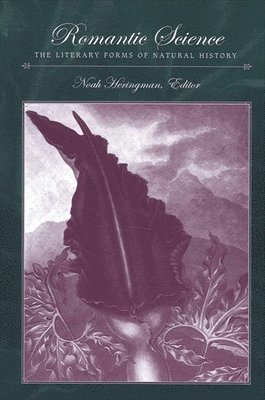
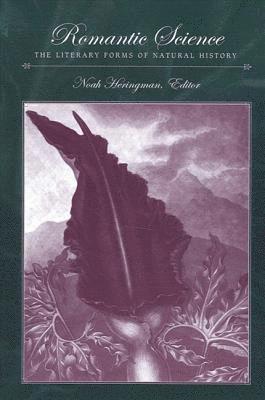
Uncovers the vital role that new scientific discoveries played in Romantic literary culture.Although "romantic science" may sound like a paradox, much of the romance surrounding modern science-the mad scientist, the intuitive genius, the utopian transformation of nature-originated in the Romantic period. Romantic Science traces the literary and cultural politics surrounding the formation of the modern scientific disciplines emerging from eighteenth-century natural history. Revealing how scientific concerns were literary concerns in the Romantic period, the contributors uncover the vital role that new discoveries in earth, plant, and animal sciences played in the period's literary culture. As Thomas Pennant put it in 1772, "Natural History is, at present, the favourite science over all Europe, and the progress which has been made in it will distinguish and characterise the eighteenth century in the annals of literature." As they examine the social and literary ramifications of a particular branch or object of natural history, the contributors to this volume historicize our present intellectual landscape by reimagining and redrawing the disciplinary boundaries between literature and science.Contributors include Alan Bewell, Rachel Crawford, Noah Heringman, Theresa M. Kelley, Amy Mae King, Lydia H. Liu, Anne K. Mellor, Stuart Peterfreund, and Catherine E. Ross.
507 kr
Skickas inom 5-8 vardagar
Uncovers the vital role that new scientific discoveries played in Romantic literary culture.Although "romantic science" may sound like a paradox, much of the romance surrounding modern science-the mad scientist, the intuitive genius, the utopian transformation of nature-originated in the Romantic period. Romantic Science traces the literary and cultural politics surrounding the formation of the modern scientific disciplines emerging from eighteenth-century natural history. Revealing how scientific concerns were literary concerns in the Romantic period, the contributors uncover the vital role that new discoveries in earth, plant, and animal sciences played in the period's literary culture. As Thomas Pennant put it in 1772, "Natural History is, at present, the favourite science over all Europe, and the progress which has been made in it will distinguish and characterise the eighteenth century in the annals of literature." As they examine the social and literary ramifications of a particular branch or object of natural history, the contributors to this volume historicize our present intellectual landscape by reimagining and redrawing the disciplinary boundaries between literature and science.Contributors include Alan Bewell, Rachel Crawford, Noah Heringman, Theresa M. Kelley, Amy Mae King, Lydia H. Liu, Anne K. Mellor, Stuart Peterfreund, and Catherine E. Ross.
674 kr
Skickas inom 10-15 vardagar
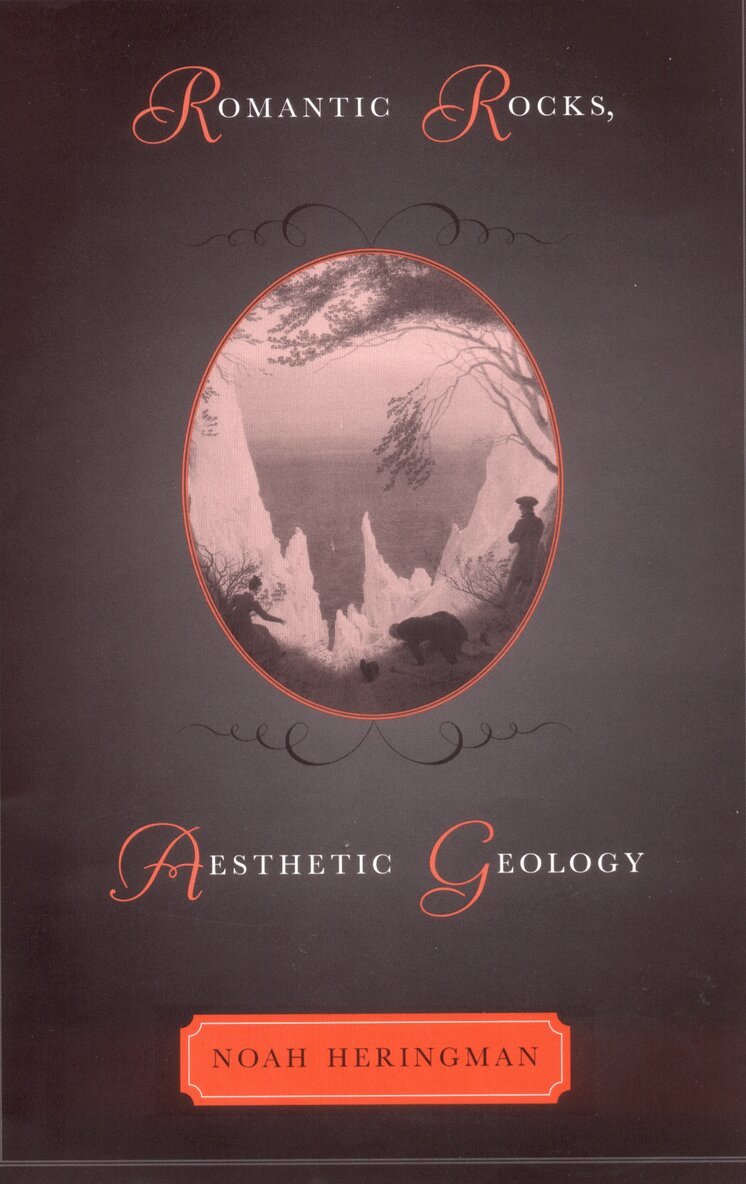
Why are rocks and landforms so prominent in British Romantic poetry? Why, for example, does Shelley choose a mountain as the locus of a "voice... to repeal / large codes of fraud and woe"? Why does a cliff, in the boat-stealing episode of Wordsworth's Prelude, chastise the young thief? Why is petrifaction, or "stonifying," in Blake's coinage, the ultimate figure of dehumanization? Noah Heringman maintains that British literary culture was fundamentally shaped by many of the same forces that created geology as a science in the period 1770–1820. He shows that landscape aesthetics—the verbal and social idiom of landscape gardening, natural history, the scenic tour, and other forms of outdoor "improvement"—provided a shared vernacular for geology and Romanticism in their formative stages.Romantic Rocks, Aesthetic Geology reexamines a wide range of eighteenth- and nineteenth-century poetry to discover its relationship to a broad cultural consensus on the nature and value of rocks and landforms. Equally interested in the initial surge of curiosity about the earth and the ensuing process of specialization, Heringman contributes to a new understanding of literature as a key forum for the modern reorganization of knowledge.
367 kr
Skickas inom 10-15 vardagar
Why are rocks and landforms so prominent in British Romantic poetry? Why, for example, does Shelley choose a mountain as the locus of a "voice... to repeal / large codes of fraud and woe"? Why does a cliff, in the boat-stealing episode of Wordsworth's Prelude, chastise the young thief? Why is petrifaction, or "stonifying," in Blake's coinage, the ultimate figure of dehumanization? Noah Heringman maintains that British literary culture was fundamentally shaped by many of the same forces that created geology as a science in the period 1770–1820. He shows that landscape aesthetics—the verbal and social idiom of landscape gardening, natural history, the scenic tour, and other forms of outdoor "improvement"—provided a shared vernacular for geology and Romanticism in their formative stages.Romantic Rocks, Aesthetic Geology reexamines a wide range of eighteenth- and nineteenth-century poetry to discover its relationship to a broad cultural consensus on the nature and value of rocks and landforms. Equally interested in the initial surge of curiosity about the earth and the ensuing process of specialization, Heringman contributes to a new understanding of literature as a key forum for the modern reorganization of knowledge.