Noah J. Efron - Böcker
Visar alla böcker från författaren Noah J. Efron. Handla med fri frakt och snabb leverans.
2 produkter
2 produkter
809 kr
Skickas inom 10-15 vardagar
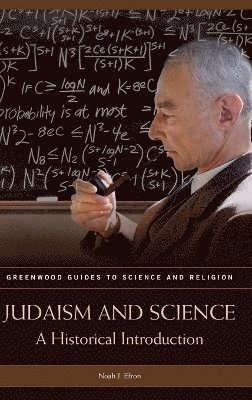
Judaism and Science canvases three millennia of Jewish attitudes towards nature and its study. It answers many questions about the complex relationship of religion and science. How did religious attitudes and dogmas affect Jewish attitudes towards natural knowledge? How was Jewish interest in science reflected, and was facilitated by, links with other cultures - Egypt and Assyria and Babylon in ancient times, Moslem culture in medieval times, and Christian culture during the Renaissance and since? How did science serve as a bridge between religious communities that were otherwise estranged and embattled? How did science serve as a vehicle of assimilation into the wider intellectual culture in which Jews found themselves? The book considers the attitudes and work of particular Jews in different epochs. It takes an eagle's-eye view of its subject, considering broad themes from a high vantage, but also swooping down to consider particular individuals at high focus, and in detail.Judaism and Science encompasses the entire history of the interaction of Jews and natural knowledge.; Part I: The Sages of Israel and Natural Wisdom describes the images of nature and natural philosophy in the two most important sets of books on the Jewish bookshelf: the Biblical corpus and the Talmudic/Early Rabbinic corpus; Part II: Jews and Natural Philosophy shows how Jews explained nature, especially the nature of the heavens, or astronomy and astrology, in medieval times and early modern times.; Part III: Jews and Science — describes the entry of Jews into modern science, beginning in 19th century Europe and 20th century United States, USSR and Israel, emphasizing the social background of the rapid entry of Jews into modern sciences, and of their remarkable successes.; The volume includes annotated primary source documents, a timeline of important events, and an bibliography of essential primary and secondary sources for further research.
267 kr
Tillfälligt slut
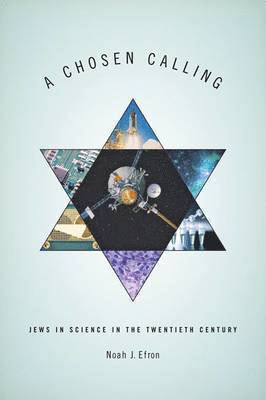
Scholars have struggled for decades to explain why Jews have succeeded extravagantly in modern science. A variety of controversial theories - from such intellects as C. P. Snow, Norbert Wiener, and Nathaniel Weyl - have been promoted. Snow hypothesized an evolved genetic predisposition to scientific success. Wiener suggested that the breeding habits of Jews sustained hereditary qualities conducive for learning. Economist and eugenicist Weyl attributed Jewish intellectual eminence to "seventeen centuries of breeding for scholars." Rejecting the idea that Jews have done well in science because of uniquely Jewish traits, Jewish brains, and Jewish habits of mind, historian of science Noah J. Efron approaches the Jewish affinity for science through the geographic and cultural circumstances of Jews who were compelled to settle in new worlds in the early twentieth century. Seeking relief from religious persecution, millions of Jews resettled in the United States, Palestine, and the Soviet Union, with large concentrations of settlers in New York, Tel Aviv, and Moscow.Science played a large role in the lives and livelihoods of these immigrants: it was a universal force that transcended the arbitrary Old World orders that had long ensured the exclusion of all but a few Jews from the seats of power, wealth, and public esteem. Although the three destinations were far apart geographically, the links among the communities were enduring and spirited. This shared experience-of facing the future in new worlds, both physical and conceptual - provided a generation of Jews with opportunities unlike any their parents and grandparents had known. The tumultuous recent century of Jewish history, which saw both a methodical campaign to blot out Europe's Jews and the inexorable absorption of Western Jews into the societies in which they now live, is illuminated by the place of honor science held in Jewish imaginations. Science was central to their dreams of creating new worlds-welcoming worlds - for a persecuted people. This provocative work will appeal to historians of science as well as scholars of religion, Jewish studies, and Zionism.