Noel M. Swerdlow – författare
Visar alla böcker från författaren Noel M. Swerdlow. Handla med fri frakt och snabb leverans.
6 produkter
6 produkter
482 kr
Skickas inom 7-10 vardagar
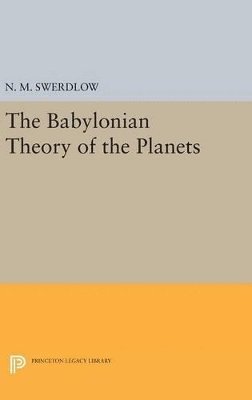
In the second millennium b.c., Babylonian scribes assembled a vast collection of astrological omens, believed to be signs from the gods concerning the kingdom's political, military, and agricultural fortunes. The importance of these omens was such that from the eighth or seventh until the first century, the scribes observed the heavens nightly and recorded the dates and locations of ominous phenomena of the moon and planets in relation to stars and constellations. The observations were arranged in monthly reports along with notable events and prices of agricultural commodities, the object being to find correlations between phenomena in the heavens and conditions on earth. These collections of omens and observations form the first empirical science of antiquity and were the basis of the first mathematical science, astronomy. For it was discovered that planetary phenomena, although irregular and sometimes concealed by bad weather, recur in limited periods within cycles in which they are repeated on nearly the same dates and in nearly the same locations. N. M.Swerdlow's book is a study of the collection and observation of ominous celestial phenomena and of how intervals of time, locations by zodiacal sign, and cycles in which the phenomena recur were used to reduce them to purely arithmetical computation, thereby surmounting the greatest obstacle to observation, bad weather. The work marks a striking advance in our understanding of both the origin of scientific astronomy and the astrological divination through which the kingdoms of ancient Mesopotamia were governed. Originally published in 1998. The Princeton Legacy Library uses the latest print-on-demand technology to again make available previously out-of-print books from the distinguished backlist of Princeton University Press. These editions preserve the original texts of these important books while presenting them in durable paperback and hardcover editions. The goal of the Princeton Legacy Library is to vastly increase access to the rich scholarly heritage found in the thousands of books published by Princeton University Press since its founding in 1905.
2 345 kr
Skickas inom 3-6 vardagar
In the second millennium b.c., Babylonian scribes assembled a vast collection of astrological omens, believed to be signs from the gods concerning the kingdom's political, military, and agricultural fortunes. The importance of these omens was such that from the eighth or seventh until the first century, the scribes observed the heavens nightly and recorded the dates and locations of ominous phenomena of the moon and planets in relation to stars and constellations. The observations were arranged in monthly reports along with notable events and prices of agricultural commodities, the object being to find correlations between phenomena in the heavens and conditions on earth. These collections of omens and observations form the first empirical science of antiquity and were the basis of the first mathematical science, astronomy. For it was discovered that planetary phenomena, although irregular and sometimes concealed by bad weather, recur in limited periods within cycles in which they are repeated on nearly the same dates and in nearly the same locations. N. M.Swerdlow's book is a study of the collection and observation of ominous celestial phenomena and of how intervals of time, locations by zodiacal sign, and cycles in which the phenomena recur were used to reduce them to purely arithmetical computation, thereby surmounting the greatest obstacle to observation, bad weather. The work marks a striking advance in our understanding of both the origin of scientific astronomy and the astrological divination through which the kingdoms of ancient Mesopotamia were governed. Originally published in 1998. The Princeton Legacy Library uses the latest print-on-demand technology to again make available previously out-of-print books from the distinguished backlist of Princeton University Press. These editions preserve the original texts of these important books while presenting them in durable paperback and hardcover editions. The goal of the Princeton Legacy Library is to vastly increase access to the rich scholarly heritage found in the thousands of books published by Princeton University Press since its founding in 1905.
495 kr
Skickas inom 7-10 vardagar
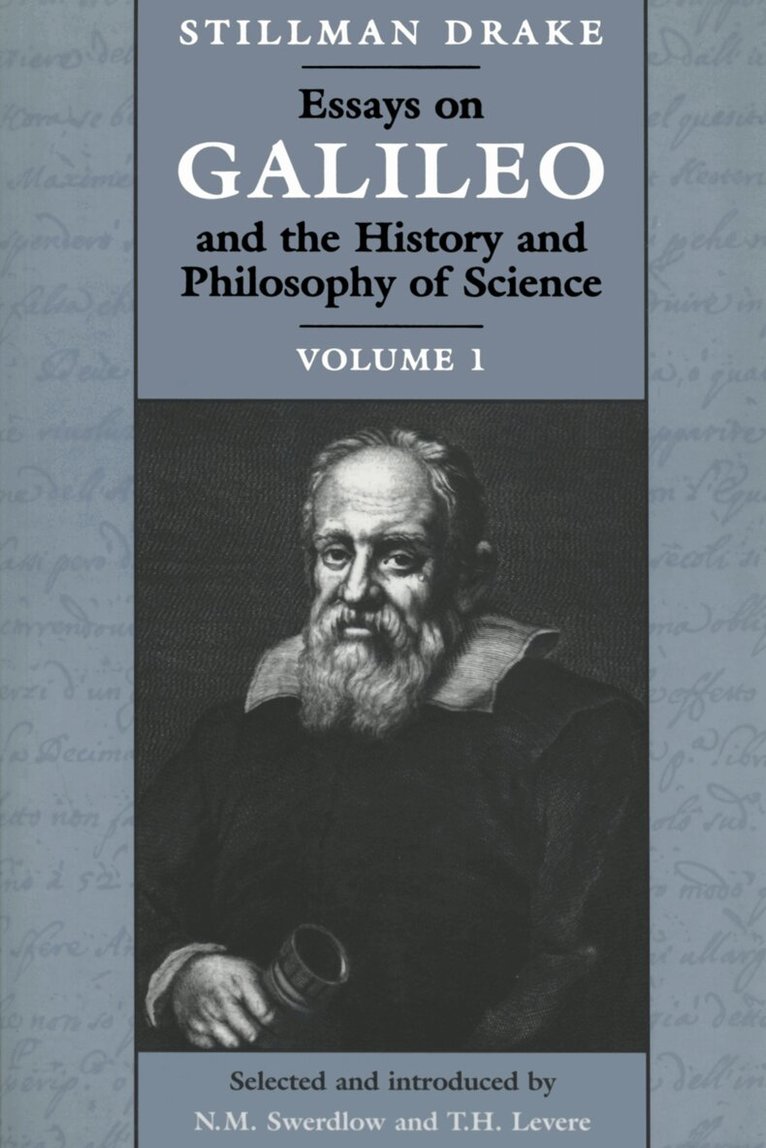
For forty years, beginning with the publication of the first modern English translation of the Dialogue Concerning the Two Chief World Systems, Stillman Drake was the most original and productive scholar of Galileo's scientific work of our age. During that time, he published sixteen books on Galileo, including translations of almost all the major writings, and Galileo at Work, the most comprehensive study of Galileo's life and works ever written. Drake also published about 130 papers, of which nearly 100 are on Galileo and the rest on related aspects of the history and philosophy of science. The three-volume collection Essays on Galileo and the History and Philosophy of Science includes 80 of those papers. Volume I contains a bibliography of the writings of Stillman Drake, biographical sketches of both Galileo and Drake, and various essays covering the broad range of Galileo's scientific endeavors, including outlines of the humanistic and religious background of his era. Other essays take up textual and bibliographical issues, analysing Galileo's mass of notes, treatises, and numerous fragments, previously collected in folios, manuscripts, and unreliable copies. Drake's wide-ranging essays cover Galileo's place in the philosophy of science, his relation to his forebears and impact on posterity, and his contribution to astronomy. In addition, the essays take up ongoing controversies, such as Galileo's stance on the affinity of science with the corpus of human knowledge. Volume I of Stillman Drake's Essays on Galileo and the History and Philosophy of Science serves as a comprehensive introduction to Galileo's life, science, and writings, and with its forthcoming companion volumes, will indeed be a fitting tribute to the memory of one of Canada's most accomplished scholars.
495 kr
Skickas inom 7-10 vardagar
For forty years, beginning with the publication of the first modern English translation of the Dialogue Concerning the Two Chief World Systems, Stillman Drake was the most original and productive scholar of Galileo's scientific work of our age. During that time, he published sixteen books on Galileo, including translations of almost all the major writings, and Galileo at Work, the most comprehensive study of Galileo's life and works ever written. Drake also published about 130 papers, of which nearly 100 are on Galileo and the rest on related aspects of the history and philosophy of science. The three-volume collection Essays on Galileo and the History and Philosophy of Science includes 80 of those papers. Volume I contains a bibliography of the writings of Stillman Drake, biographical sketches of both Galileo and Drake, and various essays covering the broad range of Galileo's scientific endeavors, including outlines of the humanistic and religious background of his era. Other essays take up textual and bibliographical issues, analysing Galileo's mass of notes, treatises, and numerous fragments, previously collected in folios, manuscripts, and unreliable copies. Drake's wide-ranging essays cover Galileo's place in the philosophy of science, his relation to his forebears and impact on posterity, and his contribution to astronomy. In addition, the essays take up ongoing controversies, such as Galileo's stance on the affinity of science with the corpus of human knowledge. Volume I of Stillman Drake's Essays on Galileo and the History and Philosophy of Science serves as a comprehensive introduction to Galileo's life, science, and writings, and with its forthcoming companion volumes, will indeed be a fitting tribute to the memory of one of Canada's most accomplished scholars.
416 kr
Skickas inom 7-10 vardagar
For forty years, beginning with the publication of the first modern English translation of the Dialogue Concerning the Two Chief World Systems, Stillman Drake was the most original and productive scholar of Galileo's scientific work. During those years, Drake published sixteen books on Galileo, including translations of almost all the major writings, and Galileo at Work, the most comprehensive study of Galileo's life and works ever written. Drake also published about 130 papers, of which nearly 100 are on Galileo and the rest on related aspects of the history and philosophy of science. The three-volume collection Essays on Galileo and the History and Philosophy of Science includes 80 of those papers. In the papers included in Volume III, Drake explores some of the more technical and practical aspects of Galileo's work, focusing on his contributions to scientific instrumentation. The essays then turn to the history of science, demonstrating the breadth of Drake's interests both beyond and relating to the work of Galileo. These interests are again evident in the final papers in the collection, in which Drake writes on the philosophy of science and language.This collection draws to conclusion Drake's writings on Galileo, capturing the influences and themes in Galileo's life and work.
4 750 kr
Kommande
The Renaissance of Astronomy provides a comprehensive, technically grounded account of the works of Regiomontanus, Copernicus, Tycho, Kepler and Galileo.