Noel Maurer - Böcker
Visar alla böcker från författaren Noel Maurer. Handla med fri frakt och snabb leverans.
8 produkter
8 produkter
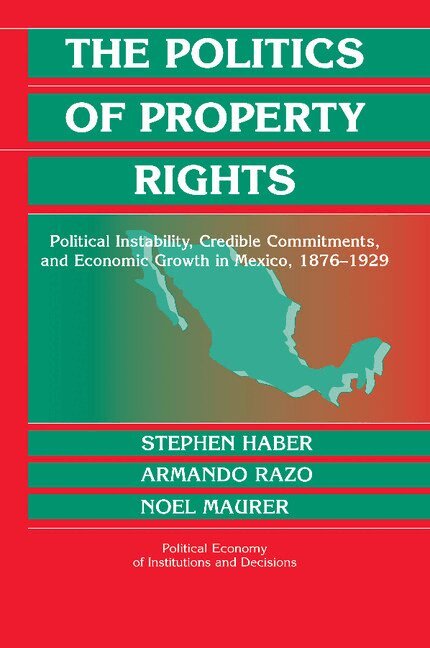
The Politics of Property Rights
Political Instability, Credible Commitments, and Economic Growth in Mexico, 1876-1929
Häftad, Engelska, 2004
448 kr
Skickas inom 7-10 vardagar
This book addresses a puzzle in political economy: why is it that political instability does not necessarily translate into economic stagnation or collapse? In order to address this puzzle, it advances a theory about property rights systems in many less developed countries. In this theory, governments do not have to enforce property rights as a public good. Instead, they may enforce property rights selectively (as a private good), and share the resulting rents with the group of asset holders who are integrated into the government. Focusing on Mexico, this book explains how the property rights system was constructed during the Porfirio Díaz dictatorship (1876-1911) and then explores how this property rights system either survived, or was reconstructed. The result is an analytic economic history of Mexico under both stability and instability, and a generalizable framework about the interaction of political and economic institutions.
334 kr
Skickas inom 7-10 vardagar
This book addresses two questions that are crucial to understanding Mexico's current economic and political challenges. Why did the opening up of the economy to foreign trade and investment not result in sustained economic growth? Why has electoral democracy not produced rule of law? The answer to those questions lies in the ways in which Mexico's long history with authoritarian government shaped its judicial, taxation, and property rights institutions. These institutions, the authors argue, cannot be reformed with the stroke of a pen. Moreover, they represent powerful constraints on the ability of the Mexican government to fund welfare-enhancing reforms, on the ability of firms and households to write contracts, and on the ability of citizens to enforce their basic rights.
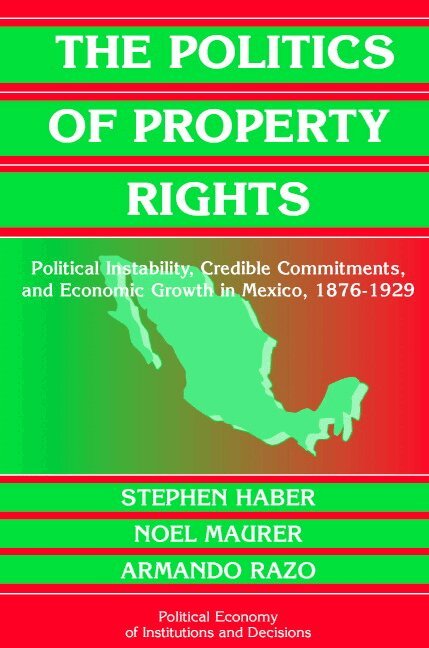
The Politics of Property Rights
Political Instability, Credible Commitments, and Economic Growth in Mexico, 1876-1929
Inbunden, Engelska, 2003
1 166 kr
Skickas inom 7-10 vardagar
This book addresses a puzzle in political economy: why is it that political instability does not necessarily translate into economic stagnation or collapse? In order to address this puzzle, it advances a theory about property rights systems in many less developed countries. In this theory, governments do not have to enforce property rights as a public good. Instead, they may enforce property rights selectively (as a private good), and share the resulting rents with the group of asset holders who are integrated into the government. Focusing on Mexico, this book explains how the property rights system was constructed during the Porfirio Díaz dictatorship (1876-1911) and then explores how this property rights system either survived, or was reconstructed. The result is an analytic economic history of Mexico under both stability and instability, and a generalizable framework about the interaction of political and economic institutions.
481 kr
Skickas inom 7-10 vardagar
This book addresses two questions that are crucial to understanding Mexico's current economic and political challenges. Why did the opening up of the economy to foreign trade and investment not result in sustained economic growth? Why has electoral democracy not produced rule of law? The answer to those questions lies in the ways in which Mexico's long history with authoritarian government shaped its judicial, taxation, and property rights institutions. These institutions, the authors argue, cannot be reformed with the stroke of a pen. Moreover, they represent powerful constraints on the ability of the Mexican government to fund welfare-enhancing reforms, on the ability of firms and households to write contracts, and on the ability of citizens to enforce their basic rights.
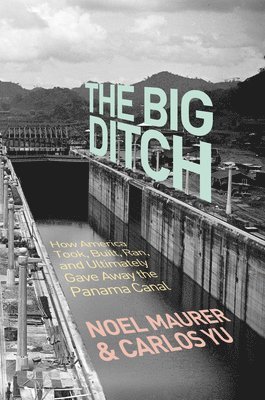
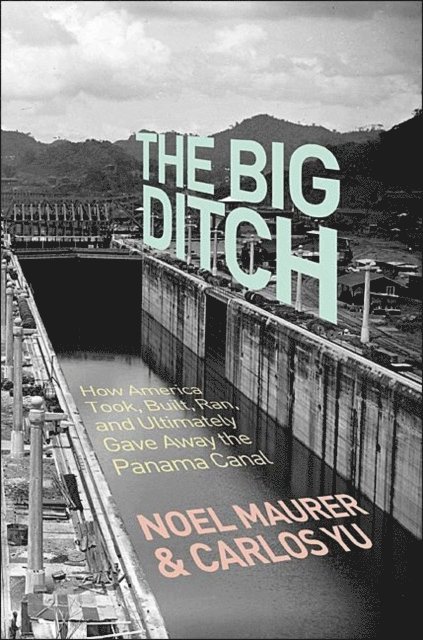
Big Ditch
How America Took, Built, Ran, and Ultimately Gave Away the Panama Canal
Inbunden, Engelska, 2010
396 kr
Skickas inom 7-10 vardagar
On August 15, 1914, the Panama Canal officially opened for business, forever changing the face of global trade and military power, as well as the role of the United States on the world stage. The Canal's creation is often seen as an example of U.S. triumphalism, but Noel Maurer and Carlos Yu reveal a more complex story. Examining the Canal's influence on Panama, the United States, and the world, "The Big Ditch" deftly chronicles the economic and political history of the Canal, from Spain's earliest proposals in 1529 through the final handover of the Canal to Panama on December 31, 1999, to the present day. The authors show that the Canal produced great economic dividends for the first quarter-century following its opening, despite massive cost overruns and delays. Relying on geographical advantage and military might, the United States captured most of these benefits. By the 1970s, however, when the Carter administration negotiated the eventual turnover of the Canal back to Panama, the strategic and economic value of the Canal had disappeared.And yet, contrary to skeptics who believed it was impossible for a fledgling nation plagued by corruption to manage the Canal, when the Panamanians finally had control, they switched the Canal from a public utility to a for-profit corporation, ultimately running it better than their northern patrons. A remarkable tale, "The Big Ditch" offers vital lessons about the impact of large-scale infrastructure projects, American overseas interventions on institutional development, and the ability of governments to run companies effectively.
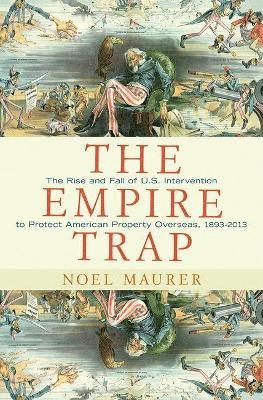
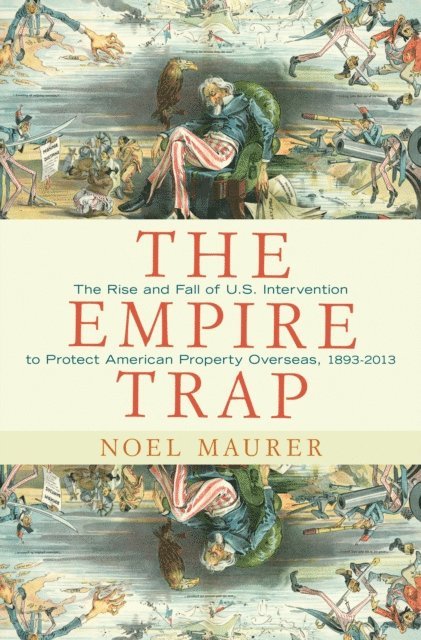
Empire Trap
The Rise and Fall of U.S. Intervention to Protect American Property Overseas, 1893-2013
Inbunden, Engelska, 2013
423 kr
Skickas inom 7-10 vardagar
Throughout the twentieth century, the U.S. government willingly deployed power, hard and soft, to protect American investments all around the globe. Why did the United States get into the business of defending its citizens' property rights abroad? The Empire Trap looks at how modern U.S. involvement in the empire business began, how American foreign policy became increasingly tied to the sway of private financial interests, and how postwar administrations finally extricated the United States from economic interventionism, even though the government had the will and power to continue. Noel Maurer examines the ways that American investors initially influenced their government to intercede to protect investments in locations such as Central America and the Caribbean. Costs were small--at least at the outset--but with each incremental step, American policy became increasingly entangled with the goals of those they were backing, making disengagement more difficult.Maurer discusses how, all the way through the 1970s, the United States not only failed to resist pressure to defend American investments, but also remained unsuccessful at altering internal institutions of other countries in order to make property rights secure in the absence of active American involvement. Foreign nations expropriated American investments, but in almost every case the U.S. government's employment of economic sanctions or covert action obtained market value or more in compensation--despite the growing strategic risks. The advent of institutions focusing on international arbitration finally gave the executive branch a credible political excuse not to act. Maurer cautions that these institutions are now under strain and that a collapse might open the empire trap once more. With shrewd and timely analysis, this book considers American patterns of foreign intervention and the nation's changing role as an imperial power.
Big Ditch
How America Took, Built, Ran, and Ultimately Gave Away the Panama Canal
Häftad, Engelska, 2023
266 kr
Skickas inom 7-10 vardagar
An incisive economic and political history of the Panama CanalOn August 15, 1914, the Panama Canal officially opened for business, forever changing the face of global trade and military power, as well as the role of the United States on the world stage. The Canal's creation is often seen as an example of U.S. triumphalism, but Noel Maurer and Carlos Yu reveal a more complex story. Examining the Canal's influence on Panama, the United States, and the world, The Big Ditch deftly chronicles the economic and political history of the Canal, from Spain's earliest proposals in 1529 through the final handover of the Canal to Panama on December 31, 1999, to the present day.The authors show that the Canal produced great economic dividends for the first quarter-century following its opening, despite massive cost overruns and delays. Relying on geographical advantage and military might, the United States captured most of these benefits. By the 1970s, however, when the Carter administration negotiated the eventual turnover of the Canal back to Panama, the strategic and economic value of the Canal had disappeared. And yet, contrary to skeptics who believed it was impossible for a fledgling nation plagued by corruption to manage the Canal, when the Panamanians finally had control, they switched the Canal from a public utility to a for-profit corporation, ultimately running it better than their northern patrons.A remarkable tale, The Big Ditch offers vital lessons about the impact of large-scale infrastructure projects, American overseas interventions on institutional development, and the ability of governments to run companies effectively.
883 kr
Skickas inom 10-15 vardagar
After its independence in 1821, Mexico experienced more than fifty years of political chaos until Porfirio Díaz assumed power in 1876. Thirty-five years later, Mexico entered another period of turbulent instability (1910-29), during which the country underwent a revolution, a counter-revolution, a counter-counter-revolution, three civil wars, and four violent coups or attempted coups. In both periods, governments repudiated debts, confiscated cash reserves, demanded forced loans, and engaged in the unrestrained printing of currency. The governments that came to power after these bouts of instability faced a crucial dilemma. They needed resources in order to impose order, yet they lacked the ability to raise significant tax revenue. The answer was to borrow—but how did governments facing armed resistance and a real chance of being overthrown credibly promise to repay their debts?Porfirio Díaz's strategy in the 1880s was to create a bank with a legal monopoly over lending to the federal government. Díaz's regime also enforced property rights to give elites tied to powerful local strongmen a stake in the political system. The threat of revolt by these strongmen assured politically connected local elites that the federal government would not attempt to confiscate their wealth. Díaz's strategy created an inefficient and concentrated banking system that interacted with the politicized nature of property rights in such a way as to produce an extremely concentrated industrial system. The Mexican Revolution (which began in 1910) violently ended the Porfirian regime but failed to alter the basic political and economic calculus. Just as Díaz had done, the leaders who attained power after 1920 selectively enforced property rights. In addition, the government created a hostage: a government-owned commercial bank. If the rules of the game were altered, the capital of the government's bank and its lucrative profits would disappear. As a result, despite ongoing violence and political instability the domestic banking system recovered rapidly during the 1920s. The result was the same as in the Porfiriato: a continuing high level of financial and industrial concentration. This is not to say that the Revolution had no effects—but in the long run, it failed to sever the ties between banks and politics. If anything, the Revolution strengthened them.