• Fri frakt över 249 kr
  • •
  • Snabba leveranser
  • •
  • Billiga böcker
Kundservice

Du är på sajten för privatpersoner.

Företag, bibliotek eller offentlig verksamhet?

Du handlar på classic.bokus.com, där alla dina funktioner finns intakta.
Till classic.bokus.com
Bokus logotyp. Gå till startsidan.
  • Erbjudanden
  • Nyheter
  • Student
  • Topplistor
  • Barn & ungdom
  • Bokus Play
  • E-böcker
  • Pocketböcker
  • Spel & pussel

10% rabatt på allt med kod: NYSTART10 →

Sidfot

Mina sidor

    Hjälp

    • Kundservice
    • Vanliga frågor och svar
    • Frakt och leverans
    • Retur vid ångerrätt
    • Reklamera vara
    • Betalning
    • Köpvillkor
    • Allmänna villkor
    • Information om webbplatsens tillgänglighet

    Om Bokus

    • Om oss
    • Pressrum
    • För studenter
    • För företag
    • För bibliotek och offentlig verksamhet
    • För leverantörer
    • Hållbarhet

    Populärt

    • Aktuella erbjudanden
    • Presentkort
    • Studentlitteratur
    • Nya böcker
    • Topplistor
    • Signerade böcker
    • Engelska böcker

    Inspiration

    • Boktips
    • BookTok
    • Populära bokserier
    • Barnbokskaraktärer
    • Populära författare
    Logotyp för Bokus
    Följ oss på Facebook (extern länk)Följ oss på Instagram (extern länk)Följ oss på YouTube (extern länk)Följ oss på TikTok (extern länk)
    bokus @ CookiesAnpassa cookiesIntegritetspolicyKöpvillkor
    Till Citymail hemsida (extern länk)Till Budbee hemsida (extern länk)Till Postnord hemsida (extern länk)Till Schenker hemsida (extern länk)Till Early Bird hemsida (extern länk)Till Walleys hemsida (extern länk)
    1. Ekonomi och Ledarskap
    2. Nationalekonomi
    3. Ekonomisk historia

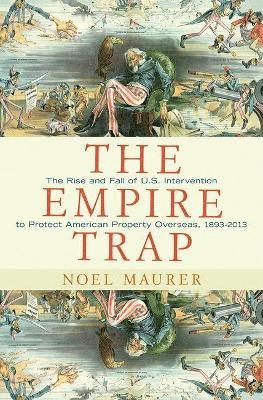
    Empire Trap

    The Rise and Fall of U.S. Intervention to Protect American Property Overseas, 1893-2013

    AvNoel Maurer

    Inbunden, Engelska, 2013

    428 kr

    Tillfälligt slut

    Fler format och utgåvor

    E-bok

    640 kr

    Beskrivning

    Throughout the twentieth century, the U.S. government willingly deployed power, hard and soft, to protect American investments all around the globe. Why did the United States get into the business of defending its citizens' property rights abroad? The Empire Trap looks at how modern U.S. involvement in the empire business began, how American foreign policy became increasingly tied to the sway of private financial interests, and how postwar administrations finally extricated the United States from economic interventionism, even though the government had the will and power to continue. Noel Maurer examines the ways that American investors initially influenced their government to intercede to protect investments in locations such as Central America and the Caribbean. Costs were small--at least at the outset--but with each incremental step, American policy became increasingly entangled with the goals of those they were backing, making disengagement more difficult.Maurer discusses how, all the way through the 1970s, the United States not only failed to resist pressure to defend American investments, but also remained unsuccessful at altering internal institutions of other countries in order to make property rights secure in the absence of active American involvement. Foreign nations expropriated American investments, but in almost every case the U.S. government's employment of economic sanctions or covert action obtained market value or more in compensation--despite the growing strategic risks. The advent of institutions focusing on international arbitration finally gave the executive branch a credible political excuse not to act. Maurer cautions that these institutions are now under strain and that a collapse might open the empire trap once more. With shrewd and timely analysis, this book considers American patterns of foreign intervention and the nation's changing role as an imperial power.

    Produktinformation

    • Utgivningsdatum:2013-08-25
    • Mått:152 x 235 x 40 mm
    • Vikt:921 g
    • Format:Inbunden
    • Språk:Engelska
    • Antal sidor:568
    • Förlag:Princeton University Press
    • ISBN:9780691155821

    Utforska kategorier

    • Ekonomisk historia inom Ekonomi och Ledarskap
    • Internationell ekonomi inom Ekonomi och Ledarskap
    • Internationella relationer inom Samhälle och politik

    Mer om författaren

    Noel Maurer is associate professor of business administration at Harvard Business School. He is the author of The Power and the Money and coauthor of The Politics of Property Rights, Mexico since 1980, and The Big Ditch (Princeton).

    Recensioner i media

    "[T]his is a very good book--cogently argued, detailed, and well-written."--Politics Reader "The Empire Trap represents an important addition to scholarship on twentieth century U.S. foreign policy. Maurer convincingly demonstrates that American investments in foreign countries were repeatedly threatened by expropriating governments and that in countless instances the United States utilized a variety of methods to protect those investments or to ensure fair compensation when they were lost."--Jeffrey Malanson, Enterprise & Society "It is impressive not only for its scope ... but also for its attention to detail in each of the cases presented. Most important, Maurer's analysis brilliantly captures a big picture that challenges much of the conventional wisdom showing how a small number of private investors draw government into one international quagmire after another because it was the only way they could have their property rights enforced."--Alan Dye, EH.Net "This is an exemplary work of historical social science, shedding light on many debates within the international relations literature."--Michael J. Lee, Perspectives on Politics

    Innehållsförteckning

    • Acknowledgments vii One Introduction 1 Two Avoiding the Trap 25 Three Setting the Trap 58 Four The Trap Closes 89 * Box 1. The Mexican Exception 137 Five Banana Republicanism 148 Six Escaping by Accident 188 Seven Falling Back In 245 Eight The Empire Trap and the Cold War 313 * Box 2. Ethiopia and Nicaragua 347 Nine The Success of the Empire Trap 350 Ten Escaping by Design? 387 Eleven The Empire Trap in the Twenty-first Century 433 Notes 453 Index 537