Nomy Arpaly – författare
Visar alla böcker från författaren Nomy Arpaly. Handla med fri frakt och snabb leverans.
9 produkter
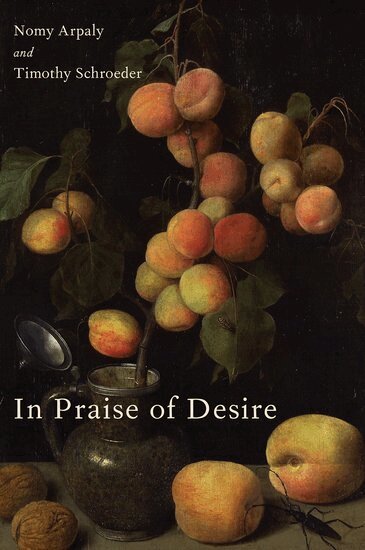
In Praise of Desire
Av Nomy Arpaly, Timothy Schroeder
Häftad, 2018
748 kr
Lägg i varukorg
Joining the ancient debate over the roles of reason and appetite in the moral mind, In Praise of Desire takes the side of appetite. The book makes the claim that acting for moral reasons, acting in a praiseworthy manner, and acting out of virtue amount to nothing more than acting out of intrinsic …
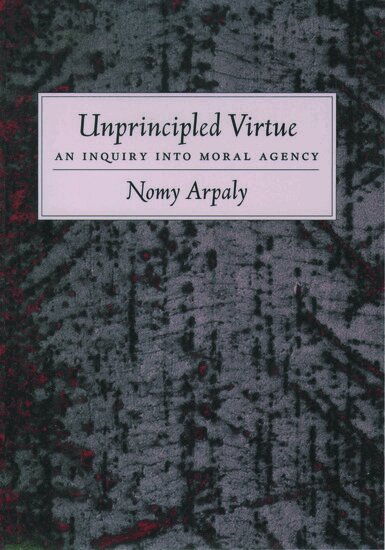
Unprincipled Virtue
An Inquiry Into Moral Agency
Av Nomy Arpaly
Inbunden, 2002
1811 kr
Lägg i varukorg
Conventional thinking about the mind - dating back to Aristotle - envisions the emotions as being directed and, to a larger extent, determined by rational thought. This picture emerges from a model of the psyche as being divided into two components, one rational and the other irrational. The …
Unprincipled Virtue
An Inquiry Into Moral Agency
Av Nomy Arpaly
Häftad, 2004
487 kr
Lägg i varukorg
Nomy Arpaly rejects the model of rationality used by most ethicists and action theorists. Both observation and psychology indicate that people act rationally without deliberation, and act irrationally with deliberation. By questioning the notion that our own minds are comprehensible to us--and …
Unprincipled Virtue
An Inquiry Into Moral Agency
Av Nomy Arpaly
E-bok, 2002
326 kr
Lägg i varukorg
Nomy Arpaly rejects the model of rationality used by most ethicists and action theorists. Both observation and psychology indicate that people act rationally without deliberation, and act irrationally with deliberation. By questioning the notion that our own minds are comprehensible to us--and …
In Praise of Desire
Av Nomy Arpaly, Timothy Schroeder
Inbunden, 2014
1628 kr
Lägg i varukorg
Joining the ancient debate over the roles of reason and appetite in the moral mind, In Praise of Desire takes the side of appetite. Acting for moral reasons, acting in a praiseworthy manner, and acting out of virtue amount to nothing more than acting out of intrinsic desires for the right or the …
In Praise of Desire
Av Timothy Schroeder, Nomy Arpaly
E-bok, 2013
514 kr
Lägg i varukorg
Joining the ancient debate over the roles of reason and appetite in the moral mind, In Praise of Desire takes the side of appetite. Acting for moral reasons, acting in a praiseworthy manner, and acting out of virtue amount to nothing more than acting out of intrinsic desires for the right or the …
Unprincipled Virtue
An Inquiry Into Moral Agency
Av Nomy Arpaly
E-bok, 2002
367 kr
Lägg i varukorg
Nomy Arpaly rejects the model of rationality used by most ethicists and action theorists. Both observation and psychology indicate that people act rationally without deliberation, and act irrationally with deliberation. By questioning the notion that our own minds are comprehensible to us--and …
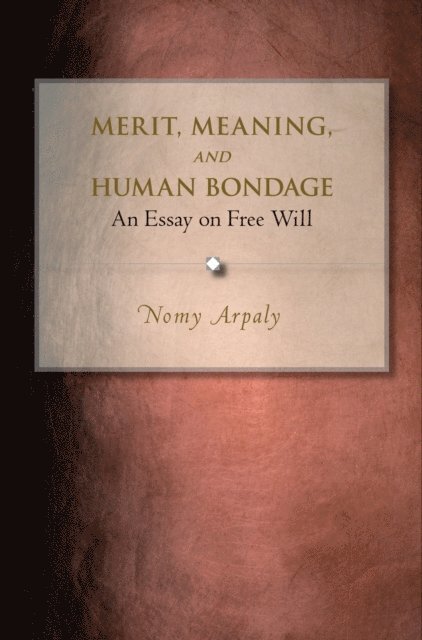
Merit, Meaning, and Human Bondage
An Essay on Free Will
Av Nomy Arpaly
Inbunden, 2006
608 kr
Lägg i varukorg
Perhaps everything we think, feel, and do is determined, and humans--like stones or clouds--are slaves to the laws of nature. Would that be a terrible state? Philosophers who take the incompatibilist position think so, arguing that a deterministic world would be one without moral responsibility and …
Merit, Meaning, and Human Bondage
An Essay on Free Will
Av Nomy Arpaly
E-bok, 2009
810 kr
Lägg i varukorg
Perhaps everything we think, feel, and do is determined, and humans--like stones or clouds--are slaves to the laws of nature. Would that be a terrible state? Philosophers who take the incompatibilist position think so, arguing that a deterministic world would be one without moral responsibility and …