Nora Claudia Lustig - Böcker
Visar alla böcker från författaren Nora Claudia Lustig. Handla med fri frakt och snabb leverans.
7 produkter
7 produkter
502 kr
Skickas inom 10-15 vardagar
Latin America is often singled out for its high and persistent income inequality. Toward the end of the 1990s, however, income concentration began to fall across the region. Of the seventeen countries for which comparable data are available, twelve have experienced a decline, particularly since 2000. This book is among the first efforts to understand what happened in these countries and why.Led by editors Felipe López-Calva and Nora Lustig, a panel of distinguished economists undertakes in-depth analyses of Argentina, Brazil, Mexico, and Peru. In addition, they provide essential background in the form of overviews of the relationship between markets and inequality, the political economy of redistribution, and the evolution of income inequality in the advanced industrialized economies. Two factors account for much of the decline in inequality: a decrease in the wage gap between skilled and low-skilled labor, and an increase in government transfers targeted to the poor.Thanks to the timeliness and sophistication of these essays, Declining Inequality in Latin America is likely to become a standard reference in its field.
282 kr
Skickas inom 10-15 vardagar
The signing of the North American Free Trade Agreement (NAFTA) was expected to signal the beginning of a new era of close co-operation between Mexico and the United States. Subsequent events, however, have introduced new tensions into the relationship. The 1995 economic collapse in Mexico sharply curtailed economic growth and lowered the demand for U.S. exports. The result has been a substantial deficit in U.S. trade with Mexico and renewed arguments that trade with Mexico reduces the employment opportunities of low-skilled workers in the United States. Immigration, both legal and illegal, has grown as a subject of contention between the two countries. Mexico has also come under increased focus as a conduit for the flow of drugs into the United States. In this book, scholars from the United States and Mexico examine the major elements of the bilateral relationship. The economic dimension is highlighted in two papers that focus on the effects of NAFTA on trade and financial transactions. The political and social dimensions are taken up in three papers on immigration, drug trafficking, and environmental concerns. The contributors include J. Enrique Espinosa and Pedro Noyola, SAI Consultores, Mexico; John Williamson, Institute for International Economics; Juan Carlos Belausteguigoitia, Ministry of the Environment, Mexico; Peter Smith, University of California, San Diego; and George Borjas, Harvard University.
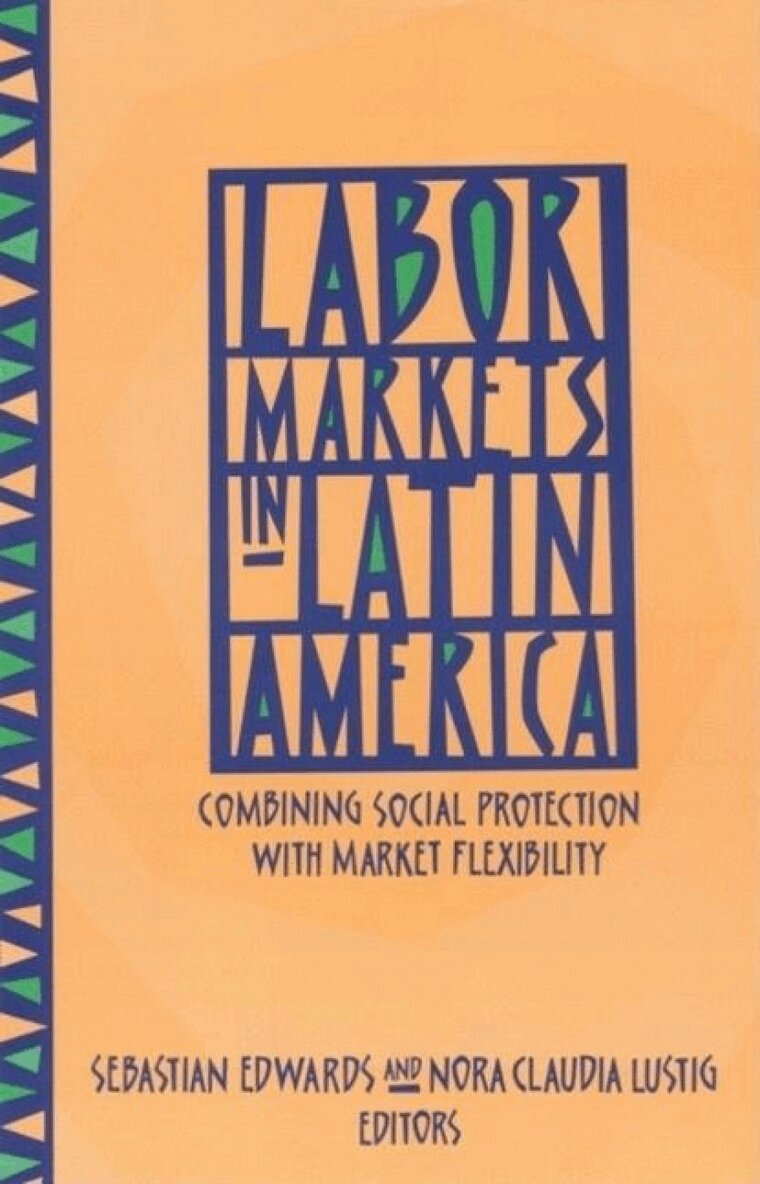
Labor Markets in Latin America
Combining Social Protection with Market Flexibility
Häftad, Engelska, 1997
310 kr
Skickas inom 10-15 vardagar
Many of the rules that govern labor markets in Latin America (and elsewhere) raise labor costs, create barriers to entry, and introduce rigidities in the employment structure. These include the exceedingly restrictive regulations on hiring and firing practices, as well as burdensome social insurance schemes. Such labor market regulations contribute to an over-expansion of precarious forms of employment and to rural poverty, and hinder countries from responding rapidly to new challenges from increased foreign competition.At the same time, other norms can reduce costs and raise productivity; they should be kept in place and their enforcement improved. For example, some occupational health and safety standards lower medical costs and save lives. One may also want to keep legislation aimed at providing a minimum social insurance for unemployment, old age, sickness, and disabilities.In practice, the most common decision that governments confront is not whether to intervene but to choose among different forms of intervention. This volume provides analysts and policymakers with useful insights on this issue. Part I addresses labor market institutions in a broader context, such as collective bargaining arrangements, minimum wages and poverty, and optimal unemployment insurance schemes. Part II analyzes labor market performance in Latin America, the links between performance and labor market regulations, and the status of labor market reform in the region. These questions are addressed for the region as a whole and in great detail for Argentina, Brazil, Chile, Mexico, and Colombia. The book provides a comprehensive description of the existing labor institutions in Latin America, the problems they pose, and the trends in labor market reforms as well as the difficulties encountered by the reform process in specific cases.In addition to the editors, the contributors are Edward Amadeo, Jose Marcio Camargo, Alejandra Cox Edwards, Rene Cortazar, Enriqu
282 kr
Skickas inom 10-15 vardagar
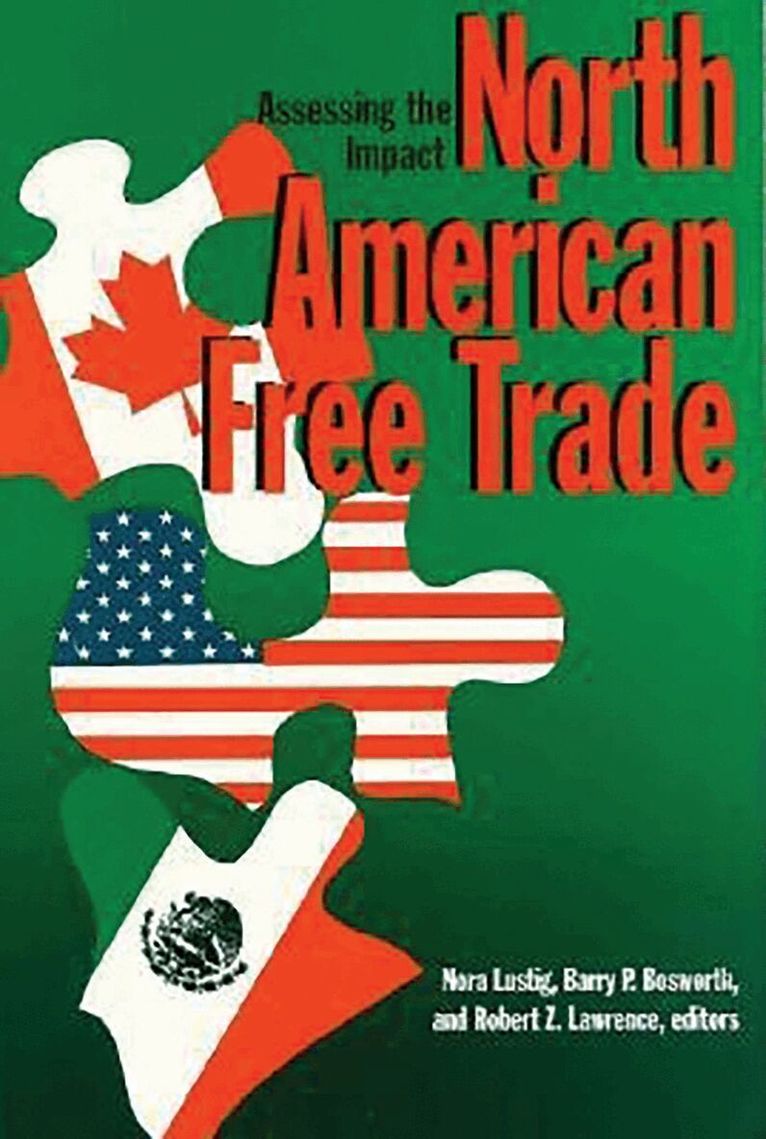
The proposed North American Free Trade Agreement (NAFTA) represents a historic change in relations among Canada, Mexico, and the United States. The effect of the agreement on the three economies has generated controversy and some degree of alarm within each country.In this book, noted trade and development experts review the available literature on the effects of NAFTA on the three member countries and the world trading system. They evaluate how NAFTA will affect areas such as economic growth, employment, income distribution, industry, and agriculture in Canada, Mexico, and the United States; and consider the significance the trade agreement holds for the rest of the world.Drusill K. Brown begins the discussion by providing an overview and comparison of the general results from recent studies. Raúl Hinojosa-Ojeda and Sherman Robinson explore in greater detail the potential effects of NAFTA on wages and employment in Mexico and the United States. Sidney Wintrab reviews industry-specific effects of NAFTA, in particular, the environment, the social agenda, and human rights and democracy. Finally, Carlos Alberto Primo Braga considers the implications of NAFTA on the rest of the world.Following each of these chapters, international scholars assess the alternatives and provide recommendations for future research.
341 kr
Skickas inom 10-15 vardagar
Concern about the pervasiveness of poverty and income inequality in Latin America goes beyond the issue of social justice. The persistence of mass poverty and inequality pits different social groups against one another and leads to a polarization that makes consistent economic policy formation difficult. National productivity may also suffer in economies with poorly educated workforces lacking adequate health care. Statistics on poverty and inequality in Latin America are rudimentary and often conflicting. Yet it is known that poverty became more widespread in the region during the last decade as it experienced economic decline. About 180 million people, or two out of every five in the area, are now living in povertysome 50 million more than in 1980. It is also known that income and wealth are far more unequally distributed in Latin America than in most other developing regions. This book provides a much-needed assessment of how poverty, inequality, and social indicators have fared in several Latin American countries over the past decade. Experts from Latin America and the U.S. focus attention on the extent of poverty and inequality and how they have been affected by the debt crisis and adjustment of the 1980s. They explain that issues of poverty and inequality were neglected as governments in Latin America struggled to restore stability and growth to their economies. Social sector spending declined sharply, affecting both the quality and quantity of services provided. The contributors examine how poverty and inequality areor are notbeing addressed in each country. They also explore the viability of alternative approaches to combating poverty and reducing inequality. They explain that virtually no one denies that governments must take a leading role in the provision of health, education, and other social services. Yet there are sharp debates--over the compatibility of social spending with economic adjustment and stabilization; the priority of social expenditures in relation to other governmental spending; the allocation of funds among different social programs; who should, and should not, benefit; and who should pay the costs. They show that the poor and middle sectors had to pay dearly because their governments, the international community, and the families themselves were not prepared to deal with austerity. The book contains eleven chapters by contributors from universities and research institutions in the U.S. and Latin America, as well as from international financial organizations. It is the result of a project cosponsored by Inter-American Dialogue.
274 kr
Skickas inom 10-15 vardagar
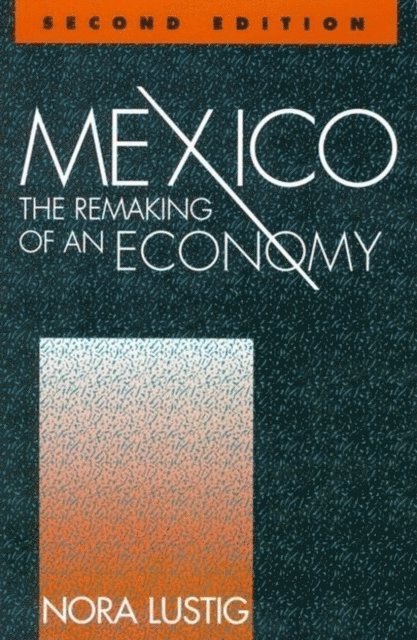
Today Mexico is viewed as a success story in the management of economic adjustment and structural reform. Inflation is under control, capital and foreign investment are returning, and out growth has increased. Mexico's recovery, however, has been neither smooth nor rapid. In mid-1982, Mexico was in deep economic crisis compounded by an unfavorable international environment. Mexico was saddled with a large foreign debt, world interest rates were high, commercial banks had stopped lending, and the price for oil was dropping. Conditions at home were no better with rampant inflation, increasing capital flight, and chaos in financial and foreign exchange markets. To confront internal imbalances and accommodate adverse external conditions, Mexico adjusted its consumption and output, then sought new ways to foster growth. The crisis and adjustment imposed great hardship and demanded enormous discipline on the part of the government. This was accomplished without serious political or social disruption. In this book, Nora Lustig analyzes Mexico's economic evolution from the outset of the debt crisis in 1982 until the sweeping reforms began to bear fruit in the early 1990s. She explains the causes of the 1982 economic crisis and why it took Mexico ""so long"" to restore stability and growth. She also explores the question of the social costs of economic crisis and adjustment, and why the process may have been easier for Mexico than other debt-ridden countries. A discussion of the emerging role of the state in Mexico and the country's new outward-oriented development strategy is followed by an analysis of its search for greater economic integration with the United States and Canada. Selected by Choice as an Outstanding Book of 1992
354 kr
Skickas inom 10-15 vardagar
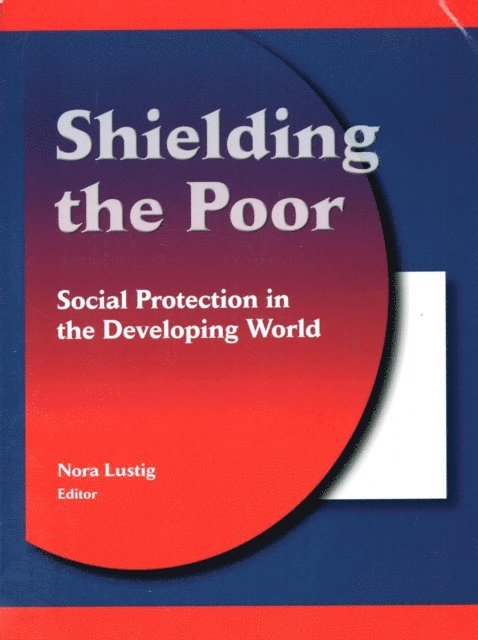
The poor in developing countries are particularly vulnerable to adverse shocks. They have little or no access to public social insurance, are unlikely to save in adequate amounts to rely fully on self-insurance or informal insurance, face restricted access to private market insurance or credit mechanisms, and have little or no political voice to demand the protection of safety net programs. In this book, the authors analyze the best ways to help the poor manage risks such as health shocks, unemployment, sudden drops in income, and old age. Unemployment benefits, employment programs, means-tested social assistance, social investment funds, and micro-finance for consumption-smoothing purposes are the leading options considered. The book provides a careful assessment of issues that governments need to address in the process of designing appropriate safety nets.