Norbert Peabody - Böcker
Visar alla böcker från författaren Norbert Peabody. Handla med fri frakt och snabb leverans.
2 produkter
2 produkter
9 041 kr
Skickas inom 7-10 vardagar
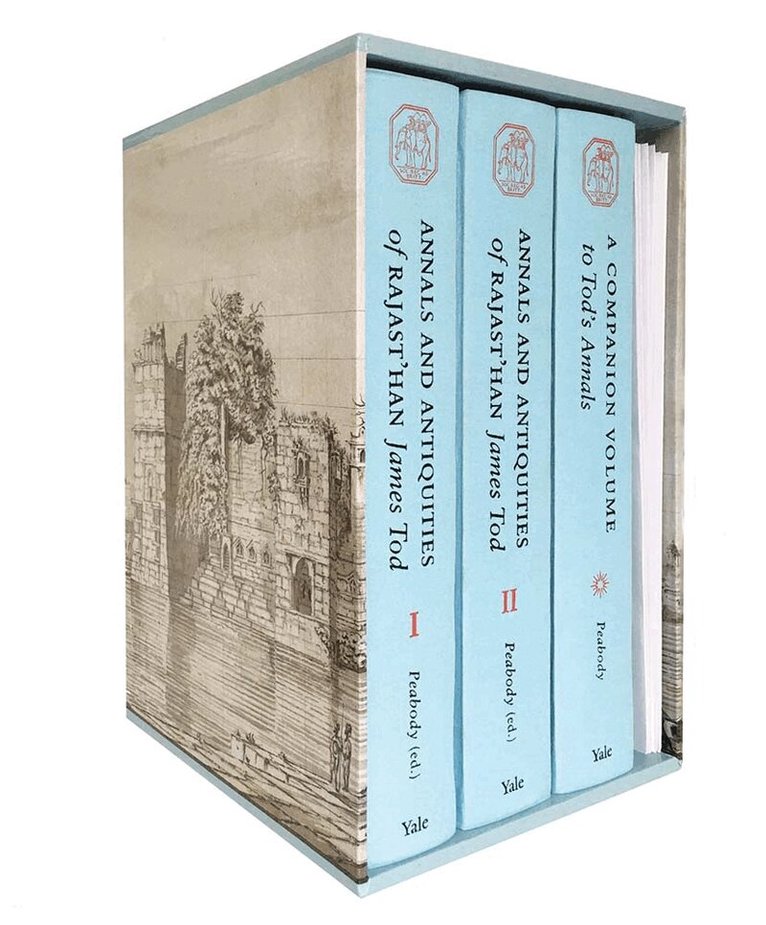
The two volumes of James Tod’s Annals and Antiquities of Rajast’han, first published in 1829–32, remain to this day the first port of call for anyone interested in the history and culture of Rajasthan and the early colonial encounter in India. Written by the first East India Company official to the region, the text was also seminal for the early figures in India’s independence movement who reworked Tod’s imagined ancient Rajput national identities into a call for India’s national liberation from British colonial rule. Now available in a numbered limited edition of 750 copies, this re-issue of the original text including over 80 original copperplate engravings, woodblock prints, and lithographs returns the text to its original state, while the accompanying companion volume critically reframes this monumental, but often misunderstood, work. The new volume shows how Tod’s Annals is not merely the product of the singular voice of a Western “orientalist” imagination, instead revealing a richly complex work in which Rajasthani voices provide a “multi-authored” heterogeneity to the text which is often discordant and unpredictable. Re-articulating the variety of voices that simultaneously inhabit Tod’s Annals, the revised volume argues for a more conjunctural, contingent, and open-ended reading of colonial history. Distributed for the Royal Asiatic Society
Del 9 - Cambridge Studies in Indian History and Society
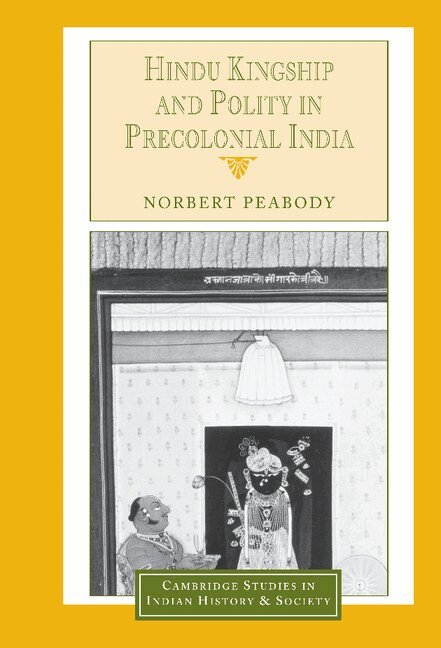
Hindu Kingship and Polity in Precolonial India
Inbunden, Engelska, 2002
1 038 kr
Skickas inom 7-10 vardagar
Through the analysis of eighteenth- and early nineteenth-century texts on the Hindu Kingdom of Kota in Rajasthan, in this 2003 book Norbert Peabody explores the ways in which historical consciousness, or memory, is culturally constructed and how this consciousness informs social experience. By building on the premise that no society receives the past in a transparent, universal and objective way, he unravels how the past in Kota has been fashioned. His analysis demonstrates how different styles of historical interpretation sustain different regimes, and how specific varieties of social and political activity are founded upon these different perceptions of the past. In this way, he suggests that different societies not only establish different co-ordinates of value in their constructions of the past, but also that the very processes of social and political transformation differ from society to society. This is a fascinating and challenging book which promises to become a classic in the field.