Norman Gevitz – Författare
Visar alla böcker från författaren Norman Gevitz. Handla med fri frakt och snabb leverans.
4 produkter
4 produkter
1 039 kr
Skickas inom 10-15 vardagar
For decades, educators, historians, and social commentators accorded major responsibility for the reform of medical education in the United States to the Flexner Report of 1910. More recently, historians have begun to challenge the impact of the Report and the desirability of the changes attributed to it. This volume takes the themes articulated in the Report and traces their development. With each theme being discussed by a specialist in the subject area, the book provides a comprehensive review of medical education in the twentieth century.These themes, many of which have not been discussed in other books, include the basic sciences, the clinical curriculum, women in medicine, black medical education, and sectarian medical education. In addition, the volume includes chapters on the evolution of the health care delivery system, trends in financing medical education, the use of outpatient settings for clinical education, the current status of the medical curriculum and needed changes, and health manpower needs. The work concludes with a chapter discussing the current proposals for change and how they relate to the problems and reforms of the Flexner era. The work will be of interest to medical school administrators, policy makers, and faculty members as well as to practicing physicians.

365 kr
Skickas inom 7-10 vardagar
Sixty million Americans have relied at some point in their lives on osteopaths, chiropractors, folk or religious healers, naturopaths, homeopaths, and acupuncturists; millions more employ alternative psychological systems, unorthodox diet and fitness programs, and a range of self-help treatments. Yet until recently, most historians and social scientists of medicine have assumed that unorthodox movements were of comparatively minor significance in the study of medicine and society. In "Other Healers" Norman Gevitz and eight other authors explore the most significant alternatives to orthodox medicine to have gained a place in American society from the early 19th century to the present. Neither advocating nor debunking these alternatives, they explore phenomena that range from Thomsonism, the early botanical system that was progenitor of the first native American sects,to the faith-healing of contemporary pentecostals and charasmatics; from the Water Cure Movement, which provided important support for the efforts of early feminist reformers, to osteopathy, whose practitioners are now licensed to offer the same range of services as M.D.'s.
740 kr
Skickas inom 11-20 vardagar
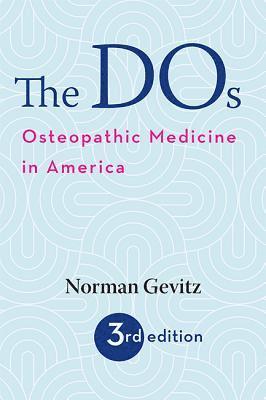
A comprehensive portrait of the osteopathic medical profession.Overcoming suspicion, ridicule, and outright opposition from the American Medical Association, the osteopathic medical profession today serves the health needs of more than thirty million Americans. Osteopathic medicine is now the fastest-growing segment of the US physician and surgeon population. In The DOs, historian Norman Gevitz chronicles the development of this controversial medical movement from its nineteenth-century origins in the American Midwest to the present day. He describes the philosophy and practice of osteopathy, as well as the impact of osteopathic medicine on health care.In print continuously since 1982, The DOs has now been thoroughly updated and expanded. From the theories underlying the use of spinal manipulation developed by osteopathy's founder, Andrew Taylor Still, Gevitz traces the movement's early success, despite attacks from the orthodox medical community. He also recounts the efforts of osteopathic medical colleges to achieve parity with institutions granting MD degrees and looks at the continuing effort by osteopathic physicians and surgeons to achieve greater recognition and visibility.Bringing additional light to the philosophical origins and practices of the osteopathic movement, as well as the historic debates about which degree to offer its graduates, this volume • chronicles the challenges the profession has faced in the early decades of the twenty-first century • addresses recent challenges to the osteopathic medical profession• explores efforts at preserving osteopathy's autonomy and distinctiveness• offers a new perspective on the future of osteopathic medicine Based on an extensive examination and evaluation of primary sources, as well as countless interviews with individuals both inside and outside osteopathic medicine, The DOs is the definitive history of the osteopathic medical profession.
419 kr
Skickas inom 7-10 vardagar
A comprehensive portrait of the osteopathic medical profession.Overcoming suspicion, ridicule, and outright opposition from the American Medical Association, the osteopathic medical profession today serves the health needs of more than thirty million Americans. Osteopathic medicine is now the fastest-growing segment of the US physician and surgeon population. In The DOs, historian Norman Gevitz chronicles the development of this controversial medical movement from its nineteenth-century origins in the American Midwest to the present day. He describes the philosophy and practice of osteopathy, as well as the impact of osteopathic medicine on health care.In print continuously since 1982, The DOs has now been thoroughly updated and expanded. From the theories underlying the use of spinal manipulation developed by osteopathy's founder, Andrew Taylor Still, Gevitz traces the movement's early success, despite attacks from the orthodox medical community. He also recounts the efforts of osteopathic medical colleges to achieve parity with institutions granting MD degrees and looks at the continuing effort by osteopathic physicians and surgeons to achieve greater recognition and visibility.Bringing additional light to the philosophical origins and practices of the osteopathic movement, as well as the historic debates about which degree to offer its graduates, this volume • chronicles the challenges the profession has faced in the early decades of the twenty-first century • addresses recent challenges to the osteopathic medical profession• explores efforts at preserving osteopathy's autonomy and distinctiveness• offers a new perspective on the future of osteopathic medicine Based on an extensive examination and evaluation of primary sources, as well as countless interviews with individuals both inside and outside osteopathic medicine, The DOs is the definitive history of the osteopathic medical profession.