Norman Owen - Böcker
Visar alla böcker från författaren Norman Owen. Handla med fri frakt och snabb leverans.
5 produkter
5 produkter
3 361 kr
Skickas inom 10-15 vardagar
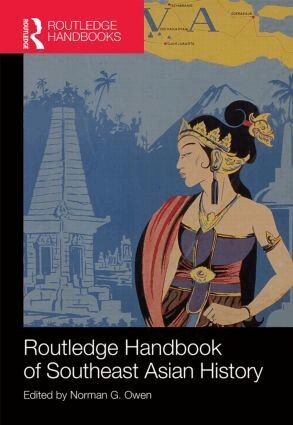
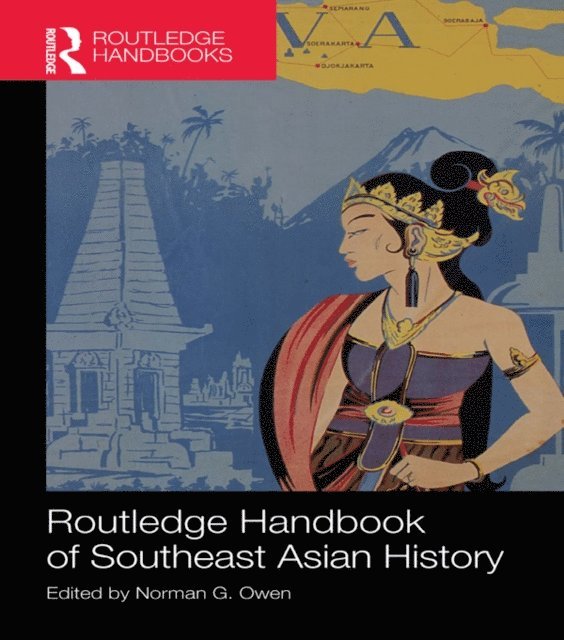
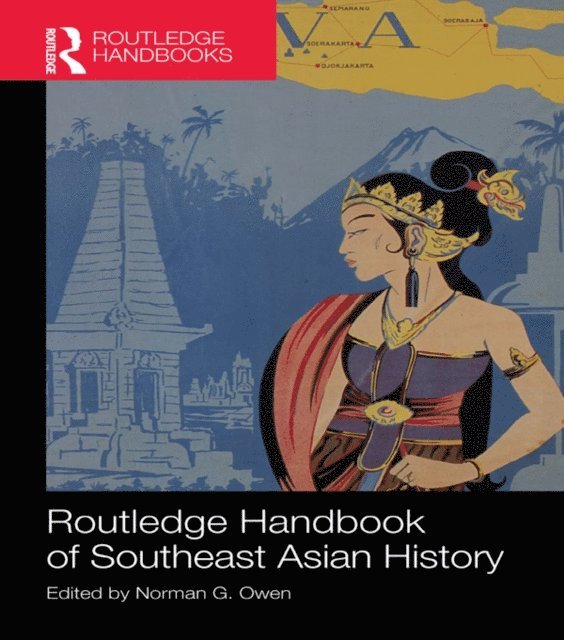
The study of the history of Southeast Asia is still growing, evolving, deepening and changing as an academic field. Over the past few decades historians have added nuance to traditional topics such as Islam and nationalism, and created new ones, such as gender, globalization and the politics of memory. The Routledge Handbook of Southeast Asian History looks at the major themes that have developed in the study of modern Southeast Asian history since the mid-18th century.Contributions by experts in the field are clustered under three major headings - Political History, Economic History, and Social and Cultural History – and chapters challenge the boundaries between topics and regions. Alongside the rise and fall of colonialism, topics include conflict in Southeast Asia, tropical ecology, capitalism and its discontents, the major religions of the region, gender, and ethnicity. The Handbook provides a stimulating introduction to the most important themes within the subject area, and is an invaluable reference work for any student and researcher on Southeast Asia and Asian and World history.
Prosperity without Progress
Manila Hemp and Material Life in the Colonial Philippines
Häftad, Engelska, 2022
835 kr
Skickas inom 3-6 vardagar
Prosperity without Progress: Manila Hemp and Material Life in the Colonial Philippines offers a compelling examination of Kabikolan's transformation from a subsistence agrarian economy to a commercialized export sector based on abaca (Manila hemp) production. The study situates the region's economic history within the broader expansion of the European-dominated world-system, contributing to global historiographical debates on capitalism, colonialism, and economic dependency. While many narratives of colonial economies focus on coercion and large-scale plantations, this book highlights an alternative path—one in which indigenous landowners adapted to market forces without direct European intervention. However, the paradox at the heart of Kabikolan's experience—temporary material gains without sustained economic progress—challenges simplistic models of capitalist development.This case study offers critical insights into why peripheral economies often fail to achieve long-term prosperity despite integration into global markets. The book details the rise and decline of the abaca industry, examining the constraints imposed by colonial rule, the persistence of a strong subsistence economy, and the limited diversification of economic activities. While Kabikolan avoided the extreme exploitation seen in other colonies, its development remained incomplete, illustrating the broader dilemma of "prosperity without progress." Through meticulous archival research and engagement with economic theory, Prosperity without Progress provides a nuanced perspective on the history of capitalism in the Philippines and beyond, making it an essential read for scholars of economic history, colonial studies, and global development.This title is part of UC Press's Voices Revived program, which commemorates University of California Press’s mission to seek out and cultivate the brightest minds and give them voice, reach, and impact. Drawing on a backlist dating to 1893, Voices Revived makes high-quality, peer-reviewed scholarship accessible once again using print-on-demand technology. This title was originally published in 1984.
Prosperity without Progress
Manila Hemp and Material Life in the Colonial Philippines
Inbunden, Engelska, 2022
1 513 kr
Skickas inom 3-6 vardagar
Prosperity without Progress: Manila Hemp and Material Life in the Colonial Philippines offers a compelling examination of Kabikolan's transformation from a subsistence agrarian economy to a commercialized export sector based on abaca (Manila hemp) production. The study situates the region's economic history within the broader expansion of the European-dominated world-system, contributing to global historiographical debates on capitalism, colonialism, and economic dependency. While many narratives of colonial economies focus on coercion and large-scale plantations, this book highlights an alternative path—one in which indigenous landowners adapted to market forces without direct European intervention. However, the paradox at the heart of Kabikolan's experience—temporary material gains without sustained economic progress—challenges simplistic models of capitalist development.This case study offers critical insights into why peripheral economies often fail to achieve long-term prosperity despite integration into global markets. The book details the rise and decline of the abaca industry, examining the constraints imposed by colonial rule, the persistence of a strong subsistence economy, and the limited diversification of economic activities. While Kabikolan avoided the extreme exploitation seen in other colonies, its development remained incomplete, illustrating the broader dilemma of "prosperity without progress." Through meticulous archival research and engagement with economic theory, Prosperity without Progress provides a nuanced perspective on the history of capitalism in the Philippines and beyond, making it an essential read for scholars of economic history, colonial studies, and global development.This title is part of UC Press's Voices Revived program, which commemorates University of California Press’s mission to seek out and cultivate the brightest minds and give them voice, reach, and impact. Drawing on a backlist dating to 1893, Voices Revived makes high-quality, peer-reviewed scholarship accessible once again using print-on-demand technology. This title was originally published in 1984.
190 kr
Skickas inom 7-10 vardagar
This volume is a manifestation of the continuing interest of scholars at the University of Michigan in Philippine studies. Written by a generation of post-colonial scholars, it attempts to unravel some of the historical problems of the colonial era. Again and again the authors focus on the relationship of the ilustrados and the Americans, on the problems of continuity and discontinuity, and on the meaning of “modernization” in the Philippine context. As part of the Vietnam generation, these authors have looked at American imperialism with a new perspective, and yet their analysis is tempered, not strident, and reflective, not dogmatic. Perhaps the most central theme to emerge is the depth of the contradiction inherent in the American colonial experiment. [vi-vii]
1 068 kr
Skickas inom 10-15 vardagar
The study of the history of Southeast Asia is still growing, evolving, deepening and changing as an academic field. Over the past few decades historians have added nuance to traditional topics such as Islam and nationalism, and created new ones, such as gender, globalization and the politics of memory. Now available in paperback, The Routledge Handbook of Southeast Asian History looks at the major themes that have developed in the study of modern Southeast Asian history since the mid-18th century.Contributions by experts in the field are clustered under three major headings - Political History, Economic History, and Social and Cultural History – and chapters challenge the boundaries between topics and regions. Alongside the rise and fall of colonialism, topics include conflict in Southeast Asia, tropical ecology, capitalism and its discontents, the major religions of the region, gender, and ethnicity. The Handbook provides a stimulating introduction to the most important themes within the subject area, and is an invaluable reference work for any student and researcher on Southeast Asia and Asian and World history.