Northwestern University Press – författare
Visar alla böcker från författaren Northwestern University Press. Handla med fri frakt och snabb leverans.
19 produkter
19 produkter
368 kr
Tillfälligt slut
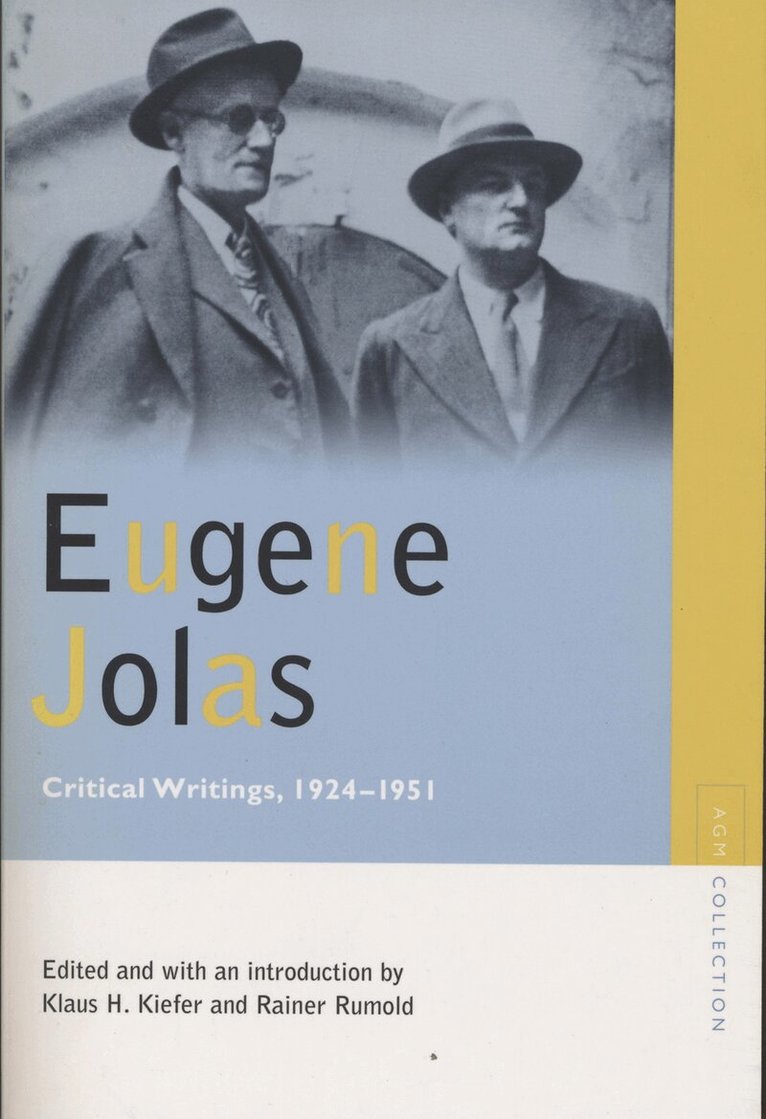
Dividing his youth between the United States and the bilingual Alsace-Lorraine, Eugene Jolas (1894-1952) flourished in three languages. As an editor and poet, he came to know the major writers and artists of his time and enjoyed a pivotal position between the Anglo-American and Continental avant-garde. His editorship of transition, the leading avant-garde journal of Paris in the twenties and early thirties, provided a major impetus to writers from James Joyce (whose ""Finnegans Wake"" was serialized in transition) to Gertrude Stein, and Samuel Beckett, with first translations of Andre Breton, and Franz Kafka, among others. Jolas' critical work, collected in this volume, includes introductions to anthologies, manifestoes like the famous Vertical, essays, some published here for the first time, on writers as various as Novalis, Trakl, the major Surrealists, Heidegger, and other philosophers. An acute observer of the literary scene as well as of the roiling politics of the time, Jolas emerges here in his role at the very center of avant-garde activity between the wars. Accordingly, this book is of signal importance to anyone with an interest in modernism, avant-garde, multilingualism, and the culture of Western Europe in the first half of the twentieth century.
648 kr
Skickas inom 5-8 vardagar
The gripping tale of a handsome and charismatic young sailor who runs afoul of his ship's master-at-arms, is falsely accused of inciting a mutiny, and hung, Billy Budd, Sailor is often treated as a masterpiece, a canonical work. But that assessment is at least partly founded on the assumption that the story was complete and ready for publication when it was left among the manuscripts on Melville's writing desk when he died in 1891. As Hershel Parker has pointed out, -It is a wonderfully teachable story--as long as it is not taught as a finished, complete, coherent, and totally interpretable work of art.- Furthering Melville's goal of getting his last literary projects into print, even in their imperfect forms, this last volume in the edition presents the poetry and prose that Melville was unable to finish, his sometimes ineffectual, sometimes heroic purposes betrayed by death. These unfinished writings include, besides Billy Budd, two projected volumes containing poems and prose pieces, Weeds and Wildings and Parthenope; three prose pieces, Rammon, Story of Daniel Orme, and Under the Rose; and some three dozen poems of varying lengths. Some of these pieces were surely composed late in Melville's career, during his retirement, but others may date to as early as the 1850s. Except for Billy Budd, many of these works have not been available in reliable texts, when available at all. This volume, the result of the editors' meticulous study of the manuscripts, offers new reading texts, with significant corrections of words, phrases, and titles, the inclusion of heretofore unpublished lines of verse, and the return to their original locations of the two poems, The Enviable Isles and Pausilippo, - that Melville had extracted for use in John Marr (1888) and Timoleon (1891). Hershel Parker's Historical Note traces how these writings fit into the trajectory of Melville's career, and the rest of the Editorial Appendix presents the scholarly evidence and decisions made in creating the reading texts. As a whole, the Northwestern-Newberry Edition of The Writings of Herman Melville, now complete in fifteen volumes, offers for the first time the total body of Melville's extant writings in a critical text, faithful to his intentions.
281 kr
Skickas inom 11-20 vardagar
252 kr
Skickas inom 5-8 vardagar
221 kr
Skickas inom 5-8 vardagar
419 kr
Skickas inom 5-8 vardagar
The 'texts' of Russian artist and thinker Daniil Kharms (1905-1942) were so many and varied and often unique (narrative, dramatic, philosophical, poetic, mathematical, pictographic, diagrammatic, musical, biographical) that they defied categorization - and, thus, thorough study or appreciation - through much of the twentieth century. This book, the first in English to view Kharms' oeuvre in its entirety, is also the first to offer a complete, inclusive, and coherent understanding of the overall project of this artist and writer now considered a major figure in the modernist canon of Europe. The book follows Kharms' development as a creative thinker, inquiring into the nature of Kharmsian nonsense, the ontological status of the OBERIU object, writing as performance, Kharms' gestural language, his 'language machines', and his ideas of order, number, infinity, and chance. Reading every paper trace (as well as extant memories) of Kharms' activities as part of a large project of world creation, Branislav Jakovljevic situates him in a twentieth-century effort - exemplified by Kafka, Beckett, Artaud, Malevich, and Khelbnikov, among others - to go beyond an interpretation of meaning circumscribed by rational and logical thought. Examining texts that could conceivably be called 'literary' as well as sketches, diagrams, hieroglyphs, photographs, and unclassifiable others, Jakovljevic's study is the first to provide a properly broad perspective on this creative thinker's farranging, far-reaching, and finally comprehensive achievement.
961 kr
Skickas inom 5-8 vardagar
In this elegant new study, Galen Johnson retrieves the concept of the beautiful through the framework of Merleau-Ponty's aesthetics. Although Merleau-Ponty seldom spoke directly of beauty, his philosophy is essentially about the beautiful. In Johnson's formulation, the ontology of Flesh as element and the ontology of the Beautiful as elemental are folded together, for Desire, Love, and Beauty are part of the fabric of the world's element, Flesh itself, the term at which Merleau-Ponty arrived to replace Substance, Matter, or Life as the name of Being. Merleau-Ponty's ""Eye and Mind"" is at the core of the book, so Johnson engages, as Merleau-Ponty did, the writings and visual work of Paul Cezanne, Auguste Rodin, and Paul Klee, as well as Rilke's commentary on Cezanne and Rodin. From these widely varying aesthetics emerge the fundamental themes of the retrieval of the beautiful: desire, repetition, difference, rhythm, and the sublime. The third part of Johnson's book takes each of these up in turn, bringing Merleau-Ponty's aesthetic thinking into dialogue with classical philosophy as well as Sartre, Heidegger, Nietzsche, and Deleuze. Johnson concludes his final chapter with a direct dialogue with Kant and Merleau-Ponty, and also Lyotard, on the subject of the beautiful and the sublime. As we experience with Rodin's Balzac, beauty and the sublime blend into one another when the beautiful grows powerful, majestic, mysterious, and transcendent.
365 kr
Skickas inom 5-8 vardagar
In this elegant new study, Galen Johnson retrieves the concept of the beautiful through the framework of Merleau-Ponty's aesthetics. Although Merleau-Ponty seldom spoke directly of beauty, his philosophy is essentially about the beautiful. In Johnson's formulation, the ontology of Flesh as element and the ontology of the Beautiful as elemental are folded together, for Desire, Love, and Beauty are part of the fabric of the world's element, Flesh itself, the term at which Merleau-Ponty arrived to replace Substance, Matter, or Life as the name of Being. Merleau-Ponty's ""Eye and Mind"" is at the core of the book, so Johnson engages, as Merleau-Ponty did, the writings and visual work of Paul Cezanne, Auguste Rodin, and Paul Klee, as well as Rilke's commentary on Cezanne and Rodin. From these widely varying aesthetics emerge the fundamental themes of the retrieval of the beautiful: desire, repetition, difference, rhythm, and the sublime. The third part of Johnson's book takes each of these up in turn, bringing Merleau-Ponty's aesthetic thinking into dialogue with classical philosophy as well as Sartre, Heidegger, Nietzsche, and Deleuze. Johnson concludes his final chapter with a direct dialogue with Kant and Merleau-Ponty, and also Lyotard, on the subject of the beautiful and the sublime. As we experience with Rodin's Balzac, beauty and the sublime blend into one another when the beautiful grows powerful, majestic, mysterious, and transcendent.
297 kr
Skickas inom 5-8 vardagar
Linking new readings of Fyodor Dostoevsky, Isaac Babel, and Osip Mandelstam to the work of Franco-Jewish philosopher Emmanuel Levinas, ""The Trace of Judaism"" asks: how does Judaism haunt Russian literature; in what ways is Levinas' ethics as 'Russian' as it is arguably 'Jewish'; and, more broadly, how do ethics and aesthetics inflect each other. Vinokur considers how the encounter with the other invokes responsibilities ethical and aesthetic, and shows how the volatile relationship between ethics and aesthetics - much like the connection between the Russian and Jewish traditions - may be inextricably symbiotic. In an ambitious work that illuminates the writings of all of these authors, Vinokur pursues the implications of this reading for our understanding an ethical function of literature.
422 kr
Skickas inom 3-6 vardagar
The Julius Rosenwald Fund has been largely ignored in the literature of both art history and African American studies, despite its unique focus, intensity, and commitment. Spertus Museum in Chicago has organized an exhibition, guest curated by Daniel Schulman, that presents and explores the work of funded artists as well as the history of the Fund. Through it, and this accompanying collection of essays, illustrations, and color plates, we see the Fund's groundbreaking initiative to address issues relating to the unequal treatment of blacks in American life. The book constitutes a veritable who's who of African American artists and intellectuals of the first half of the twentieth century, as well as a roll call of modern contributors who represent the leading scholars in their fields, including Peter M. Ascoli, grandson and biographer of Julius Rosenwald, and Kinshasha Holman Conwill, deputy director of the National Museum of African American Art and Culture. With far-reaching influence even today, the Julius Rosenwald Fund stands alongside the Rockefeller and Carnegie funds as a major force in American cultural history. This book takes an illuminating look at an innovative fund and the opportunities it brought to African American artists.
400 kr
Skickas inom 3-6 vardagar
In our time, Ted Toadvine observes, the philosophical question of nature is almost entirely forgotten - obscured in part by a myopic focus on solving 'environmental problems' without asking how these problems are framed. But an 'environmental crisis', existing as it does in the human world of value and significance, is at heart a philosophical crisis. In this book, Toadvine demonstrates how Maurice Merleau-Ponty's phenomenology has a special power to address such a crisis - a philosophical power far better suited to the questions than other modern approaches, with their over-reliance on assumptions drawn from the natural sciences. The book examines key moments in the development of Merleau-Ponty's philosophy of nature while roughly following the historical sequence of his major works. Toadvine begins by setting out an ontology of nature proposed in Merleau-Ponty's first book, ""The Structure of Behavior"". He takes up the theme of the expressive role of reflection in Phenomenology of Perception, as it negotiates the area between nature's own 'self-unfolding' and human subjectivity. Merleau-Ponty's notion of 'intertwining' and his account of space provide a transition to Toadvine's study of the philosopher's later work - in which the concept of 'chiasm', the crossing or intertwining of sense and the sensible, forms the key to Merleau-Ponty's mature ontology - and ultimately to the relationship between humans and nature.
247 kr
Skickas inom 5-8 vardagar
Poet Karen Gershon (1923-1993) opens ""A Tempered Wind"", the sequel to volume 1 of her autobiography ""A Lesser Child"", in 1943. It begins tragically with the death of Karen's sister Anne in England, where they had escaped from Nazi Germany with their third sister Lise via the Kinder-transport mission. ""A Tempered Wind"" proceeds to chart the difficult period from 1939 to 1943 as Karen adapts to a new culture and undertakes the complicated passage from adolescence to adulthood in the British Isles. Now orphans - their parents were murdered by the Nazis - the sisters are separated, and Karen is left haunted by feelings of abandonment by her sister as well as her parents who sent her away from them. Such feelings, along with her struggle with her imperiled Jewish identity, make their way into Karen's writing, which includes stories, essays, and poems. In writing, she starts to find a home in language. Charting the creative growth of an astonishing Jewish author, ""A Tempered Wind"" concludes with Karen making her own urgent way as a writer with a mission to tell the world her archetypal German Jewish story.
244 kr
Tillfälligt slut
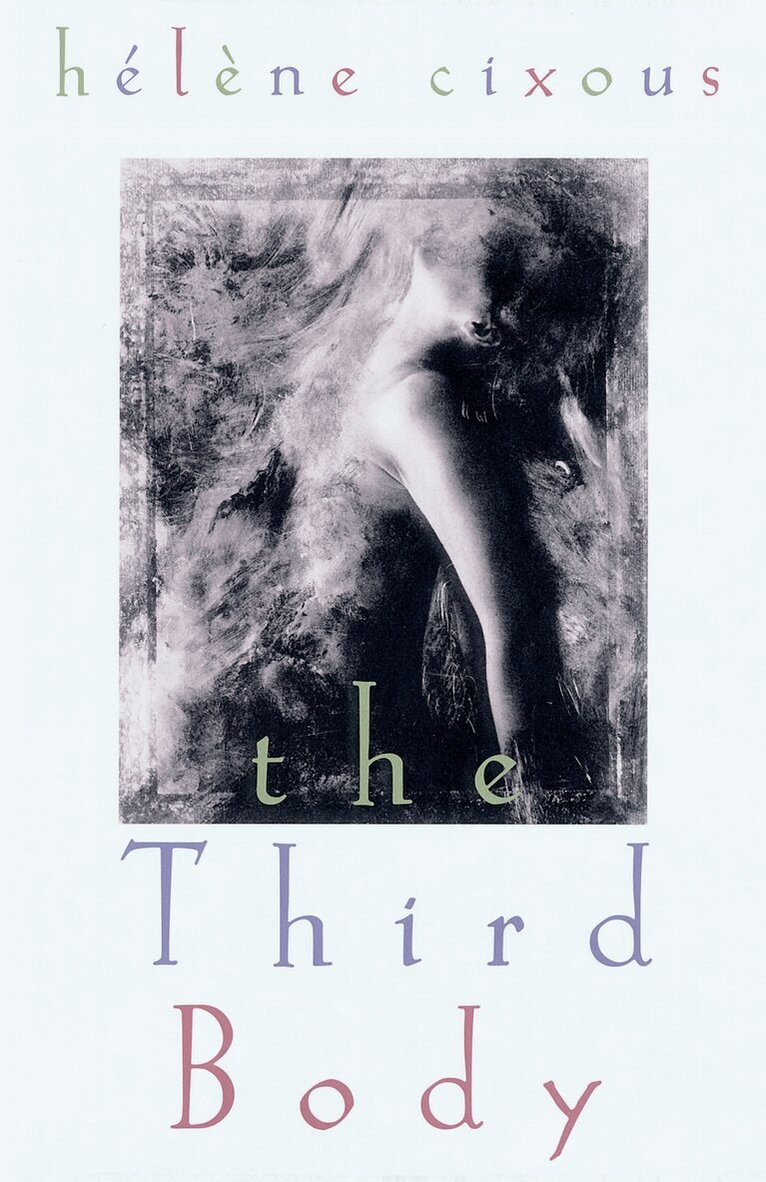
In ""The Third Body"", the poet, novelist, feminist critic, and theorist Helene Cixous interweaves a loose narrative line with anecdotes, autobiography, lyricism, myth, dream, fantasy, philosophical insights, and intertextual citations of and conversations with other authors and thinkers. Cixous evokes the relationship of the female narrator and her lover, a relationship of alternating presences and absences, separations and rejoinings. This relationship assumes protean forms within a complex web of writing, creating a 'third body' out of the entwined bodies of the narrator and her lover.
221 kr
Skickas inom 5-8 vardagar
Irene is a fragile woman born to a German family in Romania, who has recently emigrated from her native country to West Germany. Politically and socially isolated, Irene moves within the orbit of three troubled men, while simultaneously embarking on an inner exploration of exile, homeland, and identity. ""The action in this volume may be slight, but Irene's innermost consciousness--where the political has indeed become the personal--is magnificently portrayed."" --New York Times Book Review ""[A] profound story of dislocation."" --Kirkus Reviews
222 kr
Skickas inom 5-8 vardagar
238 kr
Skickas inom 3-6 vardagar
A new edition of this collection of pieces written on Stark's first journey to the Middle East, in 1928. Over the next four years she travelled alone in Iraq and Persia at a time when this area was gaining new world-wide importance, which imbued her essays with a freshness and originality which is still apparent today.
316 kr
Skickas inom 3-6 vardagar
An account of life on Ireland's western isles by the Irish playwright.
175 kr
Skickas inom 5-8 vardagar
Prison writing has a long and illustrious history in the United States - home of the modern correctional system. In the first decade of the 21st century, this country also garnered the distinction of having more prisoners per capita than any other nation in the world. We need to hear from the incarcerated writings of incarcerated men and women. The largest state prison system is in California with some 175,000 people behind bars in close to 35 facilities. Yet the only approved Honor Yard in the Department of Corrections is at the California State Prison, Los Angeles County, in Lancaster, California. These are the men that despite often-horrendous crimes - many are lifers, with a few going on three decades - have proven their capacity to dream, to create, to write, to change. From poems, to stories, to novel excerpts, to reportage, to personal essays - and a few drawings - ""Honor Comes Hard"" depicts what can happen to people who are given, as Clarence Darrow expressed many years ago, 'a chance to live'. The work is drawn from writing classes that Lucinda Thomas helped organize in the Honor Yard over several years, and from workshops conducted by Luis J. Rodriguez on most Sundays, for eight hours a day, through eight months in 2007-2008.
248 kr
Skickas inom 3-6 vardagar
'When I first started working on ""The Flood"", the title piece from this collection of poems, I thought it was about the World, about Politics, about Race, about all the things that begin with capital letters that make up Life. And in 2005 when Hurricane Katrina came and left such destruction, opening up old social wounds and sins in the process, I thought this was my chance to be big, to be grand, to tackle the important subjects that important artists are seemingly never afraid of. I was going to make my statement. I was going to be heard. I was going to leave my mark'. With this statement, Chiwan Cho begins to describe the impulses behind this most promising and powerful collection of poetry. His voice gives his poems a deep level of intimacy, while his economy of language distinguishes his work as authentic and accessible. This collection is a journey to discover the poet, Chiwan, as a man, as a Korean, as a son, as a husband, as a writer. He embraces the smallest moments in his life - finding key details, examining them, breaking them down and rebuilding them, to see if, somewhere in the smallest fragments, both trivial and tragic, the poet can discover himself, reflected, resonating with his father teaching him how to survive. Chiwan says that in the process of writing the poems in ""The Flood"", he often repeated to myself Ezra Pound's Canto 117, the line 'That I have lost my center/fighting the world'. By the time Chiwan polished each line in each poem, he'd found that center again, even if it was for a fleeting moment. 'Over eight years after I wrote the first words of this poem I thought I'd never finish, I found what I had lost. My core. My heart', Chiwan says. 'It was never about wars and tyrants and poverty nor about any of the Isms that want to suffocate us each and every day. I realized how far off the track I'd gone without realizing it'.