Odysseus Elytis - Böcker
Visar alla böcker från författaren Odysseus Elytis. Handla med fri frakt och snabb leverans.
6 produkter
6 produkter
938 kr
Tillfälligt slut
In awarding Odysseus Elytis the 1979 Nobel Prize in literature, the Swedish Academy praised him "for his poetry, which, against the background of Greek tradition, depicts with sensuous strength and intellectual clearsightedness modern man's struggle for freedom and creativeness." Throughout his long career as a poet, Elytis (1911-1996) remained true to his vision of a poetry that addresses the power of language and connects the history and mythology of Greece to the physical world and to the realities of the modern age. Renowned for their astonishing lyricism and profound optimism, Elytis's poems capture the natural wonders of Greece and give voice to the contemporary Greek-and to a more universally human-consciousness. Originally published in 1997, The Collected Poems of Odysseus Elytis, translated into English by Jeffrey Carson and Nikos Sarris, was the first complete collection of Elytis's poems in any language.Included in this landmark volume were Elytis's early poems, influenced in equal parts by surrealism and the natural world; Song Heroic and Mourning for the Lost Second Lieutenant of the Albanian Campaign, his epic poem connecting Greece's-and his own-Second World War experience to the myth of the eternal Greek hero; his most ambitious work, The Axion Esti; and his mature poetry, from Maria Nephele to West of Sorrow. For this expanded new edition, Carson and Sarris have added sixty free verse and prose poems first published in Greek in the posthumous 1998 volume From Close By, as well as a set of song lyrics, The Rhos of Eros, and a cantata, The Sovereign Sun, previously omitted. All have been translated with the same care and elegance as the rest of Elytis's oeuvre, brilliantly rendering into English the Greek poet's lyrical voice and the richness of his diction.
283 kr
Skickas inom 7-10 vardagar
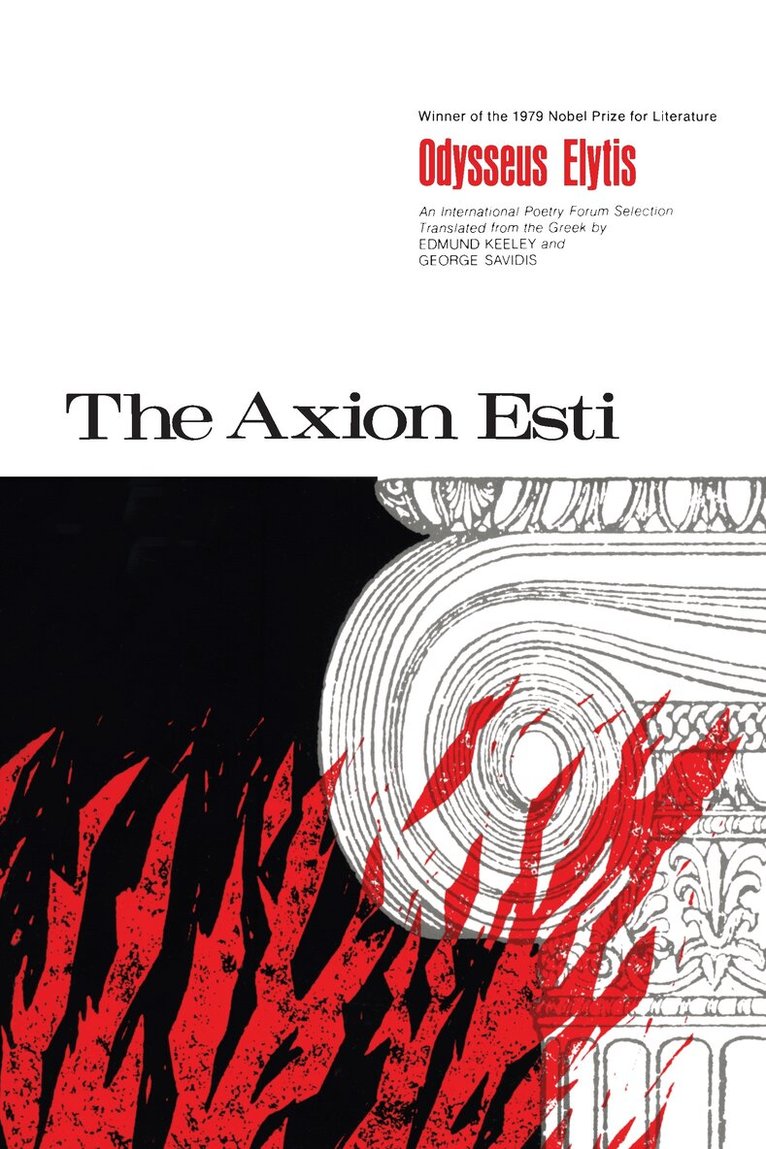
The Axion Esti is probably the most widely read volume of verse to have appeared in Greece since World War II and remains a classic today. Those who follow the music of Greek composer Mikis Theodorakis have been especially drawn to Odysseus Elytis's work, his prose is widely considered a mirror to the revolutionary music of Theodorakis. The "autobiographical" elements are constantly colored by allusion to the history of Greece, thus, the poems express a contemporary consciousness fully resonant with those echoes of the past that have served most to shape the modern Greek experience.
158 kr
Tillfälligt slut
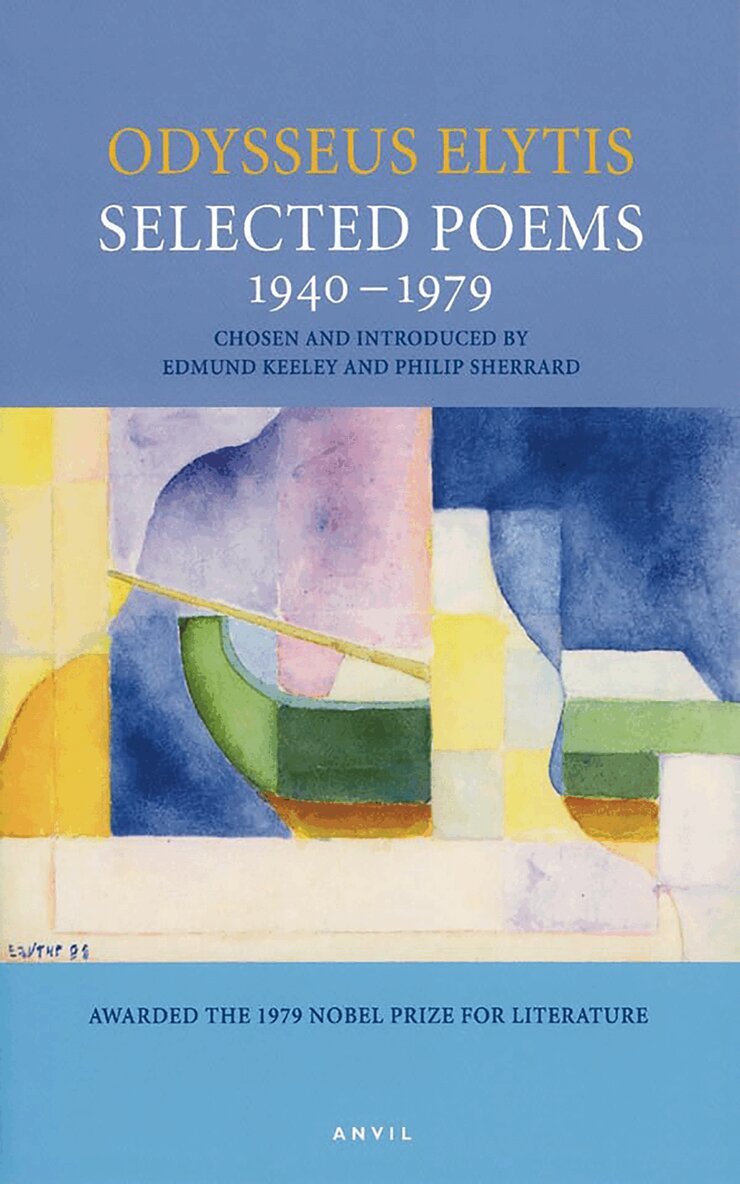
This representative selection from the work of one of modern Greece’s most fascinating poets was made shortly after his award of the Nobel Prize for Literature in 1979. It is drawn from all periods of his distinguished career and traces his development from early surrealism, in which he transforms French influence into a distinct personal voice and mythology, through the dramatic style of The Axion Esti with its blend of spirituality and earthiness, up to the later work in which he experiments with new modes for expressing his perennial themes. The poems are chosen, introduced and mainly translated by the leading translators of modern Greek poetry, Edmund Keeley and the late Philip Sherrard, whose collaborations also included translations of Seferis, Cavafy and Sikelianos. Other contributors to the book include George Savidis, Nanos Valaoritis and John Stathatos.
124 kr
Skickas
When Odysseus Elytis was awarded the Nobel Prize for Literature, the Swedish Academy’s citation singled out The Axion Esti, first published in 1959, as ‘one of twentieth-century literature’s most concentrated and richly faceted poems.’ It can be seen both as a secular oratorio, reflecting the Greek heritage and the country’s revolutionary spirit, and also as a kind of autobiography, in which the spiritual roots of the poet’s very individual sensibility are set in the wider philosophical context of the Greek tradition. In his evocation of eternal Greece, his vision of the war and its aftermath, and his concluding celebration of human life, Elytis is a true voice of our age – a deeply personal lyric poet who speaks for humanity at large.
182 kr
Skickas inom 5-8 vardagar
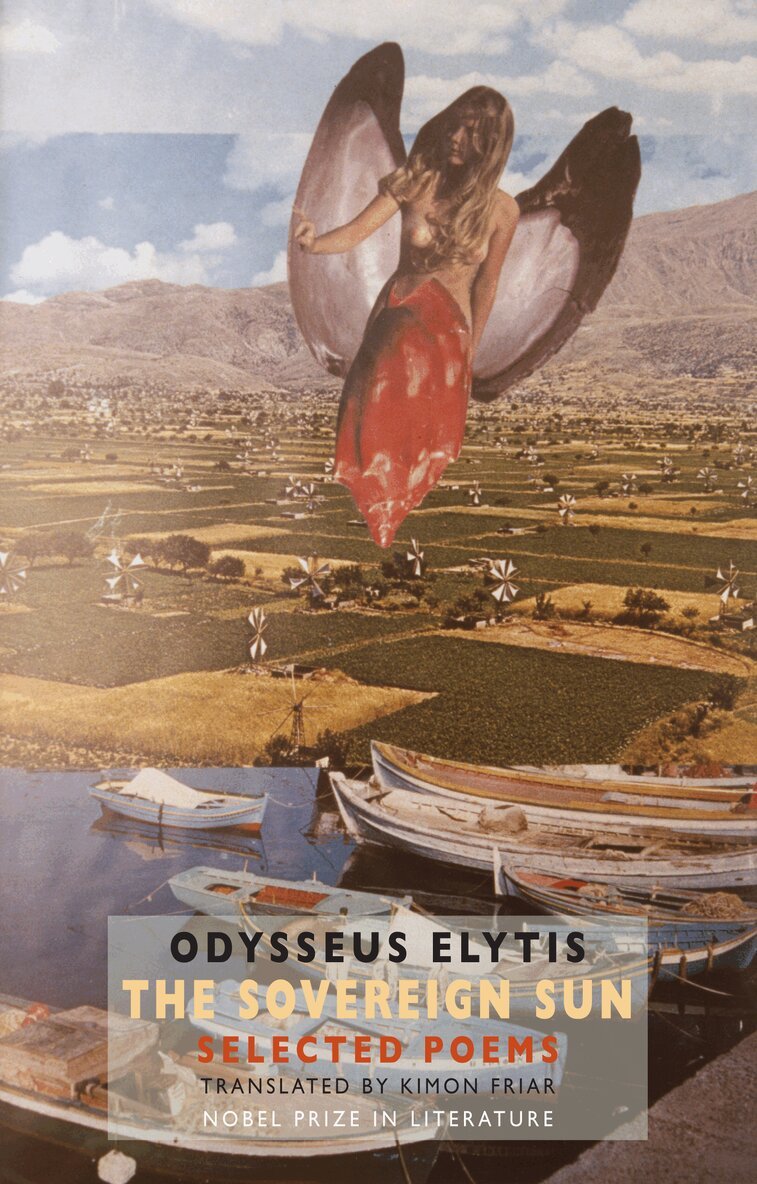
Odysseus Elytis (1911-1996) was born on Crete. With Seferis and the 'Generation of the Thirties', he introduced French Surrealism into Greek poetry. He won the Nobel Prize in Literature in 1979. The Sovereign Sun begins with his brilliantly sensuous early poems. It has large selections from his master work, Axion Esti (1959), and includes the whole of his Heroic and Elegiac Song for the Lost Second Lieutenant of the Albanian Campaign (1945).'He has a romantic and lyrical mind, which deploys a metaphysic of complete intellectual sensuality-the rocks, the islands, the blue Greek sea, the winds; they are at once "real" and also "signatures" in the alchemical sense. He makes his magic with them, and it is peculiarly Greek magic that he makes. His poems are spells, and they conjure up that eternal Greek world which has haunted and continues to haunt the European consciousness with its hints of a perfection that always remains a possibility. The Greek poet aims his heart and his gift directly at the sublime - for nothing else will do. How lucky, too, that he has found in Kimon Friar a translator who can transplant his poetry into English, so that its freshness and spontaneity still shock and delight.' – Lawrence Durrell
146 kr
Skickas
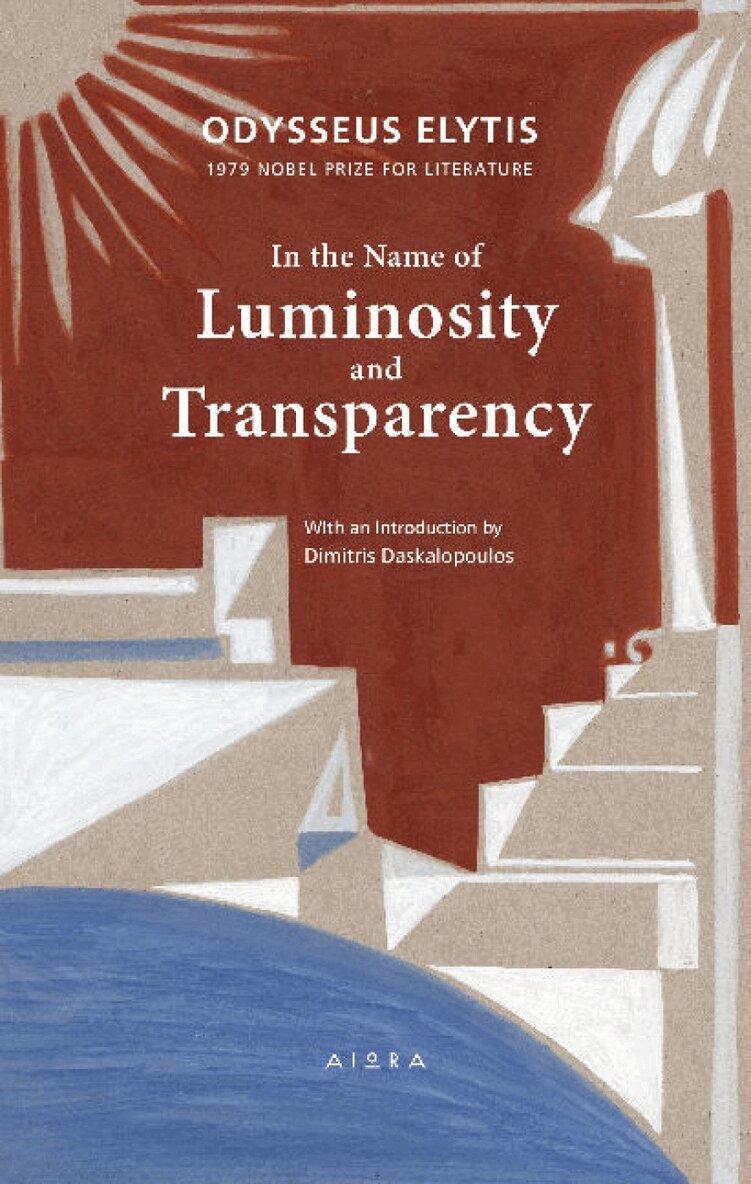
The poetry of Odysseus Elytis owes as much to the ancients and Byzantium, as to the surrealists of the 1930s and the architecture of the Cyclades, bringing romantic modernism and structural experimentation to Greece. Collected here are the two speeches Elytis gave on his acceptance of the 1979 Nobel Prize for Literature, which are still strikingly relevant today. He addresses a hypertrophic and atrophic Europe in moral chaos, with as many coexisting values as languages-and to this he offers the "common language" that is found in poetry, in art, and in their base materials of sense, aesthetic, intuition. Ultimately, his is a powerful ode to beauty amid utilitarianism, and the need for poetry as "the art of approaching that which surpasses us" and "puts us at the threshold of the deepest truth".