Ohad Nachtomy - Böcker
Visar alla böcker från författaren Ohad Nachtomy. Handla med fri frakt och snabb leverans.
9 produkter
9 produkter
973 kr
Skickas inom 5-8 vardagar
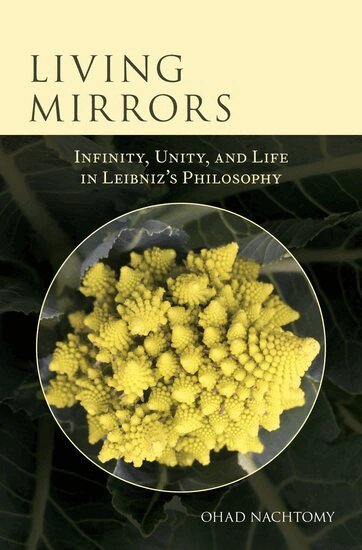
In Living Mirrors, Ohad Nachtomy examines Leibniz's attempt to "re-enchant" the natural world-that is, to infuse life, purpose, and value into the very foundations of nature, a nature that Leibniz saw as disenchanted by Descartes' and Spinoza's more naturalistic and mechanistic theories. Nachtomy sees Leibniz's nuanced view of infinity- how it differs in the divine as well as human spheres, and its relationship to numerical and metaphysical unity-as key in this effort. Leibniz defined living beings by means of an infinite nested structure particular to what he called "natural machines"-and for him, an intermediate kind of infinity is the defining feature of living beings. Using a metaphor of a "living mirror," Leibniz put forth infinity as crucial to explaining the unity of a living being as well as the harmony between the infinitely small and the infinitely large; in this way, employing infinity and unity, we can better understand life itself, both as a metaphysical principle and as an empirical fact. Nachtomy's sophisticated and novel treatment of the essential themes in Leibniz's work will not only interest Leibniz scholars, but scholars of early modern philosophy and students of the history of philosophy and science as well.
1 217 kr
Skickas inom 5-8 vardagar
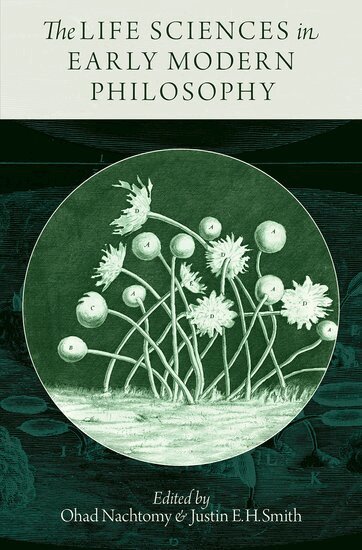
The present volume advances a recent historiographical turn towards the intersection of early modern philosophy and the life sciences by bringing together many of its leading scholars to present the contributions of important but often neglected figures, such as Ralph Cudworth, Nehemiah Grew, Francis Glisson, Hieronymus Fabricius ab Aquapendente, Georg Ernst Stahl, Juan Gallego de la Serna, Nicholas Hartsoeker, Henry More, as well as more familiar figures such as Descartes, Spinoza, Leibniz, Malebranche, and Kant. The contributions to this volume are organized in accordance with the particular problems that living beings and living nature posed for early modern philosophy: the problem of life in general, whether it constitutes something ontologically distinct at all, or whether it can ultimately be exhaustively comprehended "in the same manner as the rest "; the problem of the structure of living beings, by which we understand not just bare anatomy but also physiological processes such as irritability, motion, digestion, and so on; the problem of generation, which might be included alongside digestion and other vital processes, were it not for the fact that it presented such an exceptional riddle to philosophers since antiquity, namely, the riddle of coming-into-being out of - apparent or real - non-being; and, finally, the problem of natural order.
1 064 kr
Skickas inom 10-15 vardagar
Leibniz’s notion of possibility is one of his most significant contributions to philosophy as well as one of the cornerstones of his metaphysics. This work attempts to bring out the intrinsic subtlety of Leibniz’s approach to possibility and to explore some of its important repercussions in his metaphysics. This project involves an examination of some of the most difficult questions in Leibniz‘s metaphysics from this vantage point. The book consists of three parts, the first focusing on Leibniz’s notion of possibility, the second on his notion of agency, and the third on his notion of individuality. Leibniz’s preoccupation with the notions of possibility, agency and individuality is evident in his early writings as well as in his later ones. His combinatorial insights regarding the notion of possibility as a model for creating the world, his commitment to the traditional doctrine that activity constitutes being, and his view that individuals are the only true beings are among the formative and persisting tenets of his metaphysics. This work explores these tenets in some detail and seeks to highlight the connections between them. The first part of the book presents Leibniz’s approach to possibility by exposing his early presuppositions about the status and nature of possibilities (chapter 1); his notion of possible individuals (chapter 2); and his notion of possible worlds as constituted by the relations among possible individuals (chapters 3 and 4). The second part discusses the transition from possibility to actuality through the notion of agency.
1 440 kr
Skickas inom 5-8 vardagar
Delving into Israel's multifaceted society, editors Avi Sagi and Ohad Nachtomy, along with their distinguished contributors, explore the many ethnic and religious communities that comprise modern Israel and the ways in which they interact and often misunderstand each other. Detailing both the tensions between Israelis and Arab minorities as well as issues involving recent immigrants and the different religious sects within the Jewish community at large, this collection of essays covers diverse subjects such as Holocaust education, language rights, military service, and the balancing of religious with secular systems of law.
959 kr
Skickas inom 10-15 vardagar
This volume contains essays that examine infinity in early modern philosophy. These domains include mathematics, metaphysics, epistemology, ethics, science, and theology. Coverage begins with an introduction that outlines the overall importance of infinity to early modern philosophy.
1 381 kr
Skickas inom 10-15 vardagar
This volume contains essays that examine infinity in early modern philosophy. These domains include mathematics, metaphysics, epistemology, ethics, science, and theology. Coverage begins with an introduction that outlines the overall importance of infinity to early modern philosophy.
Del 61 - New Synthese Historical Library
Possibility, Agency, and Individuality in Leibniz's Metaphysics
Häftad, Engelska, 2010
1 064 kr
Skickas inom 10-15 vardagar
Leibniz’s notion of possibility is one of his most significant contributions to philosophy as well as one of the cornerstones of his metaphysics. This work attempts to bring out the intrinsic subtlety of Leibniz’s approach to possibility and to explore some of its important repercussions in his metaphysics. This project involves an examination of some of the most difficult questions in Leibniz‘s metaphysics from this vantage point. The book consists of three parts, the first focusing on Leibniz’s notion of possibility, the second on his notion of agency, and the third on his notion of individuality. Leibniz’s preoccupation with the notions of possibility, agency and individuality is evident in his early writings as well as in his later ones. His combinatorial insights regarding the notion of possibility as a model for creating the world, his commitment to the traditional doctrine that activity constitutes being, and his view that individuals are the only true beings are among the formative and persisting tenets of his metaphysics. This work explores these tenets in some detail and seeks to highlight the connections between them. The first part of the book presents Leibniz’s approach to possibility by exposing his early presuppositions about the status and nature of possibilities (chapter 1); his notion of possible individuals (chapter 2); and his notion of possible worlds as constituted by the relations among possible individuals (chapters 3 and 4). The second part discusses the transition from possibility to actuality through the notion of agency.
1 064 kr
Skickas inom 10-15 vardagar
In recent decades, there has been much scholarly controversy as to the basic ontological commitments of the philosopher Gottfried Wilhelm Leibniz (1646-1716). The old picture of his thought as strictly idealistic, or committed to the ultimate reduction of bodies to the activity of mind, has come under attack, but Leibniz's precise conceptualization of bodies, and the role they play in his system as a whole, is still the subject of much controversy. One thing that has become clear is that in order to understand the nature of body in Leibniz, and the role body plays in his philosophy, it is crucial to pay attention to the related concepts of organism and of corporeal substance, the former being Leibniz's account of the structure of living bodies (which turn out, for him, to be the only sort of bodies there are), and the latter being an inheritance from the Aristotelian hylomorphic tradition which Leibniz appropriates for his own ends.This volume brings together papers from many of the leading scholars of Leibniz's thought, all of which deal with the cluster of questions surrounding Leibniz's philosophy of body.
Del 67 - New Synthese Historical Library
Machines of Nature and Corporeal Substances in Leibniz
Häftad, Engelska, 2013
1 064 kr
Skickas inom 10-15 vardagar
In recent decades, there has been much scholarly controversy as to the basic ontological commitments of the philosopher Gottfried Wilhelm Leibniz (1646-1716). The old picture of his thought as strictly idealistic, or committed to the ultimate reduction of bodies to the activity of mind, has come under attack, but Leibniz's precise conceptualization of bodies, and the role they play in his system as a whole, is still the subject of much controversy. One thing that has become clear is that in order to understand the nature of body in Leibniz, and the role body plays in his philosophy, it is crucial to pay attention to the related concepts of organism and of corporeal substance, the former being Leibniz's account of the structure of living bodies (which turn out, for him, to be the only sort of bodies there are), and the latter being an inheritance from the Aristotelian hylomorphic tradition which Leibniz appropriates for his own ends.This volume brings together papers from many of the leading scholars of Leibniz's thought, all of which deal with the cluster of questions surrounding Leibniz's philosophy of body.