Oleg Budnitskii - Böcker
Visar alla böcker från författaren Oleg Budnitskii. Handla med fri frakt och snabb leverans.
4 produkter
4 produkter
1 051 kr
Skickas inom 10-15 vardagar
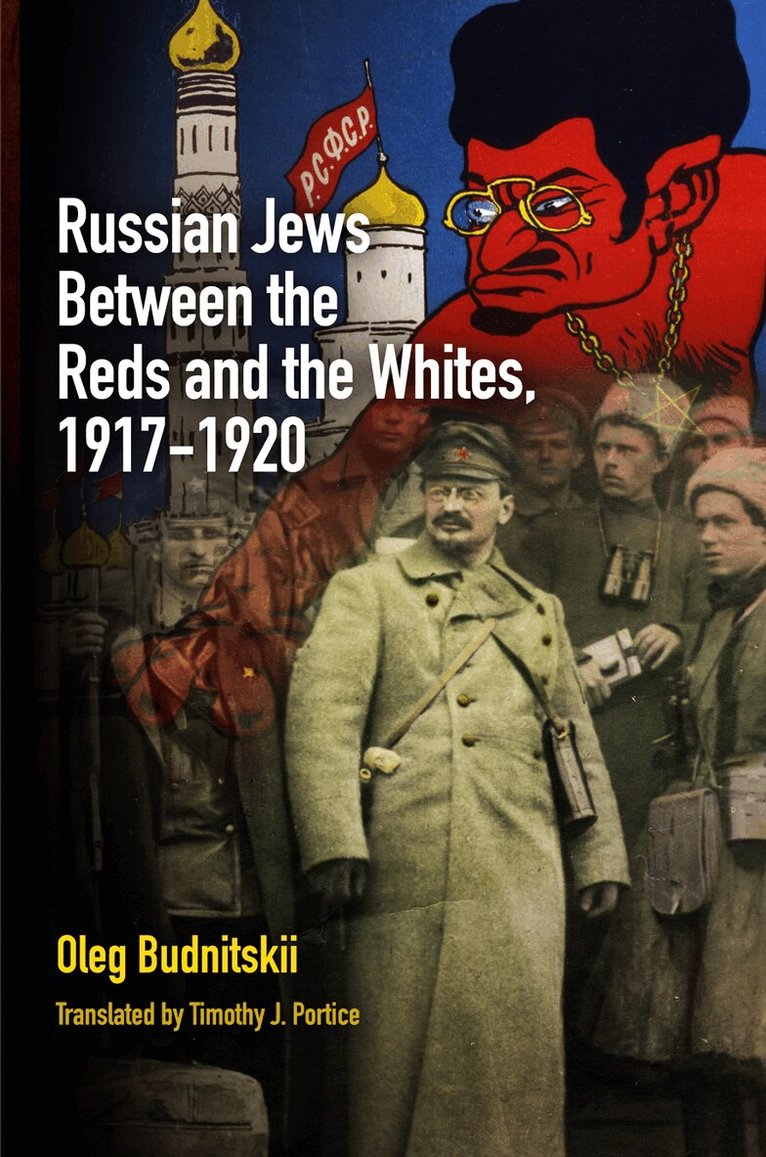
In the years following the Russian Revolution, a bitter civil war was waged between the Bolsheviks, with their Red Army of Workers and Peasants on the one side, and the various groups that constituted the anti-Bolshevik movement on the other. The major anti-Bolshevik force was the White Army, whose leadership consisted of former officers of the Russian imperial army. In the received-and simplified-version of this history, those Jews who were drawn into the political and military conflict were overwhelmingly affiliated with the Reds, while from the start, the Whites orchestrated campaigns of anti-Jewish violence, leading to the deaths of thousands of Jews in pogroms in the Ukraine and elsewhere.In Russian Jews Between the Reds and the Whites, 1917-1920, Oleg Budnitskii provides the first comprehensive historical account of the role of Jews in the Russian Civil War. According to Budnitskii, Jews were both victims and executioners, and while they were among the founders of the Soviet state, they also played an important role in the establishment of the anti-Bolshevik factions. He offers a far more nuanced picture of the policies of the White leadership toward the Jews than has been previously available, exploring such issues as the role of prominent Jewish politicians in the establishment of the White movement of southern Russia, the "Jewish Question" in the White ideology and its international aspects, and the attempts of the Russian Orthodox Church and White diplomacy to forestall the establishment of a Jewish state in Palestine.The relationship between the Jews and the Reds was no less complicated. Nearly all of the Jewish political parties severely disapproved of the Bolshevik coup, and the Red Army was hardly without sin when it came to pogroms against the Jews. Budnitskii offers a fresh assessment of the part played by Jews in the establishment of the Soviet state, of the turn in the policies of Jewish socialist parties after the first wave of mass pogroms and their efforts to attract Jews to the Red Army, of Bolshevik policies concerning the Jewish population, and of how these stances changed radically over the course of the Civil War.
Jews in the Soviet Union: a History
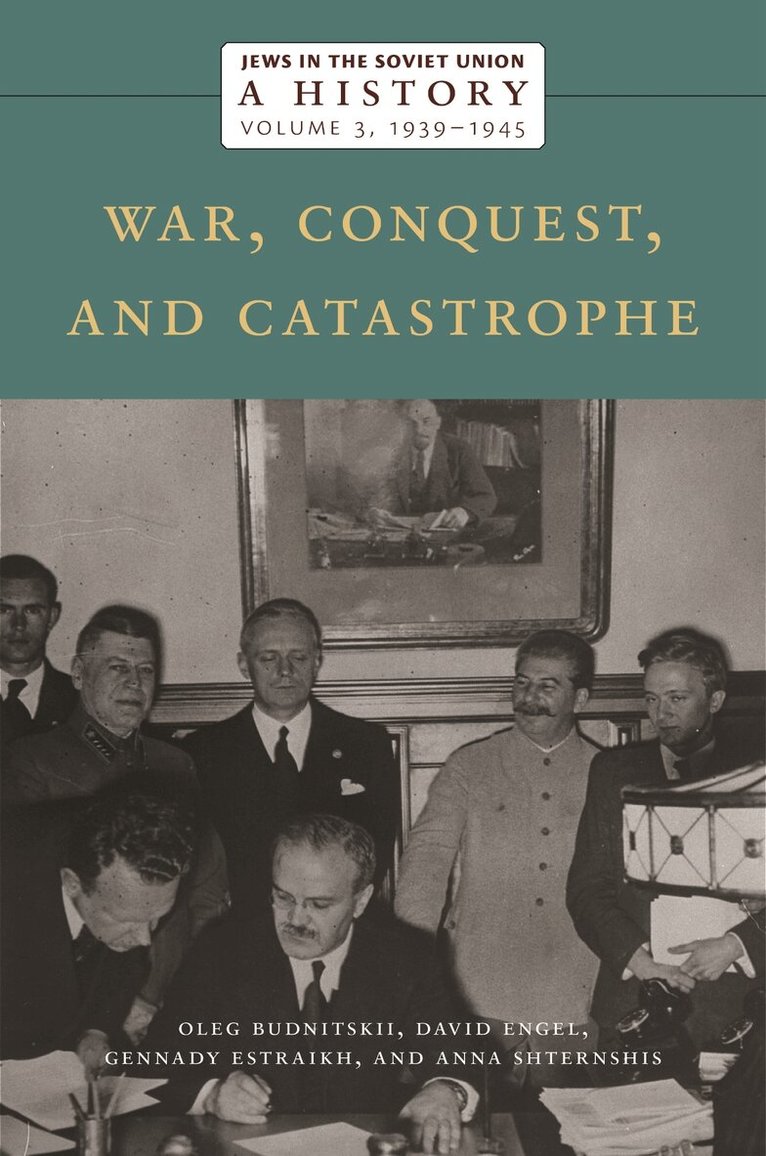
War, Conquest, and Catastrophe, 1939–1945, Volume 3
Inbunden, Engelska, 2022
405 kr
Skickas inom 10-15 vardagar
Provides a comprehensive history of Soviet Jewry during World War IIAt the beginning of the twentieth century, more Jews lived in the Russian Empire than anywhere else in the world. After the Holocaust, the USSR remained one of the world's three key centers of Jewish population, along with the United States and Israel. While a great deal is known about the history and experiences of the Jewish people in the US and in Israel in the twentieth century, much less is known about the experiences of Soviet Jews. Understanding the history of Jewish communities under Soviet rule is essential to comprehending the dynamics of Jewish history in the modern world. Only a small number of scholars and the last generation of Soviet Jews who lived during this period hold a deep knowledge of this history. Jews in the Soviet Union, a new multi-volume history, is an unprecedented undertaking. Publishing over the next few years, this groundbreaking work draws on rare access to documents from the Soviet archives, allowing for the presentation of a sweeping history of Jewish life in the Soviet Union from 1917 through the early 1990s.Volume 3 explores how the Soviet Union's changing relations with Nazi Germany between the signing of a nonaggression pact in August 1939 and the Soviet victory over German forces in World War II affected the lives of some five million Jews who lived under Soviet rule at the beginning of that period. Nearly three million of those Jews perished; those who remained constituted a drastically diminished group, which represented a truncated but still numerically significant postwar Soviet Jewish community.Most of the Jews who lived in the USSR in 1939 experienced the war in one or more of three different environments: under German occupation, in the Red Army, or as evacuees to the Soviet interior. The authors describe the evolving conditions for Jews in each area and the ways in which they endeavored to cope with and to make sense of their situation. They also explore the relations between Jews and their non-Jewish neighbors, the role of the Soviet state in shaping how Jews understood and responded to their changing life conditions, and the ways in which different social groups within the Soviet Jewish population—residents of the newly-annexed territories, the urban elite, small-town Jews, older generations with pre-Soviet memories, and younger people brought up entirely under Soviet rule—behaved. This book is a vital resource for understanding an oft-overlooked history of a major Jewish community.
412 kr
Skickas inom 5-8 vardagar
The 13th volume of the Archive of Jewish History includes selected chapters from the memoirs of Boris Gershun, a prominent lawyer in the early 20th century; memoirs of Anna Shoichet, whose "autobiography" covers the first half of the last century; and memoirs by Gennady and Elena Estraikh about their attempts to emigrate from the USSR beginning in the late 1970s. The attempts ended successfully in the early 1990s. The research section includes articles about one of the little-known members of the famous clan of Barons Ginzburg - Alfred, son of Horace and about Savely Zlatopolsky. Alfred Ginzburg was the manager of the Lena gold mines and made a significant contribution to the development of the Russian gold mining industry, and, of course, to the welfare of the family. The article about Savely Zlatopolsky, a member of the Executive Committee of the People's Will Party, is essentially the first study of this prominent figure of the revolutionary movement. Zlatopolsky's testimony during the investigation and letters from detention are published as an appendix to the article. The volume concludes with the publication of letters from the Stalin’s camp of the famous folklorist and musicologist Moisei Beregovsky, and a transcript of an interview with Boris Kamenko, who miraculously survived the Holocaust in the Stavropol region. All other members of his family were shot by the Nazis. The materials published in this volume are derived from archives in Moscow, St. Petersburg, and New York, as well as from family archives.
398 kr
Skickas inom 5-8 vardagar
14-й том «Архива еврейской истории» открывается статьей Владимира Гениса о невероятной судьбе Савелия Литвинова, младшего брата народного комиссара иностранных дел СССР Максима Литвинова. Савелий служил управляющим московским отделением Торгового представительства СССР в Германии и стал эмигрантом, отказавшись вернуться в СССР. Литвинов-младший был арестован французской полицией за подделку векселей и стал «героем» скандального процесса, весьма обеспокоившего кремлевскую элиту. Статья основана на архивных материалах, впервые вводимых в научный оборот. В статье Никиты Аграновского анализируется книга американского художника Джозефа Пеннелла «Еврей у себя дома» (1892). Большинство исследователей считают ее антисемитским памфлетом. Автор статьи предпринимает попытку, «сформировать точную и основанную на фактах оценку книги Пеннелла и вернуть ее в научный дискурс как спорный, но достойный внимания исторический документ», представляющий собой уникальный рассказ о высылке евреев из Москвы и их существовании в Юго-Западном крае Российской империи. Статья Дмитрия Фельдмана посвящена истории двух следственных дел по обвинению духовного лидера литовско-белорусских хасидов рабби Шнеура Залмана в политической неблагонадежности (1798–1801), способствовавшими, в конечном счете, укреплению позиций хасидизма в западных губерниях Российской империи. В публикации Дмитрия Рублева представлена стенограмма доклада одного из лидеров анархистского движения в Западном крае Российской империи Ильи Гейцмана, прочитанного 27 ноября 1931 г. в Москве. Гейцман сочетает воспоминания об известных анархистах с анализом их психологии и мировоззрения. Александр Френкель, известный исследователь жизни и творчества классика еврейской литературы Шолом-Алейхема, публикует переписку писателя с большевичкой Саррой Равич, которая перевела на русский язык его роман «Кровавая шутка». Публикация предваряется содержательной вступительной статьей.