Oren Yiftachel - Böcker
Visar alla böcker från författaren Oren Yiftachel. Handla med fri frakt och snabb leverans.
8 produkter
8 produkter
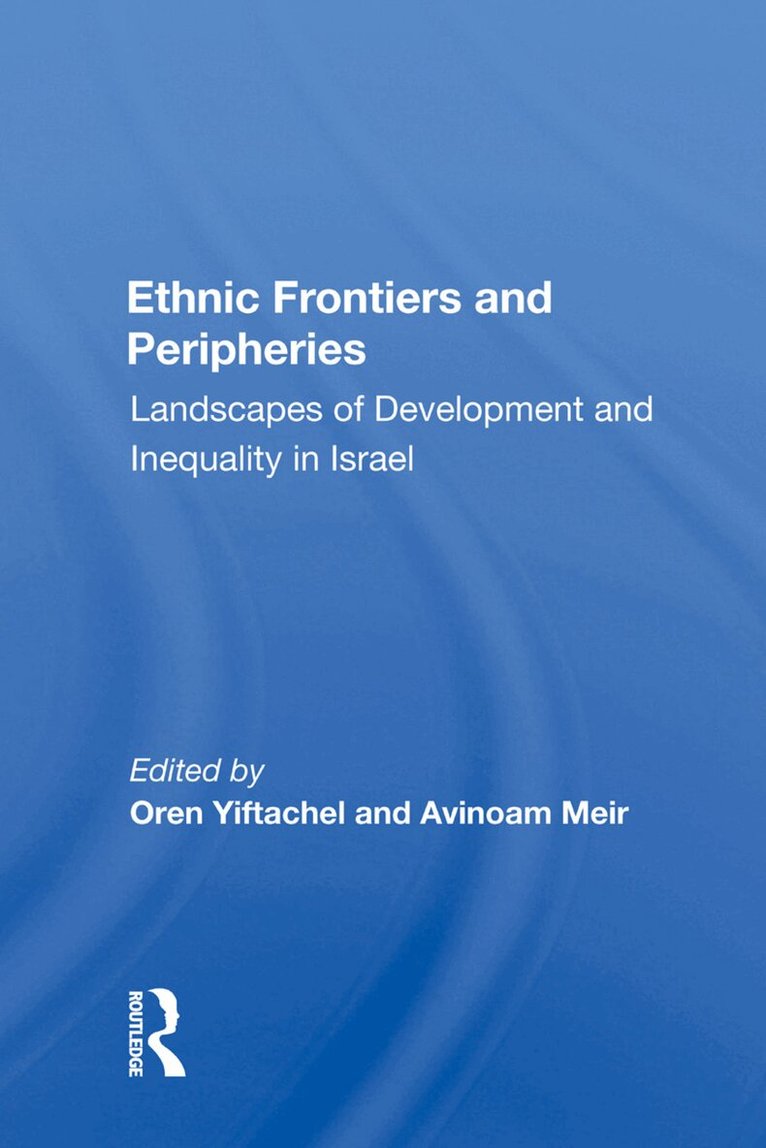
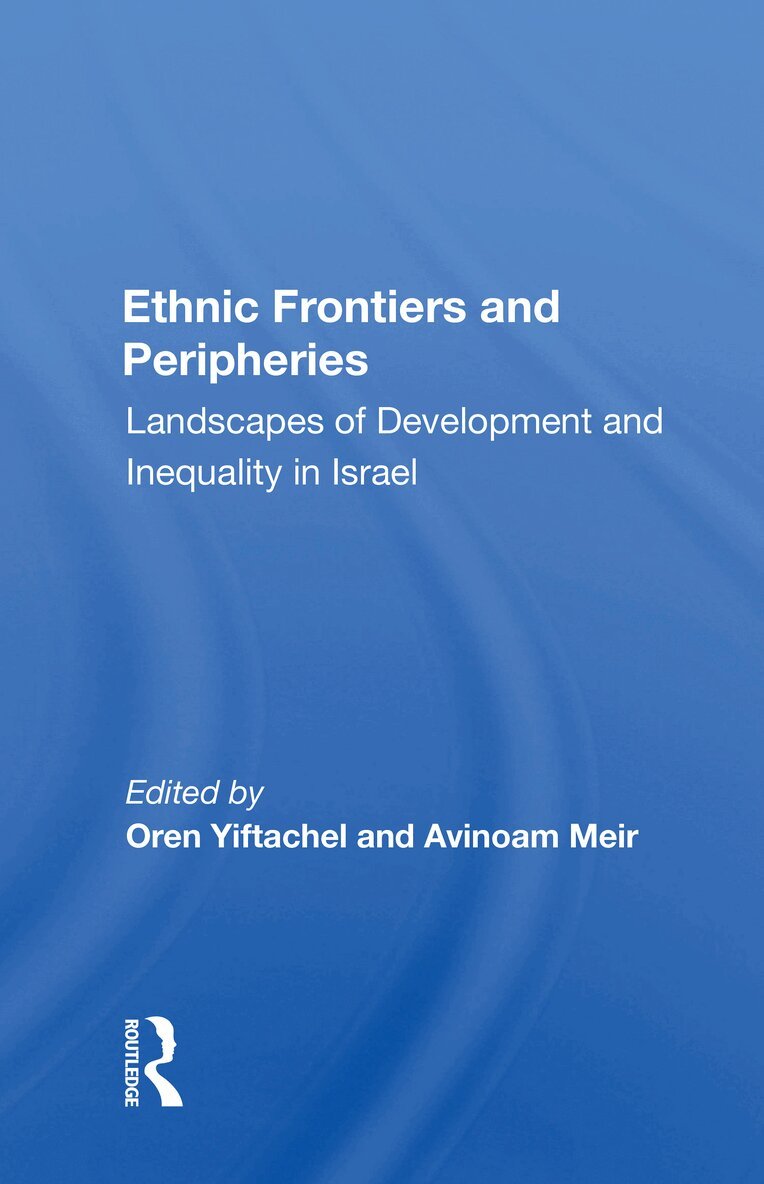
Ethnic Frontiers and Peripheries
Landscapes of Development and Inequality in Israel
Inbunden, Engelska, 2019
2 088 kr
Skickas inom 10-15 vardagar
"The idea for editing this book originated during an international conference titled ""Regional Development: The Challenge of the Frontier,"" held in December 1993 at the Dead Sea and which was organized by the Negev Center for Regional Development at Ben-Gurion University of the Negev. In this conference we noticed that little has been said about the impact of Israel's complex mosaic of ethnic groups on the shaping of the country's social and spatial frontiers. We have therefore endeavored to bring together a number of perspectives on the evolution of ethnic frontiers in Israel and the role they play in shaping the cultural landscape of this country. Yet we later realized that ""frontier"" is too limited a term, and that it may through various processes have turned into a mosaic of spatial, social, economic, and political peripheries. More specifically we attempted to present the process of frontier development as perceived by Israel's ethnic and national minorities. We therefore invited contributions from various other Israeli experts on these issues: geographers, sociologists, anthropologists, and political scientists, which have now become the main body of chapters in this book. We trust that they are representative of the main dimensions of the subject."
Ethnic Frontiers and Peripheries
Landscapes of Development and Inequality in Israel
Häftad, Engelska, 2021
617 kr
Skickas inom 10-15 vardagar
This book explores the evolution of ethnic spaces and interactions within a modern "nation-state," focusing on the territorial, economic, cultural, and political frontiers and peripheries. It examines the Israeli case by focusing on the country's main ethnic and national cleavages and margins.
914 kr
Skickas inom 10-15 vardagar
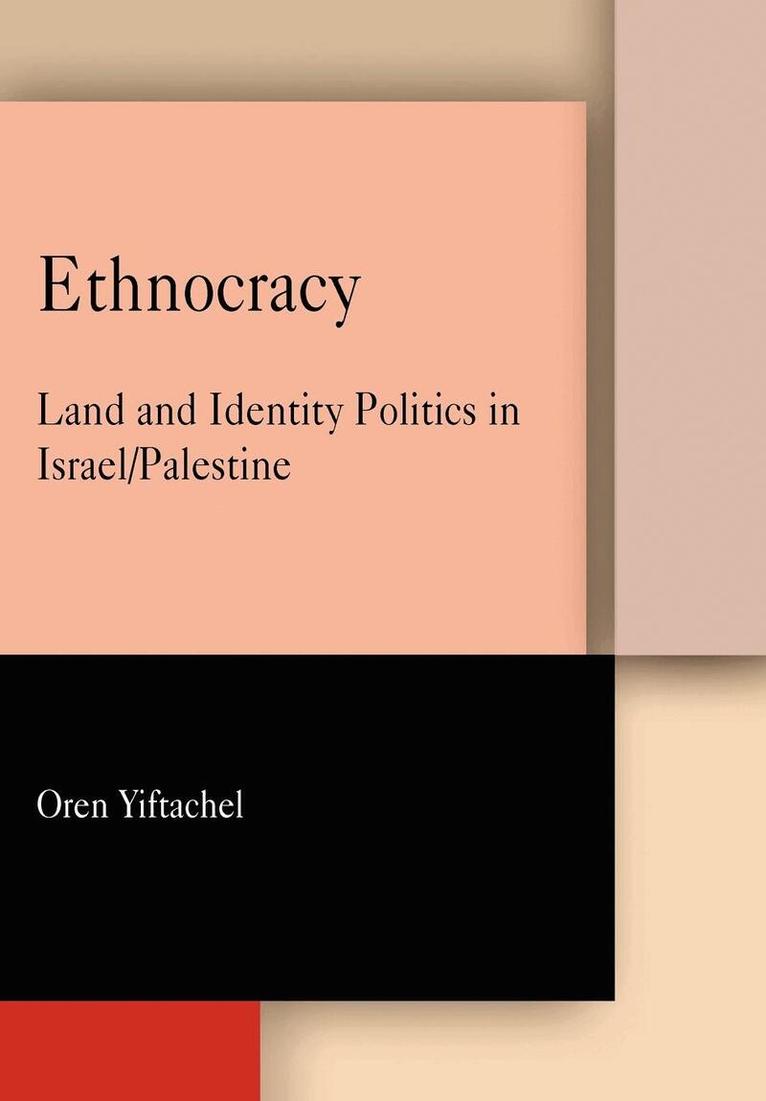
Traces the dynamics of territorial and ethnic conflicts between Jews and PalestiniansFor Oren Yiftachel, the notion of ethnocracy suggests a political regime that facilitates expansion and control by a dominant ethnicity in contested lands. It is neither democratic nor authoritarian, with rights and capabilities depending primarily on ethnic origin and geographic location. In Ethnocracy: Land and Identity Politics in Israel/Palestine, he presents a new critical theory and comparative framework to account for the political geography of ethnocratic societies.According to Yiftachel, the primary manifestation of ethnocracy in Israel/Palestine has been a concerted strategy by the state of "Judaization." Yiftachel's book argues that ethnic relations—both between Jews and Palestinians, and among ethno-classes within each nation—have been shaped by the diverse aspects of the Judaization project and by resistance to that dynamic. Special place is devoted to the analysis of ethnically mixed cities and to the impact of Jewish immigration and settlement on collective identities.Tracing the dynamics of territorial and ethnic conflicts between Jews and Palestinians, Yiftachel examines the consequences of settlement, land, development, and planning policies. He assesses Israel's recent partial liberalization and the emergence of what he deems a "creeping apartheid" whereby increasingly impregnable ethnic, geographic, and economic barriers develop between groups vying for recognition, power, and resources. The book ends with an exploration of future scenarios, including the introduction of new agendas, such as binationalism and multiculturalism.
Del 4 - International Human Rights Program Practice Series
Indigenous (In)Justice
Human Rights Law and Bedouin Arabs in the Naqab/Negev
Häftad, Engelska, 2013
194 kr
Skickas inom 7-10 vardagar
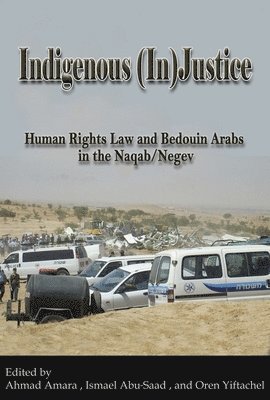
The indigenous Bedouin Arab population in the Naqab/Negev desert in Israel has experienced a history of displacement, intense political conflict, and cultural disruption, along with recent rapid modernization, forced urbanization, and migration. This volume of essays highlights international, national, and comparative law perspectives and explores the legal and human rights dimensions of land, planning, and housing issues, as well as the economic, social, and cultural rights of indigenous peoples. Within this context, the essays examine the various dimensions of the “negotiations” between the Bedouin Arab population and the State of Israel.Indigenous (In)Justice locates the discussion of the Naqab/Negev question within the broader Israeli-Palestinian conflict and within key international debates among legal scholars and human rights advocates, including the application of the Declaration on the Rights of Indigenous Peoples, the formalization of traditional property rights, and the utility of restorative and reparative justice approaches. Leading international scholars and professionals, including the current United Nations Special Rapporteur on Violence against Women and the former United Nations Special Rapporteur on the Rights of Indigenous Peoples, are among the contributors to this volume.
1 095 kr
Skickas inom 10-15 vardagar
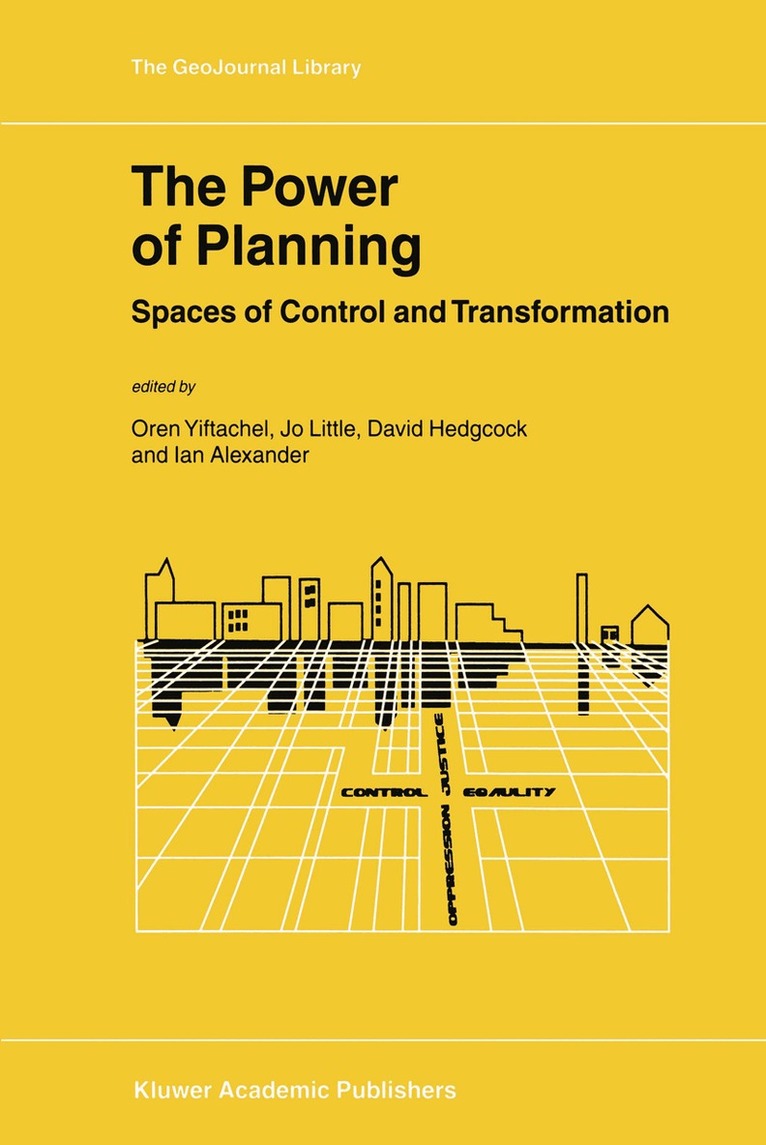
The book addresses critically the question: "What is the societal impact of urban and regional planning?". It begins with a theoretical discussion and then analyses, through a series of case studies, the intentions, contents, struggles and consequences of urban and regional planning. It shows that plans and policies often defy the commonly perceived role of advancing equality, justice, development and amenity, by causing social problems, marginalisation and inequalities. The book differs from most texts in the field by looking at planning from a critical distance, without a priori belief in its necessity or usefulness. The 12 chapters, written by renowned international scholars, demonstrate the multiplicity of social and political struggles over the contested terrain of spatial policies. The book focuses on four key areas where the impact of planning is explored: the community power, gender relations, ethnic tensions, and social polarisation, while comparing three societies: Australia, Israel and England. Audience: This volume is mainly intended for faculty and students of academia, but also for urban professionals and policy-makers.The book is relevant to fields such as urban and regional planning, geography, political science, urban studies, urban sociology, urban anthropology, ethnic and gender relations.
1 095 kr
Skickas inom 10-15 vardagar
The book addresses critically the question: "What is the societal impact of urban and regional planning?". It begins with a theoretical discussion and then analyses, through a series of case studies, the intentions, contents, struggles and consequences of urban and regional planning. It shows that plans and policies often defy the commonly perceived role of advancing equality, justice, development and amenity, by causing social problems, marginalisation and inequalities. The book looks at planning from a critical distance, without a priori belief in its necessity or usefulness. The 12 chapters, written by renowned international scholars, demonstrate the multiplicity of social and political struggles over the contested terrain of spatial policies. The book focuses on four key areas where the impact of planning is explored: the community power, gender relations, ethnic tensions, and social polarisation, while comparing three societies: Australia, Israel and England. Audience: This volume is mainly intended for faculty and students of academia, but also for urban professionals and policy-makers. The book is relevant to fields such as urban and regional planning, geography, political science, urban studies, urban sociology, urban anthropology, ethnic and gender relations.
733 kr
Skickas inom 7-10 vardagar
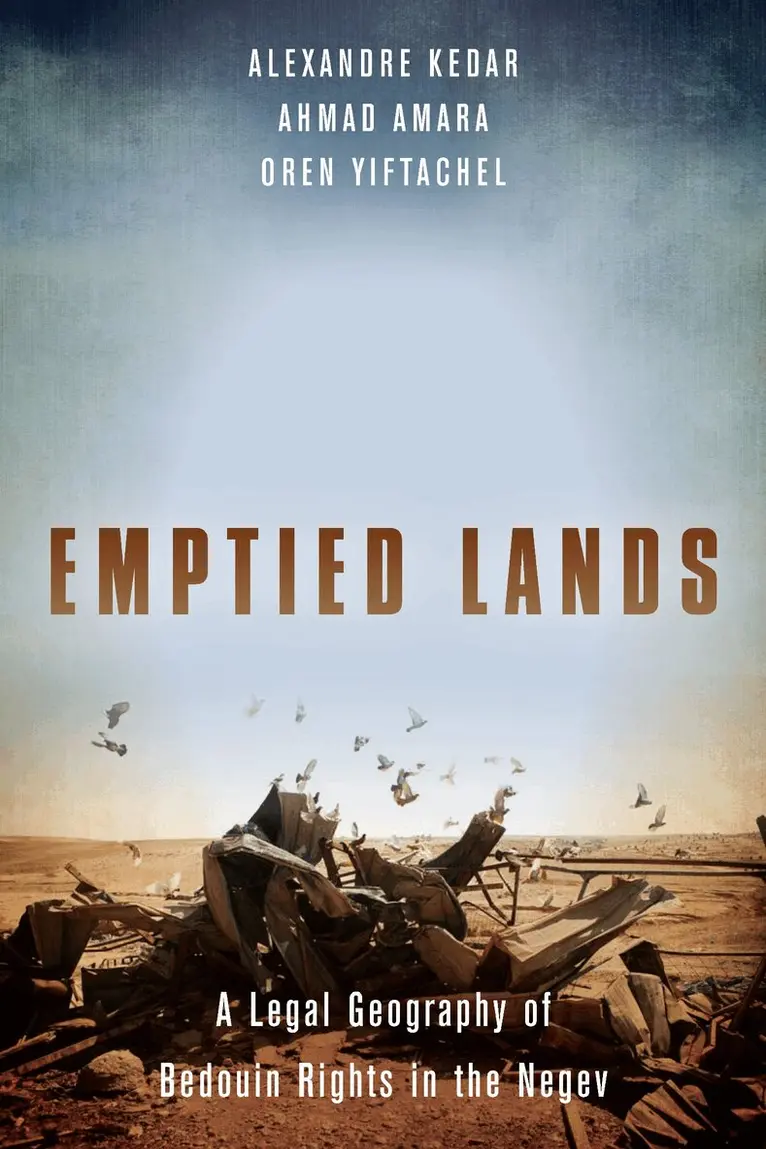
Emptied Lands investigates the protracted legal, planning, and territorial conflict between the settler Israeli state and indigenous Bedouin citizens over traditional lands in southern Israel/Palestine. The authors place this dispute in historical, legal, geographical, and international-comparative perspectives, providing the first legal geographic analysis of the "dead Negev doctrine" used by Israel to dispossess and forcefully displace Bedouin inhabitants in order to Judaize the region. The authors reveal that through manipulative use of Ottoman, British and Israeli laws, the state has constructed its own version ofterra nullius. Yet, the indigenous property and settlement system still functions, creating an ongoing resistance to the Jewish state.Emptied Lands critically examines several key land claims, court rulings, planning policies, and development strategies, offering alternative local, regional, and international routes for justice.
362 kr
Skickas inom 7-10 vardagar
Traces the dynamics of territorial and ethnic conflicts between Jews and PalestiniansFor Oren Yiftachel, the notion of ethnocracy suggests a political regime that facilitates expansion and control by a dominant ethnicity in contested lands. It is neither democratic nor authoritarian, with rights and capabilities depending primarily on ethnic origin and geographic location. In Ethnocracy: Land and Identity Politics in Israel/Palestine, he presents a new critical theory and comparative framework to account for the political geography of ethnocratic societies.According to Yiftachel, the primary manifestation of ethnocracy in Israel/Palestine has been a concerted strategy by the state of "Judaization." Yiftachel's book argues that ethnic relations—both between Jews and Palestinians, and among ethno-classes within each nation—have been shaped by the diverse aspects of the Judaization project and by resistance to that dynamic. Special place is devoted to the analysis of ethnically mixed cities and to the impact of Jewish immigration and settlement on collective identities.Tracing the dynamics of territorial and ethnic conflicts between Jews and Palestinians, Yiftachel examines the consequences of settlement, land, development, and planning policies. He assesses Israel's recent partial liberalization and the emergence of what he deems a "creeping apartheid" whereby increasingly impregnable ethnic, geographic, and economic barriers develop between groups vying for recognition, power, and resources. The book ends with an exploration of future scenarios, including the introduction of new agendas, such as binationalism and multiculturalism.