Ormond Seavey - Böcker
Visar alla böcker från författaren Ormond Seavey. Handla med fri frakt och snabb leverans.
4 produkter
4 produkter
114 kr
Skickas inom 5-8 vardagar
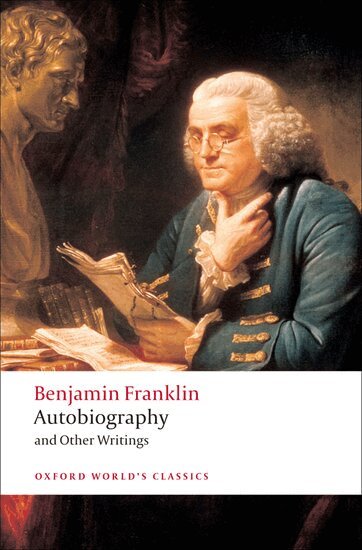
Benjamin Franklin's writings represent a long career of literary, scientific, and political efforts over a lifetime which extended nearly the entire eighteenth century. Franklin's achievements range from inventing the lightning rod to publishing Poor Richard's Almanack to signing the Declaration of Independence. In his own lifetime he knew prominence not only in America but in Britain and France as well. This volume includes Franklin's reflections on such diverse questions as philosophy and religion, social status, electricity, American national characteristics, war, and the status of women. Nearly sixty years separate the earliest writings from the latest, an interval during which Franklin was continually balancing between the puritan values of his upbringing and the modern American world to which his career served as prologue. This edition provides a new text of the Autobiography, established with close reference to Franklin's original manuscript. It also includes a new transcription of the 1726 journal, and several pieces which have recently been identified as Franklin's own work. ABOUT THE SERIES: For over 100 years Oxford World's Classics has made available the widest range of literature from around the globe. Each affordable volume reflects Oxford's commitment to scholarship, providing the most accurate text plus a wealth of other valuable features, including expert introductions by leading authorities, helpful notes to clarify the text, up-to-date bibliographies for further study, and much more.
476 kr
Tillfälligt slut
Henry Adams in Washington
Linking the Personal and Public Lives of America's Man of Letters
Inbunden, Engelska, 2020
1 281 kr
Skickas inom 10-15 vardagar
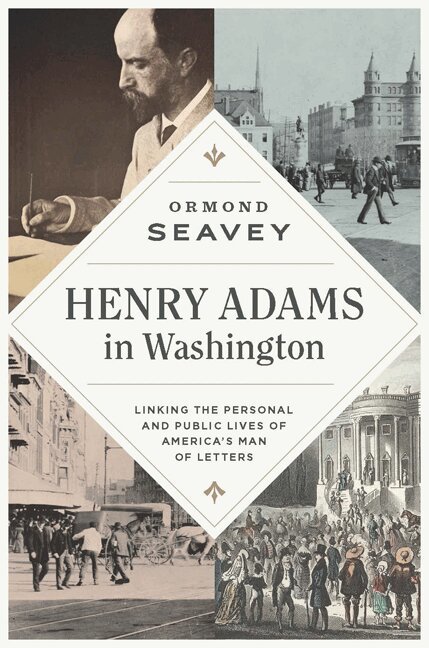
A descendent of two U.S. presidents and winner of the Pulitzer Prize, Henry Adams enjoyed a very particular place in American life, not least due to his ancestry. Yet despite his prolific writing in the years between 1877 and 1891, when he lived in Washington, D.C., Adams has somehow slipped into the gap between history and literature. In Henry Adams in Washington, Ormond Seavey integrates the diverse aspects of Adams’s writing, arguing for his placement among the major American writers of the nineteenth century.Examining Adams’s nine-volume History, which Seavey argues demands renewed literary attention, as well as his two novels, Democracy and Esther, and his biographies of Albert Gallatin and John Randolph of Roanoke, Seavey shows how Adams reveals his own character and personality in his writings, particularly his fondness for the personal rather than the public sphere. As a historian writing in Washington, D.C., Adams surely encountered the expectation that public life takes precedence over the personal; in the execution of both his historical writing and his novels, however, he dwells instead on the personal costs of public life and the diminishment of public figures who lack a fulfilling personal life. Revealing Adams to be a missing link between the essential American writers in the time of Emerson and the modernist writers of the early twentieth century, Seavey shows his novels to be considerations of contemporary political issues while also recognizing the novelistic dimensions in his history and biographies.
Henry Adams in Washington
Linking the Personal and Public Lives of America's Man of Letters
Häftad, Engelska, 2020
652 kr
Skickas inom 10-15 vardagar
A descendent of two U.S. presidents and winner of the Pulitzer Prize, Henry Adams enjoyed a very particular place in American life, not least due to his ancestry. Yet despite his prolific writing in the years between 1877 and 1891, when he lived in Washington, D.C., Adams has somehow slipped into the gap between history and literature. In Henry Adams in Washington, Ormond Seavey integrates the diverse aspects of Adams’s writing, arguing for his placement among the major American writers of the nineteenth century.Examining Adams’s nine-volume History, which Seavey argues demands renewed literary attention, as well as his two novels, Democracy and Esther, and his biographies of Albert Gallatin and John Randolph of Roanoke, Seavey shows how Adams reveals his own character and personality in his writings, particularly his fondness for the personal rather than the public sphere. As a historian writing in Washington, D.C., Adams surely encountered the expectation that public life takes precedence over the personal; in the execution of both his historical writing and his novels, however, he dwells instead on the personal costs of public life and the diminishment of public figures who lack a fulfilling personal life. Revealing Adams to be a missing link between the essential American writers in the time of Emerson and the modernist writers of the early twentieth century, Seavey shows his novels to be considerations of contemporary political issues while also recognizing the novelistic dimensions in his history and biographies.