Otgontuya Davaanyam - Böcker
Visar alla böcker från författaren Otgontuya Davaanyam. Handla med fri frakt och snabb leverans.
3 produkter
3 produkter
493 kr
Skickas inom 10-15 vardagar
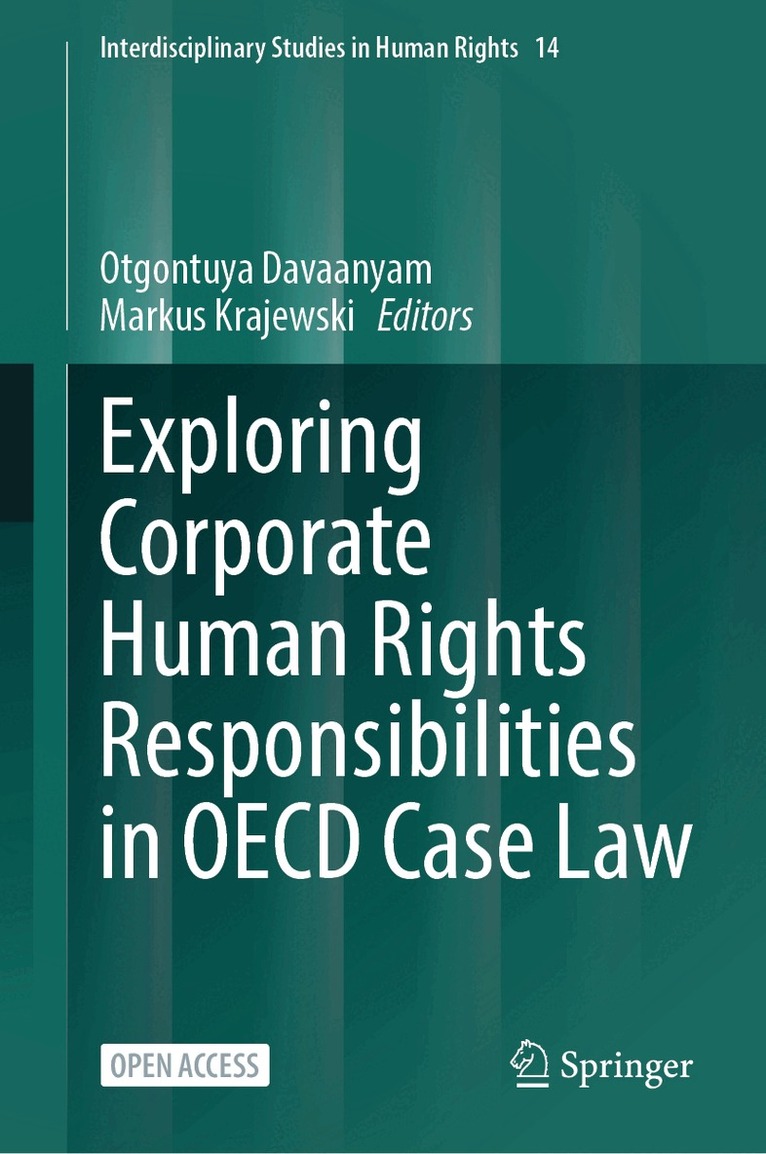
This open access book consolidates a collection of scholarly papers presented at the academic conference titled "Corporate Human Rights Responsibility in OECD Case Law: Actors, Issues, Responsibilities, and Remedies", held on 4 and 5 May 2023. The conference was organized by the OECD Case Law Project at Friedrich-Alexander-Universität Erlangen-Nürnberg.The book is divided into three sections. The first examines how NCP cases interpret corporate responsibilities, including financial institutions, on human rights and environmental issues, focusing on climate change and conflict-affected zones. It also highlights how OECD cases address corporate accountability and its impact on the revised OECD Guidelines and the EU Corporate Sustainability Due Diligence Directive (CSDDD).The second section critically evaluates the NCP mechanism's effectiveness, assessing whether it provides substantive remedies and how well NCP mediation resolves disputes. It offers both quantitative and qualitative analysis of the grievance processes in line with UNGP effectiveness criteria.The third section explores the NCP’s role in global corporate responsibility frameworks, particularly its potential influence on shaping mandatory due diligence obligations through frameworks like the CSDDD, reinforcing corporate accountability in international business practices.Additionally, the book offers key recommendations for policymakers, NCP experts, and practitioners on improving the NCP system to ensure more meaningful outcomes for human rights violations.
395 kr
Skickas inom 10-15 vardagar
This open access book consolidates a collection of scholarly papers presented at the academic conference titled "Corporate Human Rights Responsibility in OECD Case Law: Actors, Issues, Responsibilities, and Remedies", held on 4 and 5 May 2023. The conference was organized by the OECD Case Law Project at Friedrich-Alexander-Universität Erlangen-Nürnberg.The book is divided into three sections. The first examines how NCP cases interpret corporate responsibilities, including financial institutions, on human rights and environmental issues, focusing on climate change and conflict-affected zones. It also highlights how OECD cases address corporate accountability and its impact on the revised OECD Guidelines and the EU Corporate Sustainability Due Diligence Directive (CSDDD).The second section critically evaluates the NCP mechanism's effectiveness, assessing whether it provides substantive remedies and how well NCP mediation resolves disputes. It offers both quantitative and qualitative analysis of the grievance processes in line with UNGP effectiveness criteria.The third section explores the NCP’s role in global corporate responsibility frameworks, particularly its potential influence on shaping mandatory due diligence obligations through frameworks like the CSDDD, reinforcing corporate accountability in international business practices.Additionally, the book offers key recommendations for policymakers, NCP experts, and practitioners on improving the NCP system to ensure more meaningful outcomes for human rights violations.
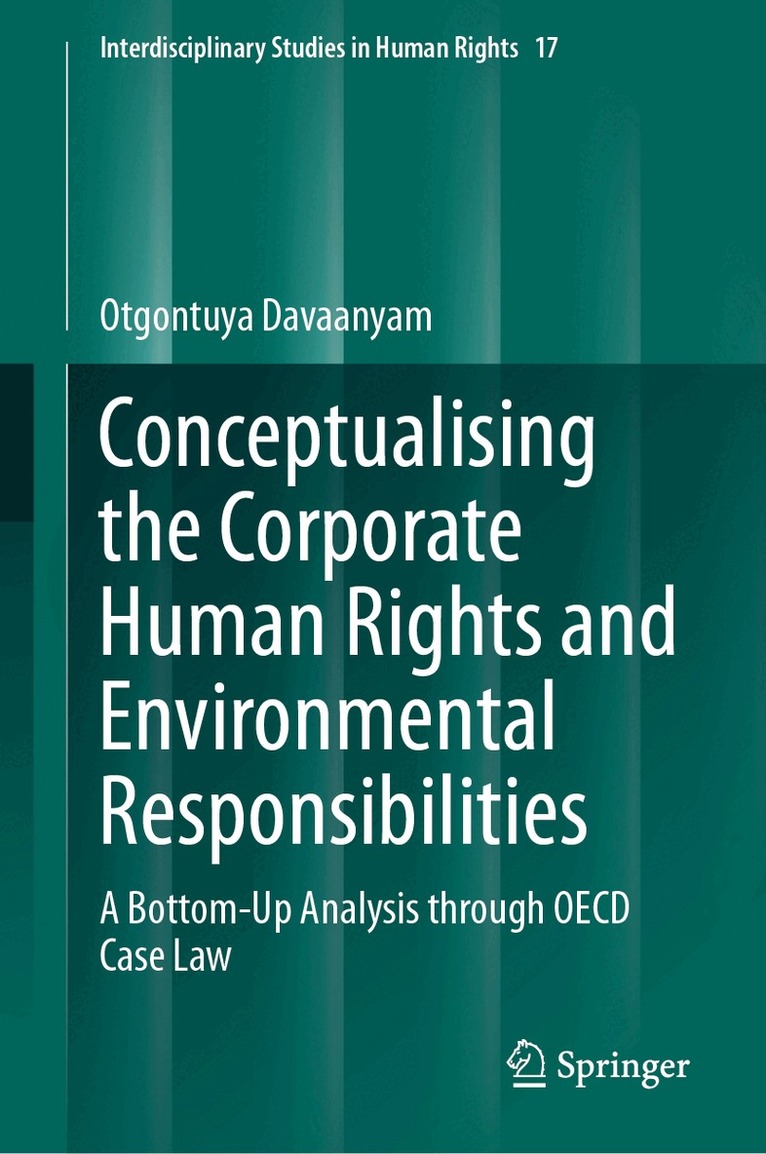
Conceptualising the Corporate Human Rights and Environmental Responsibilities
A Bottom-Up Analysis through OECD Case Law
Inbunden, Engelska, 2026
2 186 kr
Kommande
This book offers the first comprehensive, empirically grounded analysis of how corporate human rights and environmental responsibilities are conceptualised, interpreted, and operationalised through OECD National Contact Point (NCP) case law. Moving beyond doctrinal debates, it examines 394 specific instances handled between 2000 and 2024 to demonstrate how NCP statements function as an evolving body of quasi-juridical authority that progressively shapes the meaning, scope, and content of the corporate responsibility to respect under the UN Guiding Principles on Business and Human Rights (UNGPs) and the OECD Guidelines for Multinational Enterprises. Combining traditional legal analysis with systematic content analysis using MAXQDA, the book traces how norms are articulated across all dimensions of human rights due diligence: policy commitments, risk identification, prevention and mitigation, tracking, communication, remediation, and stakeholder engagement. Each thematic chapter distils key findings from the case law, highlighting both best practices and persistent shortcomings, and showing how companies navigate complex questions of causation, leverage, and corporate involvement in harm—whether through their subsidiaries, supply chains, investment relationships, or broader business structures. The book further clarifies corporate responsibilities in context: gender-based impacts, workers’ rights, Indigenous Peoples’ rights, minority protection, environmental harm, climate impacts, conflict-affected areas, and alignment with the Sustainable Development Goals. A dedicated analysis of different corporate actors—parent companies, investors, financial institutions, non-profit organisations, and state-owned enterprises—reveals distinct patterns of accountability and influence within transnational economic activity. Finally, the book turns to the state duty to protect, offering a critical examination of how home states regulate extraterritorial corporate conduct, the forms of complicity that emerge, and the regulatory measures reflected across NCP practice. The conclusion argues that, taken cumulatively, NCP statements amount to a significant and under-recognised source of normative authority: a soft-law mechanism whose interpretive influence is shaping the future direction of corporate human rights and environmental responsibility.