Owen Whooley - Böcker
Visar alla böcker från författaren Owen Whooley. Handla med fri frakt och snabb leverans.
6 produkter
6 produkter
Knowledge in the Time of Cholera
The Struggle over American Medicine in the Nineteenth Century
Inbunden, Engelska, 2013
1 019 kr
Skickas inom 7-10 vardagar
Vomiting. Diarrhea. Dehydration. Death. Confusion. In 1832, the arrival of cholera in the United States created widespread panic throughout the country. For the rest of the century, epidemics swept through American cities and towns, killing thousands. Physicians of all stripes offered conflicting answers to the cholera puzzle, ineffectively responding with opiates, bleeding, quarantines, and all manner of remedies, before the identity of the dreaded infection was consolidated under the germ theory of disease some sixty years later. These cholera outbreaks raised fundamental questions about medical knowledge and its legitimacy, giving fuel to alternative medical sects that used the confusion of the epidemic to challenge both medical orthodoxy and the authority of the still-new American Medical Association. In "Knowledge in the Time of Cholera", Owen Whooley tells us the story of those dark days, centering his narrative on rivalries between medical and homeopathic practitioners and bringing to life the battle to control public understanding of disease, professional power, and democratic governance in nineteenth-century America.
Knowledge in the Time of Cholera
The Struggle over American Medicine in the Nineteenth Century
Häftad, Engelska, 2013
307 kr
Skickas inom 7-10 vardagar
Vomiting. Diarrhea. Dehydration. Death. Confusion. In 1832, the arrival of cholera in the United States created widespread panic throughout the country. For the rest of the century, epidemics swept through American cities and towns, killing thousands. Physicians of all stripes offered conflicting answers to the cholera puzzle, ineffectively responding with opiates, bleeding, quarantines, and all manner of remedies, before the identity of the dreaded infection was consolidated under the germ theory of disease some sixty years later. These cholera outbreaks raised fundamental questions about medical knowledge and its legitimacy, giving fuel to alternative medical sects that used the confusion of the epidemic to challenge both medical orthodoxy and the authority of the still-new American Medical Association. In "Knowledge in the Time of Cholera", Owen Whooley tells us the story of those dark days, centering his narrative on rivalries between medical and homeopathic practitioners and bringing to life the battle to control public understanding of disease, professional power, and democratic governance in nineteenth-century America.
1 174 kr
Skickas inom 11-20 vardagar
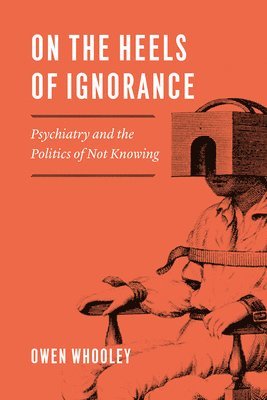
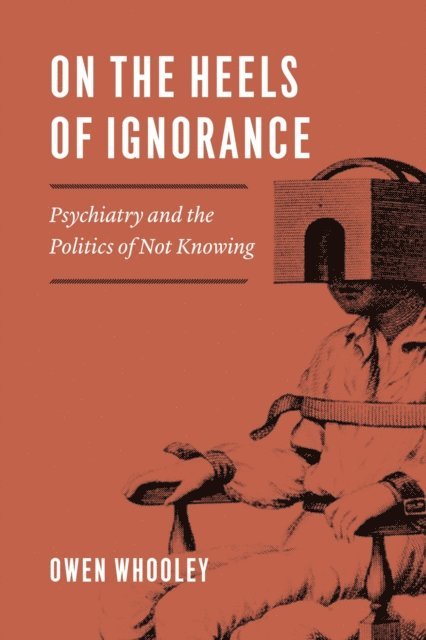
Psychiatry has always aimed to peer deep into the human mind, daring to cast light on its darkest corners and untangle its thorniest knot, often invoking the latest medical science in doing so. But, as Owen Whooley’s sweeping new history tell us, the history of American psychiatry is really a history of ignorance. On the Heels of Ignorance begins with American psychiatry’s formal beginnings in the 1840s and moves through two centuries of constant struggle simply to define and redefine mental illness, to say nothing of the best way to treat it. Whooley’s book is no anti-psychiatric screed, however; instead, he reveals a field that has steadfastly muddled along through periodic reinventions and conflicting agendas of curiosity, compassion, and professional striving. On the Heels of Ignorance draws from intellectual history and the sociology of professions to portray an ongoing human effort to make sense of complex mental phenomena using an imperfect set of tools, with sometimes tragic results.
266 kr
Skickas inom 7-10 vardagar
Psychiatry has always aimed to peer deep into the human mind, daring to cast light on its darkest corners and untangle its thorniest knot, often invoking the latest medical science in doing so. But, as Owen Whooley’s sweeping new history tell us, the history of American psychiatry is really a history of ignorance. On the Heels of Ignorance begins with American psychiatry’s formal beginnings in the 1840s and moves through two centuries of constant struggle simply to define and redefine mental illness, to say nothing of the best way to treat it. Whooley’s book is no anti-psychiatric screed, however; instead, he reveals a field that has steadfastly muddled along through periodic reinventions and conflicting agendas of curiosity, compassion, and professional striving. On the Heels of Ignorance draws from intellectual history and the sociology of professions to portray an ongoing human effort to make sense of complex mental phenomena using an imperfect set of tools, with sometimes tragic results.
1 762 kr
Kommande
A sobering assessment of the systematic failures of mental health work.The United States is in the midst of a mental health crisis that cannot be ignored. Its effects are visible in overcrowded emergency rooms, homeless encampments, and frequent police encounters responding to people with serious mental illness. And yet, the many ways we attempt to support people with mental illness—from medical care to housing support to basic hygiene—seem to never take meaningful hold. All this despite the tireless work of professionals who attempt to help people bring together the pieces of a life. The problem is not in any individual effort to ameliorate the problem; it’s the many ways these programs fail to work together. For those with serious mental illness, and those who work to ameliorate it, there is no system. There is only mess. In A Mad Mess, sociologist Owen Whooley uncovers the exasperating barriers, bureaucratic mismatches, and threadbare resources that have made a mess of what should be a supportive system. Set in Albuquerque, New Mexico—a city whose struggles echo communities nationwide— the book reveals the challenges mental health workers face daily, from tedious paperwork to occasional violence. Whooley interviewed mental health workers at two local mental health services organizations, the specialized behavioral health division of the Albuquerque Police Department (APD), and a psychiatric emergency department at the University of New Mexico Hospital. Despite mostly good intentions and sometimes heroic efforts, he shows why this important work so often ends in failure. Written with deep sympathy and unflinching honesty, A Mad Mess reveals how the lack of a cohesive mental health system obstructs critical care and places roadblocks before front-line mental health workers at every turn. Most critically, for those who suffer from severe mental illness, these setbacks are a constant reminder that the institutions charged with helping them have left them on their own.
431 kr
Kommande
A sobering assessment of the systematic failures of mental health work.The United States is in the midst of a mental health crisis that cannot be ignored. Its effects are visible in overcrowded emergency rooms, homeless encampments, and frequent police encounters responding to people with serious mental illness. And yet, the many ways we attempt to support people with mental illness—from medical care to housing support to basic hygiene—seem to never take meaningful hold. All this despite the tireless work of professionals who attempt to help people bring together the pieces of a life. The problem is not in any individual effort to ameliorate the problem; it’s the many ways these programs fail to work together. For those with serious mental illness, and those who work to ameliorate it, there is no system. There is only mess. In A Mad Mess, sociologist Owen Whooley uncovers the exasperating barriers, bureaucratic mismatches, and threadbare resources that have made a mess of what should be a supportive system. Set in Albuquerque, New Mexico—a city whose struggles echo communities nationwide— the book reveals the challenges mental health workers face daily, from tedious paperwork to occasional violence. Whooley interviewed mental health workers at two local mental health services organizations, the specialized behavioral health division of the Albuquerque Police Department (APD), and a psychiatric emergency department at the University of New Mexico Hospital. Despite mostly good intentions and sometimes heroic efforts, he shows why this important work so often ends in failure. Written with deep sympathy and unflinching honesty, A Mad Mess reveals how the lack of a cohesive mental health system obstructs critical care and places roadblocks before front-line mental health workers at every turn. Most critically, for those who suffer from severe mental illness, these setbacks are a constant reminder that the institutions charged with helping them have left them on their own.