P. Aducci - Böcker
Visar alla böcker från författaren P. Aducci. Handla med fri frakt och snabb leverans.
2 produkter
2 produkter
1 062 kr
Skickas inom 10-15 vardagar
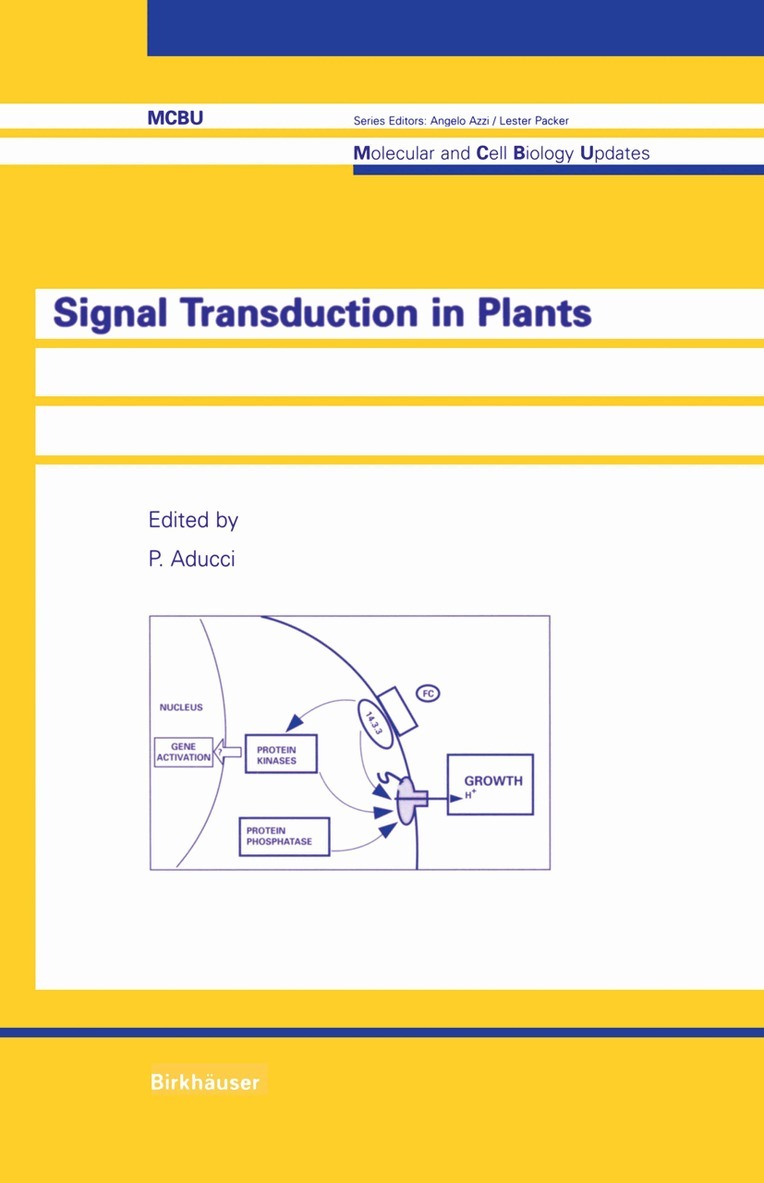
Increasing interest has been emerging in the last decade in the field of signal recognition and transduction. This is particularly true for animal systems where an impressive amount of literature is appearing and where many important pathways have been clarified at a molecular level. In the elucidation of the functions of single components of a given pathway, gene cloning has played a major role and opened the field to the genetic engineering of these complex systems. At variance with this situation, plant systems are less well elucidated, even if in recent years exciting research of developments have been initiated especially with the view toward the most promising role plants in biotechnology. Recent studies have elucidated some of the events involved in the perception of the plant hormone signals and some steps concerning its transduction. Only for three of the five hormones in plants, namely auxin, ethylene and cytokinins, have specific receptors been isolated. The use of classical molecular approaches, together with the more recently isolated mutants, have produced crucial information on receptors and shed light on possible transduction pathways. As in the case of red light, more than one pathway can be triggered by one specific signal. Many systems involved in animal signaling are now shown to be present also in plants, and in view of the fast progress in this area, it will be possible in the near future to fully describe the content of the "black boxes" in the reaction chain specifically triggered by a signal.
1 062 kr
Skickas inom 10-15 vardagar
The molecular aspects of recognition and transduction of different kinds of signals is a research area that is attracting world-wide interest. Major advances have been made in animal systems, but recently plants have become attractive to research because of their role in biotechnology. The type of signals peculiar to the plant world as well as the similarity of currently known plant transduction pathways to their animal counterparts is prompting more studies in this area of cell biology. This text provides a survey of all aspects of the recognition and transduction of plant signals of both chemical and physical origin such as hormones, light, toxins and elicitors. The various authors, drawn from areas of plant molecular biology and physiology, present different approaches to studying the recognition and transduction of different signals which specifically trigger molecular processes in plants. This book should interest researchers, teachers, and advanced students in plant biology, biochemistry and agriculture, as well as related animal systems.