
P. N. Johnson-Laird – författare
Visar alla böcker från författaren P. N. Johnson-Laird. Handla med fri frakt och snabb leverans.
2 produkter
2 produkter
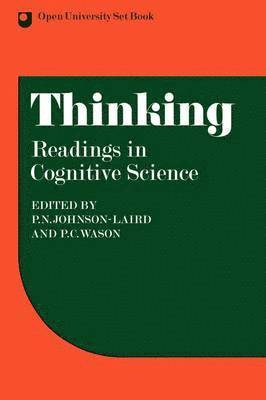
Häftad, Engelska, 1977
751 kr
Skickas inom 7-10 vardagar
First published in 1977, this is a volume about the scientific study of thinking: its possibility, its part state and its future prospects. The editors have brought together a set of readings which draw on work in cognitive psychology, artificial intelligence, psycholinguistics and philosophy. It is not, however, a mechanical or merely routine collection. At the time of publication there had been rapid and important advances in several different disciplines concerned with human thinking; many of these advances seem to be fundamental and convergent, to point towards a genuine cognitive science. The editors have tried to capture this sense of readiness, excitement and impetus in their selection of readings and their presentation of them. There are substantial introductions to each of the seven parts of the book as a whole to connect and explain the material, with the student and general reader particularly in mind.
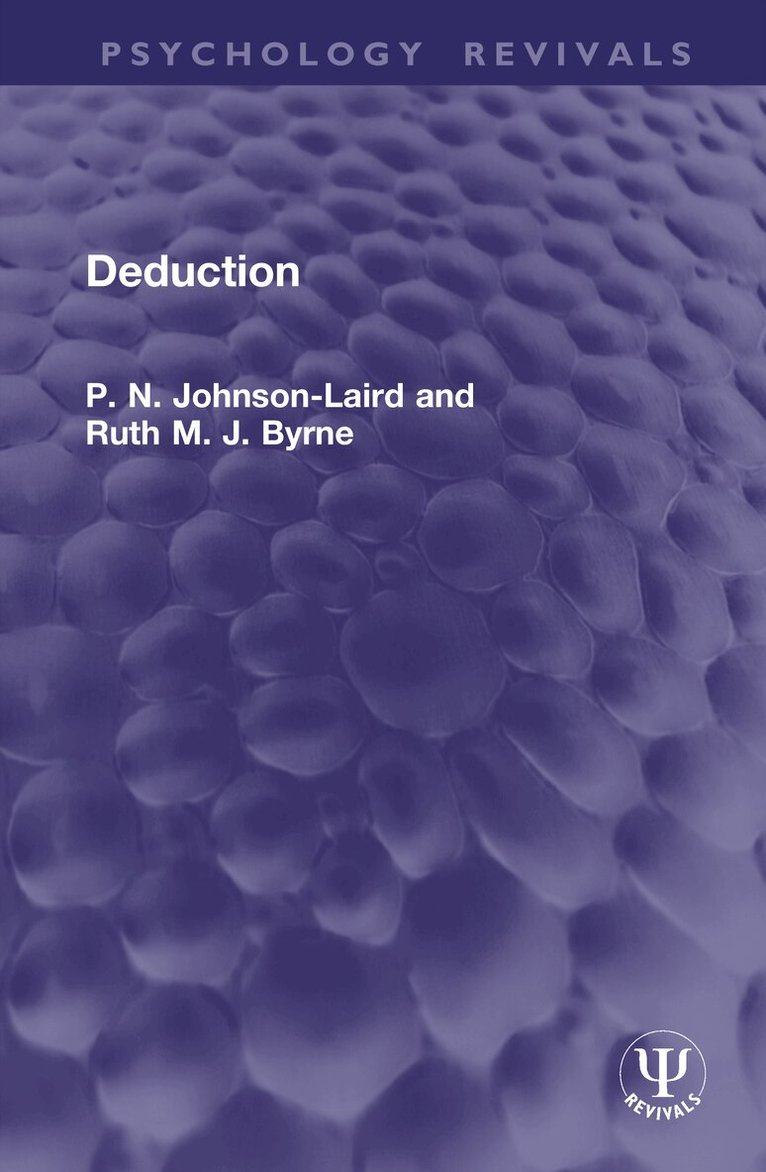
Inbunden, Engelska, 2026
1 583 kr
Kommande
How do people make deductions? The orthodox answer is that they follow formal rules of inference. Originally published in 1991, and reissued here with a new preface, the authors of Deduction repudiate this theory. They argue that people reason by building a model of the state of affairs, formulating a conclusion based on this model, and searching for alternative models that refute it. Formal rules work syntactically; mental models work semantically. The theories therefore make different predictions about the difficulty of deductions. The book reports experiments that compared these predictions in the main domains of deduction: propositional reasoning; relational reasoning; and quantificational reasoning. In each domain, the results corroborated the model theory and ran counter to the rule theories.The authors relate their findings to problems in artificial intelligence, linguistics and anthropology. They describe computer programs based on the model theory, including one that solves a major problem in the design of electronic circuits. Finally, they show how the theory resolves a long-standing controversy about rationality.