
P. Phariseau – författare
Visar alla böcker från författaren P. Phariseau. Handla med fri frakt och snabb leverans.
3 produkter
3 produkter
535 kr
Skickas inom 10-15 vardagar
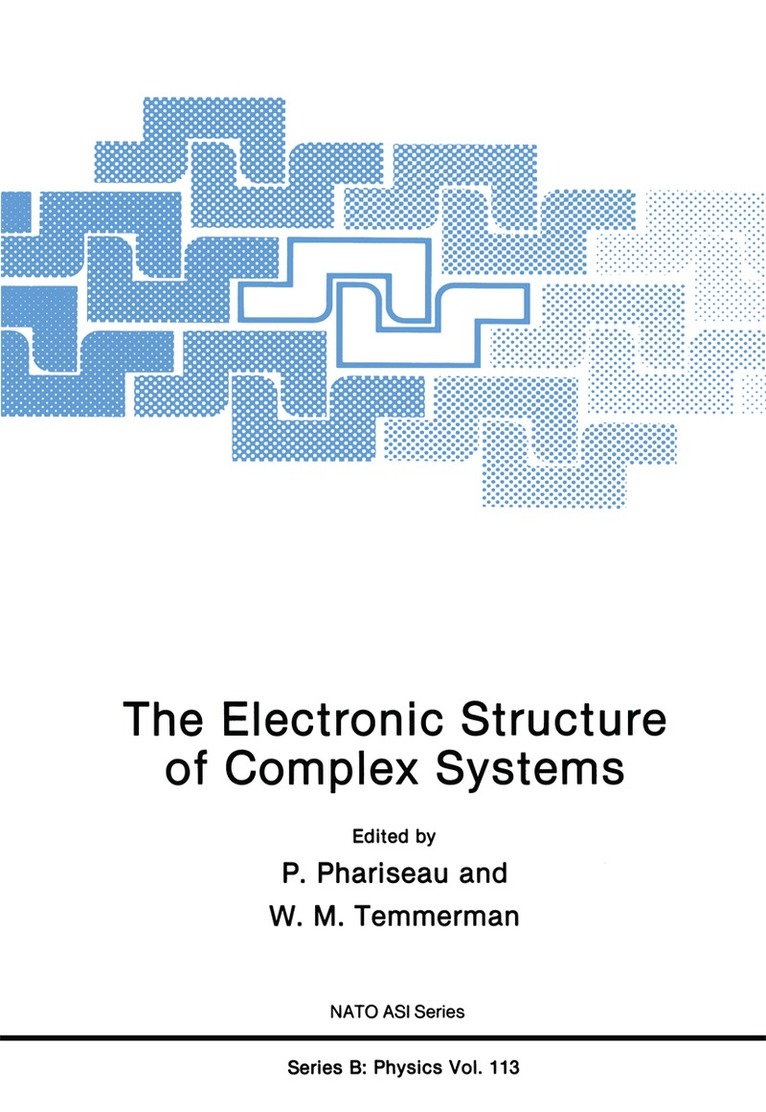
We present here the transcripts of lectures and talks which were delivered at the NATO ADVANCED STUDY INSTITUTE "Electronic Structure of Complex Systems" held at the State University of Ghent, Belgium during the period July 12-23, 1982. The aim of these lectures was to highlight some of the current progress in our understanding of the electronic structure of com plex systems. A massive leap forward is obtained in bandstructure calculations with the advent of linear methods. The bandtheory also profitted tremendously from the recent developments in the density functional theories for the properties of the interacting electron gas in the presence of an external field of ions. The means of per forming fast bandstructure calculations and the confidence in the underlying potential functions have led in the past five years or so to a wealth of investigations into the electronic properties of elemental solids and compounds. The study of the trends of the electronic structure through families of materials provided invalu able insights for the prediction of new materials. The detailed study of the electronic structure of specific solids was not neglected and our present knowledge of d- and f-metals and metal hydrides was reviewed. For those systems we also investi gated the accuracy of the one electron potentials in fine detail and we complemented this with the study of small clusters of atoms where our calculations are amenable to comparison with the frontiers of quantum chemistry calculations.
535 kr
Skickas inom 10-15 vardagar
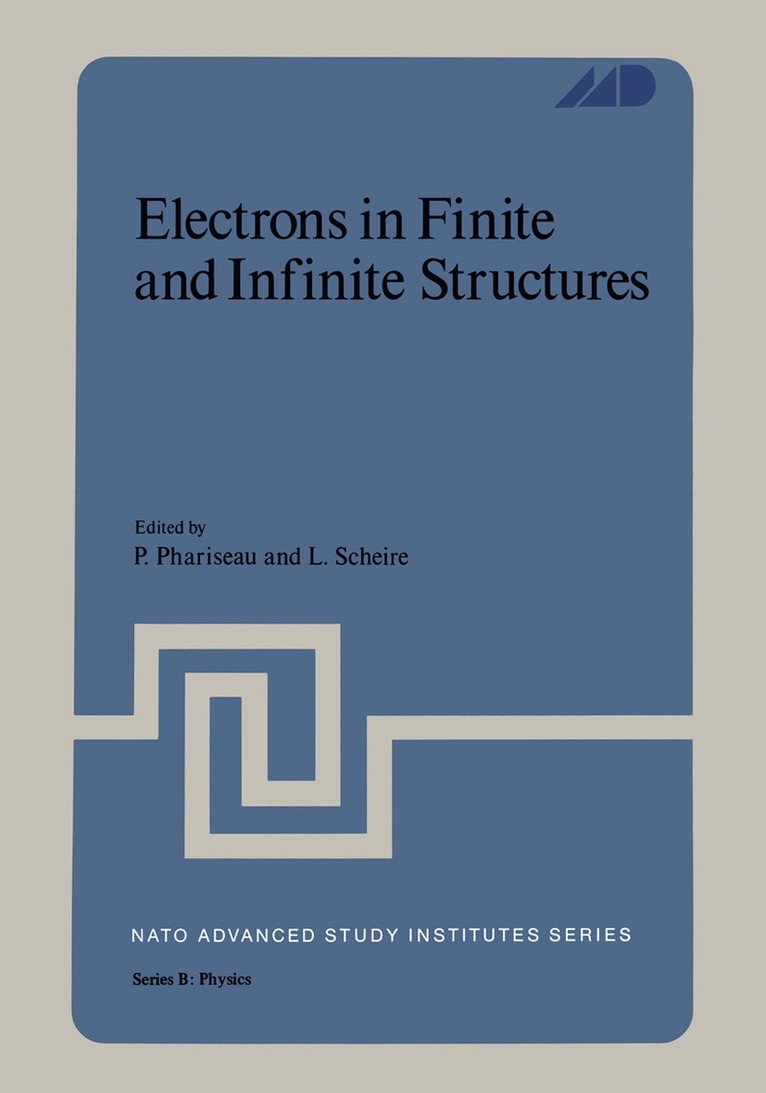
This book contains the transcripts of the lectures presented at the NATO Advanced Study Institute on "Electrons in Finite and Infinite Structures," held at the State University of Ghent, Belgium, August 30-September 11, 1976. Over the last few years substantial progress has been made in the description and the understanding of the behavior of electrons in extended bodies. This includes the study of the energy spectrum of electrons in large molecules, perfect as well as imperfect crys tals, and disordered alloys. Not only local potential techniques but also the many-body aspects are discussed in detail. As atomic, molecular, and solid state physics involve common techniques and insights, we believe that physicists and chemists active in these fields have benefited from these lectures and the interchange of ideas during the course. The aim of the Institute was to familiarize young scientists in the field with the current state of the art and to indicate in which areas advances may be expected in the near future. The A.S.I. consisted of two parts: detailed instructional and review lectures over the whole period and some evening sessions where the partici pants were offered the opportunity to present their own work and discuss their ideas with senior scientists. Since the Institute took place a few weeks after Prof. Dr. John C. Slater was suddenly taken from our scientific community, it was a great honor for us to dedicate this course, on behalf of the organizing committee, to the late John C. Slater.
535 kr
Skickas inom 10-15 vardagar
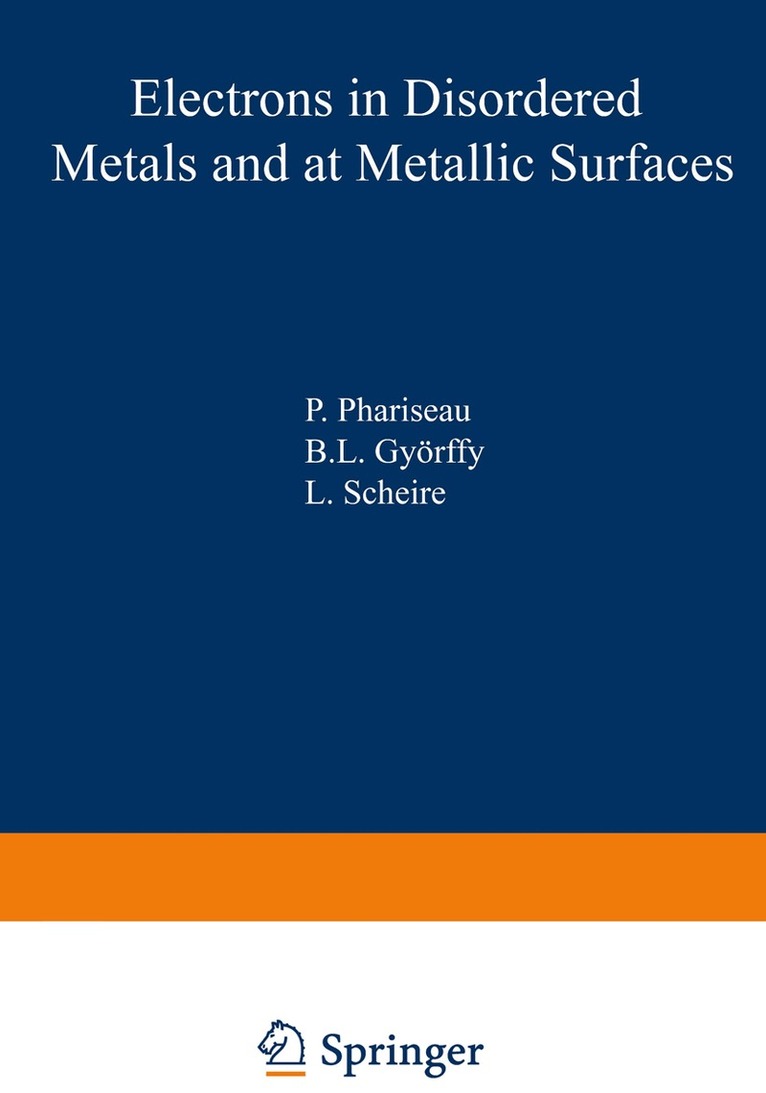
We present here the transcripts of lectures and talks which were delivered at the NATO ADVANCED STUDY INSTITUTE "Electrons in Disordered Hetals and at ~~etallic Surfaces" held at the State University of Ghent, Belgium between August 28 and September 9, 1978. The aim of these lectures was to highlight some of the current progress in our understanding of the degenerate electron 'liquid' in an external field which is neither uniform nor periodic. This theme brought together such topics as the electronic structure at metallic surfaces and in random metallic alloys, liquid metals and metallic glasses. As is the case in connection with infinite order ed crystals, the central issues to be discussed were the nature of the electronic spectra, the stability of the various phases and the occurrence of such phenomena as magnetism and supercon ductivity. In the theoretical lectures the emphasis was on detailed rea listic calculations based, more or less, on the density functional approach to the problem of the inhomogeneous electron liquid. How ever, where such calculations were not available, as in the case of magnetism in random alloys and that of metallic glasses, sim pler phenomenological models were used. The theoretical discussions were balanced by reviews of the most promising experimental techniques. Here the stress was on results and their relevance to the fundamental theory. lforeover, the attention had centered on those experiments which probe the electronic structure in the greatest detail.