Pablo Policzer - Böcker
Visar alla böcker från författaren Pablo Policzer. Handla med fri frakt och snabb leverans.
3 produkter
3 produkter
324 kr
Skickas inom 10-15 vardagar
In The Rise and Fall of Repression in Chile, Pablo Policzer tackles the difficult task of analyzing how authoritarian regimes utilize coercion. Even in relatively open societies, coercive institutions such as the police and military tend to be secretive and mistrustful of efforts by outsiders to oversee their operations. In more closed societies, secrecy is the norm, making coercion that much more difficult to observe and understand. Drawing on organization theory to develop a comparative typology of coercive regimes, Policzer analyzes the structures and mechanisms of coercion in general and then shifts his focus to the early part of the military dictatorship in Chile, which lasted from 1973 to 1990. Policzer's book sheds new light on a fundamental, yet little-examined, period during the Chilean dictatorship. Between 1977 and 1978, the governing junta in Chile quietly replaced the secret police organization known as the Dirección de Informaciones Nacional (DINA) with a different institution, the Central Nacional de Informaciones (CNI). Policzer provides the first systematic account of why the DINA was created in the first place, how it became the most powerful repressive institution in the country, and why it was suddenly replaced with a different organization, one that carried out repression in a markedly more restrained manner. Policzer shows how the dictatorship's reorganization of its security forces intersected in surprising ways with efforts by human rights watchdogs to monitor and resist the regime's coercive practices. He concludes by comparing these struggles with how dictatorships in Argentina, East Germany, and South Africa organized coercion.
1 109 kr
Skickas inom 10-15 vardagar
In The Rise and Fall of Repression in Chile, Pablo Policzer tackles the difficult task of analyzing how authoritarian regimes utilize coercion. Even in relatively open societies, coercive institutions such as the police and military tend to be secretive and mistrustful of efforts by outsiders to oversee their operations. In more closed societies, secrecy is the norm, making coercion that much more difficult to observe and understand. Drawing on organization theory to develop a comparative typology of coercive regimes, Policzer analyzes the structures and mechanisms of coercion in general and then shifts his focus to the early part of the military dictatorship in Chile, which lasted from 1973 to 1990. Policzer's book sheds new light on a fundamental, yet little-examined, period during the Chilean dictatorship. Between 1977 and 1978, the governing junta in Chile quietly replaced the secret police organization known as the Dirección de Informaciones Nacional (DINA) with a different institution, the Central Nacional de Informaciones (CNI). Policzer provides the first systematic account of why the DINA was created in the first place, how it became the most powerful repressive institution in the country, and why it was suddenly replaced with a different organization, one that carried out repression in a markedly more restrained manner. Policzer shows how the dictatorship's reorganization of its security forces intersected in surprising ways with efforts by human rights watchdogs to monitor and resist the regime's coercive practices. He concludes by comparing these struggles with how dictatorships in Argentina, East Germany, and South Africa organized coercion.
422 kr
Skickas inom 10-15 vardagar
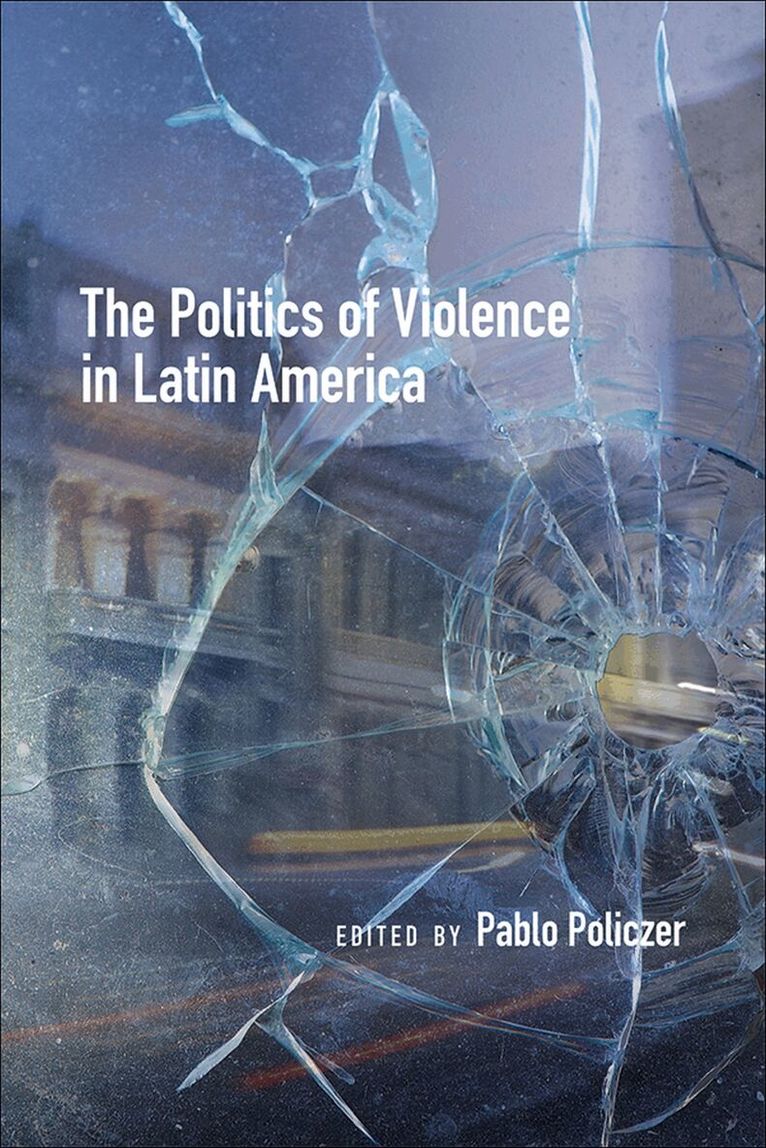
Latin America is one of the most violent regions in the world. It has suffered waves of repressive authoritarian rule, organized armed insurgency and civil war, violent protest, and ballooning rates of criminal violence. But is violence hard-wired into Latin America? This is a critical reassessment of the ways in which violence in Latin America is addressed and understood. Previous approaches have relied on structural perspectives, attributing the problem of violence to Latin America's colonial past or its conflictual contemporary politics. Bringing together scholars and practitioners, this volume argues that violence is often rooted more in contingent outcomes than in deeply embedded structures. Addressing topics ranging from the root sources of violence in Haiti to kidnapping in Colombia, from the role of property rights in patterns of violence to the challenges of peacebuilding, this book is an essential step towards understanding the causes and contexts of violence-and changing the mechanisms that produce it.