Paige Raibmon - Böcker
Visar alla böcker från författaren Paige Raibmon. Handla med fri frakt och snabb leverans.
2 produkter
2 produkter
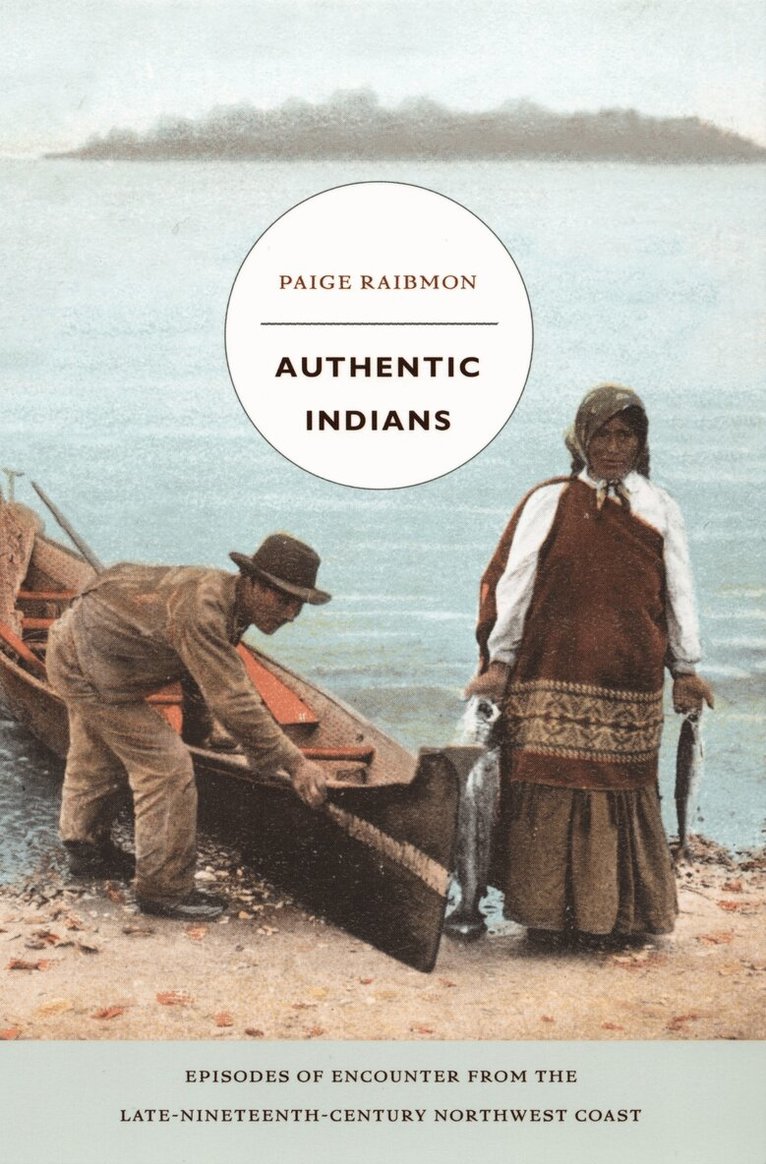
Authentic Indians
Episodes of Encounter from the Late-Nineteenth-Century Northwest Coast
Häftad, Engelska, 2005
362 kr
Skickas inom 7-10 vardagar
In this innovative history, Paige Raibmon examines the political ramifications of ideas about “real Indians.” Focusing on the Northwest Coast in the late nineteenth century and early twentieth, she describes how government officials, missionaries, anthropologists, reformers, settlers, and tourists developed definitions of Indian authenticity based on such binaries as Indian versus White, traditional versus modern, and uncivilized versus civilized. They recognized as authentic only those expressions of “Indianness” that conformed to their limited definitions and reflected their sense of colonial legitimacy and racial superiority. Raibmon shows that Whites and Aboriginals were collaborators-albeit unequal ones-in the politics of authenticity. Non-Aboriginal people employed definitions of Indian culture that limited Aboriginal claims to resources, land, and sovereignty, while Aboriginals utilized those same definitions to access the social, political, and economic means necessary for their survival under colonialism.Drawing on research in newspapers, magazines, agency and missionary records, memoirs, and diaries, Raibmon combines cultural and labor history. She looks at three historical episodes: the participation of a group of Kwakwaka’wakw from Vancouver in the 1893 World’s Columbian Exposition in Chicago; the work of migrant Aboriginal laborers in the hop fields of Puget Sound; and the legal efforts of Tlingit artist Rudolph Walton to have his mixed-race step-children admitted to the white public school in Sitka, Alaska. Together these episodes reveal the consequences of outsiders’ attempts to define authentic Aboriginal culture. Raibmon argues that Aboriginal culture is much more than the reproduction of rituals; it also lies in the means by which Aboriginal people generate new and meaningful ways of identifying their place in a changing modern environment.
711 kr
Skickas inom 7-10 vardagar
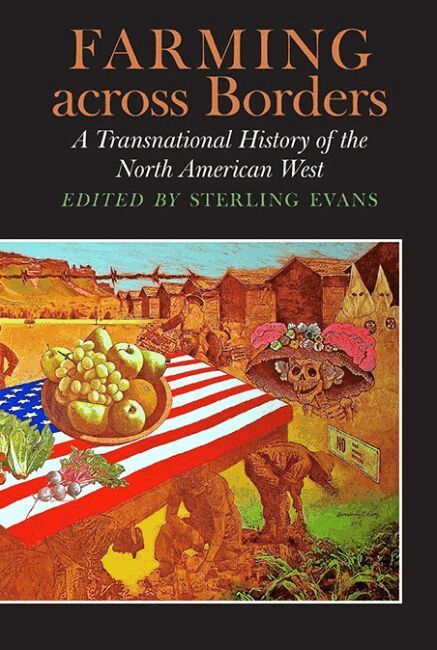
Farming across Borders uses agricultural history to connect the regional experiences of the American West, northern Mexico, western Canada, and the North American side of the Pacific Rim, now writ large into a broad history of the North American West. Case studies of commodity production and distribution, trans-border agricultural labor, and environmental change unite to reveal new perspectives on a historiography traditionally limited to a regional approach.Sterling Evans has curated nineteen essays to explore the contours of “big” agricultural history. Crops and commodities discussed include wheat, cattle, citrus, pecans, chiles, tomatoes, sugar beets, hops, henequen, and more. Toiling over such crops, of course, were the people of the North American West, and as such, the contributing authors investigate the role of agricultural labor, from braceros and Hutterites to women working in the sorghum fields and countless other groups in between.As Evans concludes, “society as a whole (no matter in what country) often ignores the role of agriculture in the past and the present.” Farming across Borders takes an important step toward cultivating awareness and understanding of the agricultural, economic, and environmental connections that loom over the North American West regardless of lines on a map. In the words of one essay, “we are tied together . . . in a hundred different ways.”