Pamela Walker Laird - Böcker
Visar alla böcker från författaren Pamela Walker Laird. Handla med fri frakt och snabb leverans.
3 produkter
3 produkter
Del 48 - Harvard Studies in Business History
Pull
Networking and Success since Benjamin Franklin
Häftad, Engelska, 2007
250 kr
Skickas inom 7-10 vardagar
Redefining the way we view business success, Pamela Laird demolishes the popular American self-made story as she exposes the social dynamics that navigate some people toward opportunity and steer others away. Who gets invited into the networks of business opportunity? What does an unacceptable candidate lack? The answer is social capital—all those social assets that attract respect, generate confidence, evoke affection, and invite loyalty.In retelling success stories from Benjamin Franklin to Andrew Carnegie to Bill Gates, Laird goes beyond personality, upbringing, and social skills to reveal the critical common key—access to circles that control and distribute opportunity and information. She explains how civil rights activism and feminism in the 1960s and 1970s helped demonstrate that personnel practices violated principles of equal opportunity. She evaluates what social privilege actually contributes to business success, and analyzes the balance between individual characteristics—effort, innovation, talent—and social factors such as race, gender, class, and connections.In contrasting how Americans have prospered—or not—with how we have talked about prospering, Laird offers rich insights into how business really operates and where its workings fit within American culture. From new perspectives on entrepreneurial achievement to the role of affirmative action and the operation of modern corporate personnel systems, Pull shows that business is a profoundly social process, and that no one can succeed alone.
257 kr
Skickas inom 7-10 vardagar
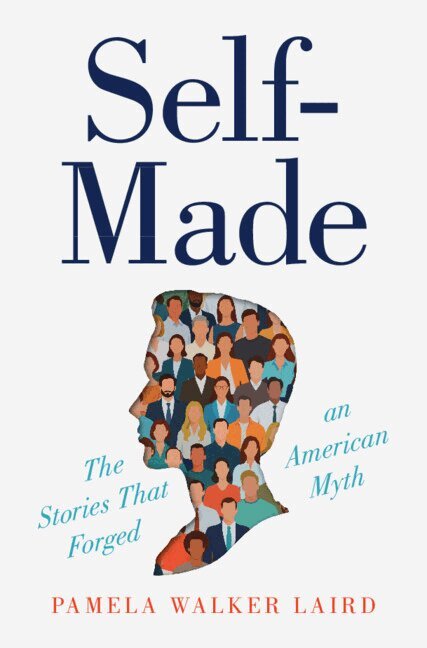
'Self-Made' success is now an American badge of honor that rewards individualist ambitions while it hammers against community obligations. Yet, four centuries ago, our foundational stories actually disparaged ambitious upstarts as dangerous and selfish threats to a healthy society. In Pamela Walker Laird's fascinating history of why and how storytellers forged this American myth, she reveals how the goals for self-improvement evolved from serving the community to supporting individualist dreams of wealth and esteem. Simplistic stories of self-made success and failure emerged that disregarded people's advantages and disadvantages and fostered inequality. Fortunately, Self-Made also recovers long-standing, alternative traditions of self-improvement to serve the common good. These challenges to the myth have offered inspiration, often coming, surprisingly, from Americans associated with self-made success, such as Benjamin Franklin, Frederick Douglass, and Horatio Alger. Here are real stories that show that no one lives - no one succeeds or fails - in a vacuum.
Del 14 - Studies in Industry and Society
Advertising Progress
American Business and the Rise of Consumer Marketing
Häftad, Engelska, 2020
686 kr
Skickas inom 7-10 vardagar
Selected by Choice Magazine as an Outstanding Academic TitleOriginally published in 1998. Drawing on both documentary and pictorial evidence, Pamela Walker Laird explores the modernization of American advertising to 1920. She links its rise and transformation to changes that affected American society and business alike, including the rise of professional specialization and the communications revolution that new technologies made possible. Laird finds a fundamental shift in the kinds of people who created advertisements and their relationships to the firms that advertised. Advertising evolved from the work of informing customers (telling people what manufacturers had to sell) to creating consumers (persuading people that they needed to buy). Through this story, Laird shows how and why—in the intense competitions for both markets and cultural authority—the creators of advertisements laid claim to "progress" and used it to legitimate their places in American business and culture.