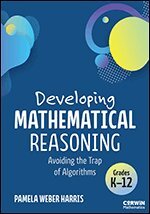
Pamela Weber Harris - Böcker
689 kr
Skickas inom 3-6 vardagar
561 kr
Tillfälligt slut
386 kr
Skickas inom 5-8 vardagar
Math is not rote-memorizable. Math is not random-guessable. Math is figure-out-able.
Author Pam Harris argues that teaching real math—math that is free of distortions–will reach more students more effectively and result in deeper understanding and longer retention. This book is about teaching undistorted math using the kinds of mental reasoning that mathematicians do.
Memorization tricks and algorithms meant to make math “easier” are full of traps that sacrifice long-term student growth for short-lived gains. Students and teachers alike have been led to believe that they’ve learned more and more math, but in reality their brains never get any stronger.
Using these tricks may make facts easier to memorize in isolation, but that very disconnect distorts the reality of math. The mountain of trivia piles up until students hit a breaking point. Humanity's most powerful system of understanding, organizing, and making an impact on the world becomes a soul-draining exercise in confusion, chaos, and lost opportunities.
Developing Mathematical Reasoning: Avoiding the Trap of Algorithms emphasizes the importance of teaching students increasingly sophisticated mathematical reasoning and understanding underlying concepts rather than relying on a set rule for solving problems. This book illuminates a hierarchy of mathematical reasoning to help teachers guide students through various domains of math development, from basic counting and adding to more complex proportional and functional reasoning.
Everyone is capable of understanding and doing real math. This book:
Highlights the important mathematical relationships, strategies, and models for students to developOffers personal stories, reflection sections, and extensive practical exercises for easy implementationIncludes real math—a lot of it—to provide teachers with examples they can put to use in their classrooms immediatelyThis book is a valuable resource for educators looking to reach more students by building a strong foundation of mathematical thinking in their students. By addressing common misconceptions about math and providing practical strategies for teaching real math, this book shows that everyone can use the mathematical relationships they already know to reason about new relationships. In other words, everyone can math.
Developing Mathematical Reasoning
The Strategies, Models, and Lessons to Teach the Big Ideas in Grades K-2
438 kr
Skickas
Math is not rote-memorizable. Math is not random-guessable. Math is figure-out-able.
Author Pam Harris argues that teaching real math—math that is free of distortions—will reach more students more effectively and result in deeper understanding and longer retention. This book is about teaching undistorted math using the kinds of mental reasoning that mathematicians do.
Memorization tricks and algorithms meant to make math “easier” are full of traps that sacrifice long-term student growth for short-lived gains. Students and teachers alike have been led to believe that they’ve learned more and more math, but in reality their brains never get any stronger. Using these tricks may make facts easier to memorize in isolation, but that very disconnect distorts the reality of math.
In her landmark book Developing Mathematical Reasoning: Avoiding the Trap of Algorithms, Pam emphasizes the importance of teaching students increasingly sophisticated mathematical reasoning and understanding underlying concepts rather than relying on a set rule for solving problems. Now, in this first companion volume, Developing Mathematical Reasoning: The Strategies, Models, and Lessons to Teach the Big Ideas in Grades K-2, she demonstrates how counting and additive strategies serve as the foundation for creating efficient, accurate, and flexible thinkers.
Everyone is capable of understanding and doing real math. This book:
Gives step-by-step guidance on how to teach the strategies, models, and big ideas that foster confidence and long-term success, preparing students for increasingly complex mathematical challengesOffers the “what to do” to teach counting, addition, and subtraction in ways that promote reasoning over rote memorizationProvides practical tools such as problem strings, models, classroom routines, and discussion questions designed to implement reasoning-based practicesIncludes supporting resources for creating a classroom culture where students see math as figure-out-able and gain confidence as mathematical thinkersBy addressing common misconceptions about math and providing practical strategies for teaching real math, this book shows that everyone can use the mathematical relationships they already know to reason about new relationships. In other words, everyone can math-even the very youngest students!
Developing Mathematical Reasoning
The Strategies, Models, and Lessons to Teach the Big Ideas in Grades 3-5
385 kr
Kommande
Math is not rote-memorizable. Math is not random-guessable. Math is figure-out-able.
Author Pam Harris argues that teaching real math—math that is free of distortions–will reach more students more effectively and result in deeper understanding and longer retention. This book is about teaching undistorted math using the kinds of mental reasoning that mathematicians do.
Memorization tricks and algorithms meant to make math “easier” are full of traps that sacrifice long-term student growth for short-lived gains. Students and teachers alike have been led to believe that they’ve learned more and more math as they move through the content, but in reality students are not necessarily progressing in their ability to reason mathematically.
Using tricks may make facts easier to memorize in isolation, but that very disconnect distorts the reality of math. The mountain of trivia piles up until students hit a breaking point. Humanity's most powerful system of understanding, organizing, and making an impact on the world becomes a soul-draining exercise in confusion, chaos, and lost opportunities.
In her landmark book Developing Mathematical Reasoning: Avoiding the Trap of Algorithms, Pam emphasizes the importance of teaching students increasingly sophisticated mathematical reasoning and understanding underlying concepts rather than relying on set rules for solving problems. Now, in this next companion volume, Developing Mathematical Reasoning: The Strategies, Models, and Lessons to Teach the Big Ideas in Grades 3–5 equips educators with practical tools to move beyond rote memorization toward true mathematical thinking for students in upper elementary grades. Focusing on additive and multiplicative reasoning, the book introduces strategies designed to improve mathematical reasoning, Problem Strings, and strategic modeling to strengthen student understanding.
Highlights include:
Reasoning-based strategies: Replace traditional algorithms with approaches that build critical thinking while ensuring understanding.Problem Strings: Step-by-step guidance on walking students through a sequence of problems that spark insight.Grade 3–5 focus: Comprehensive coverage of additive and multiplicative reasoning tailored for upper elementary learners.Practical tools: Ready-to-use routines, discussion prompts, and modeling techniques for immediate classroom application.Help students learn to think mathematically rather than memorize. Build confidence, deep understanding, and an appreciation for the logic and beauty of math.