• Fri frakt över 249 kr
  • •
  • Snabba leveranser
  • •
  • Billiga böcker
Kundservice

Du är på sajten för privatpersoner.

Företag, bibliotek eller offentlig verksamhet?

Du handlar på classic.bokus.com, där alla dina funktioner finns intakta.
Till classic.bokus.com
Bokus logotyp. Gå till startsidan.
  • Erbjudanden
  • Student
  • Topplistor
  • Barn & ungdom
  • Bokus Play
  • E-böcker
  • Ljudböcker
  • Pocketböcker
  • Spel & pussel

10% rabatt på allt med kod NYSTART10 →

Sidfot

Mina sidor

    Hjälp

    • Kundservice
    • Vanliga frågor och svar
    • Frakt och leverans
    • Retur vid ångerrätt
    • Reklamera vara
    • Betalning
    • Köpvillkor
    • Allmänna villkor
    • Information om webbplatsens tillgänglighet

    Om Bokus

    • Om oss
    • Pressrum
    • För studenter
    • För företag
    • För bibliotek och offentlig verksamhet
    • För leverantörer
    • Hållbarhet

    Populärt

    • Aktuella erbjudanden
    • Presentkort
    • Studentlitteratur
    • Nya böcker
    • Topplistor
    • Signerade böcker
    • Engelska böcker

    Inspiration

    • Boktips
    • BookTok
    • Populära bokserier
    • Barnbokskaraktärer
    • Populära författare
    Logotyp för Bokus
    Följ oss på Facebook (extern länk)Följ oss på Instagram (extern länk)Följ oss på YouTube (extern länk)Följ oss på TikTok (extern länk)
    bokus @ CookiesAnpassa cookiesIntegritetspolicyKöpvillkor
    Till Citymail hemsida (extern länk)Till Budbee hemsida (extern länk)Till Postnord hemsida (extern länk)Till Schenker hemsida (extern länk)Till Early Bird hemsida (extern länk)Till Walleys hemsida (extern länk)
    1. Psykologi och pedagogik
    2. Pedagogik
    3. Skolan och förskolan

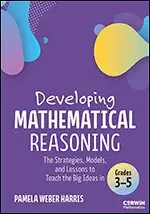
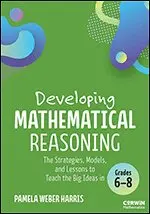
    Developing Mathematical Reasoning

    The Strategies, Models, and Lessons to Teach the Big Ideas in Grades K-2

    AvPamela Weber Harris

    Häftad, Engelska, 2025

    Del i serien Corwin Mathematics Series

    393 kr

    Beställningsvara. Skickas inom 5-8 vardagar. Fri frakt över 249 kr.

    Fler format och utgåvor

    Häftad

    393 kr

    Häftad

    392 kr

    Häftad

    Kommande

    Beskrivning

    Math is not rote-memorizable. Math is not random-guessable. Math is figure-out-able.

    Author Pam Harris argues that teaching real math—math that is free of distortions—will reach more students more effectively and result in deeper understanding and longer retention. This book is about teaching undistorted math using the kinds of mental reasoning that mathematicians do.

    Memorization tricks and algorithms meant to make math “easier” are full of traps that sacrifice long-term student growth for short-lived gains. Students and teachers alike have been led to believe that they’ve learned more and more math, but in reality their brains never get any stronger. Using these tricks may make facts easier to memorize in isolation, but that very disconnect distorts the reality of math.

    In her landmark book Developing Mathematical Reasoning: Avoiding the Trap of Algorithms, Pam emphasizes the importance of teaching students increasingly sophisticated mathematical reasoning and understanding underlying concepts rather than relying on a set rule for solving problems. Now, in this first companion volume, Developing Mathematical Reasoning: The Strategies, Models, and Lessons to Teach the Big Ideas in Grades K-2, she demonstrates how counting and additive strategies serve as the foundation for creating efficient, accurate, and flexible thinkers.

    Everyone is capable of understanding and doing real math. This book:

    • Gives step-by-step guidance on how to teach the strategies, models, and big ideas that foster confidence and long-term success, preparing students for increasingly complex mathematical challenges
    • Offers the “what to do” to teach counting, addition, and subtraction in ways that promote reasoning over rote memorization
    • Provides practical tools such as problem strings, models, classroom routines, and discussion questions designed to implement reasoning-based practices
    • Includes supporting resources for creating a classroom culture where students see math as figure-out-able and gain confidence as mathematical thinkers

    By addressing common misconceptions about math and providing practical strategies for teaching real math, this book shows that everyone can use the mathematical relationships they already know to reason about new relationships. In other words, everyone can math-even the very youngest students!

    Produktinformation

    • Utgivningsdatum:2025-12-05
    • Mått:177 x 254 x 18 mm
    • Vikt:520 g
    • Format:Häftad
    • Språk:Engelska
    • Serie:Corwin Mathematics Series
    • Antal sidor:320
    • Upplaga:1
    • Förlag:SAGE Publications
    • ISBN:9781071967546

    Utforska kategorier

    • Skolan och förskolan inom Psykologi och pedagogik
    • Undervisning i specifika ämnen inom Psykologi och pedagogik
    • Läromedel: matematik inom Läromedel

    Mer om författaren

    Pamela Weber Harris is changing the way we view and teach mathematics. Pam is the author of several books, including the Numeracy Problems Strings K-5 series, Building Powerful Numeracy, and the series Foundations for Strategies. As a mom, a former high school math teacher, a university lecturer, and an author, she believes everyone can do more math when it is based in reasoning rather than rote-memorizing or mimicking. Pam has created online Building Powerful Mathematics workshops and presents frequently at national and international conferences.  Her particular interests include teaching real math, building powerful numeracy, sequencing rich tasks to construct mathematics, using technology appropriately, and facilitating smart assessment and vertical connectivity in curricula in schools PK-12. Pam helps leaders and teachers to make the shift that supports students to learn real math because math is figureoutable!

    Recensioner i media

    Who better than Pam Harris to help you introduce K–2 students to mathematical reasoning—the language, the music, and the poetry ofmathematics. A must-read book filled with teaching strategies and creative ideas.

    Innehållsförteckning

    • PrefaceAbout This BookLanguage Use in This BookAcknowledgmentsAbout the AuthorPART I: SETTING THE STAGEChapter 1: MATHEMATICS FOR TEACHINGWhat’s the Purpose of Learning Math?The Development of Mathematical ReasoningMajor StrategiesConclusionDiscussion QuestionsPART II: DEVELOPING COUNTING AND COUNTING STRATEGIESChapter 2: ALL ABOUT COUNTINGThe Difference Between Counting and Counting StrategiesFoundations of NumberHow to Develop CountingThe Number Sequence in the TeensThe Number Sequence After the TeensMeaning of DecadesStudent InterviewConclusionDiscussion QuestionsChapter 3: COUNTING STRATEGIESAbout Counting StrategiesEarly Counting StrategiesThe Counting On, Counting Back StrategyProblem TypesDeveloping Counting StrategiesConclusionDiscussion QuestionsPART III: DEVELOPING ADDITIVE REASONINGChapter 4: THE MAJOR STRATEGIES FOR ADDITION WITHIN 20Additive ReasoningAdditive StrategiesDeveloping Addition Within 20The Get to 10 StrategyThe Next Two Major StrategiesThe Using Doubles to Add StrategyThe Add 10 and Adjust StrategyComparing the Single-Digit Addition StrategiesConclusionDiscussion QuestionsChapter 5: THE MAJOR STRATEGIES FOR SUBTRACTION WITHIN 20Developing Subtraction Within 20The Remove to 10 StrategyThe Next Two Major StrategiesThe Using Doubles to Subtract StrategyThe Remove 10 and Adjust StrategyFinding the Distance/Difference StrategyComparing the Single-Digit Subtraction StrategiesConclusionDiscussion QuestionsChapter 6: THE MAJOR STRATEGIES FOR DOUBLE-DIGIT ADDITIONDeveloping Multi-Digit Addition StrategiesThe Splitting by Place Value StrategyThe Next Two Major StrategiesThe Add a Friendly Number StrategyThe Get to a Friendly Number StrategyThe Add a Friendly Number Over StrategyThe Give and Take StrategyComparing the Major Addition StrategiesConclusionDiscussion QuestionsChapter 7: THE MAJOR STRATEGIES FOR MULTI-DIGIT SUBTRACTIONDeveloping Multi-Digit Subtraction StrategiesThe Remove by Place Value StrategyThe Next Two Major StrategiesThe Remove a Friendly Number StrategyThe Remove to a Friendly Number StrategyThe Remove a Friendly Number Over StrategyFinding the Distance/Difference StrategyThe Constant Difference StrategyComparing the Major Strategies for Multi-Digit SubtractionConclusionDiscussion QuestionsPART IV: PUTTING IT ALL TOGETHERChapter 8: TASKS TO DEVELOP MATHEMATICAL REASONINGSequencing TasksProblem StringsOther Instructional RoutinesGamesHint CardsConclusionDiscussion QuestionsChapter 9: MODELING AND MODELSStrategies Versus ModelsThe Many Meanings of ModelExploring Models by Their Best UsesOur Modeling FrameworkConclusionDiscussion QuestionsChapter 10: MOVING FORWARDMentor MathematiciansWhere to StartConclusionDiscussion QuestionsReferencesIndex