• Fri frakt över 249 kr
  • •
  • Snabba leveranser
  • •
  • Billiga böcker
Kundservice

Du är på sajten för privatpersoner.

Företag, bibliotek eller offentlig verksamhet?

Du handlar på classic.bokus.com, där alla dina funktioner finns intakta.
Till classic.bokus.com
Bokus logotyp. Gå till startsidan.
  • Erbjudanden
  • Student
  • Topplistor
  • Barn & ungdom
  • Bokus Play
  • E-böcker
  • Ljudböcker
  • Pocketböcker
  • Spel & pussel

10% rabatt på allt med kod NYSTART10 →

Sidfot

Mina sidor

    Hjälp

    • Kundservice
    • Vanliga frågor och svar
    • Frakt och leverans
    • Retur vid ångerrätt
    • Reklamera vara
    • Betalning
    • Köpvillkor
    • Allmänna villkor
    • Information om webbplatsens tillgänglighet

    Om Bokus

    • Om oss
    • Pressrum
    • För studenter
    • För företag
    • För bibliotek och offentlig verksamhet
    • För leverantörer
    • Hållbarhet

    Populärt

    • Aktuella erbjudanden
    • Presentkort
    • Studentlitteratur
    • Nya böcker
    • Topplistor
    • Signerade böcker
    • Engelska böcker

    Inspiration

    • Boktips
    • BookTok
    • Populära bokserier
    • Barnbokskaraktärer
    • Populära författare
    Logotyp för Bokus
    Följ oss på Facebook (extern länk)Följ oss på Instagram (extern länk)Följ oss på YouTube (extern länk)Följ oss på TikTok (extern länk)
    bokus @ CookiesAnpassa cookiesIntegritetspolicyKöpvillkor
    Till Citymail hemsida (extern länk)Till Budbee hemsida (extern länk)Till Postnord hemsida (extern länk)Till Schenker hemsida (extern länk)Till Early Bird hemsida (extern länk)Till Walleys hemsida (extern länk)
    1. Psykologi och pedagogik
    2. Pedagogik
    3. Pedagogisk metodik

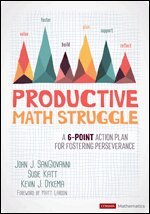
    Productive Math Struggle

    A 6-Point Action Plan for Fostering Perseverance

    AvJohn J. SanGiovanni,Susie Katt

    Häftad, Engelska, 2020

    Del i serien Corwin Mathematics Series

    393 kr

    Beställningsvara. Skickas inom 5-8 vardagar. Fri frakt över 249 kr.

    Beskrivning

    “Seldom has a book been as timely or as necessary as Productive Math Struggle is today. . . One of the remarkable accomplishments of SanGiovanni, Katt, and Dykema’s work lies in how they seamlessly connect the research on high-quality tasks, high expectations, identity, and equity to productive math struggle. This is perhaps their greatest contribution. The authors see productive math struggle as a critical feature of mathematics classrooms that support access, equity, and empowerment, specifically arguing that every student is ‘worthy of struggle.’” 

    From the Foreword by Matt Larson, Ph.D.
    Past President (2016-2018), National Council of Teachers of Mathematics
    Associate Superintendent for Instruction, Lincoln Public Schools, Nebraska

    Struggle is hard. Productive struggle is power.

    All students face struggle, and they should—it is how they learn and grow. The teacher’s job is not to remove struggle, but rather to value and harness it, helping students develop good habits of productive struggle. But what’s missing for many educators is an action plan for how to achieve this, especially when it comes to math.

    Persevering through difficult challenges to reach new learning is the core of Productive Math Struggle. When left unsupported, struggle can become unproductive and demoralizing, negatively influencing students’ mathematical identities. The authors guide teachers through six specific actions—including valuing, fostering, building, planning, supporting, and reflecting on struggle—to create a game plan for overcoming obstacles by sharing

    • Actionable steps, activities, and tools for implementation
    • Instructional tasks and vignettes representative of each grade level
    • Real-world examples showcasing classroom photos and student work samples

    A book study guide is available under the Free Resources tab that helps math educators to learn together on how to incorporate productive math struggle in their classrooms. 

    Revolving around the idea that math is a way of thinking and understanding, and not just the pursuit of answers and procedures, this book empowers students to embrace productive struggle to build essential skills for learning and living—both inside and outside the classroom.


    Produktinformation

    • Utgivningsdatum:2020-07-08
    • Mått:177 x 254 x 18 mm
    • Vikt:380 g
    • Format:Häftad
    • Språk:Engelska
    • Serie:Corwin Mathematics Series
    • Antal sidor:216
    • Upplaga:1
    • Förlag:SAGE Publications
    • ISBN:9781544369464

    Utforska kategorier

    • Pedagogisk metodik inom Psykologi och pedagogik

    Mer om författaren

    John J. SanGiovanni is a mathematics coordinator in Howard County, Maryland. There, he leads mathematics curriculum development, digital learning, assessment, and professional development. John is passionate about growing new mathematics leaders in the district and through McDaniel College. In addition to the Figuring Out Fluency series, some of his many Corwin books include Daily Routines to Jump-Start Problem Solving, Grades K–8; Answers to Your Biggest Questions About Teaching Elementary Math; the Daily Routines to Jump-Start Math series; and Productive Math Struggle: A 6-Point Action Plan for Fostering Perseverance. John is a national mathematics curriculum and professional learning consultant who also speaks frequently at national conferences and institutes. He is active in state and national professional organizations, recently serving on the board of directors for the National Council of Teachers of Mathematics (NCTM) and on the board of directors for NCSM.Susie Katt is the K-2 Mathematics Coordinator in Lincoln, Nebraska, where she leads professional learning, assessment, and math curriculum development. She is an author of Productive Math Struggle: A 6-Point Action Plan for Fostering Perseverance and Answers to Your Biggest Questions About Teaching Elementary Math. She is also a national math curriculum consultant. Susie speaks at state, regional, and national conferences. She served the National Council of Teachers of Mathematics (NCTM) as the chair of the editorial panel for the journal Teaching Children Mathematics, as department editor for Mathematics Teacher: Learning and Teaching PK–12, and as a member of program committees for annual meetings and regional conferences. Susie was recently elected to the board of directors for the National Council of Supervisors of Mathematics (NCSM) as Regional Director, Central 2. Kevin J. Dykema is an 8th grade math teacher in Mattawan, Michigan and serves on several building and district committees. He is a professional learning consultant and is a frequent speaker at national, regional, and local conferences. Kevin is active in state and national professional organizations recently serving on the Board of Directors for the National Council of Teachers of Mathematics and as a board member and annual conference chair for the Michigan Council of Teachers of Mathematics.

    Recensioner i media

    The book provides pre-service teachers with valuable information in the area of productive struggle.

    Innehållsförteckning

    • Foreword by Matt LarsonIntroduction: Why Struggle? Why Now?Chapter 1: VALUE Productive StruggleWhy Struggle MattersMath is more than the pursuit of answersMath isn′t a procedureMath is about equity, access, and opportunityProductive struggle is essential for living and learningWhat Productive Struggle Is and Isn′tWhat struggle looks likeWhen schools value struggleTeacher behaviors for productive struggleEducating familiesProductive struggle "Look-For′s"Whole school agreement about productive struggleStruggle and growth mindsetMoving from unproductive to productive beliefs about struggleStruggle and growth mindsetMoving from unproductive to productive beliefs about struggleKey Takeaways About Action 1: Value Productive StruggleAction 2: FOSTER an Identity for Productive StruggleWhat Is a Math Identity?Your mathematical identity and its effects on instructional choicesThinking about your experiences as a math studentKnowing Your Students′ Mathematical IdentitiesStudent Identity Activity 1: My Math AutobiographyStudent Identity Activity 2: My Math TimelineStudent Identity Activity 3: Journal PromptsStudent Identity Activity 4: Math Beliefs InventoryStudent Identity Activity 5: Math Role Models and Their Stories, Who Are Mathematicians?Student Identity Activity 6: Bumper StickerStudent Activity 7: My Math SuperpowerStudent Identity Activity 8: Struggle EmojisKey Takeaways About Action 2: Foster Identity for Productive StruggleChapter 3: Action 3: BUILD Community for Productive StruggleBuilding Classroom Community for Productive StruggleAddressing challenges to creating communityEstablishing norms for a productive communityMaintaining community throughout the yearActivities for Building and Maintaining a Productive Math CommunityCommunity Activity 1: Math PledgeCommunity Activity 2: Group Behaviors Comic StripCommunity Activity 3: Good Groups vs Bad GroupsCommunity Activity 4: The Number QuiltCommunity Activity 5: A Picture Is Worth 1,000 NumbersCommunity Activity 6: Name and Number TentsCommunity Activity 7: Dimensions of Me (or Many Faces)Activities to Promote a Community Understanding of Productive StruggleCommunity of Struggle Activity 1: The Picture of StruggleCommunity of Struggle Activity 2: A Time I Struggled - The Ski JumpCommunity of Struggle Activity 3: Create a Class Definition of StruggleKey Takeaways About Action 3: Build Community for Productive StruggleChapter 4: Action 4: PLAN for a Lesson with Productive StrugglePlanning for StruggleEstablish the mathematics goalSelect tasks that create the right amount of struggleSelecting High-Quality Tasks for RigorTasks for conceptual understandingTasks for procedural fluencyTasks for applicationModify Tasks for Provoke Productive StruggleModification Strategy 1: Ask Students to Create Multiple Representations (Create)Modification Strategy 2: Ask Students to Create or Connect DIfferent Representations (Connect)Modification Strategy 3: Ask Students “Does This Always Work?” (Generalize)Modification Strategy 4: Ask Students the Reverse (Reverse the Problem)Modification Strategy 6: Ask Students Open Questions (Open Up)Modification Strategy 7: Ask Students to Compare and Contrast (Similarities and Differences)Modification Strategy 8: Ask Students to Find and Use a Pattern (Find a Pattern)Modification Strategy 9: Ask Students to Put their Understanding in Writing (Write About It)Modification Strategy 10: Ask Before They Are Taught (Change the Sequence)Doing the Task and AnticipatingAnticipate representationsAnticipate language and termsAnticipate misconceptions and flawed strategiesPlanning response and reactionInstructional Models, Routines, and Other Considerations when Planning for StruggleDirect InstructionGradual Release of ResponsibilityOther Instructional ChoicesKey Takeaways About Action 4: Plan for Productive StruggleAction 5: SUPPORT the Productive Struggle During the LessonClassifying Various Types of StruggleClassifying Various Types of StruggleResponding to Different Kinds of StruggleThe Problem With Rescuing Student AnswersStruggle Moves That Rescue ThinkingStruggle Move 1: Prepping the TaskStruggle Move 2: Catch and ReleaseStruggle Move 3: ReferralsStruggle Move 4: Metacognitive QuestionsStruggle Move 5: Remove the NumbersTips for Navigating StruggleTeacher Tip 1: Don’t Restate More Than They Say (Revoicing)Teacher Tip 2: Honoring MistakesTeacher Tip 3: Consider When to Help and When to Hold BackTeacher Tip 4: Be Mindful of Mnemonics and Other “Aides” or “Tricks” to Support StruggleTeacher Tip 5: Keep It From Boiling OverTeacher Tip 6: Be aware of early finishersTeacher Tip 7: Adjust the timeTeacher Tip 8: Focus on a strategyTeacher Tip 9: Celebrate itTeacher Tip 10: Leverage accountability and participationKey Takeaways About Action 4: Support Productive StruggleChapter 6: Action 6: REFLECT on Productive StruggleIntegrating Reflection on Struggle into Lesson ClosureStudent Activities for Reflection on StruggleIndependent Writing and DrawingStudent Activity 1: JournalingStudent Activity 2: Struggle DoodleStudent Activity 3: Who I Learned FromCollaborative ReflectionsStudent Activity 4: The Picture of StruggleStudent Activity 5: One WordStudent Activity 6: Find SomeoneEvaluative Reflection ActivitiesStudent Activity 7: Got It, Tried ItStudent Activity 8: Too Easy, Too Hard, Just Right: The Goldilocks ReflectionStudent Activity 9: Today I, Tomorrow I WillTeacher Reflection on Productive StruggleTeacher Option 1: In-the-Moment NotesTeacher Option 2: JournalingTeacher Option 3: When Students Reflect, You ReflectTeacher Option 4: Team Reflections or Professional Learning CadresReflection Leads to CelebrationCelebration Approach 1: Notice It and Reward It with Struggle Bucks and Shout-OutsCelebration Approach 2: Reward It Beyond Math Class with Brag TagsCelebration Approach 3: Reward When Students Take Advantage of ToolsOne caveat about celebrationKey Takeaways About Action 6: Reflect on Productive StruggleChapter 7: Closing Thoughts about StruggleProductive Struggle Definition and Inventory: Where Are You Now?One Final Note