Corwin Mathematics Series - Böcker
Mastering Math Manipulatives, Grades K-3
Hands-On and Virtual Activities for Building and Connecting Mathematical Ideas
438 kr
Skickas
Classroom strategies for introducing math manipulatives, including commercial, virtual, and hand-made manipulatives, into formal math instruction. Step-by-step instructions for 75 activities that work with any curriculum, including four-color photos, printable work mats, and demonstration videos. Handy charts that sort activities by manipulative type, math topic, domains aligned with standards, and grade-level appropriateness.
It's time to dive in and join in the journey toward making manipulatives meaningful so math learning is concrete, profound, and effective for your students!
Figuring Out Fluency in Mathematics Teaching and Learning, Grades K-8
Moving Beyond Basic Facts and Memorization
438 kr
Tillfälligt slut
Because fluency practice is not a worksheet.
Fluency in mathematics is more than adeptly using basic facts or implementing algorithms. Real fluency involves reasoning and creativity, and it varies by the situation at hand.
Figuring Out Fluency in Mathematics Teaching and Learning offers educators the inspiration to develop a deeper understanding of procedural fluency, along with a plethora of pragmatic tools for shifting classrooms toward a fluency approach. In a friendly and accessible style, this hands-on guide empowers educators to support students in acquiring the repertoire of reasoning strategies necessary to becoming versatile and nimble mathematical thinkers. It includes:
“Seven Significant Strategies” to teach to students as they work toward procedural fluency. Activities, fluency routines, and games that encourage learning the efficiency, flexibility, and accuracy essential to real fluency. Reflection questions, connections to mathematical standards, and techniques for assessing all components of fluency. Suggestions for engaging families in understanding and supporting fluency.Fluency is more than a toolbox of strategies to choose from; it’s also a matter of equity and access for all learners. Give your students the knowledge and power to become confident mathematical thinkers.
Figuring Out Fluency - Addition and Subtraction With Whole Numbers
A Classroom Companion
386 kr
Skickas inom 5-8 vardagar
Figuring Out Fluency – Operations With Rational Numbers and Algebraic Equations
A Classroom Companion
397 kr
Skickas inom 5-8 vardagar
“This book is awesome! What stood out to me was the deep understanding I was able to have about what fluency actually means. Too often the message has been fluency and accuracy, especially at the middle school level. By providing teachers with tools for building fluency with integers, expressions, and algebra, this book shifts that message to also focus on flexibility and strategy selection.”
Lindsey Henderson Secondary Mathematics Specialist, Utah State Board of Education Salt Lake City, UT
Because fluency practice is not a worksheet.
Fluency in mathematics is more than adeptly using basic facts or implementing algorithms. It is not about speed or recall. Real fluency is about choosing strategies that are efficient, flexible, lead to accurate solutions, and are appropriate for the given situation. Developing fluency is also a matter of equity and access for all learners.
The landmark book Figuring Out Fluency in Mathematics Teaching and Learning offered educators the inspiration to develop a deeper understanding of procedural fluency, along with a plethora of pragmatic tools for shifting classrooms toward a fluency approach. Now, teachers have the chance to apply that inspiration through explicit instruction and practice every day with the classroom companion Figuring Out Fluency—Operations With Rational Numbers and Algebraic Equations. With this book, teachers can
Dive deeper into the Significant Strategies for fluency explained in the anchor book as they apply to rational number operations Explore how these strategies can be applied for proportional reasoning, solving equations for unknowns, and solving systems of linear equations Access over 100 classroom-ready activities, including worked examples, routines, and games. Find activities to explicitly teach students how to use and choose strategies to operate on rational numbers and solve algebraic equations Download all of the needed support tools, game boards, and other resources from the companion website for immediate implementationGive each and every student the knowledge and power to become skilled and confident mathematical thinkers and doers.
Figuring Out Fluency - Addition and Subtraction With Fractions and Decimals
A Classroom Companion
438 kr
Skickas inom 11-20 vardagar
Because fluency practice is not a worksheet.
Fluency in mathematics is more than adeptly using basic facts or implementing algorithms. It is not about speed or recall. Real fluency is about choosing strategies that are efficient, flexible, lead to accurate solutions, and are appropriate for the given situation. Developing fluency is also a matter of equity and access for all learners.
The landmark book Figuring Out Fluency in Mathematics Teaching and Learning offered educators the inspiration to develop a deeper understanding of procedural fluency, along with a plethora of pragmatic tools for shifting classrooms toward a fluency approach. Now, teachers have the chance to apply that inspiration through explicit instruction and practice every day with the classroom companion Figuring Out Fluency: Addition and Subtraction with Fractions and Decimals. With this book, teachers can:
Dive deeper into the Significant Strategies for fluency explained in the anchor book Learn how these strategies grow from and relate to the basic fact strategies children learn Access over 100 strategy-aligned and classroom-ready activities for fluency instruction and practice in adding and subtracting fractions and decimals, including worked examples, routines, games, and centers Find activities for assessing all components of addition and subtraction fluency for fractions and decimals, plus support for engaging families Download all of the needed support tools, game boards, and other resources from the companion website for immediate implementation.Give each and every student the knowledge and power to become skilled and confident mathematical thinkers and doers.
Engaging in Culturally Relevant Math Tasks, 6-12
Fostering Hope in the Middle and High School Classroom
437 kr
Skickas
Upper Elementary Mathematics Lessons to Explore, Understand, and Respond to Social Injustice
565 kr
Skickas inom 3-6 vardagar
“A very compelling set of fresh ideas are offered that prepare educators to turn the corner on advocating for social justice in the mathematics classroom. Each book is full of engaging activities, frameworks and standards that centers instruction on community, worldview, and the developmental needs of all students, a must needed resource to reboot our commitment to the next generation.”
Linda M. Fulmore TODOS: Mathematics For ALL Cave Creek, AZ
Empower students to be the change—join the teaching mathematics for social justice movement!
We live in an era in which students of all ages have—through media and their lived experiences— a more visceral experience of social injustices. However, when people think of social justice, mathematics rarely comes to mind. With a teacher-friendly design, this book brings upper elementary mathematics content to life by connecting it to student curiosity, empathy, and issues students see or experience.
Tested in Grades 3-5 classrooms, the model lessons in this book walk teachers through the process of applying critical frameworks to instruction, using standards-based mathematics to explore, understand, and respond to social justice issues. Learn to plan instruction that engages students in mathematics explorations through age-appropriate, culturally relevant topics, such as valuing differences, health and pay inequality, bullying, voting rights, and environmental justice. Features include:
Content cross-referenced by mathematical concept and social issues Connection to Learning for Justice’s social justice standards Downloadable instructional materials and lesson resources Guidance for lessons driven by students’ unique passions and challenges Connections between research and practiceWritten for teachers committed to developing equitable and just practices through the lens of mathematics content and practice standards as well as social justice standards, this book will help connect content to students’ daily lives, fortify their mathematical understanding, and expose them to issues that will support them in becoming active citizens and leaders.
Middle School Mathematics Lessons to Explore, Understand, and Respond to Social Injustice
487 kr
Skickas
"If you teach middle school math and have wanted to promote social justice, but haven’t been sure how to get started, you need to check out this book. It incorporates lessons you can use immediately as well as how to foster the kind of classroom community where students will thrive. It’s the kind of book you’ll want to have alongside you to support you throughout your journey." Robert Kaplinsky Author and Consultant Long Beach, CA
Empower young adolescents to be the change—join the teaching mathematics for social justice movement!
Students of all ages and intersecting identities—through media and their lived experiences— bear witness to and experience social injustices and movements around the world for greater justice. However, when people think of social justice, mathematics rarely comes to mind. With a user-friendly design, this book brings middle school mathematics content to life by connecting it to issues students see or experience.
Developed for use by Grades 6-8 educators, the contributed model lessons in this book walk teachers through the process of applying critical frameworks to instruction, using standards-based mathematics to explore, understand, and respond to social injustices. Learn to plan daily instruction that engages young adolescents in mathematics explorations through age-appropriate, culturally relevant topics such as health and economic inequality, human and civil rights, environmental justice, and accessibility. Features include:
Content cross-referenced by mathematical concept and social issues Connection to Learning for Justice’s social justice standards Downloadable teacher materials and lesson resources Guidance for lessons driven by young adolescents’ unique passions and challenges Connections between research and practiceWritten for teachers committed to developing equitable and empowering practices through the lens of mathematics content and practice standards as well as social justice standards, this book will help connect content to young adolescents’ daily lives, strengthen their mathematical understanding, and expose them to issues that will support them in becoming active agents of change and responsible leaders.
Teaching Mathematics for Social Justice, Grades K-12
A Guide for Moving From Mindset to Action
438 kr
Skickas
Cultivating Mathematical Hearts
Culturally Responsive Mathematics Teaching in Elementary Classrooms
425 kr
Skickas inom 11-20 vardagar
Meaningful Small Groups in Math, Grades K-5
Meeting All Learners’ Needs in Any Setting
444 kr
Skickas
Target the Math…Support the Students…Provide Access for All
The need for focused small group math instruction has never been greater. Today’s education landscape is fraught with learning divides unlike anything we’ve faced in recent years. We need new ways of teaching students who have remarkably varying levels of understanding and vastly different needs.
Meaningful Small Groups in Math, Grades K-5 offers practical guidance on how to meet the diverse needs of today’s students. Written for K-5 classroom teachers, math interventionists and instructional coaches, this user-friendly, accessible book provides guidance on the necessary components of small group instruction in math, trajectories for small-group instruction on specific concepts, and practical steps for getting started. Readers will find
Checklists and templates for implementing small group, sample lessons in the major content domains Emphasis on flexible groups Intervention and extension ideas for differentiating learning A chapter devoted to developing small-group programs across a school or organizationSmall group instruction in mathematics has not been as well-developed as its counterpart in the reading world. In K-5 math classrooms, small-group instruction has typically been reduced to learning centers and rotation stations, with little emphasis on differentiated, small-group, teacher-facilitated learning. To meet the needs of today’s students, a more focused approach is needed.
Modifying Your Thinking Classroom for Different Settings
A Supplement to Building Thinking Classrooms in Mathematics
178 kr
Skickas inom 5-8 vardagar
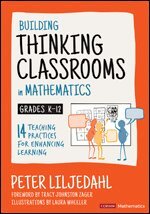
Keep thinking…keep learning in different settings In Peter Liljedahl’s bestselling Building Thinking Classrooms in Mathematics: 14 Teaching Practices for Enhancing Learning, readers discovered that thinking is a precursor to learning. Translating 15 years of research, the anchor book introduced 14 practices that have the most potential to increase student thinking in the classroom and can work for any teacher in any setting. But how do these practices work in a classroom with social distancing or in settings that are not always face-to-face? This follow-up supplement will answer those questions, and more. It walks teachers through how to adapt the 14 practices for 12 distinct settings, some of which came about as a result of the COVID-19 pandemic. This guide:
Provides the what, why, and how to adapt each practice in face-to-face settings that require social distancing, fixed seating, or small class sizes; synchronous and asynchronous virtual settings; synchronous and asynchronous hybrid settings; independent learning; and homeschooling. Includes guidance on using thinking classroom practices to support students in unfinished learning in small groups and one-on-one teaching or tutoring. Offers updated toolkits and a recommended order for the implementation of the practices for each of the settings. This supplement allows teachers to dip in as needed and continually modify the practices as their own classroom situations change and evolve, always keeping the thinking at the forefront of their mathematics teaching and learning.Answers to Your Biggest Questions About Teaching Secondary Math
Five to Thrive [series]
444 kr
Skickas
A Guide to Detracking Math Courses
The Journey to Realize Equity and Access in K-12 Mathematics Education
386 kr
Skickas inom 5-8 vardagar
Create a pathway to equity by detracking mathematics
The tracked mathematics system has been operating in US schools for decades. However, research demonstrates negative effects on subgroups of students by keeping them in a single math track, thereby denying them access to rigorous coursework needed for college and career readiness. The journey to change this involves confronting some long-standing beliefs and structures in education.
When supported with the right structures, instructional shifts, coalition building, and educator training and support, the detracking of mathematics courses can be a primary pathway to equity. The ultimate goal is to increase more students’ access to and achievement in higher levels of mathematics learning–especially for students who are historically marginalized. Based on the stories and lessons learned from the San Francisco Unified School District educators who have talked the talk and walked the walk, this book provides a model for all those involved in taking on detracking efforts from policymakers and school administrators, to math coaches and teachers.
By sharing stories of real-world examples, lessons learned, and prompts to provoke discussion about your own context, the book walks you through:
Designing and gaining support for a policy of detracked math coursesImplementing the policy through practical shifts in scheduling, curriculum, professional development, and coachingSupporting and improving the policy through continuous research, monitoring, and maintenance.This book offers the big ideas that help you in your own unique journey to advance equity in your school or district’s mathematics education and also provides practical information to help students in a detracked system thrive.
Bad at Math?
Dismantling Harmful Beliefs That Hinder Equitable Mathematics Education
359 kr
Skickas inom 5-8 vardagar
Math really is for everyone—so let’s prove it.
You’ve heard it from kids, from friends, and from celebrities: “I’m bad at math.” It’s a line that society tends to accept without examination—after all, some people just aren’t “math people,” right?
Wrong. As we do with other essential skills, we need to expose the stereotypes, challenge the negative mindsets, and finally confront the systemic opportunity gaps in math education, and replace them with a new vision for what math is, who it’s for, and who can excel at it. In this book you’ll find
Research on teacher and student mindsets and their effect on student achievementAudience-specific and differentiated tools, reflection questions, and suggested actions for educators at all levels of the systemExamples from popular media, as well as personal stories and anecdotesQuotes, data-driven figures, and suggestions for deeper learning on all aspects of a positive and equitable vision of math educationBoth social commentary and a toolkit of solutions, this bold new book directly challenges the constructs that have historically dictated our perceptions of what makes someone a “math person”. Only by dismantling those misplaced assumptions can we reform math education so it works for everyone. Because in truth, we are all math people.
438 kr
Skickas inom 11-20 vardagar
Classroom-Ready Rich Algebra Tasks, Grades 6-12
Engaging Students in Doing Math
451 kr
Skickas
Stop algebra from being a mathematical gatekeeper. With rich math tasks, all students can succeed.
Every teacher strives to make instruction effective and interesting, yet traditional methods of teaching algebra are not working for many students! That’s a problem. But the answer isn’t to supplement the curriculum with random tasks. Classroom Ready-Rich Math Tasks for Grades 6-12 equips you with a cohesive solution--50+ mathematical tasks that are rich, research-based, standards-aligned, and classroom-tested. The tasks:
Are organized into learning progressions that help all students make the leap from arithmetic to algebraOffer students interesting mathematics problems to think about and solve so math is investigative, interactive, and engagingProvide opportunities for you to connect new content to prior knowledge or focus on an underdeveloped conceptEngage students in conceptual understanding, procedural practice, and problem solving through critical thinking and applicationCome with downloadable planning tools, student resource pages, and extension questionsInclude additional support for students who may be strugglingEvery learner deserves opportunities to engage in meaningful, rigorous mathematics. And every teacher can develop mathematical thinking and reasoning abilities in students. Part of the bestselling series spanning elementary and middle school, Classroom-Ready Rich Algebra Tasks, Grades 6-12 is a powerful add-on to any core mathematics program at your school.
Building Thinking Classrooms in Mathematics, Grades K-12 Australia edition
14 Teaching Practices for Enhancing Learning
330 kr
Skickas inom 5-8 vardagar
A thinking student is an engaged student
Teachers often find it difficult to implement lessons that help students go beyond rote memorization and repetitive calculations. In fact, institutional norms and habits that permeate all classrooms can actually be enabling “non-thinking” student behavior. Sparked by observing teachers struggle to implement rich mathematics tasks to engage students in deep thinking, Peter Liljedahl has translated his 15 years of research into this practical guide on how to move toward a thinking classroom. Building Thinking Classrooms in Mathematics, Grades K–12 helps teachers implement 14 optimal practices for thinking that create an ideal setting for deep mathematics learning to occur. This guide Provides the what, why, and how of each practice and answers teachers’ most frequently asked questions Includes firsthand accounts of how these practices foster thinking through teacher and student interviews and student work samples Offers a plethora of macro moves, micro moves, and rich tasks to get started Organizes the 14 practices into four toolkits that can be implemented in order and built on throughout the year When combined, these unique research-based practices create the optimal conditions for learner-centered, student-owned deep mathematical thinking and learning, and have the power to transform mathematics classrooms like never before.390 kr
Skickas inom 5-8 vardagar
Practical and proven math tasks to maximize student thinking and learning
Building upon the blockbuster success of Building Thinking Classrooms in Mathematics, Peter Liljedahl has joined forces with co-author Maegan Giroux to bring the Building Thinking Classrooms (BTC) framework to life in this new book, Mathematics Tasks for the Thinking Classroom, Grades K-5.
But this book is so much more than simply a collection of good thinking tasks. It delves deeper into the implementation of the 14 practices from the BTC framework by updating the practices with the newest research, and focusing on the practice through the lens of rich math tasks that address specific mathematical learning outcomes or standards. Across the 20 non-curricular tasks and 30 curricular tasks used as models, this book:
Helps you choose tasks to fit your particular math standards, goals, and the competencies you want your students to buildWalks you through all the steps and scripts to launch, facilitate, and consolidate each taskShares examples of possible student solutions along with hints you might offer to help their thinking alongOffers tasks for consolidation, example notes to my future forgetful self, and mild, medium, and spicy check-your-understanding questions (CYUs) for every thin sliced sequences of curricular tasksImparts reflections from the authors on each taskThe book closes with specific guidance on how to find more tasks or craft your own non-curricular and curricular tasks, along with answers to educators’ frequently asked questions. It includes access to a companion website that includes downloadables and a task template for creating your own tasks.
Whether you are new to BTC or a seasoned user, Mathematics Tasks for the Thinking Classroom, Grades K-5 will help teachers, coaches, and specialists transform traditional math classrooms into dynamic and thought-provoking learning spaces.
Figuring Out Fluency--Ten Foundations for Reasoning Strategies With Whole Numbers
A Classroom Companion
410 kr
Skickas inom 5-8 vardagar
Because fluency practice is not a worksheet.
Fluency in mathematics is more than basic facts or using algorithms. It is not about recall or speed. Real fluency is about choosing strategies that are efficient, flexible, lead to accurate solutions, and are appropriate for the given situation. Developing fluency is a matter of equity and access for all learners.
The landmark book Figuring Out Fluency in Mathematics Teaching and Learning offered educators the inspiration to develop a deeper understanding of procedural fluency. It explained the seven Significant Strategies for fluency and offered a plethora of pragmatic tools for shifting classrooms toward a greater fluency approach. However, in order to become truly adept with these strategies, children must first have certain underlying foundational concepts and skills in place.
Figuring Out Fluency-Ten Underlying Foundations for Reasoning Strategies with Whole Numbers explores the ideas that are essential to reasoning: Number Relationships; Subitizing and Decomposing; Distance to 10, 100, and 1,000; Counting and Skip-Counting; Properties of Addition and Its Inverse Relationship with Subtraction; Properties of Multiplication and Its Inverse Relationship with Division; Multiplying by 10s and 100s; Multiples and Factors; Doubling and Halving; and Computational Estimation. With this book, elementary teachers can
Help children develop these foundational understandings, critical to reasoning and number sense.Leverage over 100 classroom-ready routines, centers, and games to develop these concepts both in first instruction, practice, and intervention.Download all of the needed support tools, game boards, and other resources from the companion website for immediate implementationDevelop each and every students’ knowledge and power to become skilled and confident mathematical thinkers and doers.
Coaching the 5 Practices
Supporting Mathematics Teachers in Orchestrating Productive Discussions
438 kr
Skickas inom 11-20 vardagar
Ambitious teaching requires ambitious coaching
Over a decade ago, the National Council of Teachers of Mathematics (NCTM) and Corwin co-published the modern classic, 5 Practices for Orchestrating Productive Mathematics Discussions, aimed at guiding teachers to improve the quality of mathematics discussions in their classrooms and create an equitable learning environment for students. The bestselling series, The 5 Practices in Practice series, followed to further explore the five practices within grade bands, empowering teachers to overcome challenges in orchestrating mathematics discussions. And now, esteemed mathematics expert Peg Smith and her author team, take the 5 practices to the next level with Coaching the 5 Practices.
Written for coaches, instructional leaders, professional developers, and teacher educators, Coaching the 5 Practices: Supporting Mathematics Teachers in Orchestrating Productive Discussions will be the lynchpin to supporting teachers who are committed to engaging students in productive discussions in mathematics classrooms. The book introduces a coaching model that creates opportunities for teacher learning through one-on-one interactions with a coach. This model focuses on the specific challenges teachers face and opportunities they can lean into as they are learning to support productive mathematics discussions around the 5 practices of anticipating, monitoring, selecting, sequencing, and connecting (as well as Practice 0 of setting goals and selecting tasks).
Through three phases of a coaching cycle—before a lesson, during a lesson, and after a lesson, this coaching model
Focuses on ambitious teaching in mathematics, aiming to ensure that every student succeeds in high-quality academic workFollows iterative cycles of various touchpoints between the coach and a teacherEmphasizes what a coach needs to do to support teacher learning throughout the cycleWith narrative examples and vignettes, lesson plans, pre-lesson and post-lesson conference plans, and other artifacts collected from real coaching sessions and classrooms, Coaching the 5 Practices is a valuable resource for education professionals who work with teachers to improve the quality of mathematics instruction. Through the efforts of Coaching the 5 Practices, teachers will continue to refine their craft and become increasingly more skilled at implementing the 5 practices in ways that support the learning of each and every student.
Rethinking Disability and Mathematics
A UDL Math Classroom Guide for Grades K-8
386 kr
Skickas inom 5-8 vardagar
Every child has a right to make sense of math, and to use math to make sense of their worlds.
Despite their gifts, students with disabilities are often viewed from a deficit standpoint in mathematics classrooms. These students are often conceptualized as needing to be fixed or remediated. Rethinking Disability and Mathematics argues that mathematics should be a transformative space for these students, a place where they can discover their power and potential and be appreciated for their many strengths. Author Rachel Lambert introduces Universal Design for Learning for Math (UDL Math), a way to design math classrooms that empowers disabled and neurodiverse students to engage in mathematics in ways that lead to meaningful and joyful math learning. The book showcases how UDL Math can open up mathematics classrooms so that they provide access to meaningful understanding and an identity as a math learner to a wider range of students. Weaved throughout the book are the voices of neurodiverse learners telling their own stories of math learning.
Through stories of real teachers recognizing the barriers in their own math classrooms and redesigning to increase access, the book:
Reframes students with disabilities from a deficit to an asset perspective, paving the way for trusting their mathematical thinkingOffers equitable math instruction for all learners, including those with disabilities, neurodiverse students, and/or multilingual learnersApplies UDL to the math classroom, providing practical tips and techniques to support students' cognitive, affective, and strategic developmentImmerses readers in math classrooms where all students are engaged in meaningful mathematics, from special education day classes to inclusive general education classrooms, from grades K-8. Integrates research on mathematical learning including critical math content such as developing number sense and place value, fluency with math facts and operations, and understanding fractions and algebraic thinking.Explores critical issues such as writing IEP goals in mathThis book is designed for all math educators, both those trained as general education teachers and those trained as special education teachers. The UDL Math approach is adapted to work for all learners because everyone varies in how they perceive the world and in how they approach mathematical problem solving. When we rethink mathematics to include multiple ways of being a math learner, we make math accessible and engaging for a wider group of learners.
373 kr
Skickas inom 5-8 vardagar
Foster a love of mathematics by creating a more inclusive and empowering learning environment through asset-based teaching!
An asset-based perspective on math education means starting with what students already know instead of focusing on what’s missing. This approach elevates student thinking and reasoning skills. In this way, educators acknowledge that all students bring prior experiences, strengths, talents, and resources to the learning process and can contribute meaningfully in an authentic learning environment. Transform Your Math Class Using Asset-Based Teaching for Grades 6-12 provides insight into asset-based perspectives in mathematics education to create an environment where all students feel valued and capable of being doers of mathematics. In the book, Michael Steele and Joleigh Honey highlight the importance of using language, instructional routines, and systemic structure that positively impact student engagement, their math identity, and ultimately their outcomes.
Providing a wealth of knowledge and practical strategies that can be used to transform math classrooms into inclusive, supportive, and empowering learning environments, this book:
Introduces an asset-based perspective that focuses on students' strengths, assets, and potential to learn mathematicsIncludes a variety of frameworks and tools that teachers can use to build and grow their sense of asset-based perspectivesOffers strategies for promoting a growth mindset in mathematics, encouraging productive struggle in math, and promoting equitable math instructionSupports teachers in reflecting on their decisions, self-awareness, and self-managementIncludes a companion online study guide to support teachers individually or as part of a professional learning communityAdopting asset-based perspectives is about movement over time, not about flipping a switch. This book paves the path for an asset-based journey that ultimately helps to transform our math classrooms and advance all students’ learning and development.
Math Workshop Plus, Grades K-8
Elevating Your Practice to Ensure Personal and Academic Success for All Students
436 kr
Skickas
Take math instruction to the next level by truly meeting the needs of ALL learners
Today's classrooms are more diverse than ever, and teachers face the challenge of meeting not only the academic needs of their students but also their social and emotional growth. Math Workshop Plus, Grades K-8 by Alison J. Mello and Dr. Nicki Newton is here to help educators elevate their math instruction for all learners by more intentionally integrating Universal Design for Learning (UDL) and Social and Emotional Learning (SEL) into the popular Math Workshop model.
By reimagining Math Workshop through an equity lens, this book offers practical guidance to designing instruction that meets every child where they are. It addresses unfinished learning, fostering positive math identities, and building the competencies students need to succeed academically and socially.
Offering an actionable approach to promote learning environments where every student can thrive, Math Workshop Plus, Grades K-8 includes
Practical strategies to seamlessly incorporate UDL and SEL into your Math Workshop for more accessible and inclusive instruction.Classroom-ready resources such as example activities, vignettes, and tools at all grade levels to help you implement changes immediately.Guidance for fostering equity by meeting the diverse needs of all learners, including strategies for differentiation, scaffolding, and supporting students' social-emotional growth.Real-world success stories from educators who have transformed their classrooms with the Math Workshop Plus approach.With Math Workshop Plus, you'll gain the tools and confidence to create a classroom environment that promotes access and excellence for all students. Learn how to personalize instruction, remove barriers to learning, and inspire a love for math in every child.
Math Therapy™
5 Steps to Help Your Students Overcome Math Trauma and Build a Better Relationship With Math
397 kr
Skickas inom 5-8 vardagar
Anything is possible – even building a better relationship with math!This is much more than a book about math. This is a book about hope. Imagine failing 11th grade math – twice! – and going on to be known affectionately as The Lady Gaga of Math. That is the story of author Vanessa “The Math Guru” Vakharia. Thanks to an inspiring teacher who helped Vanessa heal her own relationship with math, Vanessa was then able to see math in a way that literally changed the trajectory of her life. Most people have experienced math trauma at least once, but by early-mid elementary school, many students have gotten the message that either they are a math person or they are not. In Math Therapy™, Vanessa shows that with the right tools and strategies, teachers can foster a culture in which every student is capable of building a better relationship with math – and with themselves.Through the five M’s of Math Therapy™—Mythbust, Moderate, Motivate, Makeover, and Measure—teachers can help their students overcome math trauma, cultivate a positive math identity, and develop a mathematical mindset.Written in a fun and conversational style, and grounded in research on math education and neuropsychology, this book
Provides practical, hands-on strategies and tools that make it easy and fun for teachers to implement each step of Math Therapy™ in their classroomHelps teachers unpack their own math history before diving in to what they can do to help their studentsAddresses the trauma-induced stumbling blocks that many students face when tackling mathematicsIncludes humorous and engaging real-life vignettes—from celebrating Pi Day by visiting a prison, to setting off a confetti cannon to celebrate a student’s milestone, to the time Vanessa's band opened for Bon Jovi, and more!Much more than a book about helping students kick butt in math class, this book is about empowering students to develop the skills they need to live a life in which they truly believe that anything is possible, even a better relationship with math!
Interweaving Equitable Participation and Deep Mathematics
Building Community in the Elementary Classroom
655 kr
Skickas inom 5-8 vardagar
Creating mathematical community in elementary classrooms to support equitable engagement in deep mathematical content
What does a mathematical community look like in an elementary classroom? How do teachers engage young mathematicians in deep and challenging mathematical content? How do we ensure that every student contributes their voice to this community?
Interweaving Equitable Participation and Deep Mathematics: Building Community in the Elementary Classroom focuses on a dual commitment: to teaching deep and challenging mathematics and to equitable participation for all students in the classroom community. With practical strategies and real-life examples, Susan Jo Russell and Deborah Schifter offer a design for building community organized around four key aspects: every voice matters; collaboration supports student agency; student-created representations offer anchors, openings, and depth; and students become initiators and advocates for their own learning. Each chapter examines how teachers implement these ideas through video examples from six public elementary-school classrooms.
A powerful resource for any educator interested in a mathematics education that fosters a true sense of community, this book
Provides a window into a learning community of educators applying their understanding of mathematics to develop a teaching practice that fosters students’ curiosity, meaning-making, and mathematical agencyPresents vivid examples of teachers and students in diverse classrooms engaged in rich mathematical tasks and deep collaborative conversations, inviting readers to reflect on their practices and students' learningEngages readers in math investigations to help them understand student thinking, provides reflection questions about the classroom video, and offers suggestions for taking next steps in one's own practiceIncludes commentaries on the videos by a group of “critical friends”—educators with deep experience in mathematics and equity—and by the teachers of the classrooms in the videosOffers free online tools for professional development and book study groups, including a Facilitator’s Guide and a Notes Organizer, and suggests resources for continued learning.This book is a must-read for anyone passionate about creating positive change in the mathematics education system and ensuring that every student has the opportunity to thrive in their mathematical journey.
386 kr
Skickas inom 5-8 vardagar
Math is not rote-memorizable. Math is not random-guessable. Math is figure-out-able.
Author Pam Harris argues that teaching real math—math that is free of distortions–will reach more students more effectively and result in deeper understanding and longer retention. This book is about teaching undistorted math using the kinds of mental reasoning that mathematicians do.
Memorization tricks and algorithms meant to make math “easier” are full of traps that sacrifice long-term student growth for short-lived gains. Students and teachers alike have been led to believe that they’ve learned more and more math, but in reality their brains never get any stronger.
Using these tricks may make facts easier to memorize in isolation, but that very disconnect distorts the reality of math. The mountain of trivia piles up until students hit a breaking point. Humanity's most powerful system of understanding, organizing, and making an impact on the world becomes a soul-draining exercise in confusion, chaos, and lost opportunities.
Developing Mathematical Reasoning: Avoiding the Trap of Algorithms emphasizes the importance of teaching students increasingly sophisticated mathematical reasoning and understanding underlying concepts rather than relying on a set rule for solving problems. This book illuminates a hierarchy of mathematical reasoning to help teachers guide students through various domains of math development, from basic counting and adding to more complex proportional and functional reasoning.
Everyone is capable of understanding and doing real math. This book:
Highlights the important mathematical relationships, strategies, and models for students to developOffers personal stories, reflection sections, and extensive practical exercises for easy implementationIncludes real math—a lot of it—to provide teachers with examples they can put to use in their classrooms immediatelyThis book is a valuable resource for educators looking to reach more students by building a strong foundation of mathematical thinking in their students. By addressing common misconceptions about math and providing practical strategies for teaching real math, this book shows that everyone can use the mathematical relationships they already know to reason about new relationships. In other words, everyone can math.
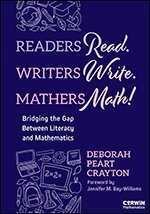
Readers Read. Writers Write. Mathers Math!
Bridging the Gap Between Literacy and Mathematics
448 kr
Skickas
Early Literacy + Early Numeracy = Academic Success
When it comes to math, educators can feel the same tension they see in their students—from uncertainty and anxiety to a lack of confidence in their own skills. This mindset creates barriers in teaching and learning and perpetuates disparities in achievement. Readers Read. Writers Write. Mathers Math!: Bridging the Gap Between Literacy and Mathematics introduces a groundbreaking framework to support educators in transforming their own math identities and creating classrooms that redefine the concept of literacy to include numeracy, so that every student feels capable, confident, and excited about math.
Author Deborah Peart Crayton challenges the notion that math is optional; instead she empowers educators to build a positive relationship with math while helping their students do the same. Grounded in the belief that math, like literacy, is essential for navigating the world, this book offers strategies and tips to reshape math instruction and create a supportive environment where every student thrives.
Through storytelling, practical tools, actionable plans, and “mathfirmations,” this book
Redefines mathematics as a vital part of lifeApplies literacy teaching strategies to math instruction to inspire math engagement outside of the traditional blockIntegrates math into reading, writing, and other subjects for meaningful, cross-curricular learningUses oral traditions, visual storytelling, and interdisciplinary methods to create a joyful, rich, and holistic learning experienceWhether you’re building confidence in your own math skills or looking to foster a community of math enthusiasts in your classroom, this book will equip you to lead the way. By viewing math as an essential life skill rather than an exclusive discipline, every child can realize their potential as a Mather!
448 kr
Skickas
When brain science meets math success
Emotions drive learning. This is an essential component of understanding how a student’s math identity is closely connected to their math success. How a student sees themselves in relation to math is dynamically constructed in their brain and is constantly changing. Every learner deserves to exist in harmony with mathematics. This book shows you how to make that mantra a reality for all students.
Liesl McConchie offers an exciting new perspective on math identity through her extensive research on how the brain learns. Liesl walks readers through cognitive neuroscience in a humorous and friendly way, using metaphors and everyday stories to explain how emotions and cognition interact. She offers engaging and simple brain-based strategies and activities to implement in the classroom.
In Building a Positive Math Identity: A Brain Science Approach, Liesl
Translates complex brain science principles for educators in an accessible and engaging wayProvides practical exercises and lessons that you can use in classroom right awayShares real-world stories that provide deeper insight into how math identity is shaped over the yearsOffers activities to help teachers gain insight into the math identities of our studentsGuides teachers to explore our own math identity and the impact it can have on our studentsMost important, the book pushes back on the prevailing message about math identity that tends to focus on student efficacy alone. This approach puts the burden on the individual, which can lead to additional oppression of those who have been most marginalized in math. Here’s our opportunity as educators to reexamine what it means to have a positive math identity--and to learn to use brain-based tools to build on a positive math identity for our students from the earliest ages.
349 kr
Skickas inom 5-8 vardagar
Boost confidence, reduce anxiety, and spark those “aha” moments for students through effective math tutoring!
Filled with research-backed guidance for tutors to ensure students develop the confidence and skills they need, The Math Tutor's Handbook: Strategies and Tips for Success is the ultimate guide for effective math tutoring. As national data suggest that students are falling behind in mathematics performance, the role of the math tutor is more critical than ever before.
The authors bring decades of wisdom and know-how to the tutoring table. Steve Leinwand—a renowned leader in math education—and Caroline Welty—a sought-after tutor who brings current insight into today’s learners—have blended their collective experience into a comprehensive handbook that offers clear guidance for effective tutoring in grades K-12 mathematics. With their conversational style, the authors provide hands-on resources to help diagnose individuals’ mathematical strengths and needs to make sure that each tutoring session carries the necessary impact..
Through a range of activities, checklists, examples, stories, and suggestions, this handbook
Focuses on the importance of personalized instruction that no computer program can matchDescribes how to develop strong, supportive relationships between tutor and studentIdentifies common stumbling blocks around the big ideas in mathematics across grade levels and suggests how to overcome themCelebrates mistakes as valuable learning opportunities to foster a deeper comprehension of mathematical concepts rather than just getting the right answerPromotes skills needed for the future, such as problem-solving and critical thinking, which are beneficial not only in future math classes but also in various aspects of life and workLet The Math Tutor's Handbook empower you to create a positive learning environment for your students and help them boost self-confidence, reduce math anxiety, and master essential skills. Whether you are a private tutor or parent, you work in a tutoring center, or you are an in-school K-12 math teacher, coach, or specialist, this is the resource you need for the math tutoring strategies and practices that are foundational to successful learning.