Panayiotis Tzamalikos - Böcker
Visar alla böcker från författaren Panayiotis Tzamalikos. Handla med fri frakt och snabb leverans.
5 produkter
5 produkter
1 142 kr
Skickas inom 5-8 vardagar
This is an important new contribution to our understanding of Origen, and of early Christian theology and Greek philosophy in general. Casting both forwards and backwards in time, Guilty of Genius: Origen and the Theory of Transmigration illustrates Origen’s fruitful engagement with earlier Greek philosophy, as well as his enormous influence on both later philosophers (Porphyry, Proclus) and Christian theologians, including the Cappadocians, Maximus Confessor, and the authors of the Nicene Creed.Building on his earlier books, which overturned erroneous but long-established assertions about Origen, the author brings together various strands to form a detailed and coherently focused treatment, demolishing the myth that Origen upheld theories such as the preexistence and transmigration of souls. This is a seminal and ground-breaking contribution to the scholarship of both early Christianity and Greek philosophy as it was inherited during the second and third centuries.
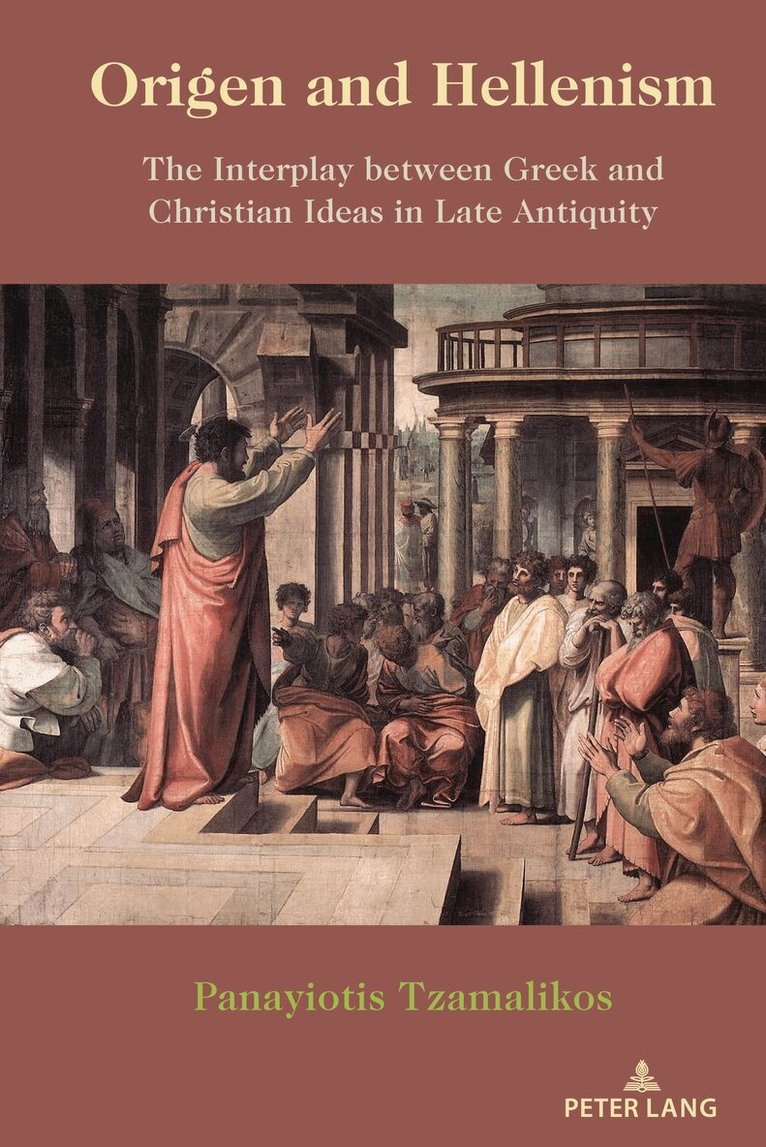
Origen and Hellenism
The Interplay between Greek and Christian Ideas in Late Antiquity
Inbunden, Engelska, 2022
1 186 kr
Skickas inom 5-8 vardagar
This book elucidates and engages in critical discussion of the Greek philosophical background to the work of Origen, the great third-century scholar and theologian. The author, Professor Panayiotis Tzamalikos, has long argued that Origen was in many respects an anti-Platonist, and that the clauses in Origen’s official anathematisation in AD 553 were based on misreadings by unschooled and fanatical drumbeaters. Tzamalikos has refuted those charges and demonstrated that they had nothing to do with Origen’s real thought. Origen and Hellenism continues the argument by placing Origen’s achievement in its correct context: Origen may have forsaken his ancestral religion and converted to Christianity when he was advanced in years, but he implicitly made much use of his Greek intellectual inheritance in composing his ground-breaking theological work, which paved the way to Nicaea.The author’s thesis is that, in the quest to discover the real Origen, scrutiny of this background is vital. In the history of philosophy, Origen is uncategorisable as an author: his thought constitutes an unexampled chapter of its own, revealing a perfect match between Christian exegesis and Greek philosophy, which gave later episcopal orthodoxy the gravamen of its anti-Arian doctrine.* * *“The author presents Origen’s thought as a completely original contribution to ancient philosophy and Christian theology at the same time. He shows convincingly that the classification of Origen as ‘Christian Platonist’ obscures rather that clarifies, since Origen took a critical stance towards several aspects of Platonism. In doing so, the author is able to free Origen’s intellectual profile, on the one hand, from distortion of Eusebius of Caesarea, and, on the other hand, from the clichés of the anti-Origenist polemics in late antiquity, especially in the fifth ecumenical council. With the liberation of Origen from the prison of his often ill-informed theological reception, the author makes an outstanding contribution to research, which in any case should be listened to not only in the field of theology, but also in the field of the history of ancient philosophy.”—Martin Illert, Prof. Dr. University of Halle, Germany* * *“No-one acquainted with current scholarship on Origen will fail to recognise the author of this book, not only on account of its length and the vigour of its style, but because Tzamalikos has no rival in erudition or in the fecundity of his ideas. None of his critics (least of all those who accuse him of disparaging Greek philosophy) will be able to produce the range of quotations from two millennia of Greek literature that Tzamalikos can marshal in support of every one of his conclusions, and few of them will be able to match his conceptual subtlety or his tenacity in exegesis.Since he is the one indispensable author writing in English on Origen at the moment, this volume will be especially useful to scholars because, while it introduces a lot of new material, it also recapitulates the arguments of Tzamalikos’ earlier studies, which, famous as they are, do not seem always to have been read in their entirety by his critics.”—Mark Edwards, Professor of Early Christian Studies, University of Oxford
703 kr
Skickas inom 5-8 vardagar
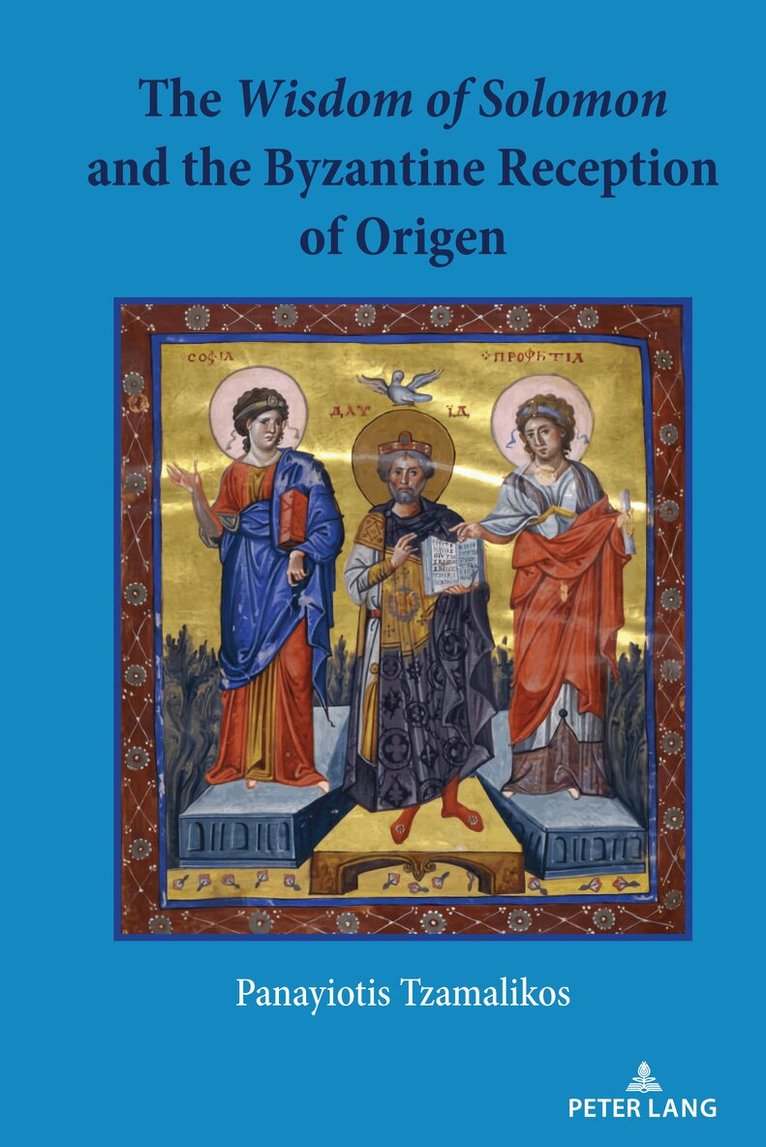
This is a critical edition of a newly discovered Greek manuscript: a full commentary from Codex 199, Metochion of the Holy Sepulchre, Constantinople, entitled ‘Wisdom of Solomon—an interpretation of Solomon’s Book of Wisdom, by Origen, as they say’. The book includes critical apparatus, commentary, and English translation.The Introduction acquaints readers with the text, as well as its late Byzantine context. In the manuscript both the Biblical text (quoted lemma after lemma) and the commentary are presented in full, which makes the document a valuable one for Old Testament scholars, since it contains not only the full commentary, but also the entire text of the Book of Wisdom, which at points has some interesting variations from all extant codices of the Septuagint.Intriguingly, Origen's name is on the rubric, but as author Panayiotis Tzamalikos demonstrates, the most likely author is Nikephorus Gregoras. Study of Gregoras’ predecessors, architects of the Palaelogean Enlightenment such as George Acropolites, Theodore Metochites, and George Pachymeres, as well as Gregoras’ contemporary John Kyparissiotes, sheds further light on how Christian and Greek thought were received and interpreted in the East.This book marks a major contribution to the field of Greek and Byzantine philosophical exegesis, and will be valuable for postgraduate classes on patristics, Biblical exegesis, and Byzantine and Greek philosophy.
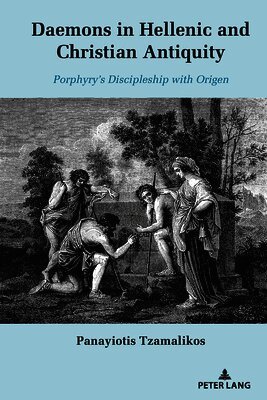
Daemons in Hellenic and Christian Antiquity
Porphyry's Discipleship with Origen
Inbunden, Engelska, 2025
1 264 kr
Skickas inom 5-8 vardagar
Daemons in Hellenic and Christian Antiquity is a groundbreaking analysis of the interplay between Greek and Christian ideas in Late Antiquity, with a focus on how daemons were conceived of by intellectuals in both traditions. Its protagonists are Origen, the great third-century philosopher and theologian, and Porphyry, a philosopher of the next generation whose ideas were strikingly influenced by Origen. By critical comparative study of Origen’s Contra Celsum and Porphyry’s De Abstinentia, author Panayiotis Tzamalikos establishes beyond doubt that Porphyry’s conception of daemons took its cue overwhelmingly from his predecessor’s theories on the subject. Porphyry adopted Origen’s ideas (and, at crucial points, his vocabulary) on daemons, at times very closely, thereby setting his daemonology apart from that of other Greek schools, while also he employed terminology interweaving Greek and Christian language. Throughout this inquiry, the author also builds further evidence that there was only one Origen, and that the modern invention of ‘two Origens’ (one ‘Platonist’, the other ‘Christian’) is untenable. This book is set to revolutionise understanding of the relationship between Greek philosophy and Christianity in Late Antiquity.
Del 112 - Vigiliae Christianae, Supplements
Real Cassian Revisited
Monastic Life, Greek Paideia, and Origenism in the Sixth Century
Inbunden, Engelska, 2012
3 633 kr
Skickas inom 5-8 vardagar
This is a critical analysis of texts included in Codex 573 (ninth century, Monastery of Metamorphosis, Meteora, Greece), which are published along with the present volume, in the same series. The Codex, entitled ‘The Book of Monk Cassian the Roman’, reveals a sixth-century heretofore unknown intellectual, namely, Cassian the Sabaite, native of Scythopolis, being its real author. By means of Medieval forgery, he has been eclipsed by a figment currently known as ‘John Cassian of Marseilles’, native of Scythia. Exploration reveals critical aspects of the interplay between Hellenism and Christianity, the Origenism and pseudo-Origenism of the sixth century, and Christian influence upon Neoplatonism in Late Antiquity. Cassian the Sabaite is probably the last great representative of a prolonged fruitful autumn of Late Antique Christian scholarship, who saw Hellenism as a treasured patrimony to draw on, rather than as a demon to be exorcised -which resulted in his ‘second death’(Rev. 2,11). Two edition volumes are now being published along with the present monograph. One, A Newly Discovered Greek Father, Cassian the Sabaite Eclipsed by John Cassian of Marseilles (folia 1r-118v). Two, An Ancient Commentary on the Book of Revelation: A Critical Edition of the Scholia in Apocalypsin. These Scholia were falsely attributed to Origen a century ago, but their real author is Cassian the Sabaite mainly drawing on a lost commentary on the Apocalypse by Didymus the Blind, as well as on Origen, Theodoret, Clement of Alexandria, Irenaeus, and others (folia 210v-290r).