Panayot Butchvarov – författare
Visar alla böcker från författaren Panayot Butchvarov. Handla med fri frakt och snabb leverans.
6 produkter
Skepticism About the External World
Inbunden, 1998
2031 kr
Lägg i varukorg
One of the most important and perennially debated philosophical questions is whether we can have knowledge of the external world. Butchvarov here considers whether and how scepticism with regard to such knowledge can be refuted or at least answered. He argues that only a direct realist view of …
Skepticism About the External World
E-bok, 1998
1155 kr
Lägg i varukorg
Do we know or even have evidence that external material objects exist? Drawing powerfully on techniques from both analytic and continental philosophy, Butchvarov offers a strikingly original approach to this perennial issue. He argues that only a direct realist view of perception--the view that in …
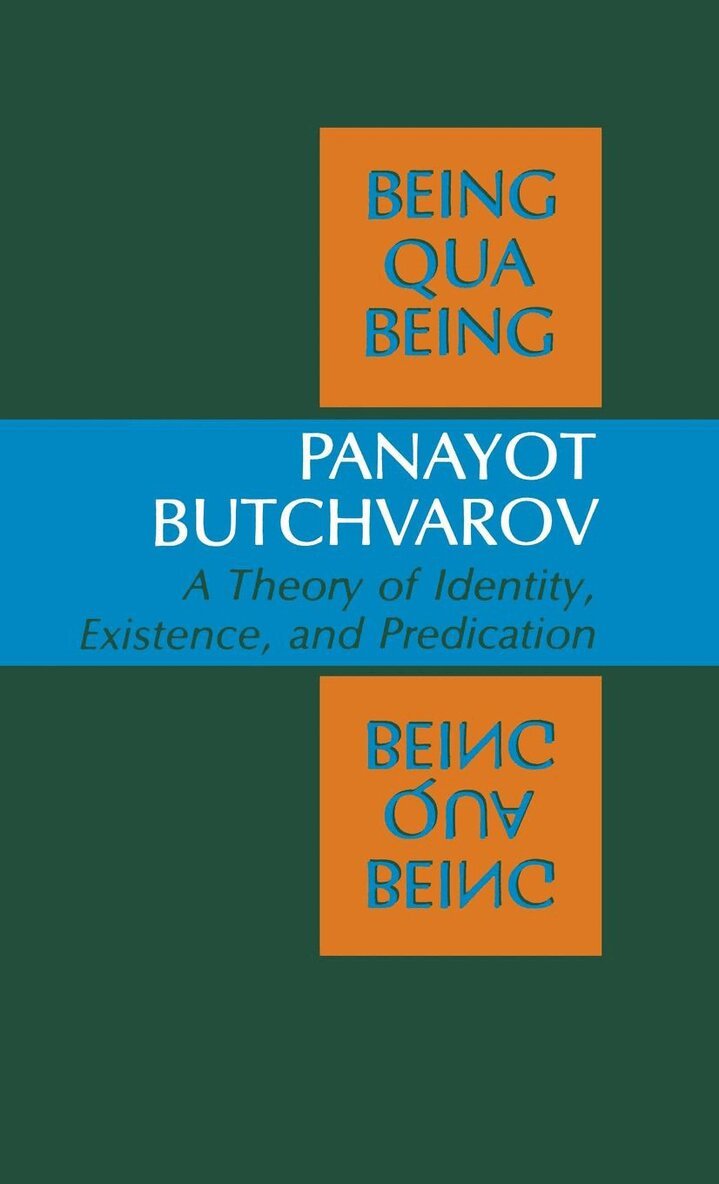
Being Qua Being
A Theory of Identity, Existence, and Predication
Inbunden, 1979
459 kr
Lägg i varukorg
Are there nonexistent things? What is the nature of informative identity statements? Are the notions of essential property and of essence intelligible, and, if so, how are they to be understood? Are individual things material substances or clusters of qualities? Can the account of the unity of a …
Anthropocentrism in Philosophy
Realism, Antirealism, Semirealism
Inbunden, 2015
1490 kr
Lägg i varukorg
Anthropocentrism in philosophy is deeply paradoxical. Ethics investigates the human good, epistemology investigates human knowledge, and antirealist metaphysics holds that the world depends on our cognitive capacities. But humans’ good and knowledge, including their language and concepts, are …
Anthropocentrism in Philosophy
Realism, Antirealism, Semirealism
E-bok, 2015
1479 kr
Lägg i varukorg
Anthropocentrism in philosophy is deeply paradoxical. Ethics investigates the human good, epistemology investigates human knowledge, and antirealist metaphysics holds that the world depends on our cognitive capacities. But humans’ good and knowledge, including their language and concepts, are …
Anthropocentrism in Philosophy
Realism, Antirealism, Semirealism
E-bok, 2015
1479 kr
Lägg i varukorg
Anthropocentrism in philosophy is deeply paradoxical. Ethics investigates the human good, epistemology investigates human knowledge, and antirealist metaphysics holds that the world depends on our cognitive capacities. But humans’ good and knowledge, including their language and concepts, are …