Paola Mayer – författare
Visar alla böcker från författaren Paola Mayer. Handla med fri frakt och snabb leverans.
5 produkter
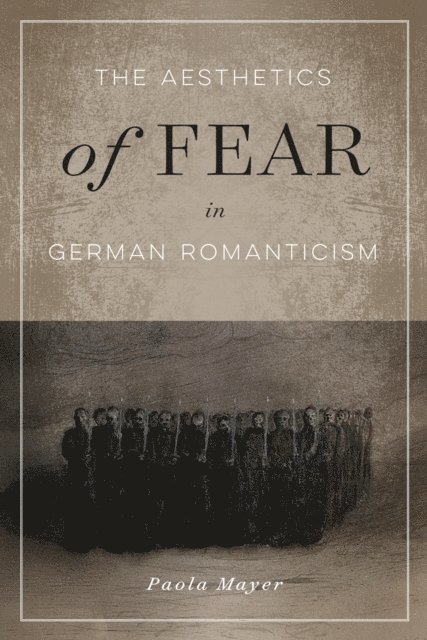
Aesthetics of Fear in German Romanticism
Av Paola Mayer
E-bok, 2020
754 kr
Lägg i varukorg
Enlightenment – both the phenomenon specific to the eighteenth century and the continuing trend in Western thought – is an attempt to dispel ignorance, achieve mastery of a potentially hostile environment, and contain fear of the unknown by promoting science and rationality. Enlightenment is often …
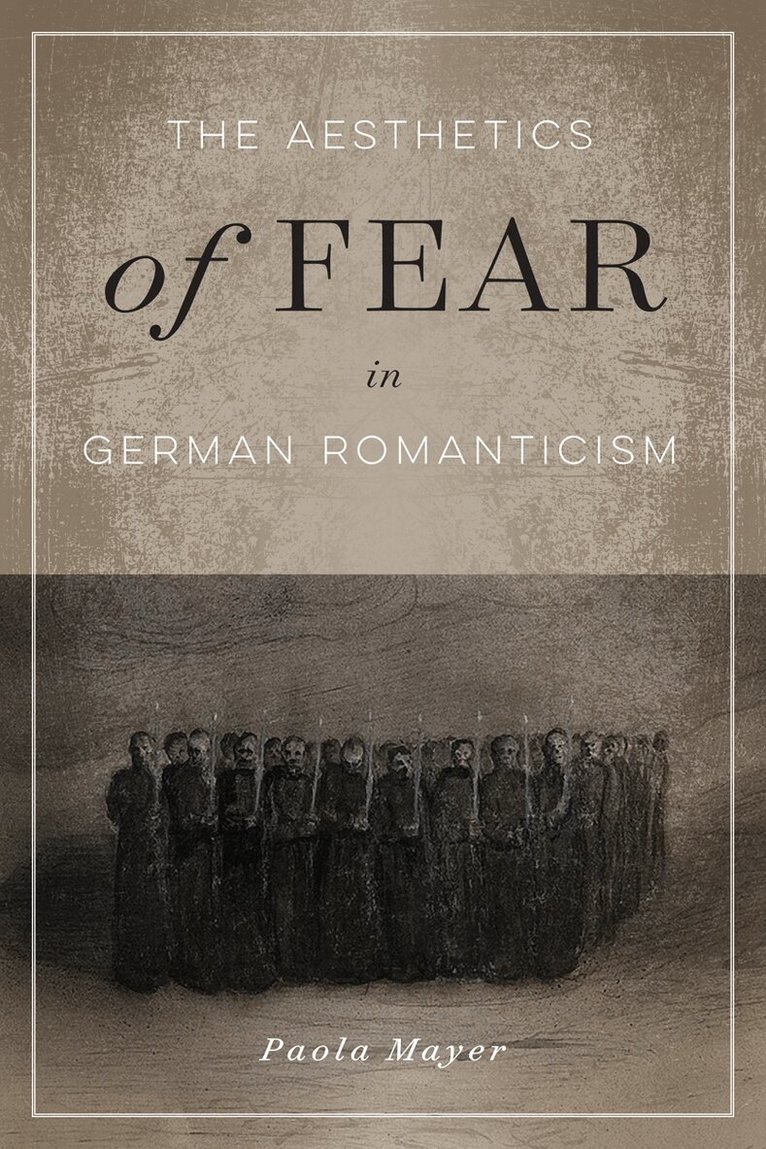
Aesthetics of Fear in German Romanticism
Av Paola Mayer
Häftad, 2020
573 kr
Lägg i varukorg
Enlightenment - both the phenomenon specific to the eighteenth century and the continuing trend in Western thought - is an attempt to dispel ignorance, achieve mastery of a potentially hostile environment, and contain fear of the unknown by promoting science and rationality. Enlightenment is often …
Jena Romanticism and Its Appropriation of Jakob Bohme
Theosophy, Hagiography, Literature
Av Paola Mayer
E-bok, 1999
1171 kr
Lägg i varukorg
These appropriations fall into two main groups: those pertaining to the name Böhme or a life assigned to it, and those involving concepts or images from the mystic''s oeuvre. The first group constituted an attempt to co-opt the aura of sanctity attached to portrayals of the poet-prophet in order to …
Romanticism, Humanism, Judaism- Romantik, Humanismus, Judentum
The Legacy of Hans Eichner- Hans Eichners Vermaechtnis
Av Hartwig Mayer, Paola Mayer m. fl.
Häftad, 2013
1628 kr
Lägg i varukorg
Hans Eichner belongs to that group of Jewish intellectuals who fled Nazi Germany or Austria in the 1930s and who subsequently exerted a formative influence on German Studies in the English-speaking world. Eichner made a new home in Canada, where he taught first at Queen’s University in Kingston, …
Jena Romanticism and Its Appropriation of Jakob Böhme
Theosophy, Hagiography, Literature
Av Paola Mayer
Inbunden, 1999
1410 kr
Tillfälligt slut
These appropriations fall into two main groups: those pertaining to the name Böhme or a life assigned to it, and those involving concepts or images from the mystic's oeuvre. The first group constituted an attempt to co-opt the aura of sanctity attached to portrayals of the poet-prophet in order to …