Paola Zambelli - Böcker
Visar alla böcker från författaren Paola Zambelli. Handla med fri frakt och snabb leverans.
3 produkter
3 produkter
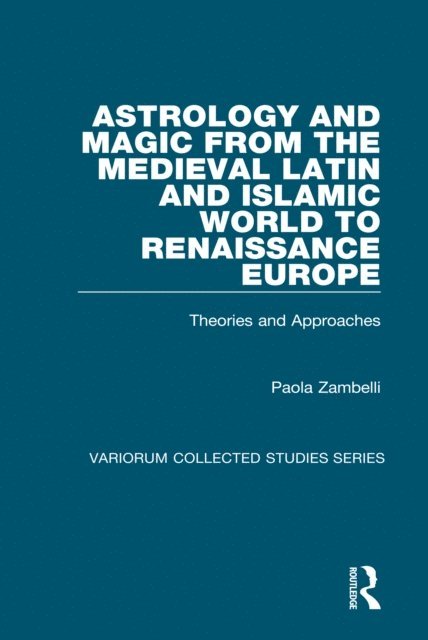
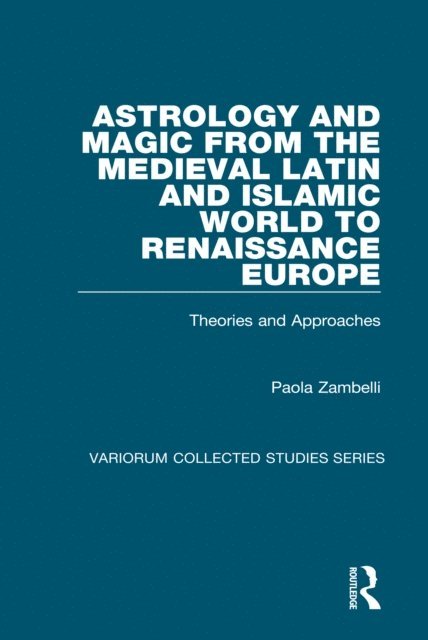
Astrology and Magic from the Medieval Latin and Islamic World to Renaissance Europe
Theories and Approaches
Inbunden, Engelska, 2012
2 113 kr
Skickas inom 10-15 vardagar
Astrology and Magic from the Medieval Latin and Islamic World to Renaissance Europe brings together ten of Paola Zambelli's papers on the subject, four of which are published in English for the first time. The papers in Part I of this volume deal with theories: the ideas of astrology and magic held by Renaissance thinkers; astrologers' ideas on universal history and its cycles; i.e. catastrophes and rebirths, theories; and myths regarding the spontaneous generation of man himself. Part II focuses on the role of astrologers in Renaissance society. As political counsellors, courtiers, and academics, their ideas were diffused and appreciated in both popular and high culture. Part III looks at the Great Conjunction of 1524 and on the long and extended debate surrounding it, which would not have been possible prior to Gutenberg, since astrologers printed numberless booklets (full of religious and political innuendo) predicting the catastrophe - flood, as well as earthquake or fire - foreseen for February 1524 (which, in the event, proved to be a month of extraordinary mild weather). Part IV reprints some review-articles of twentieth century scholars whose writing has contributed to our understanding of the historical problems concerning magic and other connected debates.
2 220 kr
Skickas inom 7-10 vardagar
No detailed description available for ""Astrologi hallucinati"".
Del 125 - Studies in Medieval and Reformation Traditions
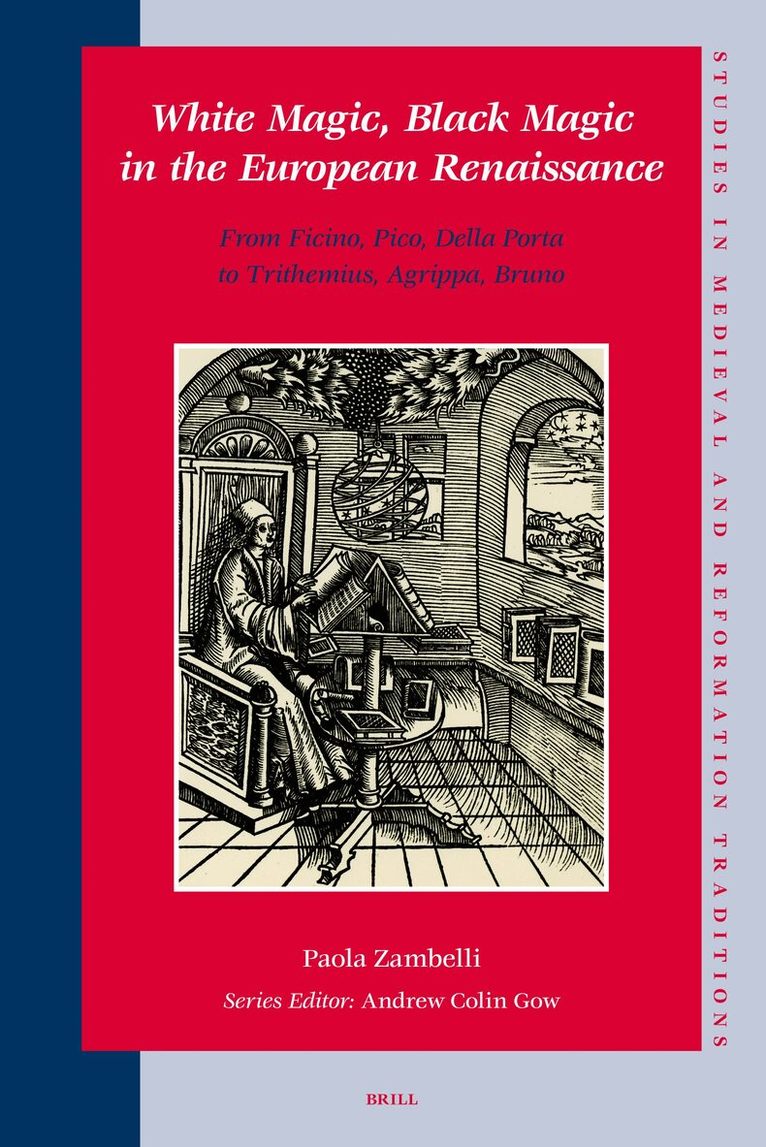
White Magic, Black Magic in the European Renaissance
From Ficino, Pico, Della Porta to Trithemius, Agrippa, Bruno
Inbunden, Engelska, 2007
2 344 kr
Skickas inom 5-8 vardagar
This book explores philosophical theories which in the Renaissance provided an interpretation of nature, of its laws and exceptions and, lastly, of man's capacity to dominate the cosmos by way of natural magic or by magical ceremonies. It does not concentrate on the Hermetic and Neoplatonic philosophers (Ficino, Pico, Della Porta), or on the relationship between magic and the scientific revolution, but rather upon the interference of the ideas and practices of learned magicians with popular rites and also with witchcraft, a most important question for social and religious history. New definitions of magic put forward by certain unorthodox and "wandering scholastics" (Trithemius, Agrippa, Paracelsus, Bruno) will interest readers of Renaissance and Reformation texts and history.