Paolo Boccagni - Böcker
Visar alla böcker från författaren Paolo Boccagni. Handla med fri frakt och snabb leverans.
10 produkter
10 produkter
404 kr
Skickas inom 7-10 vardagar
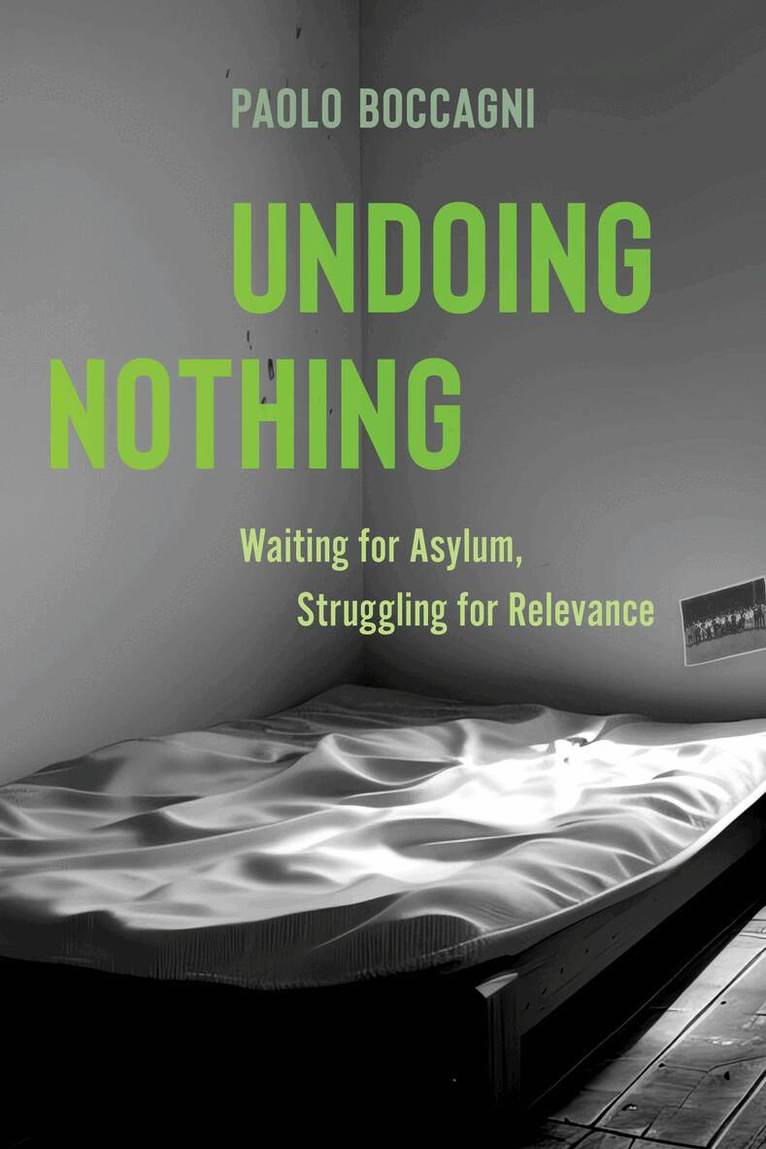
A free ebook version of this title is available through Luminos, University of California Press's Open Access publishing program. Visit www.luminosoa.org to learn more.What does everyday life look like for young men who flee to Europe, survive, and are then assigned temporary housing? Hypersurveillance or parallel normality, irrelevance, or even nothingness? Based on four years of ethnographic research, Undoing Nothing recounts the untold story of Italian asylum seekers' struggles to produce relevance—that is, to carve out meaning, control, and direction from their legal and existential liminality. Their ways of inhabiting space and time rest on a deeply ambivalent position: together and alone, inside and outside, absent and present. Their racialized bodies dwell in their assigned residence while their selves inhabit a suspended translocal space of moral economies, nightmares, and furtive dreams. This book illuminates a distinctly modern form of purgatory, offering both a perceptive critique of state responses to the so-called refugee crisis and nuanced psychological portraits of a demographic rarely afforded narrative depth and grace.
813 kr
Skickas inom 7-10 vardagar
This dynamic Handbook unpacks the entanglements between the two notions of home and migration, which illuminate the lived experiences of (in)voluntary mobilities and the contested terrain of inclusion and belonging.Drawing on cross-disciplinary contributions from leading international scholars, the Handbook advances research on the social study of home in relation to migration, refugee, displacement, and diaspora studies. It investigates the interplay between the notions of house and home, examining the relevance of home as a category of both analysis and practice. With a global and comparative range of case studies and examples, chapters bridge disciplines in unprecedented ways, exploring the existential, epistemological, and political implications of home for those struggling for it from afar and from the margins.Synthesising and systematising state-of-the-art research on home and migration, this groundbreaking Handbook will prove an invaluable resource for students, scholars, and researchers of sociology, anthropology, geography, and architecture. Practitioners and volunteers involved in social welfare, housing, informal social support, and mobilisations, for or by migrants and refugees, will also find this book of importance.
Migration and the Search for Home
Mapping Domestic Space in Migrants’ Everyday Lives
Inbunden, Engelska, 2016
747 kr
Skickas inom 10-15 vardagar
Home is usually perceived as what placidly lies in the background of everyday life, yet migrants’ experience tells a different story: what happens to the notion of home, once migrants move far away from their “natural” bases and search for new ones, often under marginalized living conditions?
1 059 kr
Skickas inom 7-10 vardagar
What happens when death becomes part of the journey of international migrants?This book examines how mortality is woven into the experience of displacement and migration. From perilous border crossings to the business of repatriation and contested burial grounds, it reveals the hidden geographies and politics that underpin the death of migrants in transit or abroad. Drawing together diverse research across disciplines, it offers a cohesive framework for understanding the industries, rituals and emotional labour surrounding migrant death. Whether through bureaucratic processes, artistic productions, activist mobilizations or collective mourning, death becomes not an endpoint, but a powerful force shaping how migration is lived, governed and remembered.
1 254 kr
Skickas inom 5-8 vardagar
Return has long been considered the end of a migration cycle. Today, returnees’ continued transnational ties, practices and resources have become increasingly visible. Transnational Return and Social Change joins what is now a growing fi eld of research and suggests new ways to understand the dynamics of return migration and the social changes that come along. It pays tribute to the meso-level impacts that follow the practices and resources migrant returnees mobilize across borders. With a particular focus on the meso-level the book takes up the challenge of transnational research and enquires into the consequences of return for local communities, organizations, social networks and groups. Presenting a collection of case studies dedicated to migrations across Europe and beyond, this book contributes new insights into the societal impact of migration in pluralized societies.
4 436 kr
Skickas inom 7-10 vardagar
This dynamic Handbook unpacks the entanglements between the two notions of home and migration, which illuminate the lived experiences of (in)voluntary mobilities and the contested terrain of inclusion and belonging.Drawing on cross-disciplinary contributions from leading international scholars, the Handbook advances research on the social study of home in relation to migration, refugee, displacement, and diaspora studies. It investigates the interplay between the notions of house and home, examining the relevance of home as a category of both analysis and practice. With a global and comparative range of case studies and examples, chapters bridge disciplines in unprecedented ways, exploring the existential, epistemological, and political implications of home for those struggling for it from afar and from the margins.Synthesising and systematising state-of-the-art research on home and migration, this groundbreaking Handbook will prove an invaluable resource for students, scholars, and researchers of sociology, anthropology, geography, and architecture. Practitioners and volunteers involved in social welfare, housing, informal social support, and mobilisations, for or by migrants and refugees, will also find this book of importance.
967 kr
Skickas inom 7-10 vardagar
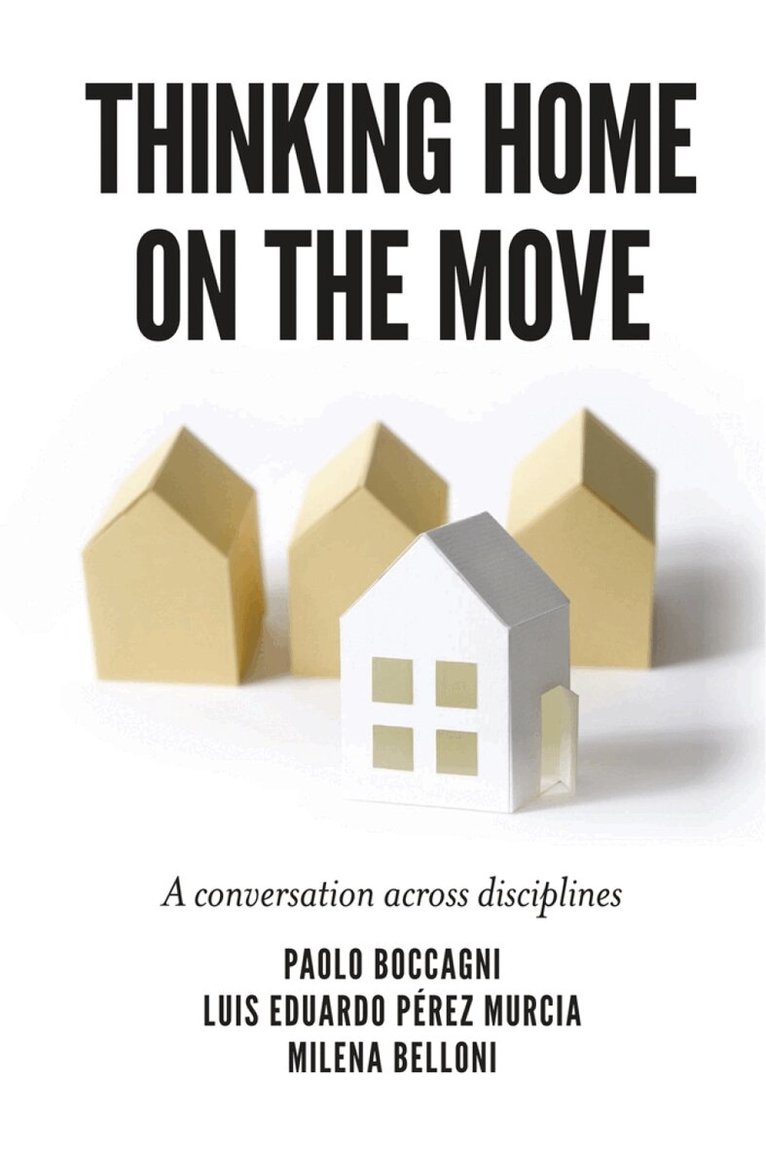
Home has been used in social sciences as a description, a metaphor and, more recently, as an emergent concept. The goal of this book is to illustrate its analytical power as a lens on the ways in which migrant and displaced people see their life circumstances and attempt to attach a sense of security, familiarity and control over them. Whether as a place or an aspiration towards it, home is a critical entry point into their life histories, experiences and prospects. Migrants’ rights and opportunities to make themselves at home are not just a private concern – rather, they are a major social and political question. This book addresses it through an original theoretical approach and an edited set of interviews with scholars from different national and disciplinary backgrounds. This reflexive conversation unveils the conceptual, methodological and empirical dimensions of researching home on the move and from the margins. Overall, Thinking Home on the Move is a powerful and in-depth look into what we as humans perceive as ‘home’ and what this truly means.
536 kr
Skickas inom 10-15 vardagar
This open access book provides insight into the domestic space of people with an immigrant or refugee background. It selects and compares a whole spectrum of dwelling conditions with ethnographic material covering a variety of national backgrounds – Latin America, North and West Africa, Eastern Europe, South Asia – and an equally broad range of housing, household and legal arrangements. It provides a fine-grained understanding of migrants’ lived experience of their domestic space and shows the critical significance of the lived space of a house as a microcosm of societal constellations of identities, values and inequalities. The book enhances the connection between migration studies and research into housing, social reproduction, domesticity and material culture and provides an interesting read to scholars in migration studies, policy makers and practitioners with a remit in local housing and integration policies.“This wonderful edited collection extends our understanding of migration not only into the confines of the domestic space but also into the territory of the ethnographer. What does it mean to be a guest in a migrant home? This collection of chapters traverses this question in diverse settings and circumstances of homemaking […]. Boccagni and Bonfanti have skilfully created an intricate lace of ethnographic accounts that provides a nuanced understanding of the built environments where migrants live, how they relate to their homes and how this is articulated in their attitudes toward majority society. The chapters, each on its own and together as a collection, advance our understanding of the researcher being a guest in the migrant home, just like the migrant being a guest in the host country. This complexity of ethnography and positionality makes this edited book an essential reading for migration scholars and ethnographers alike!”Iris Levin, Lecturer in Urban Studies, RMIT University, Melbourne, Australia“This book demonstrates how ethnographies of home and dwelling can bear on the study of migration and its manifestation in domestic space. Entering someone’s home as a researcher challenges our ethical registers: the researcher moves between being a stranger and a guest. The authors point to the dilemmas researchers encounter in intimate settings and how they might be resolved. A valuable and timely book for researchers on dwelling, home and movement.”Cathrine Brun, Professor of Human Geography, Centre for Lebanese Studies, Oxford, UK "This excellent collection delves into the relationship between migration, domesticity, and material culture. It is ethnographically rich and impressively varied in its geographical scope, with insights that will prove extremely useful to scholars and practitioners alike. The great strength of the volume lies in the fascinating diversity, granular detail and methodological care of the contributions, with authors deploying concepts and arguments that prepare a great deal of fertile ground for future work."Tom Scott-Smith, Associate Professor of Refugee Studies and Forced Migration, University of Oxford “This insightful collection departs from the simple yet significant question of roles: What happens when the researcher/participant relationship, becomes guest/host instead? By seeing and interpreting domestic spaces as ethnographic field sites, the contributions shed light on refugees’ and other migrants’ lived experiences of home and housing. Drawing on empirical evidence from diverse types of homes, across geographic locations, Migration and domestic space: Ethnographies of home in the making offers valuable and fresh perspective, encouraging new connections between material and emotional, public and private, in migration research.”Marta Bivand Erdal, Research Professor in Migration studies, Peace Research Institute Oslo (PRIO).
634 kr
Skickas inom 5-8 vardagar
430 kr
Skickas inom 10-15 vardagar
This open access book provides insight into the domestic space of people with an immigrant or refugee background. It selects and compares a whole spectrum of dwelling conditions with ethnographic material covering a variety of national backgrounds – Latin America, North and West Africa, Eastern Europe, South Asia – and an equally broad range of housing, household and legal arrangements. It provides a fine-grained understanding of migrants’ lived experience of their domestic space and shows the critical significance of the lived space of a house as a microcosm of societal constellations of identities, values and inequalities. The book enhances the connection between migration studies and research into housing, social reproduction, domesticity and material culture and provides an interesting read to scholars in migration studies, policy makers and practitioners with a remit in local housing and integration policies.“This wonderful edited collection extends our understanding of migration not only into the confines of the domestic space but also into the territory of the ethnographer. What does it mean to be a guest in a migrant home? This collection of chapters traverses this question in diverse settings and circumstances of homemaking […]. Boccagni and Bonfanti have skilfully created an intricate lace of ethnographic accounts that provides a nuanced understanding of the built environments where migrants live, how they relate to their homes and how this is articulated in their attitudes toward majority society. The chapters, each on its own and together as a collection, advance our understanding of the researcher being a guest in the migrant home, just like the migrant being a guest in the host country. This complexity of ethnography and positionality makes this edited book an essential reading for migration scholars and ethnographers alike!”Iris Levin, Lecturer in Urban Studies, RMIT University, Melbourne, Australia“This book demonstrates how ethnographies of home and dwelling can bear on the study of migration and its manifestation in domestic space. Entering someone’s home as a researcher challenges our ethical registers: the researcher moves between being a stranger and a guest. The authors point to the dilemmas researchers encounter in intimate settings and how they might be resolved. A valuable and timely book for researchers on dwelling, home and movement.”Cathrine Brun, Professor of Human Geography, Centre for Lebanese Studies, Oxford, UK "This excellent collection delves into the relationship between migration, domesticity, and material culture. It is ethnographically rich and impressively varied in its geographical scope, with insights that will prove extremely useful to scholars and practitioners alike. The great strength of the volume lies in the fascinating diversity, granular detail and methodological care of the contributions, with authors deploying concepts and arguments that prepare a great deal of fertile ground for future work."Tom Scott-Smith, Associate Professor of Refugee Studies and Forced Migration, University of Oxford “This insightful collection departs from the simple yet significant question of roles: What happens when the researcher/participant relationship, becomes guest/host instead? By seeing and interpreting domestic spaces as ethnographic field sites, the contributions shed light on refugees’ and other migrants’ lived experiences of home and housing. Drawing on empirical evidence from diverse types of homes, across geographic locations, Migration and domestic space: Ethnographies of home in the making offers valuable and fresh perspective, encouraging new connections between material and emotional, public and private, in migration research.”Marta Bivand Erdal, Research Professor in Migration studies, Peace Research Institute Oslo (PRIO).