Paolo Panico - Böcker
Visar alla böcker från författaren Paolo Panico. Handla med fri frakt och snabb leverans.
4 produkter
4 produkter
4 958 kr
Skickas inom 5-8 vardagar
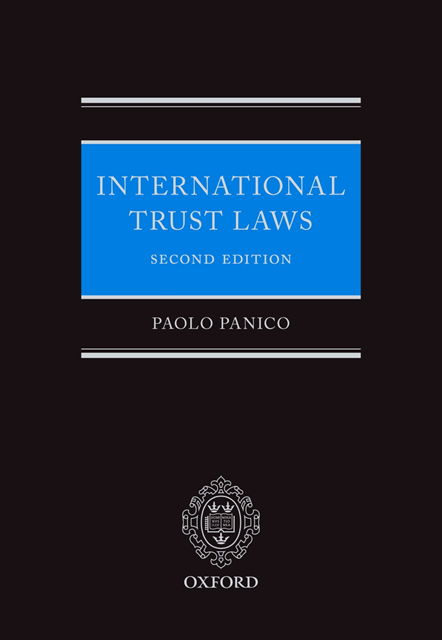
International Trust Laws is a wide-ranging comparative guide to the law of trusts across a number of important jurisdictions, with analysis of issues surrounding the creation of trusts, the powers and duties of trustees, mechanisms of control, and the special uses of trusts. The book combines academic rigour and analysis with a practical focus on trusts in the real world, including assets which modern settlors wish to envelop in a trust; liability concerns of trustees; and the governance, command, and control mechanisms which increasingly form the largest feature of trust creation. It also provides valuable background for trust law practitioners, whether they advise on trusts, draft trust documents, or litigate trust-related matters.The new edition has been fully revised and updated to address important developments in case law and legislation, including the UK Supreme Court decision on the "rule in Hastings-Bass" (Pitt and Futter cases), the Privy Council decision on 'reserved powers trusts' (TMSF), decisions on forced heirship issues in Jersey and Guernsey, decisions on 'asset protection trusts' in the US, the Trusts (Amendment N. 5) (Jersey) Law 2012 and Trusts (Amendment N. 6) (Jersey) Law 2013, Hong Kong's Trust Law (Amendment) Ordinance 2013, the Virgin Islands Special Trusts (Amendment) Act 2013 and Trustee (Amendment) Act 2013, Cyprus' International Trusts (Amendment) Law 2012 Cayman Islands, Trusts Law (2011 Revision), and amendments to the trusts law of New Zealand. It also offers new coverage of the retirement, removal, and appointment of trustees, with a special emphasis on trustee indemnity; and the recognition of trusts in non-trust jurisdictions (civil law jurisdictions, Eastern Europe, Islamic countries, and China).
5 350 kr
Skickas inom 7-10 vardagar
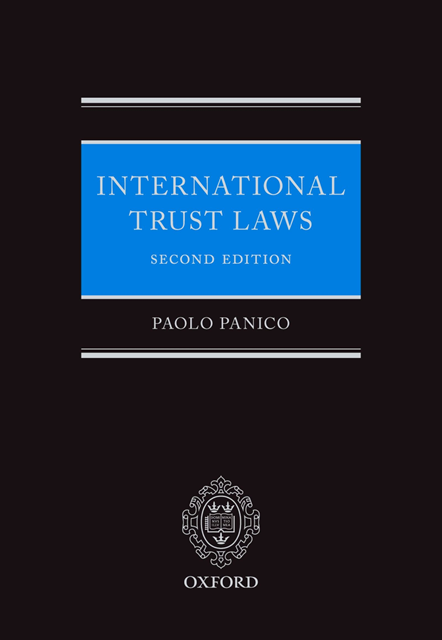
Private foundations are now offered as an alternative to traditional trusts in a growing number of international financial centres and an increasing number of practitioners - in the relevant jurisdictions and elsewhere - are asked to advise clients who are thinking of protecting their wealth in this way. As more jurisdictions introduce legislation, there is a greater need for practitioners to have a clear understanding of the law underpinning the creation and running of foundations.Written by a leading expert, Private Foundations: Law and Practice is an invaluable resource for anyone advising on or involved in the establishment and maintenance of private foundations. Each chapter discusses a fundamental aspect of private foundation law, with reference throughout to the most significant civil and common law jurisdictions. The author discusses not only the creation and management of private foundations, but also looks carefully at the powers, rights, and liabilities of their founders, officers, and beneficiaries. Every topic is analysed with reference to the legislation and case law of a number of key civil law jurisdictions (Liechtenstein, Austria, Panama, and Malta) as well as to the developing law in selected common law jurisdictions (St Kitts, Bahamas, Anguilla, Belize, Jersey, Guernsey, the Isle of Man, the Seychelles, Mauritius, and the Cook Islands).Offering a rigourous and analytical review of the law relating to private foundations, this book is ideal for anyone involved in this developing area of wealth management.
2 507 kr
Skickas inom 5-8 vardagar
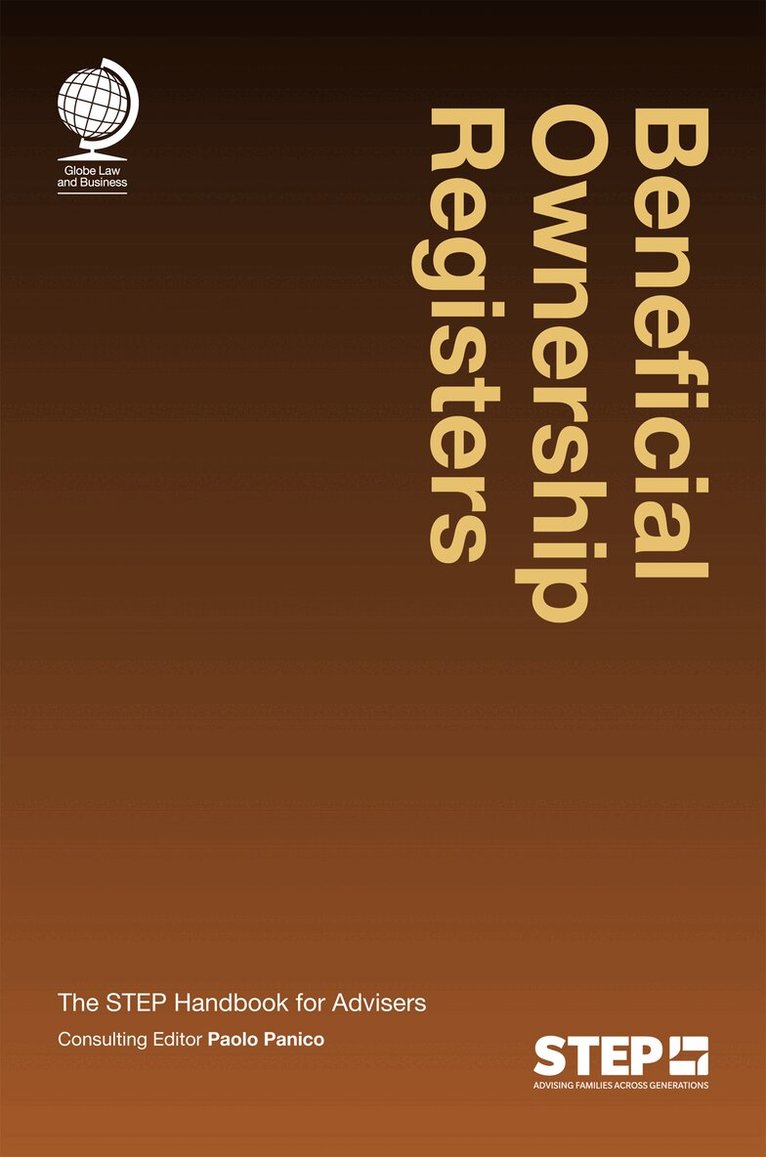
Beneficial ownership registers were introduced in the European Union (EU) under the 4th and 5th Anti Money Laundering Directive, with the ultimate goal of promoting increased transparency in the financial markets. Nevertheless, public access to the beneficial ownership information of companies and other legal arrangements, such as trusts, raises significant issues in relation to each individual's fundamental right to privacy, and consequently many EU member states are still struggling to strike the right balance between transparency and privacy. As a result, the implementation of beneficial ownership registers has been delayed in many EU member states and different legislative choices have been made in the various jurisdictions. Since beneficial ownership registers do not only apply to entities incorporated or administered in an EU jurisdiction, but may also extend to foreign entities with some business connection to that jurisdiction, it is essential to master these differences.This book, co-published with STEP, the world’s leading organisation for private wealth professionals, provides an in-depth analysis of the beneficial ownership registers legislation in a number of EU jurisdictions as well as in the UK, which pioneered it with the creation of its own ‘PSC Register’. It also looks at similar initiatives being experienced in some leading international financial centres as well as in the US.It includes coverage of:The functioning of beneficial ownership registers in selected EU jurisdictions;The differences between the beneficial ownership registers for companies and those for trusts, which are maintained in many EU member states;Practical comparisons on the possibility for individual beneficial owners to apply for their personal information to be withheld from public access;The ways of complaint in case such an application is not accepted; andSpecial cases such as the treatment of an EU company controlled by a trust or a foundation.The first to comprehensively approach this topic, this title will benefit private client advisers (lawyers, notaries, accountants) and family officers whose clients have business interests in the EU. The registration of the details of beneficial owners has become a new variable to be considered in any estate planning or asset protection exercise and more generally in any circumstance where a company or any other legal arrangement is created. It is therefore essential reading for anyone involved in any of these fields.
2 365 kr
Skickas inom 5-8 vardagar
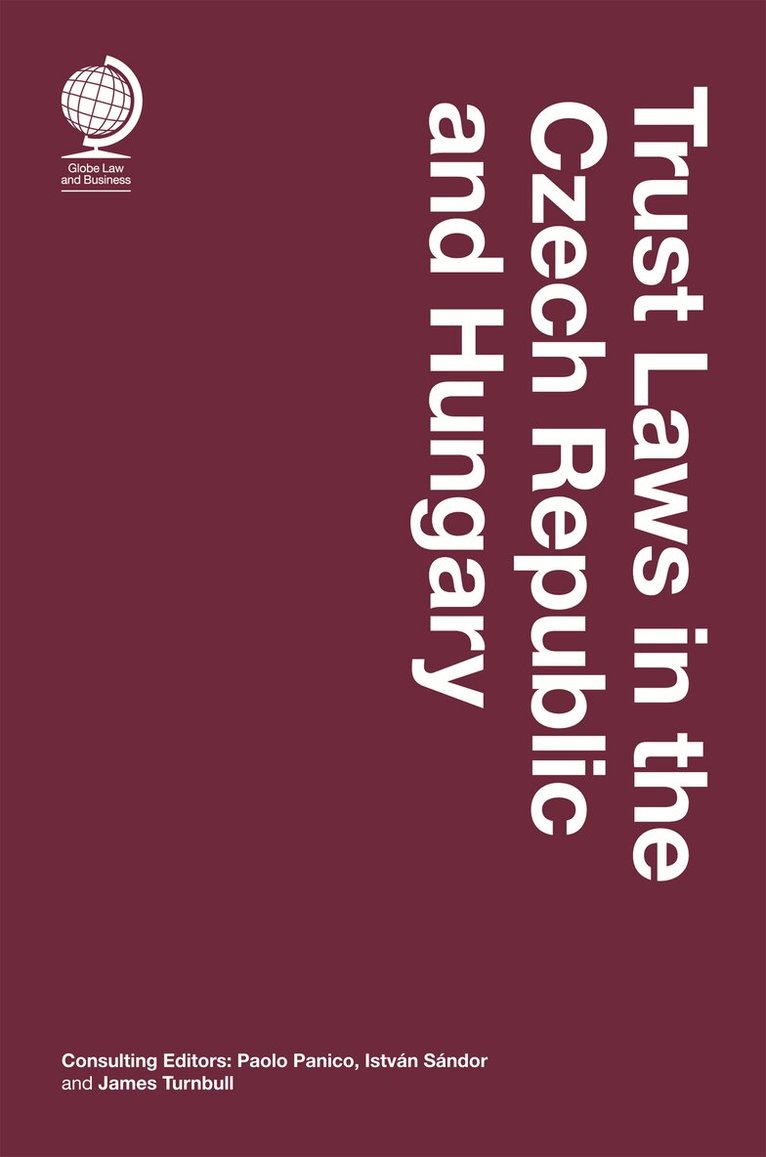
Both Czech and Hungarian trusts celebrate their 10th anniversary in 2024. These modern structures were introduced in response to the limitations of earlier succession-planning mechanisms and, together with other legal instruments, provided new tools for wealth management, estate planning and asset protection, which have reshaped the estate-planning environment.Trust Laws in the Czech Republic and Hungary explores the issues and challenges encountered when introducing common law trust concepts into civil law legal systems. It also reviews the legal and practical aspects of trusts in these two – quite different – jurisdictions, and the book is divided into two parts which deal separately with Czech and Hungarian solutions.Authored by well-known experts in this field, chapters cover the basics of the structures, providing a broad overview of key points including:the legal and regulatory formalities;trustees: their duties and responsibilities;beneficiaries;taxation; andthe practical uses of trusts for estate planning and asset protection.This title provides the only systematic review of Czech and Hungarian trust laws in English. It is an invaluable reference work to help lawyers and other private client advisers structure their clients' wealth. Additionally, professional trustees involved in the administration of Czech and Hungarian trusts, as well as accountants and tax advisers dealing with the tax treatment of trusts in the CEE region, will find this to be an indispensable guide.