Patricia A. Rosenmeyer - Böcker
Visar alla böcker från författaren Patricia A. Rosenmeyer. Handla med fri frakt och snabb leverans.
12 produkter
12 produkter
1 680 kr
Skickas inom 5-8 vardagar
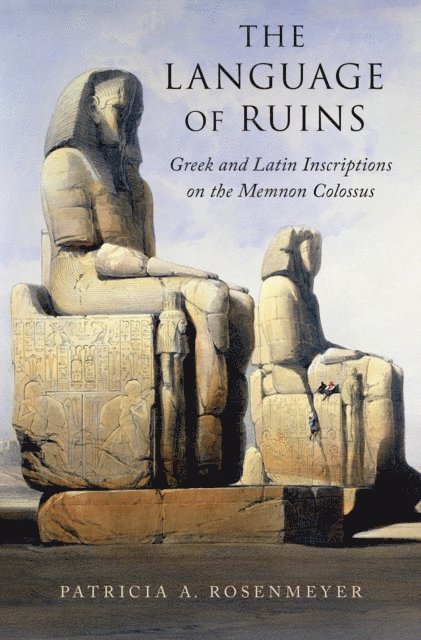
A colossal statue, originally built to honor an ancient pharaoh, still stands today in Egyptian Thebes, with more than a hundred Greek and Latin inscriptions covering its lower surfaces. Partially damaged by an earthquake, and later re-identified as the Homeric hero Memnon, it was believed to "speak" regularly at daybreak. By the middle of the first century CE, tourists flocked to the colossus of Memnon to hear the miraculous sound, and left behind their marks of devotion (proskynemata): brief acknowledgments of having heard Memnon's cry; longer lists by Roman administrators; and more elaborate elegiac verses by both amateur and professional poets. The inscribed names left behind reveal the presence of emperors and soldiers, provincial governors and businessmen, elite women and military wives, and families with children.While recent studies of imperial literature acknowledge the colossus, few address the inscriptions themselves. This book is the first critical assessment of all the inscriptions considered in their social, cultural, and historical context. The Memnon colossus functioned as a powerful site of engagement with the Greek past, and appealed to a broad segment of society. The inscriptions shed light on contemporary attitudes toward sacred tourism, the role of Egypt in the Greco-Roman imagination, and the cultural legacy of Homeric epic. Memnon is a ghost from the Homeric past anchored in the Egyptian present, and visitors yearned for a "close encounter" that would connect them with that distant past. The inscriptions thus idealize Greece by echoing archaic literature in their verses at the same time as they reflect their own historical horizon. These and other subjects are expertly explored in the book, including a fascinating chapter on the colossus's post-classical life when the statue finds new worshippers among Romantic artists and poets in nineteenth-century Europe.
1 863 kr
Skickas inom 5-8 vardagar
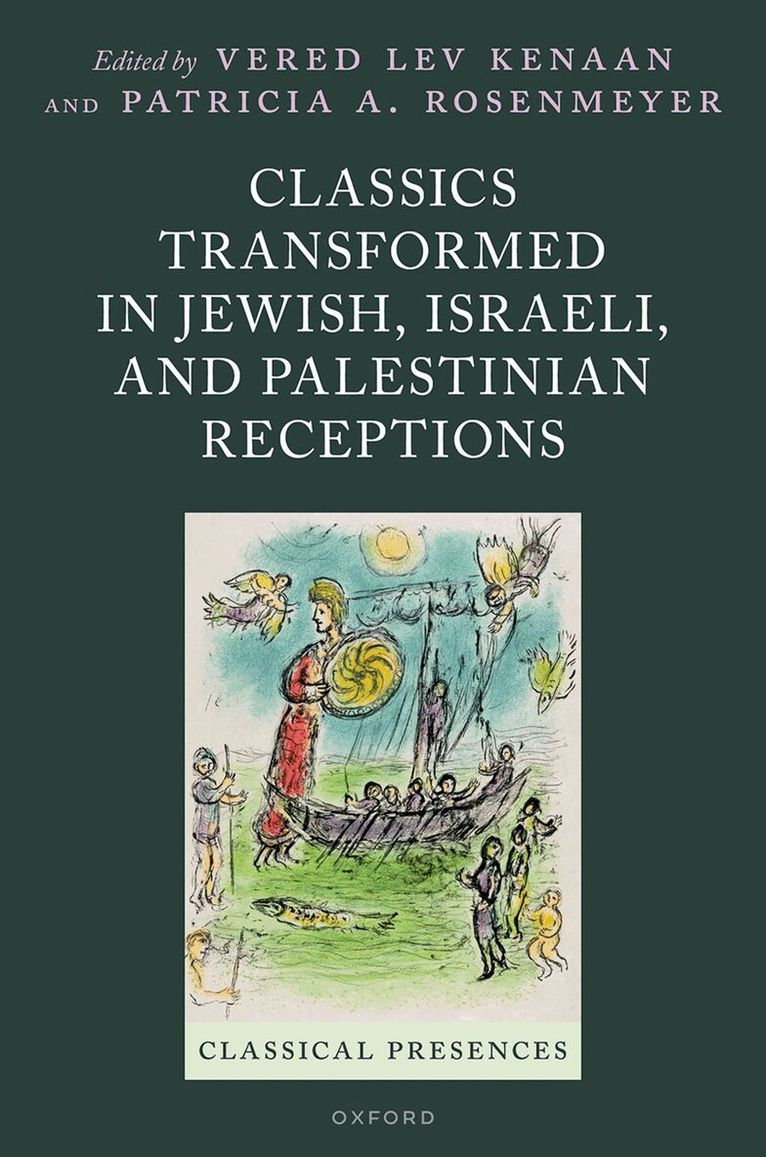
Classics Transformed in Jewish, Israeli, and Palestinian Receptions invites the reader to view classical antiquity through the writings of poets, translators, and scholars emerging from modern Jewish diasporas, Mandatory Palestine, and the State of Israel who engaged with Greek and Roman literary precedents. Whereas these voices have up to now been mostly studied independently of one another as separate fields of research, this volume brings some of these distinct voices, who nevertheless share a connection to Greco-Roman antiquity, into conversation with one another. Taking its cue from the crisis of humanism following the Holocaust, the chapters take as their themes the destruction of home, displacement, and different forms of wandering and homecomings, drawing connections to acts of translation and transmission of the classics to form a picture of cultural and textual states of alterity. The volume shows that Jewish, Israeli, and Palestinian responses to the classics are entangled and even complementary despite their different trajectories. The chapters included here focus particularly on critical moments in Jewish and Palestinian existence when the reception of classical humanism is closely linked to issues of survival. On offer here is a historically grounded investigation into the ways Jews, Israelis, and Palestinians have used classical antiquity and classical philology to validate their identity in a rapidly changing society.
499 kr
Skickas inom 10-15 vardagar
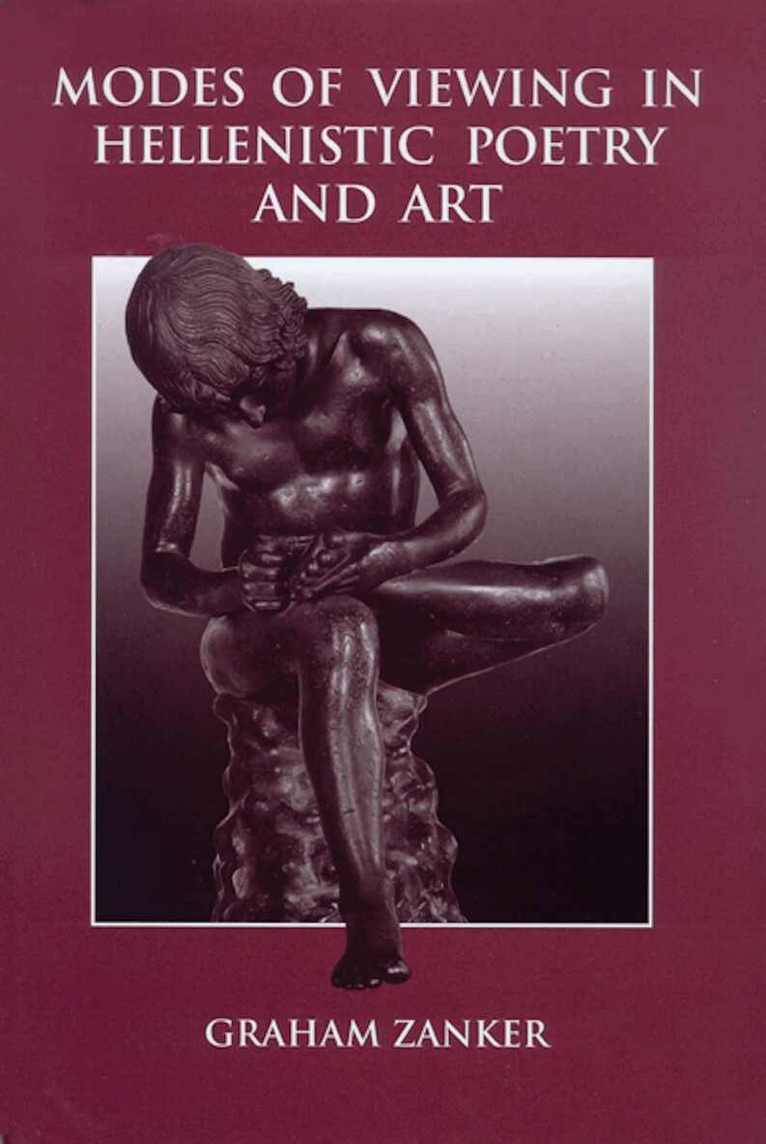
Taking a fresh look at the poetry and visual art of the Hellenistic age, from the death of Alexander the Great in 323 BC to 20 BC, Graham Zanker makes enlightening discoveries about the assumptions and conventions of Hellenistic poets and artists and their audiences. Zanker offers exciting new interpretations by closely comparing poetry and art for the light each sheds on the other.
361 kr
Skickas inom 10-15 vardagar
Horace's later lyric poetry, ""Odes IV"", which focuses on praising Augustus, the imperial family, and other political insiders, has often been treated more as propaganda than art. But, the author, here, examines the richly textured ambiguities of ""Odes IV"".
216 kr
Skickas
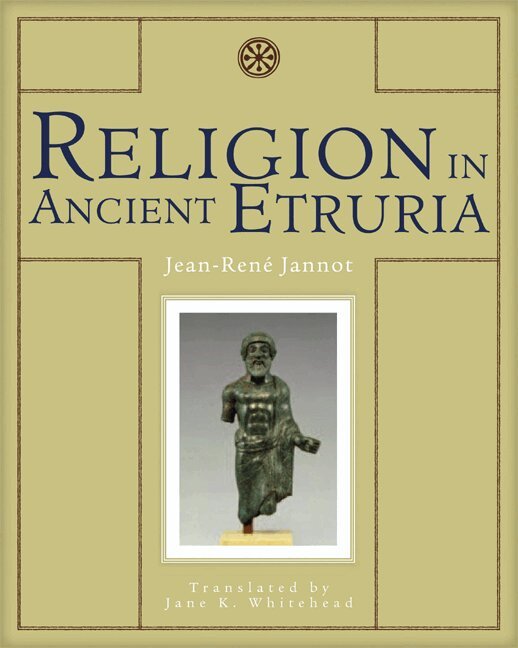
This lively translation of Devins, Dieux et Demons is the first English-language edition of Jean-Rene Jannot's highly informative examination of Etruscan religion. Jannot tackles this elusive subject within three major constructs - death, ritual, and the nature of the gods - and presents recent discoveries in an accessible format. Jane K. Whitehead's translation updates Jannot's innovative text and introduces readers of all types - students, scholars, and the general audience - to this thorough overview of ancient Etruscan beliefs, including the afterlife, funerary customs, and mythology. Provocative insights and thoughtful discussions contribute to an understanding of the prophetic nature of Etruscan culture. Jannot investigates the elaborate systems of defining space and time that so distinctly characterize this ancient society. Jannot offers a unique perspective that illuminates the origins of some of our own ""modern"" religious beliefs. This updated edition includes more than 100 illustrations that depict early temples, statues, mirrors, tablets, and sculptures.
437 kr
Skickas inom 10-15 vardagar
In his first book of Satires, written in the late, violent days of the Roman republic, Horace exposed satiric speech as a tool of power and domination. Using critical theories from classics, speech act analysis, and other fields, Catherine Schlegel argues that Horace's acute poetic observation of hostile speech provides insights into the operations of verbal control that are relevant to his time and to ours. She demonstrates that, though Horace is forced by his political circumstances to develop a new, unthreatening style of satire, his poems contain a challenge to our most profound habits of violence, hierarchy, and domination. Focusing on the relationships between speaker and audience and between old and new style, Schlegel examines the internal conflicts of a notoriously difficult text. This exciting contribution to the field of Horatian studies will be of interest to classicists as well as other scholars interested in the genre of satire.
2 150 kr
Skickas inom 10-15 vardagar
The first referenece to letter writing occurs in the first text of western literature, Homer's Iliad. From the very beginning, Greeks were enthusiastic letter writers, and letter writing became a distinct literary genre. Letters were included in the works of historians but they also formed the basis of works of fiction, and the formal substructure for many kinds of poem. Patricia Rosenmeyer, an authority on the history of the Greek letter, assembles in this book a representative selection of such 'literary letters', from Aelian and Alciphron to Philostrartus and the supposed letters of Themistocles. The book will be valuable for all students of Greek literature especially those studying Greek (and Latin) letter.
579 kr
Skickas inom 10-15 vardagar
The first referenece to letter writing occurs in the first text of western literature, Homer's Iliad. From the very beginning, Greeks were enthusiastic letter writers, and letter writing became a distinct literary genre. Letters were included in the works of historians but they also formed the basis of works of fiction, and the formal substructure for many kinds of poem. Patricia Rosenmeyer, an authority on the history of the Greek letter, assembles in this book a representative selection of such 'literary letters', from Aelian and Alciphron to Philostrartus and the supposed letters of Themistocles. The book will be valuable for all students of Greek literature especially those studying Greek (and Latin) letter.
705 kr
Skickas inom 7-10 vardagar
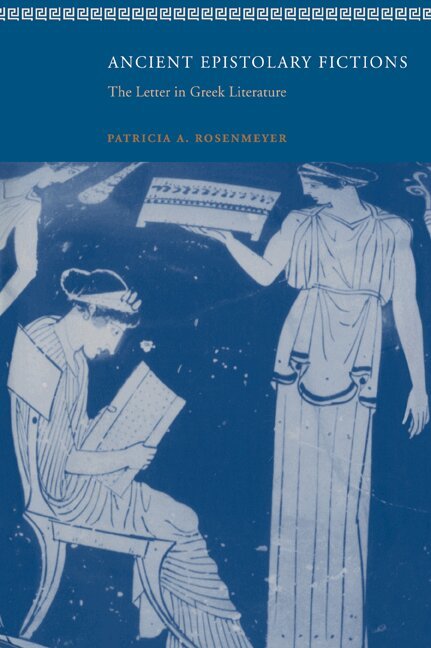
A comprehensive look at fictive letters in Greek literature from Homer to Philostratus, first published in 2001. It includes both embedded epistolary narratives in a variety of genres (epic, historiography, tragedy, the novel), and works consisting solely of letters, such as the pseudonymous letter collections and the invented letters of the Second Sophistic. The book challenges the notion that Ovid 'invented' the fictional letter form in his Heroides and considers a wealth of Greek antecedents for the later European epistolary novel tradition. Epistolary technique always problematizes the boundaries between fictionality and reality. Based on a process of selection and self-censorship, the letter is a construction, not a reflection, of reality. The author bypasses the question of sincerity for a close look at epistolary self-representation, the function of the letter form and the nature of the relationship between writer and reader in a wide range of ancient Greek texts.
644 kr
Skickas inom 7-10 vardagar
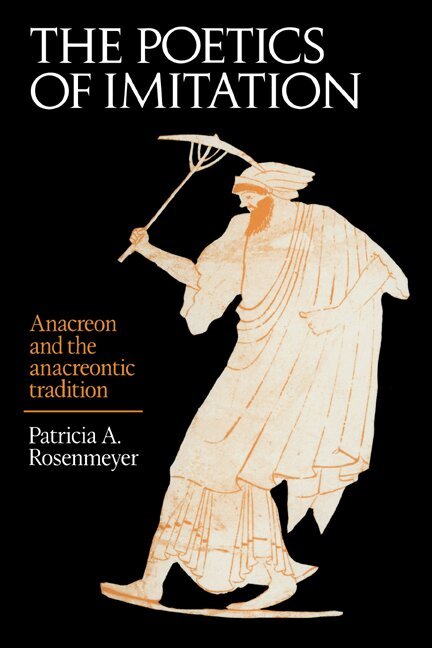
Western literature knows the anacreontic poems best in the translations or adaptations of such poets as Ronsard, Herrick and Goethe. This collection of poems, once assumed to be the work of Anacreon himself, was considered unworthy of serious attention after the poems were proved to be late Hellenistic and early Roman imitations by anonymous writers. This full-length treatment of the anacreontic corpus, first published in 1992, explores the complex poetics of imitation which inspired anacreontic composition for so many centuries in antiquity. The author reassesses Anacreon's own oeuvre, and then discusses the system of selective imitation practised by the anacreontic poets. The book explores what light the corpus can shed on ancient literary genres, intertextual influences, and the literary manifestations of symposiastic and erotic ideals in a post-classical society which looks back to an archaic model as its guiding force.A full translation of the anacreontic collection is included as an appendix and all Greek and Latin is translated.
1 431 kr
Skickas inom 7-10 vardagar
Western literature knows the anacreontic poems best in the translations or adaptations of such poets as Ronsard, Herrick and Goethe. This collection of poems, once assumed to be the work of Anacreon himself, was considered unworthy of serious attention after the poems were proved to be late Hellenistic and early Roman imitations by anonymous writers. This full-length treatment of the anacreontic corpus, first published in 1992, explores the complex poetics of imitation which inspired anacreontic composition for so many centuries in antiquity. The author reassesses Anacreon's own oeuvre, and then discusses the system of selective imitation practised by the anacreontic poets. The book explores what light the corpus can shed on ancient literary genres, intertextual influences, and the literary manifestations of symposiastic and erotic ideals in a post-classical society which looks back to an archaic model as its guiding force.A full translation of the anacreontic collection is included as an appendix and all Greek and Latin is translated.
1 658 kr
Skickas inom 7-10 vardagar
A comprehensive look at fictive letters in Greek literature from Homer to Philostratus, first published in 2001. It includes both embedded epistolary narratives in a variety of genres (epic, historiography, tragedy, the novel), and works consisting solely of letters, such as the pseudonymous letter collections and the invented letters of the Second Sophistic. The book challenges the notion that Ovid 'invented' the fictional letter form in his Heroides and considers a wealth of Greek antecedents for the later European epistolary novel tradition. Epistolary technique always problematizes the boundaries between fictionality and reality. Based on a process of selection and self-censorship, the letter is a construction, not a reflection, of reality. The author bypasses the question of sincerity for a close look at epistolary self-representation, the function of the letter form and the nature of the relationship between writer and reader in a wide range of ancient Greek texts.