Patricia S. Churchland – författare
Visar alla böcker från författaren Patricia S. Churchland. Handla med fri frakt och snabb leverans.
10 produkter
Braintrust
What Neuroscience Tells Us about Morality
Häftad, 2018
208 kr
Lägg i varukorg
A provocative new account of how morality evolvedWhat is morality? Where does it come from? And why do most of us heed its call most of the time? In Braintrust, neurophilosophy pioneer Patricia Churchland argues that morality originates in the biology of the brain. She describes the …
Braintrust
What Neuroscience Tells Us about Morality
E-bok, 2018
221 kr
Lägg i varukorg
A provocative new account of how morality evolved What is morality? Where does it come from? And why do most of us heed its call most of the time? In Braintrust , neurophilosophy pioneer Patricia Churchland argues that morality originates in the biology of the brain. She describes the …
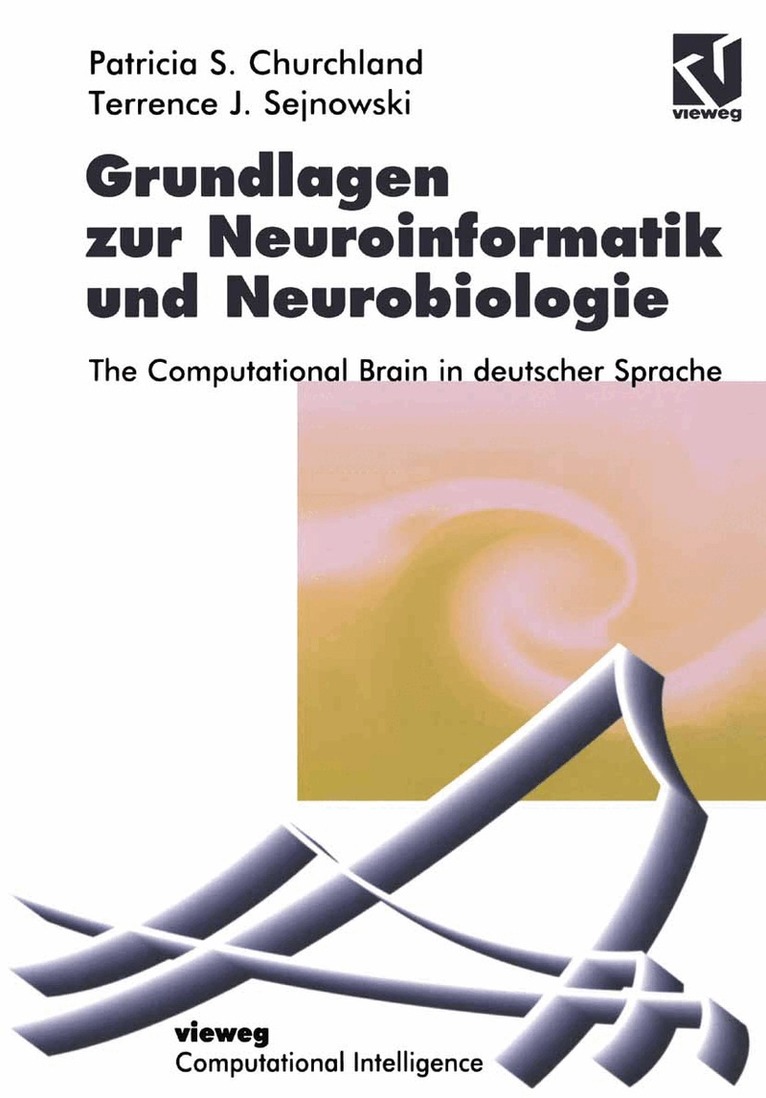
Grundlagen zur Neuroinformatik und Neurobiologie
The Computational Brain in deutscher Sprache
Av Terrence J. Sejnowski, Patricia S. Churchland
E-bok, 2013
848 kr
Lägg i varukorg
Grundlagen zur Neuroinformatik und Neurobiologie
The Computational Brain in deutscher Sprache
Av Patricia S. Churchland, Terrence J. Sejnowski m. fl.
Häftad, 2012
816 kr
Lägg i varukorg
The Computational Brain, das aussergewohnliche Buch uber vergleichende Forschung in den Bereichen von menschlichem Gehirn und neuesten Moglichkeiten der Computertechnologie, liegt hiermit erstmals in deutscher Sprache vor. Geschrieben von einem fuhrenden Forscherteam in den USA, ist es eine …
Neurophilosophy and Alzheimer's Disease
E-bok, 2012
2862 kr
Lägg i varukorg
Any mention of the relationship, still poorly understood, between body (or brain) and mind invariably invokes the name of Descartes, who is often thought of as the father of modern philosophy and perhaps of neurophilosophy. Although a native of the heart of France (the region around Tours), Rene …
Neurophilosophy and Alzheimer's Disease
Häftad, 2012
2179 kr
Lägg i varukorg
Any mention of the relationship, still poorly understood, between body (or brain) and mind invariably invokes the name of Descartes, who is often thought of as the father of modern philosophy and perhaps of neurophilosophy. Although a native of the heart of France (the region around Tours), Rene …
Mind-Brain Continuum
Sensory Processes
Av Rodolfo R. Llinás, Patricia S. Churchland
Häftad, 1996
377 kr
Tillfälligt slut
Computational Brain
Av Patricia S. Churchland, Terrence J. Sejnowski
Häftad, 2016
428 kr
Tillfälligt slut