Patrick Bracken - Böcker
Visar alla böcker från författaren Patrick Bracken. Handla med fri frakt och snabb leverans.
2 produkter
2 produkter
1 060 kr
Skickas inom 5-8 vardagar
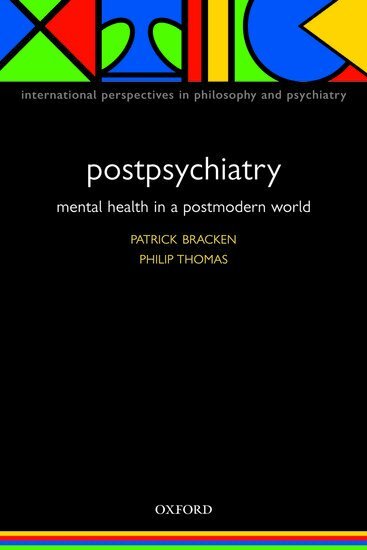
How are we to make sense of madness and psychosis? For most of us the words conjure up images from television and newspapers of seemingly random, meaningless violence. It is something to be feared, something to be left to the experts. But is madness best thought of as a medical condition? Psychiatrists and the drug industry maintain that psychoses are brain disorders amenable to treatment with drugs, but is this actually so? There is no convincing evidence that the brain is disordered in psychosis, yet governments across the world are investing huge sums of money on mental health services that take for granted the idea that psychosis is an illness to be treated with medication. Although some people who use mental health services find medication helpful, many do not, and resist the idea that their experiences are symptoms of illnesses like schizophrenia. Consequently they are forced into having treatment against their wishes. So, how do we make sense of this situation?Postpsychiatry addresses these questions. It involves an attempt to rethink some of the fundamental assumptions of mental health work, showing how recent developments in philosophy and ethics can help us to clarify some of the dilemmas and conflicts around different understandings of madness. Throughout, the authors examine the conflicting ways in which politicians, academics, and mental health professionals appear to understand madness, and contrast this with voices and experiences that are usually excluded - those of the people who use mental health services. They then examine the power of psychiatry to shape how we understand ourselves and our emotions, before considering some of the basic limitations of psychiatry as science to make madness meaningful. In the final section of the book they draw on evidence from service users and survivors, the humanities and anthropology, to point out a new direction for mental health practice. This new direction emphasises the importance of cultural contexts in understanding madness, placing ethics before technology in responding to madness, and minimising 'therapeutic' coercion.
687 kr
Skickas inom 7-10 vardagar
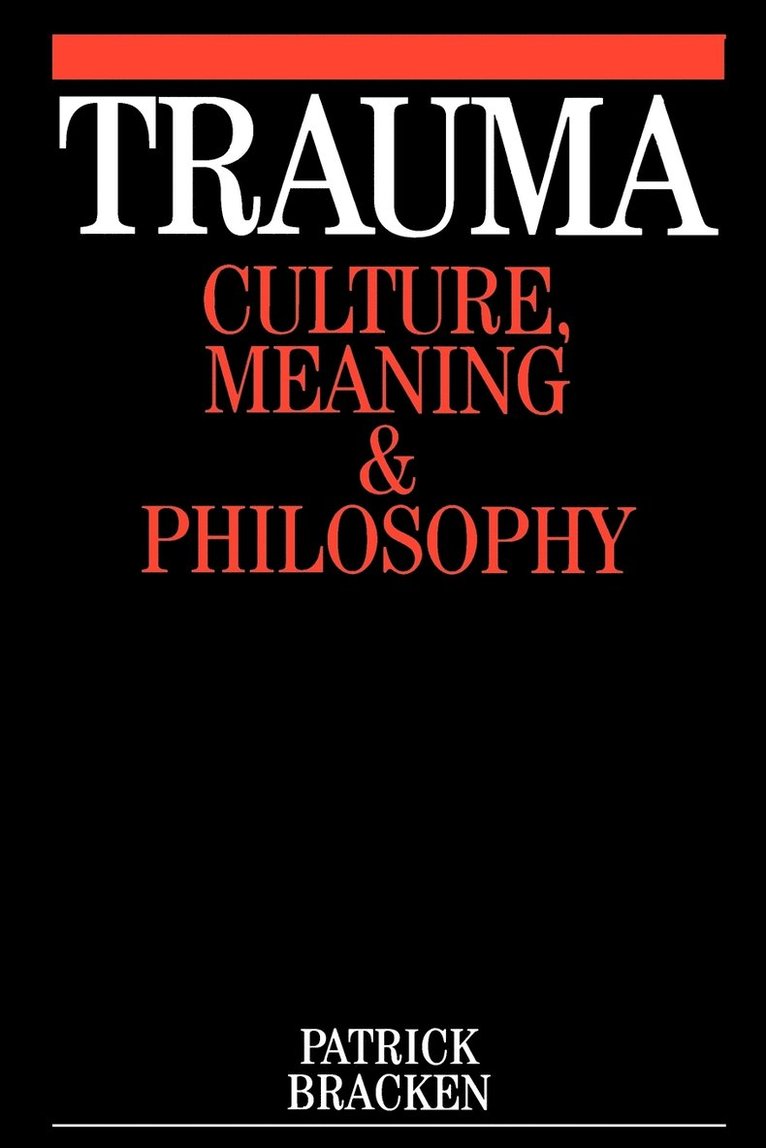
In the past twenty years there has been a remarkable growth of interest in the area of trauma within the disciplines of psychology and psychiatry. This professional interest both reflects and contributes to a wider cultural concern with trauma. The syndrome of Post Traumatic Stress Disorder (PTSD) lies at the heart of the current discourse on trauma. This book argues that there are serious problems inherent in current conceptualisations of how people react to trauma, and consequently in many of the therapeutic responses that have been developed. The book offers a radical critique of the concept of PTSD and questions the assumptions which underpin the 'trauma industry' that has emerged around it. However, the book is not just about critique. Drawing on anthropology, philosophy and his own clinical experience and that of others, the author presents a very different understanding of the relationships between trauma, meaning and culture. Post traumatic anxiety is presented as a problem with strong social and cultural dimensions and not simply an issue of individual psychopathology. Thus the reader is equipped with a new framework for helping traumatised individuals and communities. This very different conceptualisation of post traumatic sequelae will challenge therapists, aid and development workers as well as theoretical workers in psychology and psychiatry. Dr. Bracken argues against the medicalisation of distress and for the strengthening of communities and seeks to connect disputes about the framing of trauma with a wider debate about the social control of technology and expertise. This book will also be of interest to philosophers and others wishing to understand the relevance of philosophical analysis to medicine and psychology.