Patrick H. Byrne - Böcker
Visar alla böcker från författaren Patrick H. Byrne. Handla med fri frakt och snabb leverans.
5 produkter
5 produkter
402 kr
Tillfälligt slut
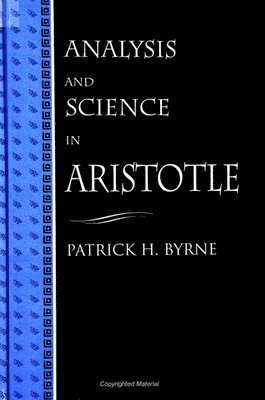
Presents a new interpretation of Aristotle's Analytics (the Prior and Posterior Analytics) as a unified whole, and argues that to "loose up" or solve—rather than to reduce or break up—is the principle meaning which best characterizes the Analytics.Offering a new interpretation of Aristotle's Analytics (the Prior and Posterior Analytics) as a unified whole, Patrick H. Byrne argues that a non-deductive form of ancient mathematical analysis influenced Aristotle's thinking. Reading the Analytics with this perspective in mind sheds new light on Aristotle's theories of the syllogism, demonstration and the principles of science.The book begins with a brief survey of ancient geometrical analysis and an investigation of Aristotle's uses of the Greek term, analuein. Byrne argues that "to loose up" or solve-rather than to reduce or break up-is the principal meaning which best characterizes Aristotle's Analytics. Extending this line of reasoning, he argues that for Aristotle scientific analysis commonly begins with knowledge of a "mere fact" (a conclusion) and seeks a rigorous demonstration which expresses knowledge of the "reasoned fact." Moreover, genuine analysis of a fact into a reasoned fact cannot be accomplished unless the premises of demonstrations are themselves reasoned facts. Hence the processes which yield the immediate principles (especially definitions) are next investigated through detailed examinations of key examples which Aristotle provides.
400 kr
Skickas inom 7-10 vardagar
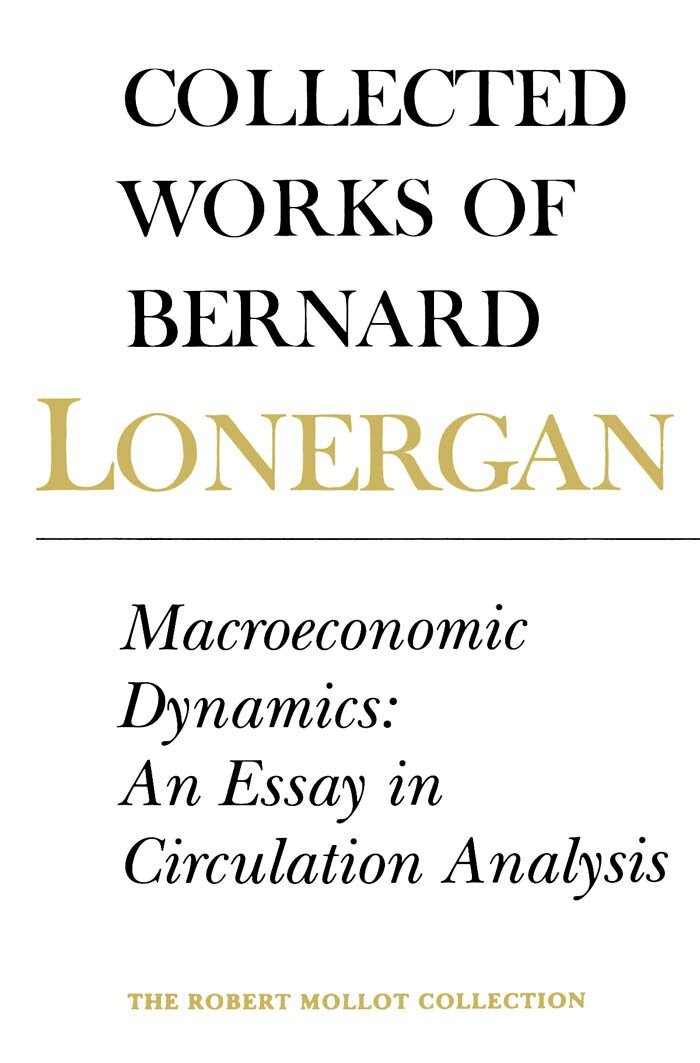
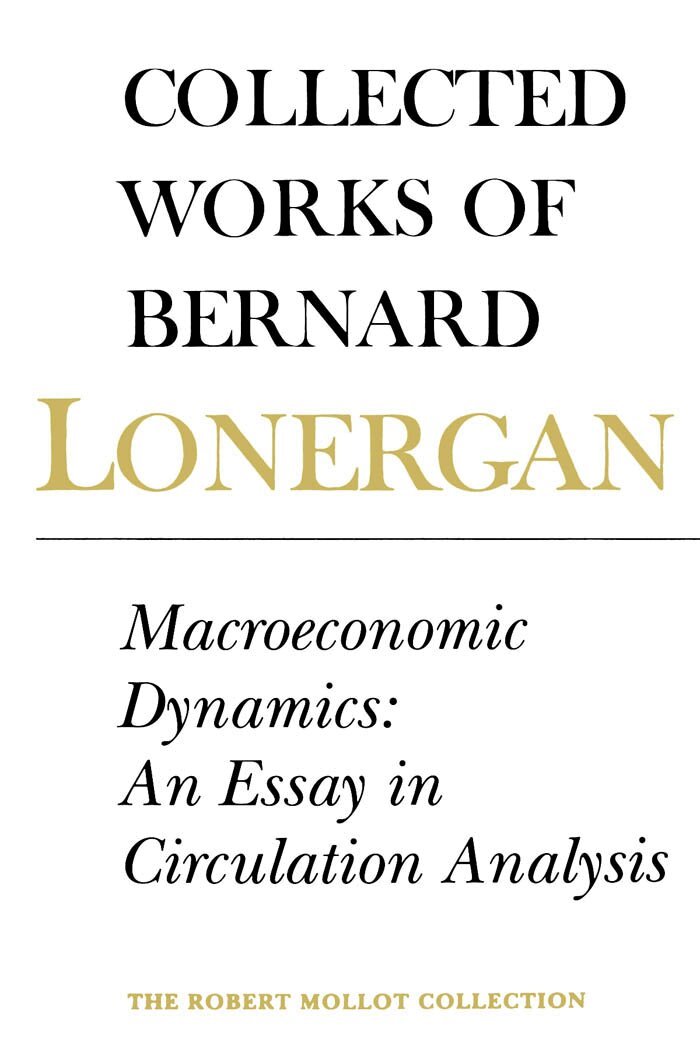
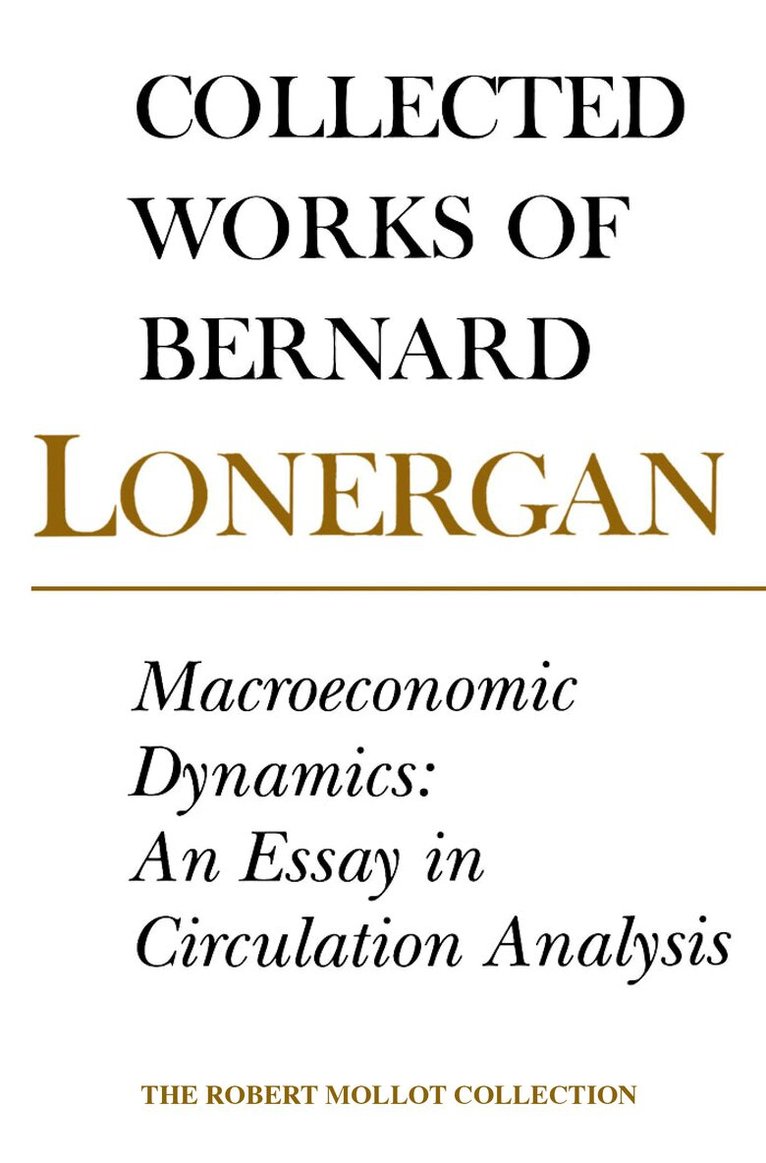
Few theologians in history have matched Bernard Lonergan's range of learning. Fewer still have written on the "dismal science" of economics. Rooted so solidly in the concerns of this world, economics is not a discipline we associate with the more rarified pursuit of theology. In this long-awaited volume, Lonergan demonstrates the short-sightedness of this view.This companion volume to For A New Political Economy (Collected Works of Bernard Lonergan, Volume 21) continues the work of bringing together the various elements of Lonergan's economic thought. His economic writings span forty years and represent one of the most important intellectual achievements of the twentieth century. They have previously been inaccessible outside of the Lonergan research community as the majority of them have not been formally published, and exist only as a group of unfinished essays and material for courses on economics taught by Lonergan. Lonergan's economic ideas track a different line of thought from that taken by contemporary economists. Macroeconomic Dynamics: An Essay in Circulation Analysis represents the economic thought of Lonergan at the end of his career. His analysis, while taking a fresh look at fundamental variables, breaks from centralist theory and practice towards a radically democratic perspective on surplus income and non-political control, and explores more fully the ideas introduced in For a New Political Economy. This work will be read not only by economists but also by liberation theologians, political theologians, and others inside and outside of religious organizations interested in social justice issues and alternative approaches to economics.
441 kr
Skickas inom 5-8 vardagar
Offers a unified vision for approaching human ethical responses to what science is telling us about the crises facing our environment and climate.Toward Environmental Wholeness proposes a new understanding of environmental wholeness that is needed to address the ethical challenges posed by environmental and climate crises. Relying on the studies of numerous historians, Patrick H. Byrne traces the complex developments in environmental and climate change sciences and how they have posed complex ethical challenges. Drawing upon the thought of Bernard Lonergan, he shows how seemingly contradictory contributions from diverse ethical traditions can be brought together into a framework for responding to what the developing sciences are telling us about our current situation and evaluating our realistic options. Byrne reveals how the limitations of a utilitarian approach to environmental ethics had to be expanded into more holistic approaches and the difficulties those approaches encountered-especially the Romantic notions of a pristine, unchanging nature to be preserved and humans as alien. Environmental and climate change sciences have revealed the complex, dynamic natural and human systems that now call for a more dynamic vision of the whole as the basis for environmental ethics. The book also examines how the initiatives of Pope Francis' Laudato si' and the United Nations' Strategic Development Goals are responding to these challenges.This book is published in an open access edition and released on University Press Library Open (UPLOpen.com) as part of the UPLOpen Climate Change Collection. UPLOpen is an initiative of Paradigm Publishing and the De Gruyter eBound Foundation.
1 456 kr
Skickas inom 3-6 vardagar
Offers a unified vision for approaching human ethical responses to what science is telling us about the crises facing our environment and climate.Toward Environmental Wholeness proposes a new understanding of environmental wholeness that is needed to address the ethical challenges posed by environmental and climate crises. Relying on the studies of numerous historians, Patrick H. Byrne traces the complex developments in environmental and climate change sciences and how they have posed complex ethical challenges. Drawing upon the thought of Bernard Lonergan, he shows how seemingly contradictory contributions from diverse ethical traditions can be brought together into a framework for responding to what the developing sciences are telling us about our current situation and evaluating our realistic options. Byrne reveals how the limitations of a utilitarian approach to environmental ethics had to be expanded into more holistic approaches and the difficulties those approaches encountered-especially the Romantic notions of a pristine, unchanging nature to be preserved and humans as alien. Environmental and climate change sciences have revealed the complex, dynamic natural and human systems that now call for a more dynamic vision of the whole as the basis for environmental ethics. The book also examines how the initiatives of Pope Francis' Laudato si' and the United Nations' Strategic Development Goals are responding to these challenges.This book is published in an open access edition and released on University Press Library Open (UPLOpen.com) as part of the UPLOpen Climate Change Collection. UPLOpen is an initiative of Paradigm Publishing and the De Gruyter eBound Foundation.
467 kr
Skickas inom 7-10 vardagar
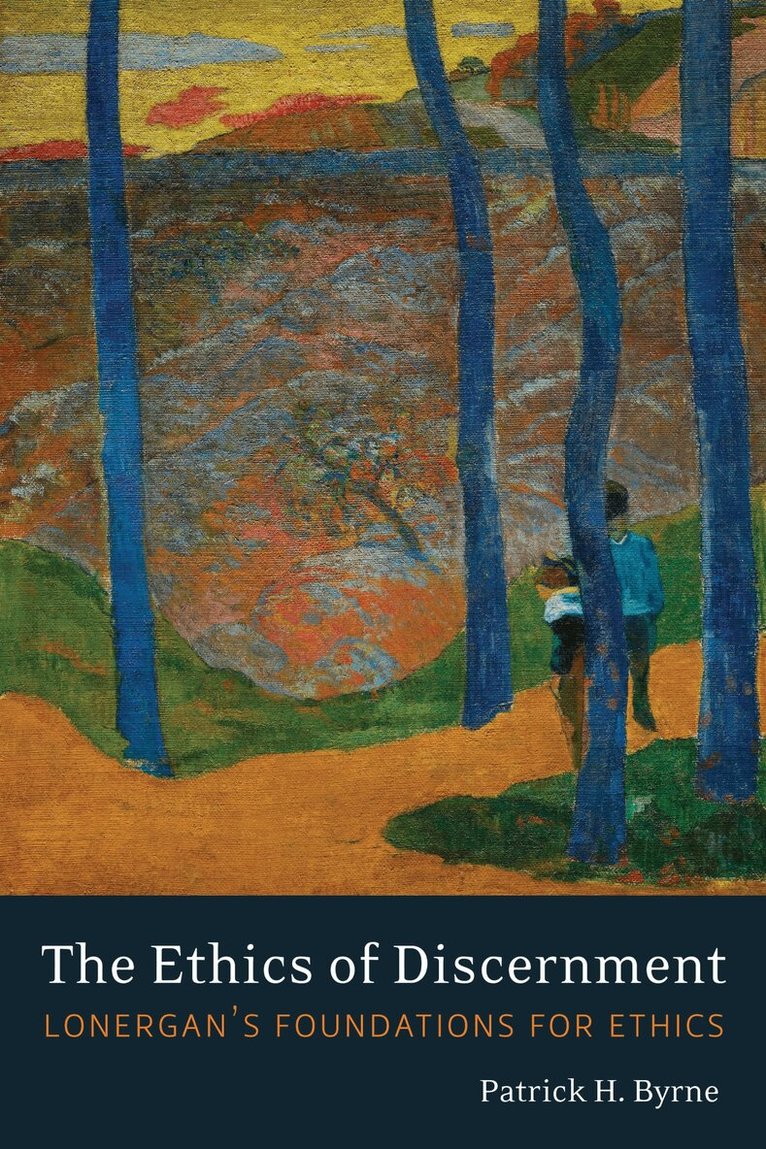
In The Ethics of Discernment, Patrick H. Byrne presents an approach to ethics that builds upon the cognitional theory and the philosophical method of self-appropriation that Bernard Lonergan introduced in his book Insight, as well as upon Lonergan’s later writing on ethics and values.Extending Lonergan’s method into the realm of ethics, Byrne argues that we can use self-appropriation to come to objective judgements of value. The Ethics of Discernment is an introspective analysis of that process, in which sustained ethical inquiry and attentiveness to feelings as “intentions of value” leads to a rich conception of the good.Written both for those with an interest in Lonergan’s philosophy and for those interested in theories of ethics who have only a limited knowledge of Lonergan’s work, Byrne’s book is the first detailed exposition of an ethical theory based on Lonergan’s philosophical method.