Patrick Iber - Böcker
Visar alla böcker från författaren Patrick Iber. Handla med fri frakt och snabb leverans.
3 produkter
3 produkter
Poverty of the Imagination
The Cold War and the Social Science of Development in Latin America
Inbunden, Engelska, 2026
1 814 kr
Kommande
Explores the history of the “science of development” during the Cold War and how experts across the social sciences tried to create the tools to address the problem of poverty across Latin America.In the mid-twentieth century, Latin America had the world’s starkest internal inequality. In Brazil in 1960, for example, the top 10% took upwards of 60% of the country’s total income, while its entire bottom half took only 10%. As Patrick Iber shows in Poverty of the Imagination, this problem of poverty and social inequality focused the attention of social scientists on the task of articulating a “science of development.” In the context of the Cold War, this project drew the attention of the U.S. government and the Ford Foundation, which hoped that peaceful development would prevent revolutions.This book examines the five central frameworks that emerged to explain poverty: from dependency theory on the Marxist left to theories of modernization, the culture of poverty, and marginality in the center, to neoliberalism on the right. Iber shows how each rose (and fell) by connecting to political projects, from the War on Poverty in the United States to the dictatorship of Augusto Pinochet in Chile. Through vivid portraits of key thinkers, he shows how each was shaped by the environment of the Cold War and the presence of the Ford Foundation. It is a story with surprising turns: what began for Ford as a Cold War project to support university “modernization” changed as dictatorships took control of much of the region. Then, Ford took the side of the dissidents, supporting an anti-poverty agenda for the restoration of democracy. A guide to some of the most important ideas in global development and Latin American studies alike, this book also shows how scholars and institutions faced down authoritarian threats—and won.
Poverty of the Imagination
The Cold War and the Social Science of Development in Latin America
Häftad, Engelska, 2026
535 kr
Kommande
Explores the history of the “science of development” during the Cold War and how experts across the social sciences tried to create the tools to address the problem of poverty across Latin America.In the mid-twentieth century, Latin America had the world’s starkest internal inequality. In Brazil in 1960, for example, the top 10% took upwards of 60% of the country’s total income, while its entire bottom half took only 10%. As Patrick Iber shows in Poverty of the Imagination, this problem of poverty and social inequality focused the attention of social scientists on the task of articulating a “science of development.” In the context of the Cold War, this project drew the attention of the U.S. government and the Ford Foundation, which hoped that peaceful development would prevent revolutions.This book examines the five central frameworks that emerged to explain poverty: from dependency theory on the Marxist left to theories of modernization, the culture of poverty, and marginality in the center, to neoliberalism on the right. Iber shows how each rose (and fell) by connecting to political projects, from the War on Poverty in the United States to the dictatorship of Augusto Pinochet in Chile. Through vivid portraits of key thinkers, he shows how each was shaped by the environment of the Cold War and the presence of the Ford Foundation. It is a story with surprising turns: what began for Ford as a Cold War project to support university “modernization” changed as dictatorships took control of much of the region. Then, Ford took the side of the dissidents, supporting an anti-poverty agenda for the restoration of democracy. A guide to some of the most important ideas in global development and Latin American studies alike, this book also shows how scholars and institutions faced down authoritarian threats—and won.
452 kr
Skickas inom 10-15 vardagar
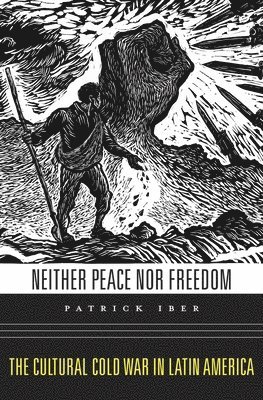
During the Cold War, left-wing Latin American artists, writers, and scholars worked as diplomats, advised rulers, opposed dictators, and even led nations. Their competing visions of social democracy and their pursuit of justice, peace, and freedom led them to organizations sponsored by the governments of the Cold War powers: the Soviet-backed World Peace Council, the U.S.-supported Congress for Cultural Freedom, and, after the 1959 Cuban Revolution, the homegrown Casa de las Américas.Neither Peace nor Freedom delves into the entwined histories of these organizations and the aspirations and dilemmas of intellectuals who participated in them, from Diego Rivera and Pablo Neruda to Gabriel García Márquez and Jorge Luis Borges. Patrick Iber corrects the view that such individuals were merely pawns of the competing superpowers. Movements for democracy and social justice sprung up among pro-Communist and anti-Communist factions, and Casa de las Américas promoted a brand of revolutionary nationalism that was beholden to neither the Soviet Union nor the United States.But ultimately, intellectuals from Latin America could not break free from the Cold War’s rigid binaries. With the Soviet Union demanding fealty from Latin American communists, the United States zealously supporting their repression, and Fidel Castro pushing for regional armed revolution, advocates of social democracy found little room to promote their ideals without compromising them. Cold War politics had offered utopian dreams, but intellectuals could get neither the peace nor the freedom they sought.