Patrick J. Rosopa - Böcker
Visar alla böcker från författaren Patrick J. Rosopa. Handla med fri frakt och snabb leverans.
4 produkter
4 produkter
3 349 kr
Tillfälligt slut
956 kr
Skickas inom 7-10 vardagar
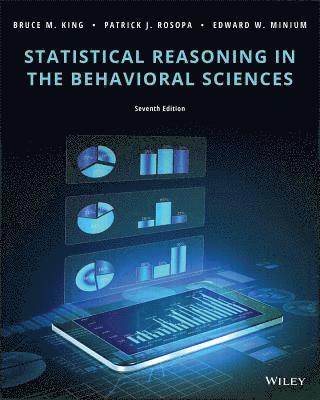
Cited by more than 300 scholars, Statistical Reasoning in the Behavioral Sciences continues to provide streamlined resources and easy-to-understand information on statistics in the behavioral sciences and related fields, including psychology, education, human resources management, and sociology. Students and professionals in the behavioral sciences will develop an understanding of statistical logic and procedures, the properties of statistical devices, and the importance of the assumptions underlying statistical tools. This revised and updated edition continues to follow the recommendations of the APA Task Force on Statistical Inference and greatly expands the information on testing hypotheses about single means. The Seventh Edition moves from a focus on the use of computers in statistics to a more precise look at statistical software. The “Point of Controversy” feature embedded throughout the text provides current discussions of exciting and hotly debated topics in the field. Readers will appreciate how the comprehensive graphs, tables, cartoons and photographs lend vibrancy to all of the material covered in the text.
Research Methods in Human Resource Management
Toward Valid Research-Based Inferences
Häftad, Engelska, 2020
549 kr
Skickas inom 7-10 vardagar
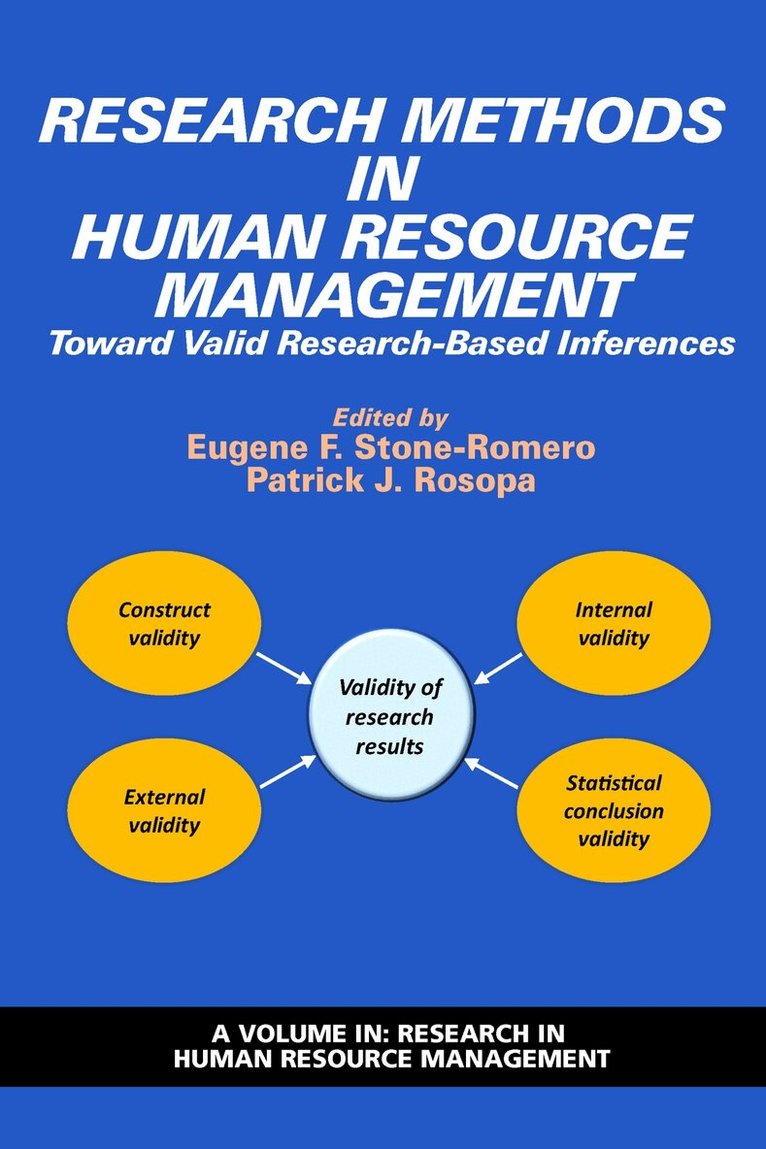
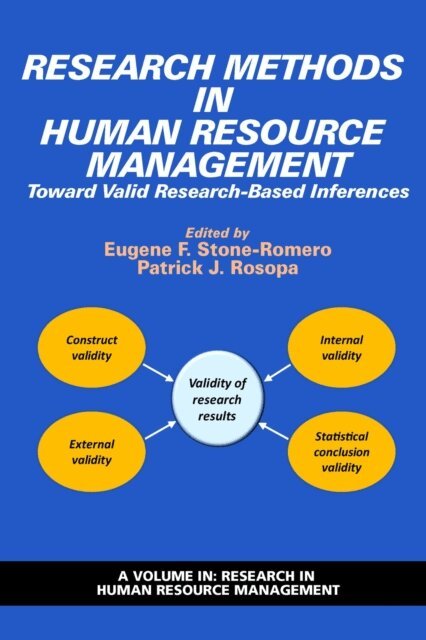
Empirical research in HRM has focused on such issues as recruiting, testing, selection, training, motivation, compensation, and employee well-being. A review of the literature on these and other topics suggests that less than optimal methods have often been used in many HRM studies. Among the methods-related problems are using (a) measures or manipulations that have little or no construct validity, (b) samples of units (e.g., participants, organizations) that bear little or no correspondence to target populations, (c) research designs that have little or no potential for supporting valid causal inferences, (d) samples that are too small to provide for adequate statistical power, and (e) data analytic strategies that are inappropriate for the issues addressed by a study. As a result, our understanding of various HRM phenomena has suffered and improved methods may serve to enhance both the science and practice of HRM.In view of the above, the purpose of this volume of Research in Human Resource Management is to provide basic and applied researchers with resources that will enable them to improve the internal validity, external validity, construct validity, and statistical conclusion validity of research in HRM and the related fields of industrial and organizational psychology, and organizational behavior. Sound research in these fields should serve to improve both science and practice. With respect to science, support for a theory hinges on the validity of research used to support it. In addition, the results of valid research are essential for the development and implementation of HRM policies and practices.In the interest of promoting valid research-based inferences in HRM research, the chapters in this volume identify a wide range of methods-related problems and offer recommendations for dealing with them. Chapters in it address such HRM research-related topics as neglected research issues, causal inferences in research, heteroscedasticity in research, range restriction in research, interrater agreement indices, and construct validity issues in measures of such constructs as job performance, organizational politics, and safety climate.
Research Methods in Human Resource Management
Toward Valid Research-Based Inferences
Inbunden, Engelska, 2020
1 009 kr
Skickas inom 7-10 vardagar
Empirical research in HRM has focused on such issues as recruiting, testing, selection, training, motivation, compensation, and employee well-being. A review of the literature on these and other topics suggests that less than optimal methods have often been used in many HRM studies. Among the methods-related problems are using (a) measures or manipulations that have little or no construct validity, (b) samples of units (e.g., participants, organizations) that bear little or no correspondence to target populations, (c) research designs that have little or no potential for supporting valid causal inferences, (d) samples that are too small to provide for adequate statistical power, and (e) data analytic strategies that are inappropriate for the issues addressed by a study. As a result, our understanding of various HRM phenomena has suffered and improved methods may serve to enhance both the science and practice of HRM.In view of the above, the purpose of this volume of Research in Human Resource Management is to provide basic and applied researchers with resources that will enable them to improve the internal validity, external validity, construct validity, and statistical conclusion validity of research in HRM and the related fields of industrial and organizational psychology, and organizational behavior. Sound research in these fields should serve to improve both science and practice. With respect to science, support for a theory hinges on the validity of research used to support it. In addition, the results of valid research are essential for the development and implementation of HRM policies and practices.In the interest of promoting valid research-based inferences in HRM research, the chapters in this volume identify a wide range of methods-related problems and offer recommendations for dealing with them. Chapters in it address such HRM research-related topics as neglected research issues, causal inferences in research, heteroscedasticity in research, range restriction in research, interrater agreement indices, and construct validity issues in measures of such constructs as job performance, organizational politics, and safety climate.