Patrick Seguin – författare
Visar alla böcker från författaren Patrick Seguin. Handla med fri frakt och snabb leverans.
8 produkter
8 produkter
2 574 kr
Skickas inom 5-8 vardagar
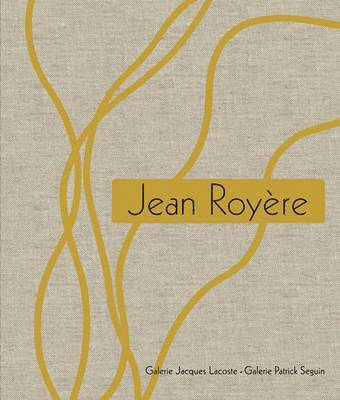
Compact and fluid, robust and delicate, Royère’s chairs, lamps, chandeliers, sofas and desks exude a sensuous confidence, suggesting both comfort and alertnessIn 1931, aged 29, Jean Royère (1902–1981) resigned from a comfortable position in the import–export trade in order to set up business as an interior designer. He learnt his new trade in the cabinetmaking workshops of the Faubourg Saint-Antoine in Paris. In 1934, he designed the new layout of the Brasserie Carlton on the Champs Elysées and found immediate success, embarking upon an international career that was to endure for nearly half a century. Royère tackled all kinds of decoration work and opened branches in the Near East and Latin America; among his patrons were King Farouk, King Hussein of Jordan and the Shah of Iran, who entrusted him with the interior design of their palaces. The Royère style is a wonderful amalgam of bright, cheery colors, subtly organic forms and precious materials. Compact and fluid, robust and delicate, Royère’s chairs, lamps, chandeliers, sofas and desks exude a sensuous confidence, suggesting both comfort and alertness. This superbly produced, linen-bound, two-volume boxed monograph would have made Royère proud. The first volume explores the designer’s work across four themes inspired by his creations: “The Vegetal Realm,” “The Animal World,” The Imaginative Realm” and “Line and Design.” In addition to prefaces by Jacques Lacoste and Patrick Seguin, this volume contains interviews with Lorenz Baümer, Béatrice Salmon, and Christian Lacroix--by art historian and journalist Françoise Claire Prodhon--and a chapter looking back to the Jean Royère exhibition at the Sonnabend Gallery in New York in 2008. The second volume opens with a 1963 interview with Royère by Pascal Renous, and then presents the “Jean Royère Repertoire”: 380 items of furniture and other creations accompanied by detailed references and illustrations of variants. The volume is rounded off by a sketchbook offering 156 hitherto unpublished Royère drawings. This authoritative and sumptuous publication is the last word on this midcentury master.
1 868 kr
Skickas inom 5-8 vardagar
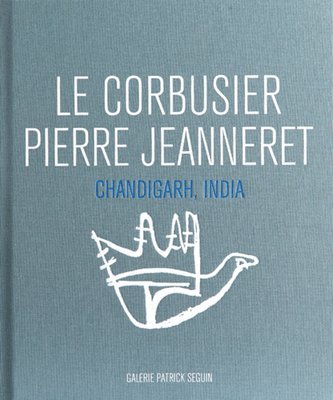
This beautiful, comprehensive volume documents Le Corbusier and Pierre Jeanneret's massive Chandigarh project—the buildings and the furniture (today considered masterpieces of twentieth-century architecture and design), the plans, sketches and maquettes as well as reproducing both archival and contemporary photographs. In 1947, shortly after India gained independence, the Indian Prime Minister Jawaharlal Nehru initiated a vast plan of modernization throughout the country, during which Chandigarh became the administrative capital of the Punjab province. Nehru commissioned Le Corbusier and Pierre Jeanneret to construct this capital from scratch, with the sole instruction that they should be expressive and experimental and should not let themselves be hindered by tradition. Illustrated with photographs dating from the time period to the present, this book documents the architectural project and the production of the furniture, offering a definitive summary of this epic modernist enterprise. A further chapter is dedicated to the work of Lucien Hervé, the famous architectural photographer who depicted the city extensively.The architect, urban planner, painter, writer, designer and theorist Charles-Edouard Jeanneret, known as Le Corbusier, was born in Switzerland in 1887. In 1922 Le Corbusier and his cousin Pierre Jeanneret opened an architectural studio in Paris, inaugurating a partnership that would last until 1940. They began experimenting with furniture design after inviting the architect Charlotte Perriand to join the studio in 1928. After World War II, they sought efficient ways to house large numbers of people in response to the urban housing crisis. In the 1950s a unique opportunity to realize their concepts on a grand scale presented itself in the construction of Chandigarh. Before his death in 1965, Le Corbusier established the Fondation Le Corbusier in Paris to look after and make available to scholars his library, architectural drawings, sketches and paintings.
1 276 kr
Skickas inom 5-8 vardagar
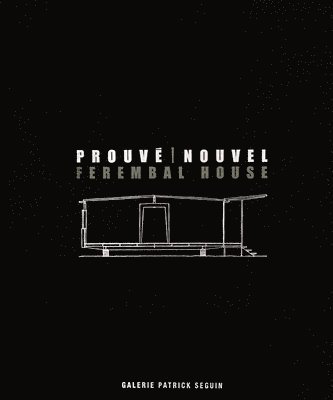
Jean Prouvé’s Ferembal House was built in Nancy, France, in 1948, as the office for a can factory. Composed of five axial frames clad with wooden panels, set on a tall masonry base and occupying less than 600 square feet in a single raised story, this prefabricated structure was a classic example of Prouvé’s advocacy of mobile architecture. Thirty years later, however, the company went out of business and the factory was demolished. Fortunately a Nancy resident had the wherewithal to dismantle and preserve Prouvé’s innovative building, putting it into storage. In 1991, the well-known Parisian design gallerist Patrick Seguin traveled to Nancy to locate the Ferembal House. Seguin spent the next ten years raising the funds to renovate it, working in tandem with Prouvé experts, and in 2007 invited his longstanding friend, the architect Jean Nouvel, to undertake a creative adaptation of the House. Drawing on contemporary technical resources, Nouvel brilliantly extended and systematized its fundamental modularity with stackable Ductal blocks and a floor of removable slabs. The results were exhibited in the Tuileries Gardens in Paris, in 2010. This comprehensive account of Prouvé’s posthumous collaboration with Nouvel recounts the tale of the Ferembal House with archival photographs and plans of the original structure and a detailed account of Nouvel’s inspired interventions.
344 kr
Skickas inom 5-8 vardagar
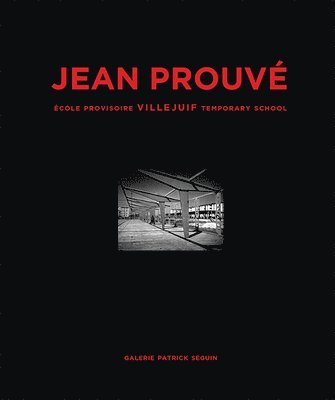
Jean Prouvé began to design portable and demountable barracks for the French army during the Second World War. After the war, the French government commissioned Prouvé to design inexpensive, effective housing for the newly homeless, prompting him to perfect his patented axial portal frame to build easily constructed demountable houses. Few of these groundbreaking structures were built, making them exceedingly rare today—prompting Galerie Patrick Seguin’s tireless efforts over the past 27 years to preserve and promote these important designs. The gallery owns the largest collection of Prouvé’s demountables, 22 in total.This volume focuses on the Villejuif Temporary School designed in 1957. It is luxuriously illustrated with archival and contemporary photographs. Though lacking any formal education in architecture, Jean Prouvé (1901–84) became one of the most influential architects of the 20th century, boldly experimenting with new building designs, materials and methods. “His postwar work has left its mark everywhere,” wrote Le Courbusier, “decisively.”
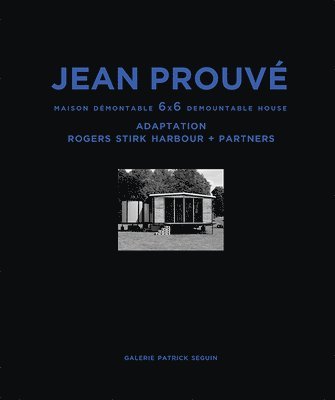
Jean Prouvé: Maison Démontable 6x6 Demountable House
Adaptation Rogers Stirk Harbour+Partners, 1944–2015
Inbunden, Engelska, 2016
344 kr
Skickas inom 5-8 vardagar
Jean Prouvé began to design portable and demountable barracks for the French army during the Second World War. After the war, the French government commissioned Prouvé to design inexpensive, effective housing for the newly homeless, prompting him to perfect his patented axial portal frame to build easily constructed demountable houses. Few of these groundbreaking structures were built, making them exceedingly rare today—prompting Galerie Patrick Seguin’s tireless efforts over the past 27 years to preserve and promote these important designs. The gallery owns the largest collection of Prouvé’s demountables, 22 in total.This volume focuses on his 6 x 6 Demountable House, and is luxuriously illustrated with archival and contemporary photographs. Though lacking any formal education in architecture, Jean Prouvé (1901–84) became one of the most influential architects of the 20th century, boldly experimenting with new building designs, materials and methods. “His postwar work has left its mark everywhere,” wrote Le Courbusier, “decisively.”
344 kr
Skickas inom 5-8 vardagar
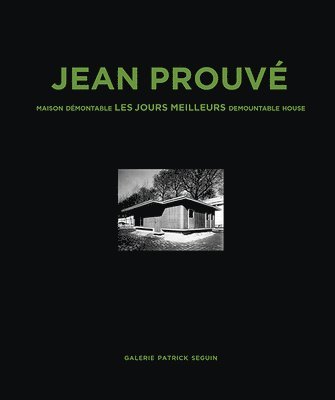
Jean Prouvé began to design portable and demountable barracks for the French army during the Second World War. After the war, the French government commissioned Prouvé to design inexpensive, effective housing for the newly homeless, prompting him to perfect his patented axial portal frame to build easily constructed demountable houses. Few of these groundbreaking structures were built, making them exceedingly rare today—prompting Galerie Patrick Seguin’s tireless efforts over the past 27 years to preserve and promote these important designs. The gallery owns the largest collection of Prouvé’s demountables, 22 in total.This volume focuses on his 1956 Demountable House, and is luxuriously illustrated with archival and contemporary photographs. Though lacking any formal education in architecture, Jean Prouvé (1901–84) became one of the most influential architects of the 20th century, boldly experimenting with new building designs, materials and methods. “His postwar work has left its mark everywhere,” wrote Le Courbusier, “decisively.”
344 kr
Skickas inom 5-8 vardagar
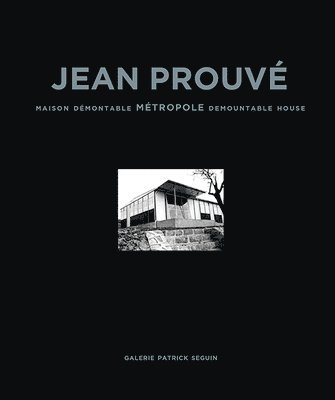
Jean Prouvé began to design portable and demountable barracks for the French army during the Second World War. After the war, the French government commissioned Prouvé to design inexpensive, effective housing for the newly homeless, prompting him to perfect his patented axial portal frame to build easily constructed demountable houses. Few of these groundbreaking structures were built, making them exceedingly rare today—prompting Galerie Patrick Seguin’s tireless efforts over the past 27 years to preserve and promote these important designs. The gallery owns the largest collection of Prouvé’s demountables, 22 in total.This volume focuses on his Metropole Demountable House, and is luxuriously illustrated with archival and contemporary photographs. Though lacking any formal education in architecture, Jean Prouvé (1901–84) became one of the most influential architects of the 20th century, boldly experimenting with new building designs, materials and methods. “His postwar work has left its mark everywhere,” wrote Le Courbusier, “decisively.”
344 kr
Skickas inom 5-8 vardagar
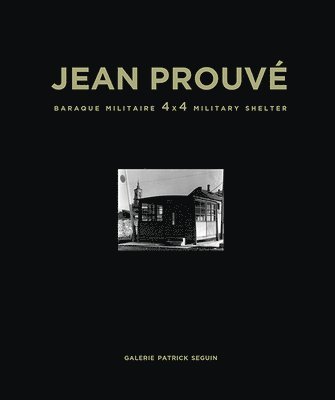
Jean Prouvé began to design portable and demountable barracks for the French army during the Second World War. After the war, the French government commissioned Prouvé to design inexpensive, effective housing for the newly homeless, prompting him to perfect his patented axial portal frame to build easily constructed demountable houses. Few of these groundbreaking structures were built, making them exceedingly rare today—prompting Galerie Patrick Seguin’s tireless efforts over the past 27 years to preserve and promote these important designs. The gallery owns the largest collection of Prouvé’s demountables, 22 in total.This volume focuses on his Demountable Military Shelter, and is luxuriously illustrated with archival and contemporary photographs. Though lacking any formal education in architecture, Jean Prouvé (1901–84) became one of the most influential architects of the 20th century, boldly experimenting with new building designs, materials and methods. “His postwar work has left its mark everywhere,” wrote Le Courbusier, “decisively.”