Paul Adler - Böcker
Visar alla böcker från författaren Paul Adler. Handla med fri frakt och snabb leverans.
9 produkter
9 produkter
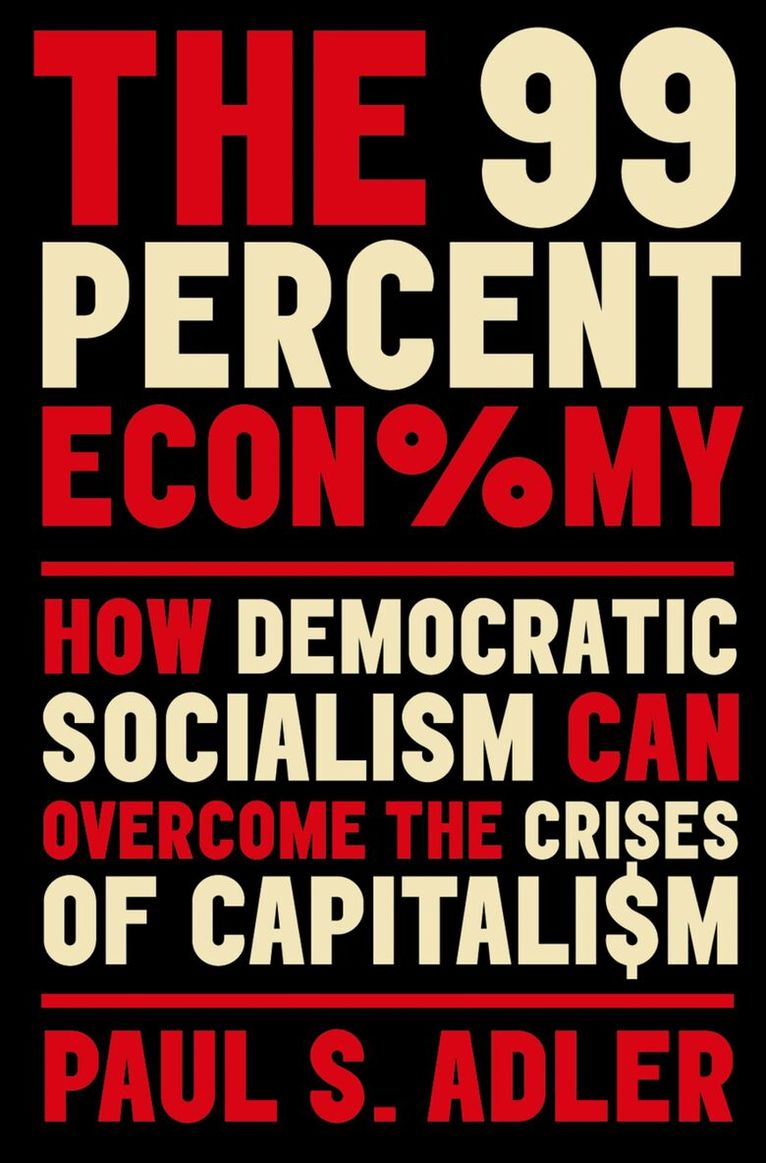
The 99 Percent Economy
How Democratic Socialism Can Overcome the Crises of Capitalism
Häftad, Engelska, 2023
223 kr
Skickas inom 5-8 vardagar
We live in a time of crises - economic turmoil, workplace disempowerment, unresponsive government, environmental degradation, social disintegration, and international rivalry. In The 99 Percent Economy, Paul S. Adler, a leading expert on business management, argues that these crises are destined to deepen unless we radically transform our economy. But despair is not an option, and Adler provides a compelling alternative: democratic socialism. He argues that to overcome these crises we need to assert democratic control over the management of both individual enterprises and the entire national economy. To show how that would work, he draws on a surprising source of inspiration: the strategic management processes of many of our largest corporations. In these companies, the strategy process promises to involve and empower workers and to ensure efficiency and innovation. In practice, this promise is rarely realized, but in principle, that process could be consolidated within enterprises and it could be scaled-up to the national level. Standing in the way? Private ownership of society's productive resources, which is the foundation of capitalism's ruthless competition and focus on private gain at the cost of society, the environment, and future generations. Adler shows how socialized, public ownership of our resources will enable democratic councils at the local and national levels to decide on our economic, social, and environmental goals and on how to reach them. The growing concentration of industry makes this socialization step ever easier. Democratic socialism is not a leap into the unknown, Adler shows. Capitalist industry has built the foundations for a world beyond capitalism and its crises.
The Firm as a Collaborative Community
Reconstructing Trust in the Knowledge Economy
Inbunden, Engelska, 2006
2 977 kr
Skickas inom 5-8 vardagar
This volume explores the changing nature of community in modern corporations. Community within and between firms - the fabric of trust so essential to contemporary business - has long been based on loyalty. This loyalty has been largely destroyed by three decades of economic turbulence, downsizing, and restructuring. Yet community is more important than ever in an increasingly complex, knowledge-intensive economy. The thesis of this volume is that a new form of community is slowly emerging - one that is more flexible and wider in scope than the community of loyalty, and that transcends the limitations of both traditional Gemeinschaft and modern Gesellschaft. We call this form collaborative community.The trend towards collaborative community is difficult to detect amidst the ferocious forces of market and bureaucratic rationalization. But close analysis of some of America's most successful corporations reveals three dimensions of the emerging form:· a shared ethic of interdependent contribution: distinct from the uneasy mix of loyalty and individualism that prevailed for so long;· a formalized set of norms of interdependent process management that include iterative co-design, metaphoric search, and systematic mutual understanding: distinct from both rigid authority hierarchies and informal log-rolling;· An interdependent social identity that supports these organizational features: distinct from both dependent, traditionalistic identities and the independence of the autonomous self that is often associated with Western culture.This volume is a collaborative effort of leading scholars in organization studies to delineate the new form of community and the forces encouraging and constraining its growth. The contributors combine sociology and psychology theory with detailed analysis of business cases at the firm and inter-firm level.
The Firm as a Collaborative Community
Reconstructing Trust in the Knowledge Economy
Häftad, Engelska, 2007
773 kr
Skickas inom 5-8 vardagar
This volume explores the changing nature of community in modern corporations. Community within and between firms - the fabric of trust so essential to contemporary business - has long been based on loyalty. This loyalty has been largely destroyed by three decades of economic turbulence, downsizing, and restructuring. Yet community is more important than ever in an increasingly complex, knowledge-intensive economy. The thesis of this volume is that a new form of community is slowly emerging - one that is more flexible and wider in scope than the community of loyalty, and that transcends the limitations of both traditional Gemeinschaft and modern Gesellschaft. We call this form collaborative community. The trend towards collaborative community is difficult to detect amidst the ferocious forces of market and bureaucratic rationalization. But close analysis of some of America's most successful corporations reveals three dimensions of the emerging form: · a shared ethic of interdependent contribution: distinct from the uneasy mix of loyalty and individualism that prevailed for so long;· a formalized set of norms of interdependent process management that include iterative co-design, metaphoric search, and systematic mutual understanding: distinct from both rigid authority hierarchies and informal log-rolling;· An interdependent social identity that supports these organizational features: distinct from both dependent, traditionalistic identities and the independence of the autonomous self that is often associated with Western culture. This volume is a collaborative effort of leading scholars in organization studies to delineate the new form of community and the forces encouraging and constraining its growth. The contributors combine sociology and psychology theory with detailed analysis of business cases at the firm and inter-firm level.
650 kr
Skickas inom 10-15 vardagar
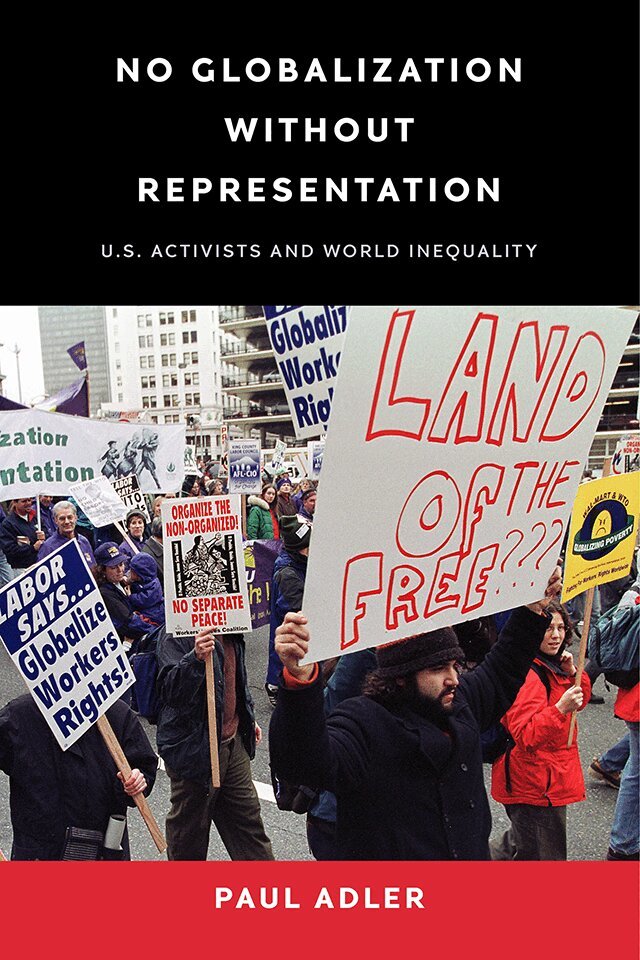
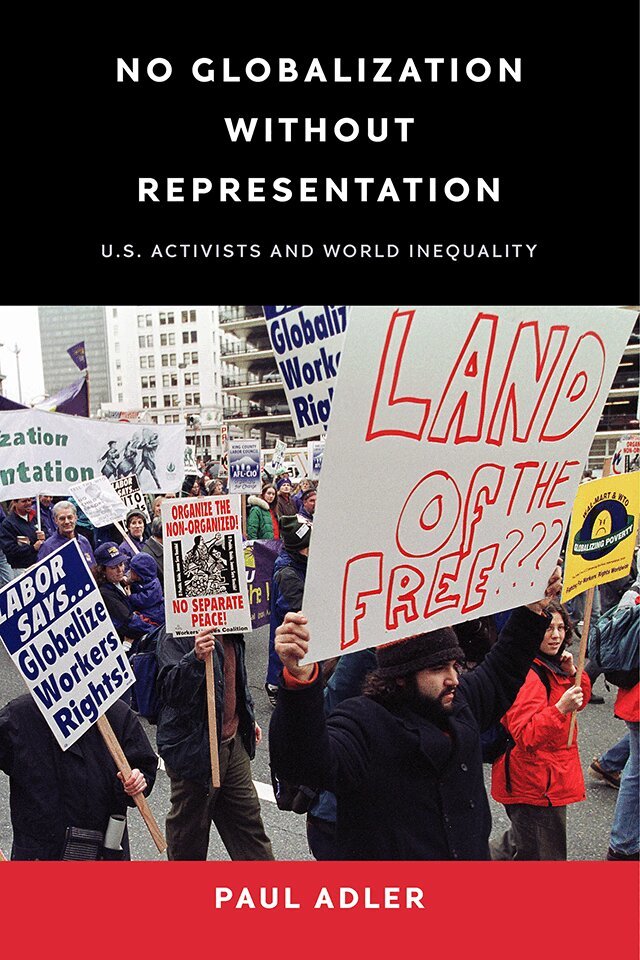
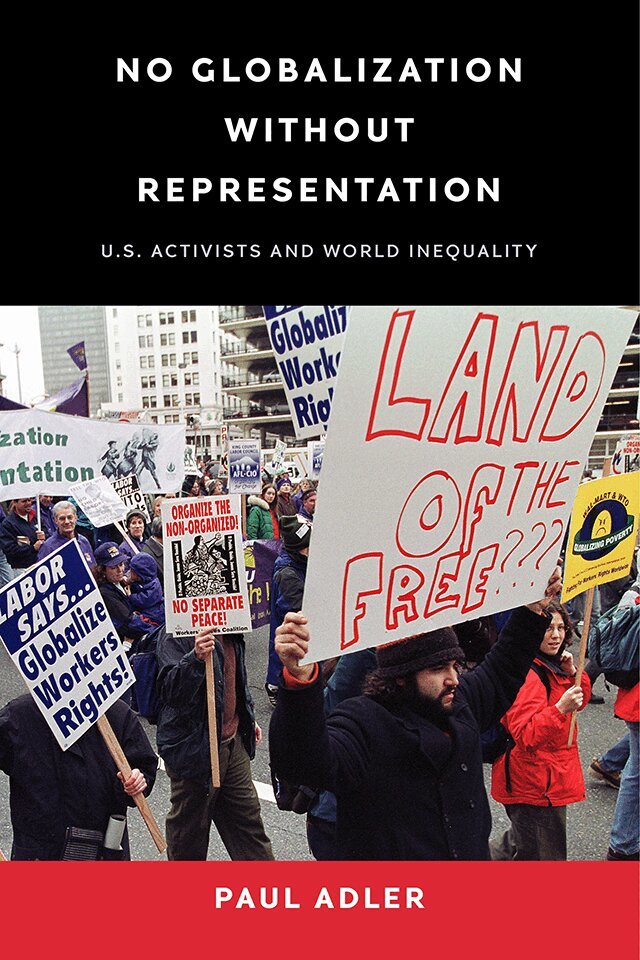
How consumer and environmental activists became significant players in U.S. and world politicsAmid the mass protests of the 1960s, another, less heralded political force arose: public interest progressivism. Led by activists like Ralph Nader, organizations of lawyers and experts worked "inside the system." They confronted corporate power and helped win major consumer and environmental protections. By the late 1970s, some public interest groups moved beyond U.S. borders to challenge multinational corporations. This happened at the same time that neoliberalism, a politics of empowerment for big business, gained strength in the U.S. and around the world.No Globalization Without Representation is the story of how consumer and environmental activists became significant players in U.S. and world politics at the twentieth century's close. NGOs like Friends of the Earth and Public Citizen helped forge a progressive coalition that lobbied against the emerging neoliberal world order and in favor of what they called "fair globalization." From boycotting Nestlé in the 1970s to lobbying against NAFTA to the "Battle of Seattle" protests against the World Trade Organization in the 1990s, these groups have made a profound mark.This book tells their stories while showing how public interest groups helped ensure that a version of liberalism willing to challenge corporate power did not vanish from U.S. politics. Public interest groups believed that preserving liberalism at home meant confronting attempts to perpetuate conservative policies through global economic rules. No Globalization Without Representation also illuminates how professionalized organizations became such a critical part of liberal activism—and how that has affected the course of U.S. politics to the present day.
110 kr
Skickas inom 5-8 vardagar
318 kr
Skickas
How consumer and environmental activists became significant players in U.S. and world politicsAmid the mass protests of the 1960s, another, less heralded political force arose: public interest progressivism. Led by activists like Ralph Nader, organizations of lawyers and experts worked "inside the system." They confronted corporate power and helped win major consumer and environmental protections. By the late 1970s, some public interest groups moved beyond U.S. borders to challenge multinational corporations. This happened at the same time that neoliberalism, a politics of empowerment for big business, gained strength in the U.S. and around the world.No Globalization Without Representation is the story of how consumer and environmental activists became significant players in U.S. and world politics at the twentieth century's close. NGOs like Friends of the Earth and Public Citizen helped forge a progressive coalition that lobbied against the emerging neoliberal world order and in favor of what they called "fair globalization." From boycotting Nestlé in the 1970s to lobbying against NAFTA to the "Battle of Seattle" protests against the World Trade Organization in the 1990s, these groups have made a profound mark.This book tells their stories while showing how public interest groups helped ensure that a version of liberalism willing to challenge corporate power did not vanish from U.S. politics. Public interest groups believed that preserving liberalism at home meant confronting attempts to perpetuate conservative policies through global economic rules. No Globalization Without Representation also illuminates how professionalized organizations became such a critical part of liberal activism—and how that has affected the course of U.S. politics to the present day.
113 kr
Skickas inom 5-8 vardagar
312 kr
Skickas inom 5-8 vardagar
552 kr
Skickas inom 3-6 vardagar