Paul Almeida - Böcker
Visar alla böcker från författaren Paul Almeida. Handla med fri frakt och snabb leverans.
10 produkter
10 produkter
2 108 kr
Kommande
Climate action encompasses all kinds of efforts to mitigate climate change. The Oxford Handbook of Climate Action examines diverse efforts globally, with chapters discussing activism or policy on every continent. The volume presents major theoretical perspectives and concrete strategies for addressing climate change in the twenty-first century.The Handbook considers both noninstitutional and institutional forms of climate action. Contributors discuss the origins of climate activism as well as important achievements in raising public awareness, increasing participation, incorporating environmental justice, and implementing climate-friendly policies. They also demonstrate why nonconventional forms of collective action are necessary and effective when existing institutions fail to address planetary warming at an appropriate pace and level of urgency. Authors cover climate action planning, renewable energy systems, reforestation, carbon capture and storage technologies, nature-based climate solutions, and just economic transitions. The scholars also identify climate action within broader systems of race, class, gender, and colonialism.Drawing from environmental science, sociology, political science, and anthropology, the Handbook gathers analyses and recommendations from an interdisciplinary field of specialists. The volume is thereby both comprehensive and accessible to students and scholars from various disciplines, making it a vital resource for anyone interested in the study of climate issues.
425 kr
Skickas inom 7-10 vardagar
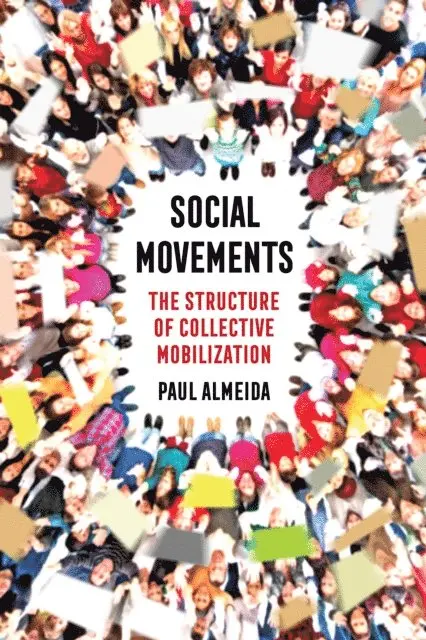
Social Movements cleverly translates the art of collective action and mobilization by excluded groups to facilitate understanding social change from below. Students learn the core components of social movements, the theory and methods used to study them, and the conditions under which they can lead to political and social transformation.This fully class-tested book is the first to be organized along the lines of the major subfields of social movement scholarship—framing, movement emergence, recruitment, and outcomes—to provide comprehensive coverage in a single core text.Features include:use of real data collected in the U.S. and around the worldthe emphasis on student learning outcomescase studies that bring social movements to lifeexamples of cultural repertoires used by movements (flyers, pamphlets, event data on activist websites, illustrations by activist musicians) to mobilize a grouptopics such as immigrant rights, transnational movement for climate justice, Women's Marches, Fight for $15, Occupy Wall Street, Gun Violence, Black Lives Matter, and the mobilization of popular movements in the global South on issues of authoritarian rule and neoliberalismWith this book, students deepen their understanding of movement dynamics, methods of investigation, and dominant theoretical perspectives, all while being challenged to consider their own place in relation to social movements.
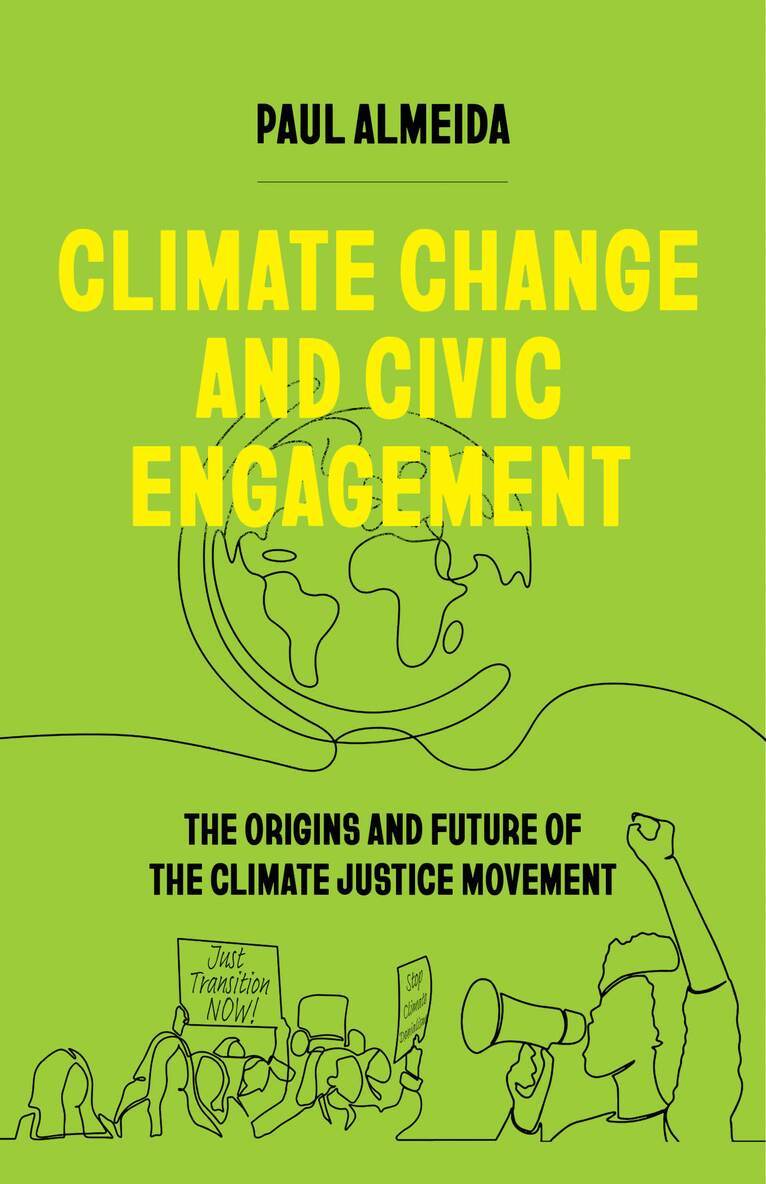
Climate Change and Civic Engagement
The Origins and Future of the Climate Justice Movement
Inbunden, Engelska, 2026
983 kr
Kommande
The most recent scientific reporting suggests that the outlook for continued global warming is dire. Collective action and civic engagement by ordinary people around the world will prove decisive in slowing down global warming and supporting planetary survival. Climate Change and Civic Engagement demonstrates the origins, gains, and future trajectory of the climate movement. In analyzing collective action events around the world and exploring how the movement navigates the competing paradigms of climate denialism, decarbonization, and just transitions, this book includes: Data collected from thousands of climate engagements and events. The most recent tools from social movement scholarship, such as GIS mapping, representative surveys from frontline communities, and theories of expanding climate civic engagement along just transition pathways. An exploration of the links between climate justice and environmental justice. Creative tactics for sustaining collective climate action in the face of climate denialism and technocratic solutions. This book shows readers the indispensability of social movement knowledge in forging effective climate justice movements.
Climate Change and Civic Engagement
The Origins and Future of the Climate Justice Movement
Häftad, Engelska, 2026
312 kr
Kommande
The most recent scientific reporting suggests that the outlook for continued global warming is dire. Collective action and civic engagement by ordinary people around the world will prove decisive in slowing down global warming and supporting planetary survival. Climate Change and Civic Engagement demonstrates the origins, gains, and future trajectory of the climate movement. In analyzing collective action events around the world and exploring how the movement navigates the competing paradigms of climate denialism, decarbonization, and just transitions, this book includes: Data collected from thousands of climate engagements and events. The most recent tools from social movement scholarship, such as GIS mapping, representative surveys from frontline communities, and theories of expanding climate civic engagement along just transition pathways. An exploration of the links between climate justice and environmental justice. Creative tactics for sustaining collective climate action in the face of climate denialism and technocratic solutions. This book shows readers the indispensability of social movement knowledge in forging effective climate justice movements.
234 kr
Skickas inom 7-10 vardagar
Civil society actors contested the fifty-year long transition to a global economy based on the principles of neoliberalism. Mobilization against neoliberal measures represents one of the most common forms of social-movement activity across the world. We explore the evolution of resistance to economic liberalization from the 1970s to the current period. Our study highlights several dimensions of civic opposition to the implementation of free market policies, including: forms of neoliberalism; geographic distribution of protest events across world regions and time; and outcomes of movement campaigns.
686 kr
Skickas inom 7-10 vardagar
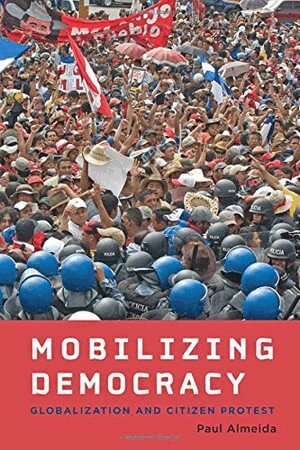
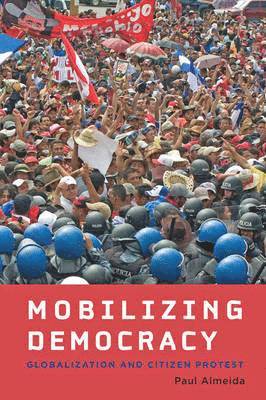
Paul Almeida's comparative study of the largest social movement campaigns that existed between 1980 and 2013 in every Central American country (Costa Rica, El Salvador, Guatemala, Honduras, Nicaragua, and Panama) provides a granular examination of the forces that spark mass mobilizations against state economic policy, whether those factors are electricity rate hikes or water and health care privatization. Many scholars have explained connections between global economic changes and local economic conditions, but most of the research has remained at the macro level. Mobilizing Democracy contributes to our knowledge about the protest groups "on the ground" and what makes some localities successful at mobilizing and others less successful. His work enhances our understanding of what ingredients contribute to effective protest movements as well as how multiple protagonists-labor unions, students, teachers, indigenous groups, nongovernmental organizations, women's groups, environmental organizations, and oppositional political parties-coalesce to make protest more likely to win major concessions.Based on extensive field research, archival data of thousands of protest events, and interviews with dozens of Central American activists, Mobilizing Democracy brings the international consequences of privatization, trade liberalization, and welfare-state downsizing in the global South into focus and shows how persistent activism and network building are reactivated in these social movements. Almeida enables our comprehension of global and local politics and policy by answering the question, "If all politics is local, then how do the politics of globalization manifest themselves?" Detailed graphs and maps provide a synthesis of the quantitative and qualitative data in this important study. Written in clear, accessible prose, this book will be invaluable for students and scholars in the fields of political science, social movements, anthropology, Latin American studies, and labor studies.
302 kr
Tillfälligt slut
Paul Almeida's comparative study of the largest social movement campaigns that existed between 1980 and 2013 in every Central American country (Costa Rica, El Salvador, Guatemala, Honduras, Nicaragua, and Panama) provides a granular examination of the forces that spark mass mobilizations against state economic policy, whether those factors are electricity rate hikes or water and health care privatization. Many scholars have explained connections between global economic changes and local economic conditions, but most of the research has remained at the macro level. Mobilizing Democracy contributes to our knowledge about the protest groups "on the ground" and what makes some localities successful at mobilizing and others less successful. His work enhances our understanding of what ingredients contribute to effective protest movements as well as how multiple protagonists-labor unions, students, teachers, indigenous groups, nongovernmental organizations, women's groups, environmental organizations, and oppositional political parties-coalesce to make protest more likely to win major concessions.Based on extensive field research, archival data of thousands of protest events, and interviews with dozens of Central American activists, Mobilizing Democracy brings the international consequences of privatization, trade liberalization, and welfare-state downsizing in the global South into focus and shows how persistent activism and network building are reactivated in these social movements. Almeida enables our comprehension of global and local politics and policy by answering the question, "If all politics is local, then how do the politics of globalization manifest themselves?" Detailed graphs and maps provide a synthesis of the quantitative and qualitative data in this important study. Written in clear, accessible prose, this book will be invaluable for students and scholars in the fields of political science, social movements, anthropology, Latin American studies, and labor studies.
Global Struggles and Social Change
From Prehistory to World Revolution in the Twenty-First Century
Häftad, Engelska, 2020
352 kr
Skickas inom 7-10 vardagar
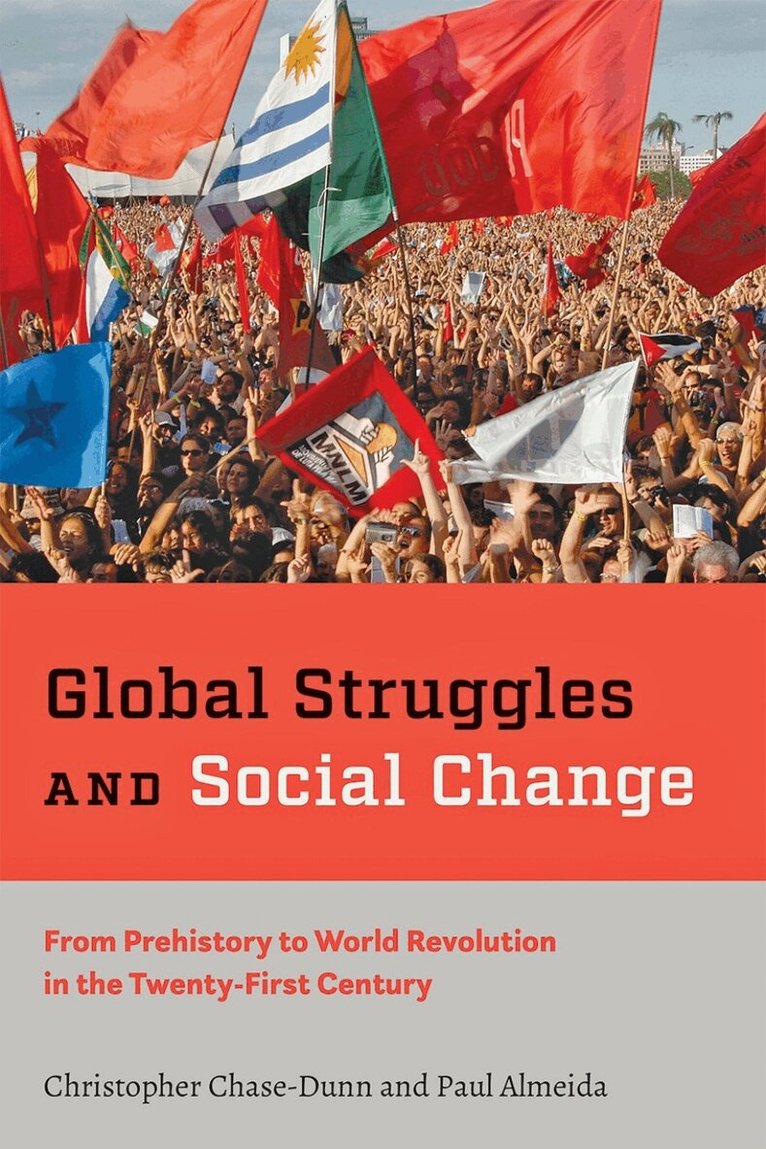
Deftly demonstrates how the rise and fall of social movements throughout history is closely linked to economic and political developments.In the early decades of the twenty-first century, an international movement to slow the pace of climate change mushroomed across the globe. The self-proclaimed Climate Justice movement urges immediate action to reduce carbon emissions and calls for the adoption of bold new policies to address global warming before irreversible and catastrophic damage threatens the habitability of the planet. On another front, since the 1980s, multiple waves of resistance have occurred around the world against the uneven transition from state-led development to the neoliberal globalization project. Both Climate Justice and Anti-Austerity movements represent the urgency of understanding how global change affects the ability of citizens around the world to mobilize and protect themselves from planetary warming and the loss of social protections granted in earlier eras.In Global Struggles and Social Change, Christopher Chase-Dunn and Paul Almeida explore how global change stimulates the formation and shape of such movements. Contending that large-scale economic shifts condition the pattern of social movement mobilizations around the world, the authors trace these trends back to premodern societies, revealing how severe disruptions of indigenous communities led to innovative collective actions throughout history. Drawing on historical case studies, world system and protest event analysis, and social networks, they also examine the influence of global change processes on local, national, and transnational social movements and explain how in turn these movements shape institutional shifts. Touching on hot-button topics, including global warming, immigrant rights protests, the rise of right-wing populism, and the 2008 financial crisis, the book also explores a broad range of premodern social movements from indigenous people in the Americas, Mesopotamia, and China. The authors pay special attention to periods of disruption and external threats, as well as the role of elites, emotions, charisma, and religion or spirituality in shaping protest movements. Providing sweeping coverage, Global Struggles and Social Change is perfect for students and anyone interested in globalization, international and comparative politics, political sociology, and communication studies.
1 073 kr
Skickas inom 10-15 vardagar
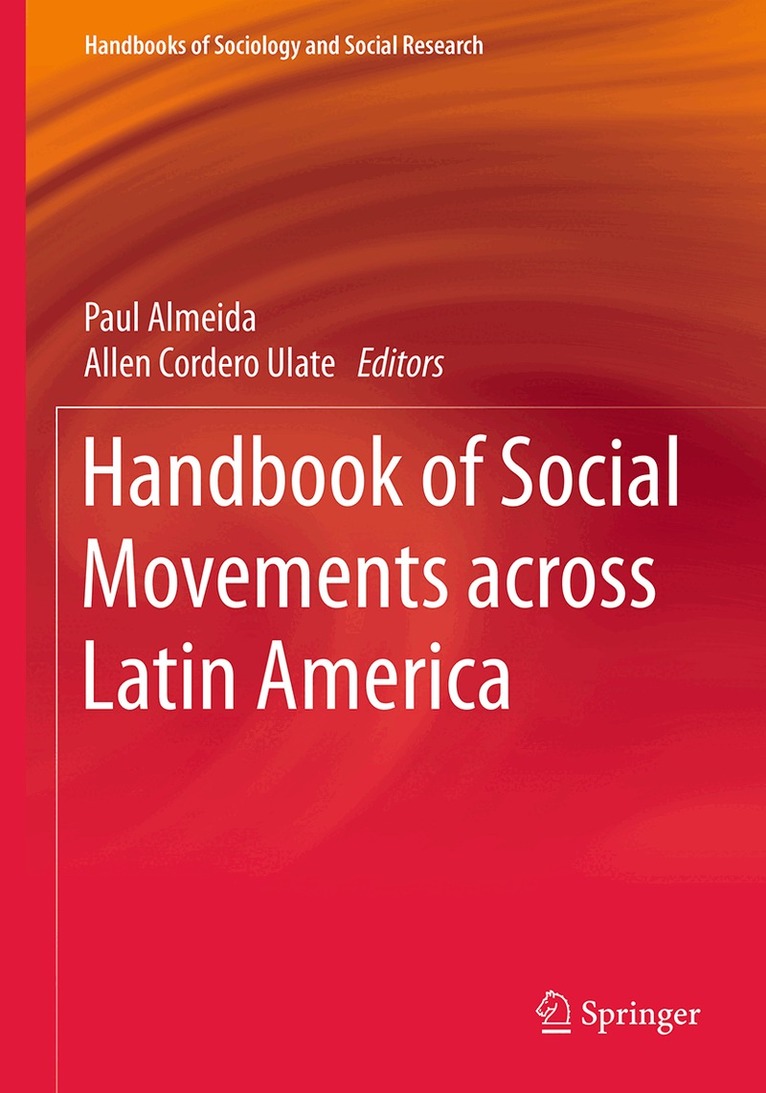
This handbook covers social movement activities in Latin American countries that have had profound consequences on the political culture of the region. It examines the developments of the past twenty years, such as a renewed upswing in popular mobilization, the ending of violent conflicts and military governments, new struggles and a relatively more democratic climate. It shows that, from southern Chiapas to Argentina, social movements in the 1990s and especially in the 2000s, have reached new heights of popular participation. There is a lack of research on the politics of this region in the contemporary era of globalization, this volume partially fills the void and offers a rich resource to students, scholars and the general public in terms of understanding the politics of mass mobilization in the early twenty-first century. The contributors each address social movement activity in their own nation and together they present a multidisciplinary perspective on the topic. Each chapter uses a case study design to bring out the most prominent attributes of the particular social struggle(s), for instance the main protagonists in the campaigns, the grievances of the population and the outcomes of the struggles. This Handbook is divided into seven substantive themes, providing overall coherence to a broad range of social conflicts across countries, issues and social groups. These themes include: 1) theory of Latin American social movements; 2) neoliberalism; 3) indigenous struggles; 4) women’s movements; 5) movements and the State; 6) environmental movements; and 7) transnational mobilizations.
966 kr
Skickas inom 10-15 vardagar
This handbook covers social movement activities in Latin American countries that have had profound consequences on the political culture of the region. It examines the developments of the past twenty years, such as a renewed upswing in popular mobilization, the ending of violent conflicts and military governments, new struggles and a relatively more democratic climate. It shows that, from southern Chiapas to Argentina, social movements in the 1990s and especially in the 2000s, have reached new heights of popular participation. There is a lack of research on the politics of this region in the contemporary era of globalization, this volume partially fills the void and offers a rich resource to students, scholars and the general public in terms of understanding the politics of mass mobilization in the early twenty-first century. The contributors each address social movement activity in their own nation and together they present a multidisciplinary perspective on the topic. Each chapter uses a case study design to bring out the most prominent attributes of the particular social struggle(s), for instance the main protagonists in the campaigns, the grievances of the population and the outcomes of the struggles. This Handbook is divided into seven substantive themes, providing overall coherence to a broad range of social conflicts across countries, issues and social groups. These themes include: 1) theory of Latin American social movements; 2) neoliberalism; 3) indigenous struggles; 4) women’s movements; 5) movements and the State; 6) environmental movements; and 7) transnational mobilizations.